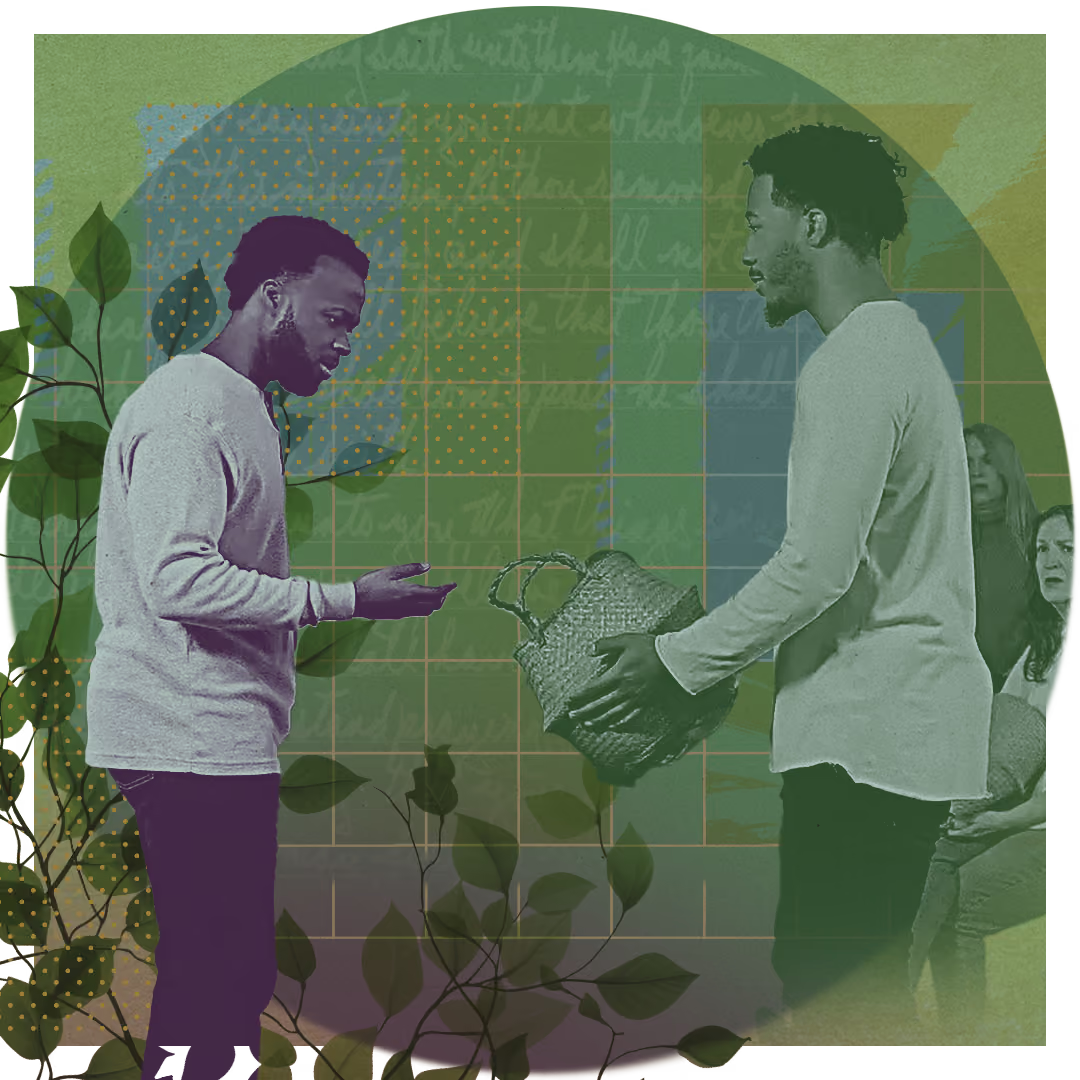
David: [electronic music] It's helpful to think about that 'cause we don't really do cornerstones anymore.
Seth: Right.
David: But we do groundbreakings.
Seth: Mm-hmm.
David: And it's interesting to think about the kingdom of Jesus, just coming, his death, and his resurrection and ascension, as the breaking ground of the kingdom of God.
Seth: Yeah.
David: And-
Seth: Yes
David: ... now we're building-
Seth: We're building
David: ... on the place where he broke ground.
Intro: [electronic music] Welcome to the Spoken Gospel Podcast. Spoken Gospel is a ministry that's dedicated to speaking the gospel out of every corner of scripture. In Luke 24, Jesus told his disciples that every part of the Bible was about him. So each week, hosts David and Seth work through a passage of scripture to see how it's all about Jesus and his good news. Let's jump in. [electronic music]
David: Well, welcome everyone to the Spoken Gospel Podcast. Thank you so much for joining us. We are jumping into the book of Haggai today.
Seth: Yep.
David: Or Haggai.
Seth: Double G.
David: Double G. Haggai, um-
Seth: One of the most explored corners of scripture. [laughs]
David: Yeah, I was actually, like, flipping through it in my Bible and I was like, "Okay, it's between Zephaniah and Zechariah." And I was like, I kept flipping back-
Seth: [laughs]
David: ... 'cause it's one single page in my Bible. [laughs]
Seth: It is not long.
David: It's not long. Um, but I, I know very little about Haggai, and so, uh, other than-
Seth: Yeah
David: ... I know where he's situated historically-
Seth: Mm-hmm
David: ... and so I know a little bit about what's going on, but I don't know what he's bringing, so I'm really excited to hear about it.
Seth: Yeah.
David: What are you most excited about?
Seth: Uh, for this episode in the Book of Haggai, I'm really excited to talk about how God's promises to be with his people and to provide for his people all come true before God's people start to obey.
David: Oh, I see.
Seth: So that's really the nutshell. Like, God is generous, pours out his spirit, blesses, promises, does all these things for God's people before they ever make movements to do the right thing.
David: Mm.
Seth: So I think that's a really interesting idea-
David: Yeah
Seth: ... that I'm excited to explore alongside Haggai. And in the next episode, we'll probably talk about how and why God uses certain leaders to shake the world order-
David: Oh
Seth: ... and reestablish his own kingdom.
David: That sounds fun.
Seth: So yeah, so Haggai, really short, but a lot of really cool things baked into his prophecies.
David: Yeah. Okay, so you're excited about, especially what we're gonna look at today, because God is going to be with his people, he's gonna do some awesome stuff before his people even obey.
Seth: Yeah.
David: Which is... I mean, when I'm thinking about the Bible, I'm like, it typically is like, "Okay, if you obey my commands, you'll be blessed," especially like Torah-
Seth: Yeah
David: ... law-
Seth: Yeah
David: ... is do these things and you'll be blessed. The- they're, they're tied up with one another.
Seth: Mm-hmm. Right.
David: But i- i- I mean, I guess to be fair to the Torah, it's not necessarily do this and up till that point there is no blessing, and once you obey, then the blessing comes. We're not given, like, a time scale for which one comes first.
Seth: Right. Well, I think the reason Haggai ends up talking this way is because of the way that God starts his covenant or his relationship with Israel all the way back in the Book of Exodus.
David: Right.
Seth: God brings his people out of slavery. He makes them his people. He promises to be with them, to bless them, to make rain fall in the spring, and to make their crops grow-
David: Yeah
Seth: ... in late autumn. He promises to make sure that the, they and their cattle are fertile. He- his presence is all this kind of beautiful garden-like things-
David: Mm
Seth: ... where the people of God will sprout up successfully. That's what God's covenant's with them to do.
David: And they, and he gave that covenant, like, while they're out in the wilderness.
Seth: Right, before he ever told them to obey a law.
David: Mm.
Seth: Right?
David: Yeah.
Seth: So God promises to do all these things for them, and then he says, "If you're willing to obey my law."
David: Mm-hmm.
Seth: "And I've already started to do those things for you. I've given you a down payment on the type of things I'll do for you, because what did I just do?"
David: I freed you from Egypt.
Seth: "I freed you from slavery. I split open a sea for you. I-"
David: Yeah.
Seth: "... the w- uh, manna has fallen out of the sky."
David: Yeah. "And you weren't, like, the best obedient servants. You didn't even know what commands to obey."
Seth: Right.
David: "I did it 'cause I loved you. I did it because I'm a covenant-making god. I did it 'cause I'm gracious and merciful."
Seth: That's right.
David: And so God's... So what you're saying is God's always been present with his people to provide before they've obeyed.
Seth: That's right.
David: And so Haggai's picking up on the character of God in that.
Seth: Yeah.
David: That's always how he operates. I mean, I'm even thinking about creation.
Seth: Yeah.
David: It was like, what did nothingness, what did chaos, what did the black void of space do to earn God's creative act of everythinging it?
Seth: I mean-
David: Nothing
Seth: ... nothing.
David: Nothing. Yeah.
Seth: They had no universal natural laws to obey.
David: Right. [laughs]
Seth: Gravity did not have a constant. Like, yeah, right? You know? [laughs]
David: That's a funny way to think about the, the Torah-
Seth: [laughs]
David: ... is like, not even nature had a Torah. [laughs]
Seth: Not even nature. Nature had a law to obey.
David: Gravity didn't know which way was up.
Seth: Right.
David: Yeah, so it, it couldn't even obey. You, all you had was the, the swirling wild and waste. Which is less-
Seth: And then God blessed gravity with objects to attract to each other. [laughs]
David: Yeah, yeah. [laughs] Oh, that's cool. Okay. So this... Okay, so God's character is such that he always is with his people to provide for them before they obey.
Seth: Yeah.
David: Okay.
Seth: And so that's the way Israel starts, right?
David: Yeah. Israel starts that way. They're founded on that character.
Seth: And then what's the first thing that happens is they disobey. [laughs]
David: The golden calf.
Seth: The golden calf, right.
David: Yeah. Whoopsie.
Seth: Um, yeah, so there's a period of 40 years in the wilderness.
David: Yep.
Seth: And after that period of 40-
David: Wherein God kept providing for them. Their sandals never wore out. They never went without a meal.
Seth: That's right, yes.
David: They had water from a rock.
Seth: Right, right.
David: Like, even in their [laughs] disobedience and punishment, God was still with them to provide for them.
Seth: God was still present with them.
David: Yeah.
Seth: And particularly for our purposes, w-Where was God still present with them during that period of time?
David: In the tabernacle?
Seth: Yes. So right after, in Exodus 24, like the covenant is confirmed.
David: Mm-hmm.
Seth: "I'll be your God. You'll be my people."
David: Right.
Seth: The next five chapters are all descriptions on how to build the tabernacle.
David: Yeah, everyone's favorite part, Exodus 25 to 30. [laughs]
Seth: Right. It's like it's what you love to read, uh, whenever you go into the Book of Exodus. [laughs]
David: Please tell me more about the priest's breastplate.
Seth: The deep, deep explanation of what the br- the priest's breastplate's [laughs] gonna look like.
David: [laughs]
Seth: The pomegranates on top of this thing and... Anyway, but it's significant-
David: Oh, very significant
Seth: ... because God will be with His people. He will be their God. He will be their king. Where? In the tabernacle.
David: Yeah.
Seth: And the tabernacle is this living symbol of God's provision and His presence and His leadership even of a disobedient people.
David: Mm-hmm.
Seth: So that tabernacle follows them through the wilderness-
David: Right
Seth: ... to the borders of the Jordan River 40 years later-
David: Yeah
Seth: ... where that presence promises them a whole land to be their own-
David: Right
Seth: ... right?
David: Yeah.
Seth: So they enter the land, and by God's blessing found in the tabernacle, what happens? Enemies are scattered. People are pushed back through a man named Joshua, who another name, man named Joshua's really important in the Book of Haggai.
David: Mm.
Seth: And those enemies are pushed back. God's people start a kingdom. Kings are instituted, and what do they do with the tab- the tabernacle? They make it even better and more grand.
David: Oh, they form it into the temple.
Seth: They form it into a temple where God's presence is, but also that's where... It's kind of weird to think, uh, it's, it's almost hard to think, not think about it magically. [laughs]
David: Yeah.
Seth: But it's like almost as if because God's presence is there, because God's temple is there, that's also why the land continues to produce its fruit.
David: Okay.
Seth: Right?
David: That's what I was gonna ask you a question about.
Seth: Yeah.
David: 'Cause you, you've put together God's presence and provision-
Seth: Yeah
David: ... and I was like, I was gonna circle back around to it-
Seth: Yeah
David: ... but you, you, you went there.
Seth: Yes.
David: I'm like, what, why are those two ideas connected? Why are, is God's being with His people connected to the provision for His people?
Seth: I mean, the simple answer is because that's who God is.
David: He's a provider.
Seth: I mean, and you already set it up by going back to Genesis.
David: Mm.
Seth: Like when God's presence-
David: His word
Seth: ... His word, His voice-
David: His breath
Seth: ... His breath, His breath first shows up, what ha- what happens?
David: Life.
Seth: Life. Things sprout up out of the ground. Mountains are formed. Chaos is subdued. God's presence is synonymous with creation-
David: Mm
Seth: ... and provision and abundance and blessing.
David: Mm.
Seth: Right? So like that's-
David: Yeah
Seth: ... that's what His presence is meant to do, give more life. So if the tabernacle's moving with them, life will follow them. If the temple is there, life will be with God's kingdom as it spreads throughout the world.
David: I see. It's, that's really healing for me to hear. [laughs]
Seth: [laughs]
David: I think, and I'm probably among a minority maybe, I don't know, listening to this, but when I think about God's presence and it's like, okay, He was on Sinai and this thunderous cloud. You don't go into it.
Seth: Mm-hmm.
David: And then that thunderous presence went into a tabernacle, and Nahab and Abihu offered the wrong fire, and it consumed them. You better be careful.
Seth: Right.
David: Don't go into the Holy of Holies the wrong way.
Seth: Mm-hmm.
David: And like, and like don't touch the Ark of the Covenant or you'll die on the spot. And, you know-
Seth: Right
David: ... so when I think about God's presence, I think about destruction in that time period-
Seth: Mm-hmm
David: ... not creation.
Seth: Yeah. And-
David: And so, like, help me with that.
Seth: Yeah. Well, you should think about both things.
David: Oh, great. [laughs]
Seth: Uh, so you're not wrong to be like, "Wait, wait, what about all these pro-
David: Yeah
Seth: ... what about all this destruction that happens?"
David: Okay.
Seth: But let's finish this story-
David: Okay, okay, okay
Seth: ... of creation. So the idea is but where God's temple is, His presence is, and His, His creative power is also, right?
David: Yep.
Seth: That's the idea. So-
David: Where God's presence is, His creative power is also. Okay, yes.
Seth: But your question is, well, what happens-
David: When His presence is destructive and de- uncreation.
Seth: Well, the reason God's presence is there to create and to be a blessing to His people is because God's a generous God.
David: Uh-huh.
Seth: But He promises that blessing and creative power only when and if God's people continue to obey.
David: Okay.
Seth: Right?
David: Yep.
Seth: I'll be this creative-
David: Yep
Seth: ... life-giving God.
David: And I'm gonna start blessing you before you obey.
Seth: Before you obey. Will you obey my laws? Yes, we will.
David: Uh-huh.
Seth: Obvious question: What happens when we disobey God's laws? That's, that's what you're asking, right?
David: Yeah. Yeah, yeah, yeah.
Seth: Well, what happens when you disobey God's laws? You get all o- uncreation unleashed on you. You decide to step outside of the commands that allow you to access the life of God.
David: Mm.
Seth: All that is not God, all that is death, comes upon you.
David: I see. Okay, let me, let me try something on here.
Seth: Yes.
David: So when, when God created the world, His, His, the presence of His character and His will-
Seth: Mm-hmm
David: ... brought forth abundance, and it created the Garden of Eden. Unmeritoriously, He brings Adam and Eve into that garden-
Seth: Mm-hmm
David: ... and He gives them commands. "You may live in this place before you've done anything."
Seth: Mm-hmm.
David: "And to stay in here, all you need to do is don't eat from the tree of the knowledge of good and evil." [laughs]
Seth: Yep.
David: So there's, there's the paradigm that we're talking about. They disobey that. They eat from the tree of knowledge of good and evil, and they're cast out into thorns and thistles, uncreation land.
Seth: Death.
David: Right.
Seth: Lack of life.
David: Death comes in, and I'm wondering if that paradigm, I just think the Adam and Eve story-
Seth: Yep
David: ... tightens it up for me-
Seth: Yep
David: ... all the categories.
Seth: Yeah, yeah, yeah.
David: And so maybe the reason why that is for what we're talking about, where presence and provision are mapped onto each other-
Seth: Mm-hmm
David: ... is you're, you're saying God's character, who God is, is abundance.
Seth: Mm-hmm.
David: And so when we act like God by obeying His-
Seth: Mm-hmm
David: ... His commands are expressions-
Seth: Mm-hmm
David: ... of how to be like Him.
Seth: Yeah, yeah.
David: Right?
Seth: Yep.
David: So when we obey His commands, we're acting like God, therefore, we participate-
Seth: Mm-hmm
David: ... and continue and contribute to that abundance.
Seth: Yep.
David: When we disobey the commands, we are uncreation in the midst of provision.
Seth: Right.
David: We are the destructive force.
Seth: Mm-hmm.
David: And so God moves us into uncreation space in order for us to act out-
Seth: Yes
David: ... our de-creation we're trying to do on our own-
Seth: Yep
David: ... and keeps His abundance over here in His presence.
Seth: Right. Yes.
David: And so we need a way to get from uncreation into-
Seth: Right
David: ... His presence, which is where provision is.
Seth: So, yes. What's interesting is that the temple is this place where God's presence and life and creative power lives, but God's temple is also the place where covenants are repaired.
David: Mm.
Seth: So you have, here, you're, I'm your God. You're my people. Here are all the things you must do to be in the temple. Here's what it should look like. Here's what the priest should do. Here's what a- all these things are supposed to be. And then what's Leviticus all about right after a whole bunch of sacrifices-
David: Mm-hmm
Seth: ... in case you fail the covenant.
David: Right, or a- I mean, even in the flow of the Torah, they did fail the covenant with the building of the golden calf.
Seth: Well, that's right, that's right.
David: Moses tries to enter at the end of Exodus, can't.
Seth: Mm-hmm.
David: And so Leviticus is, now here's how you can.
Seth: Right.
David: Right.
Seth: So, so the idea here is the temple actually represents not only God's life-giving power, but also the place where God's life-giving power can be restored to people-
David: Uh-huh
Seth: ... who have now chosen to enact death and break those commandments.
David: I see.
Seth: Does that make sense?
David: So we leave the creative presence of God through disobeying his commands, and we break the covenant.
Seth: Mm-hmm. That's right.
David: Therefore, we experience the de-creation that we bring on ourselves.
Seth: That's right.
David: Then when we want to restore that covenant, that is made possible at this place-
Seth: That's right
David: ... called the tabernacle or the temple.
Seth: That's right.
David: Why?
Seth: Why did God choose the temple to be the place where-
David: Yeah
Seth: ... a covenant could be repaired?
David: Yeah.
Seth: Well, I mean, that's a good question. I don't know if I've thought about it before.
David: I mean, I guess in one sense it's like, well, that's where God is.
Seth: Well, yeah.
David: He's the repairer of the covenant and-
Seth: That's what I was gonna say.
David: Yeah.
Seth: If you've offended the one that you've ma- the king that you've made a covenant with-
David: Yeah, you go to him to fix it [laughs]
Seth: ... you go to the king to, to fix it.
David: Right.
Seth: Uh-
David: It's less about the place itself and more about the God who lives in it.
Seth: That's right.
David: Okay.
Seth: And so in God, in his grace and in his mercy, decided that the way that you would repair a covenant is by offering a bull or a goat or-
David: Mm-hmm
Seth: ... a lamb or whatever.
David: Right.
Seth: And he would take that as a symbol of your remorse and his willingness to pass your sins away from you and on to the life of another.
David: Or to use the language we've been-
Seth: Yeah
David: ... using, he puts, like, i- in, in Genesis, what did he do? He created animals.
Seth: Right.
David: Right? And what our law-breaking does is it brings de-creation.
Seth: Mm-hmm.
David: And so he puts that de-creation onto that animal-
Seth: Mm-hmm
David: ... instead of you.
Seth: Oh, yeah, yeah. That's right. Yes.
David: The, the de-creation comes to them.
Seth: That's a good idea, yes.
David: Anyway, I'm trying to, like, use that language.
Seth: Yeah.
David: Yeah, that's helpful.
Seth: So rewind a little bit-
David: Okay
Seth: ... to this is, God's tabernacle has turned into a temple during God's kingdom era.
David: Back in the time of, like, Joshua-
Seth: No, no
David: ... or no, back in the time of David, Solomon.
Seth: Yeah, Joshua, has moved on to David and Solomon.
David: Yep.
Seth: Solomon builds this temple.
David: Yes.
Seth: Great. Okay. W- what happens next in Israel's story is that king after king after king after king disobeys God's laws.
David: Mm-hmm.
Seth: Mercifully and graciously, as God has done all the way since creation, he continues to bless God's people with some level of abundance and national life, right?
David: Even when they disobey.
Seth: Even when they disobey.
David: Yeah, I remember us in Kings talking about that where it was like, I can't remember which king it was, it was, like, Ahaz or something-
Seth: Yeah
David: ... and we were both just so confused. I can't remember who it was.
Seth: Right.
David: So confused about, like-
Seth: Why is God-
David: ... this guy keeps disobeying, God keeps blessing him.
Seth: Right.
David: Well, yeah. So that's going on.
Seth: So, yeah, so that's going on, but the question becomes, like, what happens if God's people break God's covenant over and over and over and over again, and then the temple where God's presence is supposed to live falls into increasing disrepair-
David: Mm
Seth: ... and increasing misuse? If the place where God's presence can be, God's life-giving, creative presence can be accessed-
David: Mm-hmm
Seth: ... is being misused-
David: Taken over by de-creation
Seth: ... will God let creation-
David: Will God, yeah
Seth: ... come from that place?
David: Mm.
Seth: And so the story of Israel's history is, the answer is eventually no.
David: Right.
Seth: Eventually, the answer is that the God's people are so going to mistreat his life-giving power, he's gonna even take the temple-
David: Mm-hmm
Seth: ... the symbol of his covenant and the symbol of where covenants can be repaired, and he's gonna break it down.
David: Right, and that's what happened in the Babylonian invasion.
Seth: That's right. So Babylon comes, destroys the temple, and destroys the people of God's hope-
David: Mm
Seth: ... in returning to a covenant and returning to a place where a covenant could even be repaired.
David: Yeah.
Seth: Does that make sense?
David: It does, yeah.
Seth: So, like, God's life-giving presence is impossible to, to gain now.
David: Right.
Seth: How can we have all the covenant blessings we had before? God said he'd make our crops grow and make rain fall-
David: Yeah
Seth: ... and give us national borders and-
David: And all that's happening because of, like you said, like, the magic-
Seth: Right
David: ... of God being in the land.
Seth: Right.
David: It's emanating out from the temple. That's why the grass grows.
Seth: Right.
David: Which is kind of a mystical way to think about life, but-
Seth: But that's-
David: ... it's what we're being invited into here.
Seth: That's right.
David: I'm, I'm reminded of Ezekiel.
Seth: Mm-hmm.
David: So Ezekiel's one of those unique books where part of it's written before the temple's destroyed, and part of it's written after.
Seth: Okay.
David: And so the first part of the book, he, he, they've been exiled. They're on the shores of Babylon, and they're like, "We're gonna get back in the land." There's hope still because the temple's still there.
Seth: Right, right, right, right.
David: So yeah, we've been kicked out, we've been driven out, but we can repair the covenant, right? [laughs] Because why?
Seth: Right.
David: Because the temple still stands. And then in the midst of Ezekiel, the temple's destroyed, and news comes to him, and it's n- hope's over-
Seth: Right
David: ... for a time. Then he-
Seth: Yeah
David: ... prophesies new hope. But, like, I, I'm, I'm just inhabiting that space of why is it such bad news. The temple gets destroyed-
Seth: Yes
David: ... it's because, well, we've broken the covenant before, but-
Seth: But we-
David: ... we can always come back to the temple. [laughs]
Seth: Right, the right sacrifices can be offered-
David: Yeah
Seth: ... and we can, we can be right again, and we can experience God's blessing again.
David: That's right.
Seth: He's provided, God's provided a way for us to fix this problem.
David: Yep, but now that provision is gone.
Seth: Yeah.
David: Okay. And so is that where we-
Seth: So yeah
David: ... are?
Seth: So Babylon destroys the temple.
David: Uh-huh.
Seth: Most of the population of Israel is either scattered among the Babylonian nation, and a lot of people are just deported straight to the heart of Babylon.
David: Yeah.
Seth: Then the Persians take over Babylon.
David: Mm.
Seth: Babylon falls-
David: Right
Seth: ... and the Persian government raises up, and a man named King Cyrus decides that the people of GodShould be allowed to return back to their homeland and rebuild their temple.
David: Mm.
Seth: So this is big news.
David: Yeah.
Seth: God's people are like, are saying, "Oh, this is how the covenant restarts."
David: Right, because we used to be slaves to a foreign king-
Seth: Mm-hmm
David: ... and God freed us by convincing the, the leader to let us go.
Seth: Right. The same-
David: And it's happening again
Seth: ... the same thing is happening again. Our history's about to repeat itself.
David: Mm-hmm.
Seth: And then this delegation goes, and guess who it's headed up by? A man named Joshua, a high priest-
David: Ooh
Seth: ... just like the Joshua before, and a man named Zerubbabel, who's in the line of King David, who wanted to build the first temple.
David: All, all the pieces are in place.
Seth: So all the pieces in the Book of Haggai are in place to think, "Will this be the time that God's covenant could be restored?"
David: And this is overlapping with the time at the beginning of Ezra, right?
Seth: Yep.
David: Or yeah, yeah, Ezra.
Seth: Yeah, the Book of Ezra, the Book of Zechariah all happen-
David: Okay
Seth: ... around this time.
David: Yep.
Seth: Yes.
David: So people are coming back into the land. They have all the pieces. They have Joshua. They have the, the freedom from the king. They have, uh, Zerubbabel in the line of David, and they get there, and they rebuild the temple, and everything's great.
Seth: Well [laughs]
David: [laughs] Well.
Seth: We would hope. We would so, so, so, so, so hope.
David: [laughs]
Seth: So a little bit more history before we can act- before we start the Book of Haggai.
David: Okay, yes.
Seth: So Cyrus sends a delegation-
David: Mm-hmm
Seth: ... of people to Israel, and they're tasked to rebuild the temple. Uh, but once they get there, they kind of enter into this weird political religious tension.
David: Hmm.
Seth: Under Babylonian control, Babylon divided the area around Jerusalem and turned it into the province of Samaria.
David: Oh, okay. Yes.
Seth: Yeah, or the capital was in Samaria. Headquarters-
David: Okay
Seth: ... of this large province were in Samaria.
David: Yeah, I've heard about the Samaritans.
Seth: Yeah.
David: I heard about a good one.
Seth: And so in this big province called Samaria, you had-
David: Did you just tell a joke?
Seth: What? [laughs]
David: I said I heard about a good one.
Seth: [laughs]
David: [laughs] You're so locked in.
Seth: I'm so locked in.
David: [laughs]
Seth: I've got this geography in my mind that I can't get the Bible out.
David: I'm sorry. I couldn't pass it up. Okay, so-
Seth: So you have this-
David: Yeah
Seth: ... this big area known, uh, headquartered in Samaria.
David: Mm-hmm.
Seth: And it's filled with people of God that never left, were never deported to Babylon.
David: So some former citizens of Jerusalem who-
Seth: Yep, who are still there.
David: Still there.
Seth: Still hang out.
David: Okay.
Seth: Still hung out for a time. There's some remnants of the old civil war where the northern kingdom split off, but they've moved back south now around Jerusalem.
David: Mm.
Seth: And you also have foreigners and a whole bunch of people, and-
David: Some of those neighboring nations that Israel fought to push back that are now like-
Seth: Right
David: ... I mean, squatters' rights.
Seth: Well, we're-
David: Come in.
Seth: Yeah, yeah, yeah, squatters' rights. Well, Babylon's in control now. Doesn't mat- we're all Babylonian citizens. We can move wherever we want.
David: That's right.
Seth: L- let's go over here.
David: This old feud with Israel's over-
Seth: Yeah
David: ... 'cause they're not even a thing.
Seth: Let's burn it down. We can, we can rebuild this city for ourselves, so you got-
David: Okay, so this hodgepodge melting pot.
Seth: Right, but then Cyrus says, "Okay, actually, no, I'm gonna carve a little rectangle out of the nation of Samaria-
David: Mm-hmm
Seth: ... take its sovereignty away from Samaria, give it its own governor, and call that-"
David: Texas.
Seth: Texas. [laughs]
David: [laughs]
Seth: Call that the new place of the people of God.
David: Yeah.
Seth: So the book opening of Ezra describes why nobody likes this plan, why the Samaritans think this is a terrible idea and send all these delegations to interfere with the reconstitution of God's people in this little area called Yehud at the time.
David: Uh-huh.
Seth: And then during that same time period, God's people are like, "This isn't worth the effort to rebuild a temple. We're constantly attacked on every side. Nobody really know who the land belongs to. Is it these refugees that came back? Is it the people-
David: Mm
Seth: ... that lived here all this time? Is it the foreigners? Who does the land belong to?"
David: Right.
Seth: "Does it belong to us? Does it belong to them? And beside that, there's a lot of conflict with the people who used to own this land." And the building project set up by King Cyrus stops.
David: Okay, and is this the same area that was Jerusalem?
Seth: Yeah. Uh, it was like, so there's Jerusalem, and then basically a few square miles outside of it.
David: Okay.
Seth: Like, it's like an eight-square-mile... It's very small.
David: Okay.
Seth: Maybe eight square miles is the wrong dimension.
David: Yeah, yeah.
Seth: But, but a very small little rectangle inside the broader province of Samaria.
David: But it would've included Jerusalem. Jerusalem proper.
Seth: It would've included Jerusalem proper.
David: Okay.
David: So all this infighting and, and political dispute makes the building project that Cyrus tried to get going impossible.
Seth: Right.
David: I, is it because, like, they were trying, and they just couldn't get it through? Is it 'cause they didn't fight hard enough, or do we know?
Seth: Well, what it seems like happened was that they were able to build the altar.
David: Okay.
Seth: When Cyrus sent them back, they were able to build the altar, and that makes sense. That's where you're gonna offer sacrifices. That's where you ask for forgiveness. That would be the place where-
David: If you're, if you're gonna build one thing, you should start there. [laughs]
Seth: Right, you, you should start there.
David: Yeah.
Seth: This is the place where the covenant could be rebuilt.
David: Yeah.
Seth: But the Book of Ezra just says that due to this mix of external pressure along with an internal failure of nerve to stand up to that external pressure-
David: Mm
Seth: ... God's people stop building for two full years.
David: Two years.
Seth: Two years.
David: There's just this lone altar sitting in Jerusalem-
Seth: Yep
David: ... and the house of God is still in disrepair.
Seth: That's right, and then Haggai shows up-
David: Okay
Seth: ... on weirdly the 29th of August, the year 520 BC. [laughs]
David: Is that-
Seth: It's, it's just-
David: Does that mean anything?
Seth: It doesn't mean anything except to me personally because I'm not used to the Bible having such specific dates.
David: [laughs] Yeah, we should start celebrate. We should have a holiday.
Seth: We should. [laughs]
David: Haggai Day.
Seth: Haggai Day. But no, he shows up on that day, and then in less than four months, the temple starts getting rebuilt.
David: Starts getting rebuilt.
Seth: Yes.
David: Okay.
Seth: And that's, that's the whole book of Haggai takes place within four months-
David: Whoa
Seth: ... starting in August, ending in December.
David: That's cool.
Seth: I know. I was like, that's why I think-
David: That like never happens in the Bible.
Seth: I know.
David: Yeah. [laughs]
Seth: I'm like, this is such a neat little period of s- time that-
David: Yeah
Seth: ... every chapter has a date marking on it, and it accords with history books, and you know-
David: Yeah, that's really cool.
Seth: So-
David: Okay.
Seth: And I-
David: So we're, now we're gonna look at the ministry of Haggai.
Seth: That's right. [gentle music]So the book of Haggai, we've already said, is fairly short, and it contains five oracles, which is just a way of saying, like, a formulaic prophetic word. [laughs]
David: Okay, an oracle-
Seth: [laughs]
David: ... is a prophetic word, but you're saying it's formulaic, so does it have a structure usually?
Seth: Normally, it starts or ends with something like, "Thus sayeth the Lord."
David: Oh, okay.
Seth: So when you read that, this is like prophetic pro forma. Prophetic, not pro forma, prophetic stock language.
David: Oh, okay. Yeah, yeah, yeah.
Seth: It's like, "Oh, this is... I'm reading a prophecy."
David: Yeah.
Seth: "Thus sayeth the Lord." Now I know what I'm getting myself into.
David: Some formal prophecy.
Seth: Some formal prophecy.
David: High prophecy.
Seth: High prophecy. [laughs]
David: [laughs] Okay, so there's five-
Seth: There's five of them
David: ... in two chapters.
Seth: In two chapters, yeah.
David: Okay. [laughs]
Seth: So it's, there's, they're pretty short, which is kinda nice-
David: Yeah
Seth: ... for the a- for the average reader-
David: Yeah
Seth: ... for, and for me included.
David: I don't like really long prophecies. [laughs]
Seth: Yeah, the, the longer, the better. [laughs]
David: [laughs]
Seth: But they really make two main points.
David: Okay.
Seth: Uh, and we'll kinda look th- at them in pairings.
David: Okay.
Seth: So the two main points are, Haggai critiques the people of God for failing to rebuild the temple, to continue to rebuild the temple-
David: Mm-hmm
Seth: ... after the altar was built. So that's one set of prophecies.
David: Okay. Yep.
Seth: And the second set of prophecies are given specifically to Joshua, the high priest, and Zerubbabel, the, the, the soon-to-be governor of this land.
David: Okay.
Seth: And what he tells them is that, "By your courageous leadership, God will grant victory and destroy all the enemies of the people of God."
David: Okay.
Seth: So th- those are the two main-
David: Yeah
Seth: ... lines of prophecy.
David: Okay, five oracles, two buckets.
Seth: Two buckets, yes.
David: One bucket is, "Hey, guys, why'd you stop rebuilding the temple?"
Seth: Mm-hmm.
David: "Get on it."
Seth: Yep.
David: Bucket two is, "Y'all need some good leaders. Joshua, Zerubbabel, it's you."
Seth: That's right.
David: Okay.
Seth: That's the... [laughs] Yeah.
David: Okay.
Seth: [laughs] That, that's all you need to know.
David: I'm tracking. Which, which oracles correspond to which bucket?
Seth: So we're gonna look at oracles one and two-
David: Okay
Seth: ... uh, which is the first chapter, basically, and then the fourth oracle, which is in chapter two.
David: Okay.
Seth: So, I mean, they're all in one and two. [laughs]
David: Yeah, yeah, yeah.
Seth: Yeah, they're everywhere. [laughs]
David: Okay, so oracles one, two, and four-
Seth: One, two, and four
David: ... goes in bucket one.
Seth: Yep.
David: Y'all start rebuilding the temple. Oracle, then that would leave three and five go in leadership bucket.
Seth: That's right.
David: Okay. I'm game. So we're gonna look at bucket one.
Seth: Yes.
David: Let's do it.
Seth: Okay, here's bucket one. Haggai chapter one, verse two. "Thus says the Lord of hosts." These-
David: And there's that high prophecy thing.
Seth: There's that high prophecy. "These people say the time has not yet come to rebuild the house of the Lord."
David: These people.
Seth: These people.
David: Oh, these people again. [laughs]
Seth: So God has noticed these people have not rebuilt the temple. So what's interesting, based on everything that we've set up before, why isn't the altar enough?
David: Hmm.
Seth: Like, if the goal here is to get back to the presence of God, if the goal here is to get back to that life-giving presence and restore the way in which the covenant can be repaired, well, where is all that activity centered? Well, it's on the altar.
David: Hmm.
Seth: So why do we need more? Is kind of like-
David: That's interesting
Seth: ... like, so it m- kinda makes sense they would stop there, right?
David: Yeah.
Seth: And if it's so, it's so hotly debated, okay, well, we, we got the important thing down, why everything else?
David: So interesting. [laughs] It's like, we got the transactional thing down.
Seth: Right. [laughs]
David: Who needs the presence of God?
Seth: Right. [laughs]
David: [laughs]
Seth: So, uh-
David: We got the credit card. Who needs the dad who gave us the credit card?
Seth: Yeah, so-
David: Yeah. It's like-
Seth: That's probably a good analogy moving forward.
David: [laughs] Okay.
Seth: So, um-
David: These people
Seth: ... verse four, but here's what Haggai says. "Is it time for you yourselves to dwell in your paneled houses while this house lies in ruin?"
David: Oh, yeah, so they're living big while the-
Seth: Mm-hmm
David: ... temple has no walls.
Seth: And it also calls back to the way that David talked about his desire to build the temple. He said, like, "I live in a palace of cedar-"
David: Right
Seth: ... "but God still lives in a tent."
David: Yeah.
Seth: Which is interesting.
David: It is interesting, especially 'cause God's response to him was like, "I don't need you to build me a house." [laughs]
Seth: Yeah. It's like, "But I'll build you into a kingdom, and your son will build the house."
David: Yeah. [laughs]
Seth: So-
David: And here's Zerubbabel.
Seth: And here's Zerubbabel.
David: Okay.
Seth: So yeah, so verse five, "Now therefore, thus says the Lord of hosts. Consider your ways."
David: Does that mean, like, check yourself?
Seth: Basically. [laughs]
David: [laughs]
Seth: Yeah, it's like, consider your, check your, check your motivations here. Or not, not check your motivations, but consider your surroundings-
David: Hmm
Seth: ... is what he says.
David: Okay.
Seth: You have sown a lot of seeds-
David: Yep
Seth: ... but you've harvested little.
David: Ah.
Seth: You eat, but you never eat enough. You drink, but you're never quenched. You clothe yourself, but you're never warm. You earn wages, but they seem to go into pockets with holes at the bottom.
David: Hmm.
Seth: So what is this?
David: It's, it's, the magic's gone.
Seth: The magic's gone.
David: Yeah.
Seth: It's like you're doing everything, supposedly you did the thing that, where the presence would come.
David: Right.
Seth: Which you thought w- where the presence would come-
David: Uh-huh
Seth: ... the altar, but none of the magic is back.
David: Right, God's, there's really none of that old provision and abundance that used to be in the land.
Seth: That's right.
David: And it's like, well, I got food, but I'm still hungry.
Seth: Yeah.
David: And like, I drank a little bit, but I'm still really thirsty.
Seth: What did God promise? Didn't he promise to give you abundance?
David: Yeah.
Seth: Life more than you need?
David: Yeah, so his argument is, "You guys say you don't need to rebuild the temple, but tell me something, i- are any of the benefits of the temple actually here?"
Seth: Does God's covenant feel like it's alive?
David: Yeah. That's cool.
Seth: So he goes on. He goes on. This is actually already, we're starting the second oracle. "So consider your ways again, thus sayeth the Lord."
David: There it is.
Seth: "Consider your ways. Go up to the hills and bring wood, and build the house, that I may take pleasure in it, that I may be glorified," says the Lord.
David: Hmm.
Seth: So he wants them to rebuild the temple.
David: Yep.
Seth: He said, "But you looked for that wood, and behold, it came to little. And when you brought it to me, it blew away. Why? This is why. Because my house lies in ruins, while each of you busies himself with his own house. Therefore, the heavens above you have withheld the dew. The earth has withheld its produce. And I have called for a drought on the land, and on the hills, and on the grain, and the new wine, and on the oil, and on what the ground brings forth, on man and beast, and on all their labors."
David: Hmm.
Seth: If you go and read Deuteronomy 28-
David: Yeah
Seth: ... it'll list all the covenant blessings and covenant curses.
David: Are th- these the curses?
Seth: He's-... paraphrasing-
David: I see
Seth: ... and cribbing from the language found in the covenant blessing from the covenant curse.
David: So you're saying, like, you guys think the covenant's rebound. You think you don't need-
Seth: Mm
David: ... to finish the temple.
Seth: Right.
David: But the covenant's still broken, and I'm quoting the covenant back to you to prove it.
Seth: That's right. So Haggai's critiquing their priorities.
David: Mm.
Seth: He's, he's telling them, "You came to this land with the commission-
David: Right
Seth: ... to rebuild the temple, and you started in earnest. You did a little bit-
David: Uh-huh
Seth: ... but then you decided y- you would be better off providing for your own needs-
David: Right
Seth: ... than letting God provide for your needs."
David: Yeah, that's interesting.
Seth: "And you've had diminishing returns from the day you started that self-salvation project."
David: Ooh, I like that.
Seth: Right?
David: Yes.
Seth: So, so consider, is this really the covenant you hoped would return to you?
David: Mm-hmm.
Seth: Is this really the covenantal program you want to adopt for the rest of your, our national existence?
David: Yep.
Seth: No, there's a better covenant, a covenant based on the abundance and generosity of God, but that's dependent upon the temple being rebuilt.
David: Mm. So I wanna talk about that.
Seth: Okay.
David: But I have, I guess, an observation first-
Seth: Mm
David: ... or I just wanna highlight what you just said-
Seth: Yeah
David: ... even more, 'cause it was really good. This idea that Israel, or, you know, the remnant, uh, would you call them the delegation-
Seth: Yeah
David: ... that comes in-
Seth: The, the commissioned ones from Cyrus
David: ... the commissioned ones come in. They have all these resources to rebuild. They kind of stop, and they end up investing instead in, "Well, you know what? Instead of finishing the, the temple where God's presence could come and the magic could come back [laughs] and we would have abundance-
Seth: Mm
David: ... instead, we can manufacture our own abundance."
Seth: Right.
David: "We can build p- paneled houses."
Seth: Magic's not real.
David: Right, yeah.
Seth: Right.
David: Yeah, God's presence isn't the, the issue. The issue is, like, we're in a political wasteland, and we gotta fend for ourselves.
Seth: That's right.
David: And so let's, let's batten down the hatches, and let's do it ourselves.
Seth: Yeah.
David: The self-salvation project instead of building the place to let God do the work.
Seth: Yeah.
David: It's just interesting, and I think that's a constant theme through the Bible that I love to pick up on, is-
Seth: Yeah
David: ... how often we just try to save ourselves.
Seth: Yeah, and I think that's what they're trying to do, and then Haggai's just noticing-
David: Mm
Seth: ... if you observe the status of your current life, you'll see how you're constantly getting diminishing returns, and that's because you've failed to return to the place where God's presence actually lives-
David: Yeah
Seth: ... the temple.
David: It's, it's so interesting, 'cause I think we do this all the time, right? We, we try to manufacture our own abundance, [laughs] right?
Seth: Yeah.
David: Through, through so many different means-
Seth: Yeah
David: ... instead of going all in on our relationship with God, prayer-
Seth: Mm
David: ... trust-
Seth: Mm-hmm
David: ... faith, and leaving that up to Him to provide.
Seth: Right, right.
David: It just brings new light, this Haggai metaphor-
Seth: Yeah
David: ... kind of world, brings new light to Jesus's words in the Sermon on the Mount to seek first the Kingdom of God and His righteousness-
Seth: Oh, yeah
David: ... and then all these things will be added unto you.
Seth: Right.
David: Come to me, and I'll do the magic. [laughs]
Seth: Yeah, that's right.
David: It's just like-
Seth: That's right
David: ... a complete... I hope everybody knows we don't really mean magic, but, you know, it's a metaphor.
Seth: I mean magic. [laughs]
David: [laughs] But, you know, I think that's really interesting.
Seth: No, I think it's really interesting, and I also think you're hitting on a narrowing of what I wanna say.
David: Mm.
Seth: It's, I don't think Haggai is saying, "That's why you must rebuild the temple."
David: Mm.
Seth: I think he's saying, "That's why mu- you must rededicate yourself to the covenant."
David: Mm.
Seth: The temple is a symbol.
David: Okay, this is helpful, 'cause this is gonna be my next question.
Seth: The temple is a symbol of the covenant. It is the place where the covenant can be repaired, but it is not the same thing as God himself. [laughs]
David: Right.
Seth: You know, right?
David: Yes.
Seth: And so this is, and this gets cleared up, this distinction between rebuilding the temple and then rebuilding the symbol of God's covenant.
David: Mm-hmm.
Seth: So read with me verse 12. "Then Zerubbabel, the son of Shealtiel, and Joshua, the son of Jehozadak, the high priest, with all the remnant of the people, obeyed the voice of the Lord their God and the words of Haggai the prophet." So they're obeying.
David: Yeah.
Seth: Which we would think that means building, right?
David: Oh, sure. Yeah, they went and picked up a hammer.
Seth: "And the people feared the Lord." The obedience here is not building, it's fearing.
David: Mm.
Seth: It's trusting that the God of the covenant meant what he said when he said, "I will bless you-
David: Yeah
Seth: ... in my covenant. Will you trust my covenant?" And this is further confirmed by, go down to verse 15, or just before that on verse 14. "And they came, and they worked on the house of the Lord their host on the 24th day of the month in the sixth month." When were the prophecies given? On the first day of the month. It's 23 days later-
David: Mm
Seth: ... that they start actually working on the house of the Lord. So when is, when do they obey? When do they fear?
David: Ah.
Seth: 23 days before-
David: The work begins
Seth: ... before the work begins.
David: Yeah.
Seth: And that's counted as obedience, that fear, that re-
David: Yep
Seth: ... that desire to be a part of the covenant.
David: Yep, makes sense.
Seth: Does that make sense?
David: But yeah, and I'm looking at it. In between those two days-
Seth: Yep
David: ... or on the day they believe, God says, "I'm with you."
Seth: That's right.
David: Yeah. [laughs]
Seth: I am with you. When? Before you start obeying.
David: That rocks, Seth. I love that. [laughs]
Seth: And then what else happens? The Lord stirred up their spirits.
David: Mm.
Seth: He stirred the spirit of Zerubbabel, spirit of Joshua, the spirit of all the people, and then they came ready to work on the house 23 days later.
David: Wow.
Seth: So what comes first?
David: [laughs] The chicken or the egg? No.
Seth: The chicken or the egg.
David: Yeah.
Seth: Like, God's empowering presence comes before the obedience does.
David: Yeah.
Seth: The people express faith that God is a God of blessing and abundance and life. God fills them with power and skill to build the place that will symbolize that.
David: That-
Seth: Does that make sense?
David: Yeah, he, yeah. Once the de-creation remnant starts fearing the Lord again-
Seth: Mm-hmm
David: ... he is with them to bring about new creation.
Seth: Yeah, yeah, yeah, yeah, yeah.
David: To start creating the temple again.
Seth: That's right.
David: To r- start rebuilding-
Seth: Yes
David: ... to start un-acting all the de-creation.
Seth: Mm-hmm.
David: That's really good, 'cause I was gonna ask the question, w- why is God being so stingy, in a sense? Like, why wait for the temple to be rebuilt? God doesn't... He told David, "I don't need a house."
Seth: Right.
David: Why, why is that the issue?
Seth: Right.
David: And it's like, oh, it's not.It's a symptom of the disease.
Seth: Mm. Right.
David: The disease is they've had the wrong priority.
Seth: Yep.
David: They have not been fearing the Lord, they've not been trusting Him. They're like, "We can provide for ourselves."
Seth: That's right.
David: "Who needs God?"
Seth: Who needs a covenant when we can-
David: Right
Seth: ... we got farming tools.
David: I got, I got paneled houses, homes.
Seth: Right.
David: Yeah, I don't need anything. Yeah, and God's like, "That's the problem. That's why there's holes in your pockets, that's why your water doesn't quench your thirst, that's why your food doesn't fill your belly-
Seth: Mm-hmm
David: ... is 'cause I'm trying to wake you up-
Seth: Mm-hmm
David: ... to change your priorities. That I just want you and me to be together again-
Seth: Yeah
David: ... and you're just self-sufficient."
Seth: The temple is just a physical building representing-
David: Mm-hmm
Seth: ... an internal change of heart.
David: Yeah. And so when people have that internal change of heart, God's with them.
Seth: Yes.
David: Like, right there. They draw near to God, He draws near to them [laughs].
Seth: That's right.
David: And He just-
Seth: Fills them with the Spirit-
David: Yeah
Seth: ... and empowers them to be a force of creation-
David: Yeah
Seth: ... in the world, to build the temple. There is more to say on this.
David: Okay.
Seth: 'Cause I said, so that's the first two oracles.
David: Right.
Seth: The f- the fourth oracle also picks up on this idea in, on, in Haggai 2:10. This is about three months later when he makes this oracle.
David: November.
Seth: November. [laughs]
David: [laughs]
Seth: And here he talks specifically to the priests and asks them questions about the law. So the priests were supposed to not only do the sacrifices, but they're also supposed to teach God's people about how to interact and act with God. And He asks them some questions. "If someone carries holy meat in his clothes and that piece of holy food touches his other garments, does those, do those garments become holy?" And all the priests are like, "No, that's not the way holiness works. Holiness is not contagious. That's not the way that works." And so then Haggai asks a second question. "Okay, what about the other way around? What if somebody becomes unclean by coming into contact with a dead body? Do they become clean? Is uncleanliness contagious?"
David: Nice.
Seth: And they're like, "Yes, it is."
David: Yeah.
Seth: "That's the way that works." So then Haggai responds, and he says, "This is the way that it has been with this people and with this nation," declares the Lord, "and so with every work of their hands. Everything you've been offering on this altar until this moment has been unclean."
David: Whoa. I mean, that is, like-
Seth: Right
David: ... I mean, pooping on the White House lawn. I mean-
Seth: [laughs]
David: [laughs] Like, I'm trying to think of something so... It's worse. It's so disrespectful to bring unclean sacrifices to the altar of God. That is, like, the ultimate bad thing.
Seth: They thought the altar was enough-
David: Yeah
Seth: ... without that change of heart that desired the covenant.
David: They, it was the transactional thing.
Seth: Right.
David: Yeah.
Seth: That's exactly right. So they thought in, all God wants is a place for offer-
David: Ah
Seth: ... uh, for Him to drink blood.
David: Oof.
Seth: And he's like, "No, those are symbols of your desires to be connected to the God of life who is generous-
David: Yes
Seth: ... and you have bastardized that whole concept-
David: Mm-hmm
Seth: ... by just building an altar-
David: Mm-hmm
Seth: ... making sacrifices, and assuming religious performance is enough to indicate that you're a part of God's covenant."
David: Yep.
Seth: And then he basically gives the same critique he gave before. "Hasn't it been that when you went up to get 20 measures of something, you only came back with 10? Isn't it the case when you g- went to drink wine, the bottle's always half empty? God has sent all these things to you because you've, you're outside the covenant. Ha- didn't you not do the math? You know the law so well, you know what unclean and clean things are-
David: Uh-huh
Seth: ... but you don't recognize when you're inside or outside the covenant?"
David: Mm.
Seth: "So consider, then, that on this day forward, since the day that the foundation of the Lord's temple was laid..." So there's a, remember, we're two months in the future.
David: Yep.
Seth: He's giving this prophecy, and he's basically looking back. He's saying, "You guys misunderstood the law, right?"
David: Yep.
Seth: "You built this altar, you're relying on religious performance, and all these bad things happened. But today is a new day. The foundation stone has been laid."
David: Mm.
Seth: "Your obedience has begun."
David: Ah, the foundation of the temple is not a slab of concrete.
Seth: No.
David: The foundation of the temple is the fear of the Lord-
Seth: Yes
David: ... and an obedient heart.
Seth: That's right. And he said, and what's interesting, too, the foundation stone, I had to do some research on what a foundation stone is.
David: Yeah.
Seth: So it's two months later, but we're also told they started work two months earlier.
David: Oh, sure.
Seth: So what have they been doing for two months?
David: I don't know.
Seth: So they've been clearing the land. You can't build something on rubble.
David: Right, yep.
Seth: So you have to level the land, make sure everything is prepared-
David: Yep
Seth: ... to start doing work.
David: That's how I always know something new is coming in on-
Seth: Re-
David: ... a street that I drive past-
Seth: That's right, 'cause a-
David: ... is there's a bunch of bulldozers out there-
Seth: And the la-
David: ... getting everything out of the way
Seth: ... the land looks unnaturally flat.
David: Mm.
Seth: So for two months, they've been preparing the land. Two months later, they lay the foundation stone, which is just the symbolic first stone of the work yet to come.
David: Oh, it's like when they break ground.
Seth: That's right.
David: It doesn't do anything [laughs].
Seth: It, like, the golden shovel that sticks up-
David: Yeah
Seth: ... like, brings up one hammer of dirt.
David: Yeah.
Seth: Hammer? Shovel? [laughs]
David: One hammer, one hammer of dirt. [laughs]
Seth: One shovelful of dirt.
David: Yes.
Seth: It's like-
David: That didn't, that's not, like, necessary for the work to get done.
Seth: No.
David: It's symbolic.
Seth: It's symbolic of the work that will be done.
David: Yes.
Seth: The obedience that will come about.
David: Right.
Seth: And then God says, "Okay, I will bless you."
David: Mm.
Seth: "You've only laid one stone-
David: Yeah
Seth: ... but I will give you all the covenant blessings as if the temple was finally built."
David: Oh, through one act of genuine faith-
Seth: Right
David: ... you get the whole covenant again.
Seth: That's right.
David: Well, I mean, come on. [laughs]
Seth: Yeah.
David: That's awesome.
Seth: Yeah.
David: You've been doing two years' worth of self-salvation efforts, sacrificing unclean things at a transactional altar, and all it took was one act of genuine faith to get all the magic back. [laughs]
Seth: That's right, yes.
David: That's cool. [laughs]
Seth: And I think the foundation stone, uh, is a really helpful metaphor to think about-What it means to fear the Lord-
David: Mm
Seth: ... and what faith actually is-
David: Okay
Seth: ... in action because it's the first of many things yet to come
David: Right.
Seth: It's, in a way, it's a very significant thing. You trust that God's covenant will be accomplished, that we are building the place where God's presence will dwell, his life will be present, where we can fix the covenant when it goes wrong, where it's really significant.
David: Yeah, yeah, yeah.
Seth: But at the same time, it's just one stone.
David: Right.
Seth: It's an important stone, a symbolic stone-
David: Yeah
Seth: ... the first stone, but it, it's also only symbolizes the work yet to be done.
David: Right.
Seth: But that first step is enough to experience all the covenant blessings of God.
David: Mm-hmm.
Seth: So I think this is really interesting that Jesus calls himself, well, not, actually, Jesus never calls himself the cornerstone.
David: Yeah, but it said-
Seth: But-
David: ... of him
Seth: ... Peter, Peter does.
David: Yep.
Seth: Paul does.
David: Is that the same thing, the foundation stone and the cornerstone?
Seth: That is, from my understanding and my research, they are functionally the same thing.
David: Okay.
Seth: The cornerstone could have been the first one laid-
David: Yeah
Seth: ... because it's this really significant-
David: Right
Seth: ... piece, but it's also symbolic.
David: Right.
Seth: Like, it's, "Oh, the cornerstone has been laid. Everything will be built off of that."
David: Yeah.
Seth: Which is interesting because that's the way Paul uses and Peter uses that language.
David: Right, as like the first fruits kind of thing.
Seth: Yeah, he says this in 1 Peter, "W- so come to Jesus, the living stone, rejected by humans-
David: Mm-hmm
Seth: ... but chosen by God, and you also are living stones being built-
David: Right
Seth: ... into a spiritual house around him." So Jesus-
David: He was the first
Seth: ... here's, Jesus was the first, and we are all being built around him. "See, I lay a stone in Zion, chosen and precious cornerstone, and the one who trusts in him will never be put to shame" which is the promise, same promise Haggai gives to-
David: Mm
Seth: ... his priests. The cornerstone's been laid, you will be blessed.
David: Yeah.
Seth: You will not be put to shame.
David: It's helpful to think about that 'cause we don't really do cornerstones anymore.
Seth: Right.
David: But we do groundbreakings.
Seth: Mm-hmm.
David: And it's interesting to think about the kingdom of Jesus, his coming, his death, and his resurrection, and ascension as the breaking ground of the Kingdom of God.
Seth: Yeah.
David: And-
Seth: Yes
David: ... now we're building-
Seth: We're building
David: ... on the place where he broke ground.
Seth: Mm-hmm. We're... And what are we building? We're building a place where God's life-giving presence-
David: Mm-hmm
Seth: ... can go out into the world, bless people, and also a place where people can find healing-
David: Right
Seth: ... when they break the laws of God's command.
David: Right. So let's talk about that-
Seth: Yeah
David: ... because, I mean, there's so much Jesus in this-
Seth: Yes
David: ... that it's insane. Um, I mean, first off, let's, let's go back to the very beginning of this conversation. God's presence brings provision. God being somewhere means there's creation.
Seth: Mm-hmm. Mm-hmm.
David: And then you have Haggai asking these rhetorical questions about cleanliness and uncleanliness, and it's like, oh, is cleanliness communicative? Is it contagious? No. Well, is disease? Yes. Uh, until Jesus comes, and then he's the presence of God, bringing creation with him everywhere he goes, so he's able to go to the unclean, like lepers.
Seth: Right.
David: He's able to go to the blind, those whose sight has been decreated, you know?
Seth: Yeah.
David: And he's able to touch them and bring life to them and-
Seth: Mm-hmm
David: ... recreation to their bodies.
Seth: Mm-hmm.
David: You know, rebuilding the, their temple of like-
Seth: Mm-hmm
David: ... you know, like, like-
Seth: Yeah
David: ... Haggai was asking-
Seth: Yeah
David: ... these people to do.
Seth: And what's interesting is that it feels like almost an internal contradiction within the law. It's like the, the general scope of the law is if something's unclean, it can get more things unclean.
David: Mm-hmm.
Seth: But something that's holy can't make something, can't come into contact with something unclean without becoming defiled itself.
David: Yeah.
Seth: But the whole, like, movement of God as a being has been to come towards disordered and unclean things-
David: Right
Seth: ... and make them holy. [laughs]
David: Yeah, definitely.
Seth: Isn't that interesting?
David: That is interesting.
Seth: And so when Jesus walks on the scene-
David: Yep
Seth: ... he's not enacting the old logic of uncleanliness poisoning holiness.
David: Mm-hmm.
Seth: He's enacting the logic of God's holiness-
David: Right
Seth: ... that comes to a place and recreates it, that gives it the abundance, brings it back from the dead, right?
David: Mm-hmm. Yep.
Seth: It's kind of amazing.
David: Yeah. It's-
Seth: He's escalating far... He's far exceeding the hopes of what even Haggai would've hoped for.
David: Yeah. So, so then, so that's, that's amazing, thinking about Jesus as the moving temple that cleanses the world as it passes through it.
Seth: Yep.
David: And then I wanna get to groundbreaking in a little bit again, but before we get there, I wanna talk about the altar-
Seth: Mm-hmm
David: ... because I'm just convicted by that, that I think a lot of Christians today can treat Jesus and his cross like the people of Israel in Haggai's day treated the altar, that they want the transaction-
Seth: Mm
David: ... without the place to be with God.
Seth: We don't wanna feel guilty. We wanna feel like we're doing the right thing.
David: Yep.
Seth: But we could go here or there on trusting God with our finances and our house-
David: Right
Seth: ... and our materials. Like, no, we can do that on our own.
David: Yeah, I can provide for myself. I can get a job. I can have 401[k]. I can pay off the mortgage.
Seth: Yeah.
David: I don't need God for that.
Seth: All I need God for is to make me feel better about myself.
David: Make sure I'm not going to hell.
Seth: Right. You know, I think that's-
David: Yeah
Seth: ... I think that's fair.
David: Yeah, there's-
Seth: Um
David: ... that transactional relationship that people have with the cross, and what's really on the line is Jesus wants your heart.
Seth: Mm. Mm-hmm.
David: He wants to be with you.
Seth: And he wants to give you far more life than you're currently experiencing.
David: So much more. And it's like, man, isn't that true? Like, let Haggai's words hit you as you're listening to this, and let it hit me as I say it. Like, isn't it true that we go buy a, a, a dinner for $20, and by the time we're done, it ends up fill, filling us up like it was a $10 meal? You know?
Seth: Right. Yeah, yeah.
David: Like, like, don't we go on a vacation thinking it's gonna be a, a 10 out of 10 and it's a seven out of 10? Like, don't, [laughs] like, don't we experience this law of diminishing returns that you talked about?
Seth: Isn't inflation constantly eating away-
David: [laughs]
Seth: ... at our savings account?
David: You're right. Yeah, yeah, yeah. And it's like, I think we all experience that law of diminishing returns, and it's because our priorities are wrong.And this goes back, way back to the conversation we had in, in Ecclesiastes, that the only way-
Seth: Right
David: ... to properly enjoy life is when you are fearing the Lord-
Seth: Mm-hmm
David: ... and obeying His commandments.
Seth: And experiencing everything as a gift.
David: Yeah.
Seth: Yeah.
David: But when it's a gift, you get to experience 10 out of 10-
Seth: Yeah
David: ... every time. 20 ephah of flour is 20 ephah of flour every time.
Seth: Just throwing ephahs out there. [laughs]
David: Just throwing ephahs. I got ea- I got ephahs on ephahs. And so I think that's just really interesting, is that-
Seth: Yeah
David: ... when we treat Jesus and His cross as a trans- transactional relationship, we will experience no magic in life.
Seth: Mm-hmm. Yeah.
David: The, the, like life will be void of magic, and you'll experience the law of diminishing returns no matter how big your house is.
Seth: Mm-hmm.
David: No matter how fancy of vacations you go on. No-
Seth: Yeah
David: ... no matter anything.
Seth: Right.
David: Uh, but when we have the relationship with God, when we, when we seek first His kingdom and His righteousness-
Seth: We commit ourselves to that covenant.
David: That's right.
Seth: Yes.
David: Then all these things are added.
Seth: Yeah.
David: And we're just happy to be in God's house again.
Seth: Mm-hmm.
David: And so I think that's very beautiful.
Seth: Yes.
David: Third thing is this breaking the ground thing.
Seth: Yeah.
David: Is Jesus came as the, the cleansing presence, creative presence of God in the world, creating new life everywhere He went, and He, uh, died in order to be the altar, right-
Seth: Mm-hmm
David: ... in the temple.
Seth: Yeah, yeah.
David: That transaction does happen.
Seth: That's what Peter says, he said, "Jesus was raised from the dead. He is the stone rejected by you-
David: Mm. Mm
Seth: ... but which became the chief cornerstone." Like, in His death He becomes the foundation-
David: Yeah
Seth: ... stone, so.
David: Right. So He broke ground-
Seth: Yep
David: ... on this new kingdom, uh, and this new temple-
Seth: Mm-hmm
David: ... through His death and resurrection. And now w- as we die to self, as we die to our paneled houses-
Seth: Mm-hmm
David: ... and seek first His kingdom, then we get to start building stones on the ground that He broke.
Seth: That's right. The command to rebuild the temple still stands.
David: Yes.
Seth: That's, yes.
David: That's, yeah.
Seth: Yeah.
David: That's what I'm saying.
Seth: And it's not performative.
David: Nope.
Seth: But it's an outward demonstration that we believe in the magic.
David: Right.
Seth: That when we love God and His laws and His kingdoms, all that's His becomes ours.
David: Yes. Yeah.
Seth: "Seek first the Kingdom of God and all these things will be added to you."
David: Right.
Seth: Like, yeah.
David: And, and what's cool, what's really cool, if we can just extend this magic metaphor, what's really cool is the magic becomes ours, and we get to be participants-
Seth: Mm
David: ... in expanding the abundance-
Seth: Mm-hmm
David: ... of creation.
Seth: Yep.
David: That we actually get to go out and do what Jesus did-
Seth: Yeah
David: ... filled with His Spirit. Like, we are little temples-
Seth: Yep
David: ... filled with the presence of God, and we can come to the unclean and make them clean.
Seth: Yeah.
David: Whether that is someone who is, like what Paul said, someone who believes in something that's just not true. Our weapons are against lies.
Seth: Mm-hmm.
David: And we come to them with the Gospel and the truth of, of God's Word, and we take the de-creation that's in them, and through th- God's Word and the Gospel, we can make it life. But God, like, we also can bring healing, and we can pray for people, and-
Seth: Right, yeah
David: ... we get to actually bring-
Seth: Right
David: ... the, the healing presence of God to people.
Seth: Like, as individuals, we can reenact that movement of God's creative life power-
David: Right
Seth: ... against people who are experiencing death currently.
David: Yes, which is just awesome.
Seth: Yeah, and then I think the corporate dimension is interesting, too.
David: Yes.
Seth: It's like Israel as a nation was experiencing these things because the temple represented not just one person's ability to push back darkness and death, but a people's ability to push back darkness and death, and a people's ability to experience the life-giving power of God.
David: Yes.
Seth: So that's God's church.
David: Yep, that's the church.
Seth: Like, that's, that's us. We are the living stones-
David: Mm-hmm
Seth: ... that are part of a whole that allows other people to come and experience everything the covenant had for the world. We can bless the world when we understand that we are part of a whole, that when people come into it, experience God's blessing.
David: Yeah. That is really magical.
Seth: Magical-
David: [laughs]
Seth: ... is the word for the podcast.
David: All right. Well, that is the first theme in Haggai.
Seth: That's right.
David: Next week we're gonna look at the second theme in Haggai, which is God raising up leaders like Zerubbabel and Joshua-
Seth: Mm-hmm
David: ... to shake the nations.
Seth: That's right.
David: To be world shakers.
Seth: World shakers. [laughs]
David: This is like a, this is a youth, a youth c- a youth conference theme right here.
Seth: I wasn't planning on that, but I'm r- I'm here for it. [laughs]
David: [laughs] So we'll see you guys next week to talk about leaders who are earth shakers.
David: That's the best, that's the best exit-
Seth: That's the-
David: ... I've ever made.
Seth: Congratulations.
David: Thank you. All right, we'll see you guys next week. [upbeat music]
Outro: Thank you for listening to the Spoken Gospel podcast. Spoken Gospel creates short films, devotionals, and podcasts like this one. Everything we make is free because of generous supporters like you. To see our resources, visit spokengospel.com or subscribe to our YouTube channel. Thanks for listening. See you next week. [upbeat music]