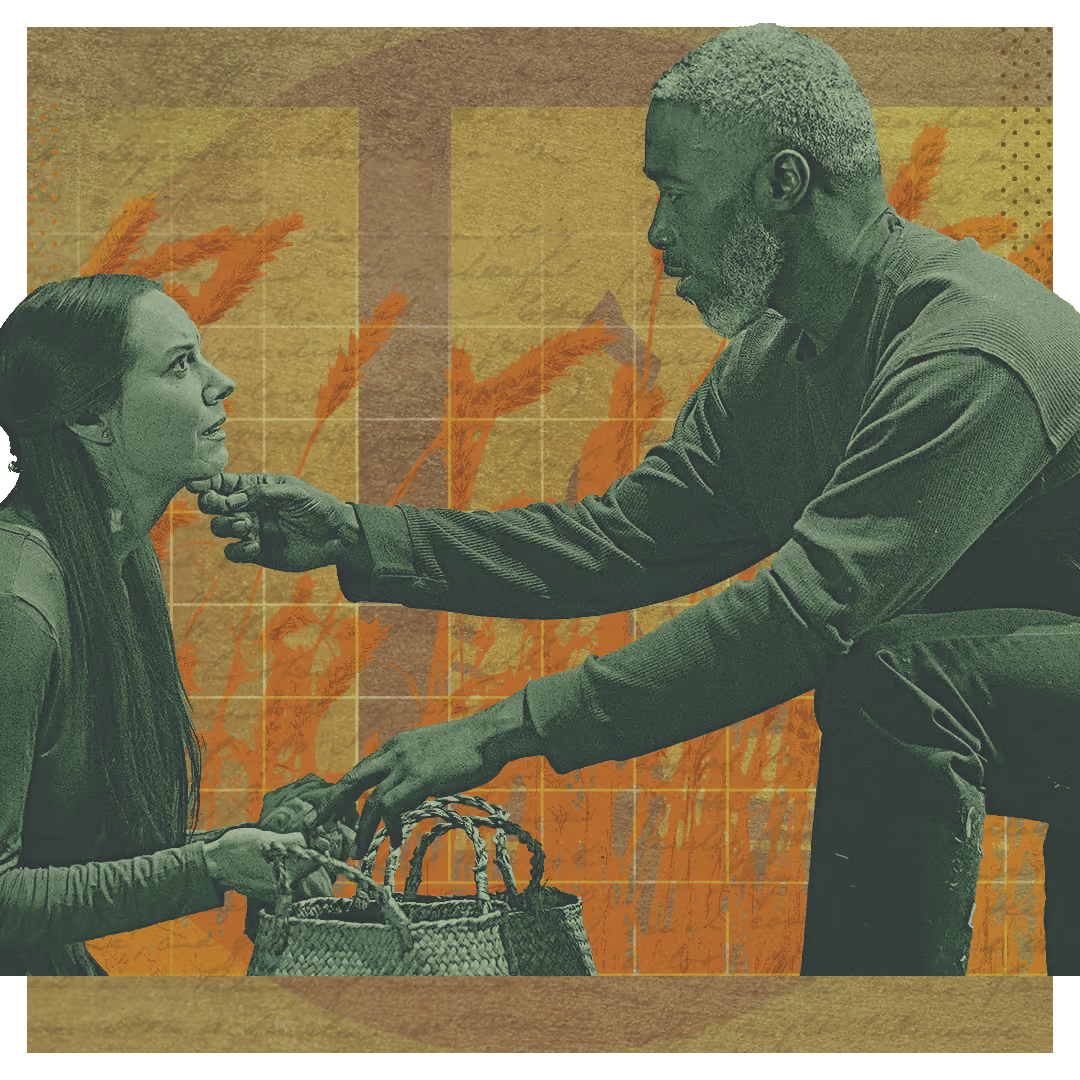
Intro: Welcome to the Spoken Gospel Podcast. Spoken Gospel is a nonprofit dedicated to the idea that every part of the Bible, Old Testament and New, is about Jesus. And this podcast is our experiment to publicly test that belief. Every episode, hosts David Bowden and Seth Stewart work through a Biblical text to see how it helps us see and savor Jesus. Let's jump in.
David: Well, welcome everyone to the Spoken Gospel podcast. Thank you for joining us. Seth, how you doing this morning?
Seth: I'm feeling great. Yeah, this is in the office.
David: You are, you are officially 100% moved to Oklahoma City again.
Seth: Again. Again.
David: And You are, you are in the Spoken Gospel offices because you have tested negative for coronavirus.
Seth: Yes, there were— I foolishly went to Florida.
David: You did.
Seth: And I had a scare and I'm fine. Yes.
David: So thank God for that.
Seth: Thank the Lord. Yes. I had to wear a mask for a long time. I couldn't be in the office when I thought I would. But here I am. You're here now. Never again do I have to record a podcast remotely.
David: Hallelujah.
Seth: I'm so excited.
David: I'm very excited.
Seth: It was not my favorite.
David: No, it was hard. Yeah, it was hard, especially because we spent the first year of the Spoken Gospel podcast doing it face to face.
Seth: Yeah.
David: And then when you moved, it was really hard to adapt to doing it.
Seth: Yeah. And then the whole world went on Zoom and then— Yeah.
David: And then you just didn't want to be on Zoom at all.
Seth: I didn't want to do that again.
David: Yeah. So it's good to have you here.
Seth: I'm excited. Permanently. Permanently. Indefinitely.
David: Indefinitely. Just as indefinite as the—
Seth: Imprisoned here.
David: As the length of coronavirus, you are here. I'm excited for people to listen to this 10 years from now and be like, "I remember that." I remember this. Anyway, last week we did an introduction to the Book of Ruth. And so now we're going to spend a little bit more time talking about it. I think you and I were both, after thinking through everything we talked about in Ruth, we were like, man, we covered a lot.
Seth: We covered a lot.
David: 84-verse book.
Seth: Yeah.
David: Is that right?
Seth: How many? 85.
David: 85-verse book.
Seth: 85 verses. Yeah. But I love studying shorter books because it allows me to think about them better. Like, I can't get— it's hard for me to get my head around Genesis.
David: Yes.
Seth: Or Joshua. Right. But it's like, oh, 4 chapters, 85 verses. I can understand this really well. I can just understand it a lot more deeply. So I think, yes, yes.
David: And so I think what we're going to do today is look at the first 2 chapters of Ruth, the first half of the book of Ruth, and try to pull out some things that we missed in the introduction and try to dig a little bit deeper. And really both of us, I think, came in this morning just being like, we just want to see and savor Jesus and the gospel today. And so we're going to try to do that with you guys.
Seth: Can I ask you a question that you're not prepared for?
David: Oh, always.
Seth: Why is it the Book of Ruth and not the Book of Boaz?
David: Yeah. Well, I mean, number one, I think narratively Ruth shows up first before Boaz.
Seth: Yeah. Like in the, in the, in the text, like in the Book of Ruth, she's one of the first characters mentioned.
David: I think Ruth is clearly the inside instigator of the, the faith, the kindness shown towards Naomi and the line of Elimelech. Even though the one who brings the kindness is Boaz.
Seth: Right, right.
David: It's funny how like, I mean, it would be like, it would be like me saying like, why is the book of Daniel called Daniel and not Yahweh?
Seth: Yeah, I guess that's right. What's funny, because I always like, I guess in Christian subculture, like there's so much like capital placed on Boaz. And even like kind of like funny Christian culture, like we're like, I'm just waiting for my Boaz. Like girls, but like, actually guys should be saying, I'm just waiting for my Ruth.
David: My Proverbs 31 woman.
Seth: My Proverbs 31 woman. Anyway, I was just like, there seems to be a lot more emphasis placed on Boaz's role, but I think that's just misplaced. Like there's like, I think Ruth, the women in the story are the primary actors. And especially in the time where there is no kings. The men are failing to do, to lead the people of Israel, we have faithful women doing what they've always, they've always been doing, right? Like the wise women leading the nation of Israel.
David: And so we'll see a big moment of Ruth's faithfulness. We'll see two big moments of Ruth's faithfulness in the, in these two chapters, one in the first chapter, one in the second. We'll get there. But we wanted to look at the opening of the book and kind of lean in a little bit more into how how this narrative is framed from the beginning to be riddled with sin and covenant breaking. And so the first one—
Seth: yeah, the days when the judges ruled. So this is back to Judges, terrible time. There was a famine in the land and a man of Bethlehem in Judah went to sojourn in the country of Moab, he and his wife and his two sons.
David: Right. So you have a— you have a statement of irony right at the beginning. So you have Bethlehem is this place where Elimelech and his family live. Bethlehem in Hebrew means house of bread.
Seth: Yes.
David: And so there is no bread in the house of bread.
Seth: Yes.
David: There's a famine in the house of bread. Is the— and so you're supposed to see this irony here and you're supposed to be set— you're supposed to have this category set up in your mind for that which should be full is empty.
Seth: Yes.
David: Which Naomi will pick up on.
Seth: And she'll like— she'll embody that herself. That's right. And she'll, she'll even say it. She's like, I went away full and came back empty. Yes.
David: Yeah. But yeah, and so I think it sets that up. The other thing, the fact that there's a famine is a big deal. God often used famine throughout the Old Testament as a punishment for, for his people. And clearly, if this is during the time of the judges and over and over again throughout the history of the judges, people did what was right in their own eyes and then God had to punish them. This famine is very likely a divine punishment toward the sin of Israel. And what— the way Elimelech leads his family in response to this is patently wrong.
Seth: Yeah.
David: Instead of staying in Israel and praying, repenting, trusting God to bring back the bread to the house of bread, yeah, he just leaves the Promised Land and he settles in Moab. Right.
Seth: Which is where he's not supposed to.
David: Exactly.
Seth: Yeah.
David: Like, God brought them out of Moab Why would you go back? And so not only does he abandon the Promised Land instead of repenting and waiting for God to provide, you know, which is like the Sabbath command. Yeah, he's going to Moab. And then instead of marrying his sons off to other people in the tribe of the— of Ephrathites.
Seth: How do you say it? The Ephrathites. The Ephrathites. They were the Ephrathites.
David: They were supposed to marry inside that clan. He instead marries his sons off to Moabites, which is also, again, which is also wrong.
Seth: Yeah, you're supposed to marry within your own tribe.
David: He's breaking covenant upon covenant.
Seth: Yeah.
David: But, but the means of his covenant breaking is this Moabite woman, Ruth.
Seth: Yes. And just to put a pin in the idea of the famine as judgment, famine is also— doesn't have to be a judgment of God. It does not. No. And in fact, many of the stories of Israel's founding are centered around famine.
David: Yes.
Seth: So think about Joseph and the Technicolor Dreamcoat and his father and all that whole story.
David: The very thing that drew— drove them to Egypt, right, was a famine.
Seth: Was a famine. And it's a foreign country where they have to go to receive food and they come back to their homeland. Well, actually, in that situation, they're exiled.
David: They're exiled from their home and try to get back to their homeland.
Seth: So really, even here in Ruth, you have a retelling of that, of the Exodus, or no, the Joseph story. The Joseph story. The Exodus and the book of Joshua coming back into the Promised Land. It's the whole story of Israel bound up in like one verse, two verses.
David: I'm tracking that, but you might want to unpack that.
Seth: Okay. What I mean is, so Egypt, or there was a famine in Bethlehem.
David: There was a famine in the Promised Land where Jacob and his family were, including the 12 tribes of Israel, Joseph included.
Seth: Yes. And in order to escape the famine, they had to go to a foreign country Egypt to get food and bring it back.
David: So that, that, that's mapping on to this part of Ruth where there's a famine in Israel. And so Elimelech leaves the Promised Land to go find bread in a foreign country.
Seth: Yes.
David: Okay, I'm tracking.
Seth: Now the entire family of Joseph, because the famine continued, ended up moving to Egypt, a foreign land, and then becoming enslaved.
David: A bunch of bad things happened.
Seth: A bunch of bad things, which is what happens to Elimelech and his family. Yes.
David: Everyone dies and they're Wives are childless.
Seth: Yes. Okay. And then they move out of Egypt into the Promised Land by God's miraculous provision. And so we really have a retelling of the story of Israel, which is then, I guess, the rest of the book of Ruth.
David: Yes. Their reentry into the Promised Land and God's provision through things like Boaz and Ruth's faithfulness.
Seth: That's exactly right. Wow.
David: So it's like Ruth is an 85-verse version of the first 6 books of the Bible. Yes. Is that what you're telling me?
Seth: That's what I'm telling you.
David: So do I just skip those first? No.
Seth: No. I mean, yeah. I mean, well, it does make sense then. Like, so, so you have like Genesis, Exodus, Leviticus, Numbers, Deuteronomy, Joshua, Judges, and then Ruth retells it, retells the whole story.
David: Interesting.
Seth: So yeah.
David: Wow.
Seth: There you go.
David: That's cool.
Seth: Yeah, I love that.
David: I love that. And so what I wanted to look at here then was we're talking about the fact that Elimelech and his family have severely broken the covenant of God. We are supposed to see them as consummate covenant breakers during a period of consummate covenant breaking, right? They are the worst of the worst.
Seth: Yeah. And you see that in the consummate consequences in Elimelech's family.
David: Exactly right.
Seth: So all the— both sons die, both— all three daughters— the wife, the mother, and both daughters are widowed.
David: Yep.
Seth: There is no relatives to redeem them. They're in a foreign land in the middle of a famine, right?
David: Like, yes. And so I think we need to see here is one thing we need to see here is the judgment of God against covenant breaking, which we just know from reading the first six books of the Bible is true. Like, like God made a covenant with his people and he said, if you obey it, you'll be blessed. If you disobey it, you'll be cursed. And they are experiencing the curses of covenant breaking in the, in the land of Moab. Yeah. But then I think the amazing beauty of this book is the multifaceted ways that God superintends all the circumstances of Ruth's goings-on, you know, in Bethlehem in order to save, provide for, redeem, and reestablish a family that had broken his covenant. Right.
Seth: That's, that's where the story is going. So the first 5 verses, you just get curse. Yes. This is a picture of the curse. And then you see breaking in in verse 6, the path forward. And it's not— and it doesn't come from who you expect.
David: Oh, right.
Seth: It comes from Ruth, a Moabite, somebody from the land that should have been cursed as well.
David: Yeah. If anything, you would expect if this was going to be a retelling of the first part of the Bible, you'd be expecting like a Moses figure.
Seth: Yes.
David: Right. Who was an Israelite who rose to power and was coming in to save the people.
Seth: You'd expect Elimelech's brother to come in and rescue Naomi, marry her. Like the kinsman redeemer laws.
David: Yes.
Seth: Like his brother would come in or there would be another son The— not in all the patriarchal narratives and the stories of Abraham, Isaac, and Jacob.
David: Oh, right.
Seth: There's always another son. There's always another family member, but here there's nothing. There's no one to pick up where the, the other narratives in scripture have picked up from. So here, who can do it if the father's dead, if the brothers are dead, if Israel is in shambles, if Israel is faithless? Where will God find faithful people? Where will, where will rescue come from? Right. Moab. Yeah. Moab.
David: And another, like, another question I'm asking as you're doing all that is like, who cares? It's not all of Israel that's out here stranded in Moab. It's 3 people.
Seth: Yeah.
David: And it's like, yeah, for all intents and purposes, if you're reading this book without any ulterior motives, it's like the, the, the future of Israel isn't hanging in the balance here. We'll learn that it actually is.
Seth: Yeah.
David: But it's like God is going to show extreme covenant love to just 3 people, 2 people, 1 woman, you know, like, it's just part of the reason why Ruth is such an amazing story.
Seth: It is. It's just a really personal, really sweet, kind of an amazing story. It's just a great story. And so I guess from there, how you you hinted at it already. God's going to make himself— make Israel a nation again, like, and he's going to do that through a foreigner, through a Moabite, right? And so what happens is Naomi basically says, "I'm going to go back home." But apparently Bethlehem no longer is in famine. There's actually bread in the house of bread again. Yes. And she decides to go back home, and apparently she owns land there. Now her two daughters-in-law have a choice. They could stay in Moab where they probably have some sort of family, right? Or they could go with her.
David: Well, actually, she doesn't even give them that option.
Seth: What do you mean?
David: Naomi doesn't give them that option. She says, go back to your own.
Seth: Yeah.
David: So the option is there isn't one. It's go back to Moab. It's, it's Ruth's. And we'll see her do this again and again through the book. It's Ruth's wisdom to see an opportunity to obey and follow Yahweh when there seems to be none.
Seth: Yeah, in verse 8, "But Naomi said to her two daughters-in-law, 'Go return each of you to her mother's house.'" Right. Pause right there. It is not father's house.
David: Oh, right. It is still a matriarchal narrative.
Seth: It is a matriarchal narrative. Yeah. "May the Lord deal kindly with you as you have dealt with the dead and with me." So she is saying, "Go back home." Go back home. You have honored—
David: Can't you see you are not welcome anymore? It is like a—
Seth: What is that?
David: It is like a white fang. Like White Fang. And then Harry and the Hendersons did it too.
Seth: I have never heard of White Fang or—
David: it's like a classic, like classic, like where it's like you try to get rid of this animal that loves you because it'd be better for them to be back in the wild.
Seth: Is White Fang a dog? Yeah.
David: Oh, and it's like, get out of here! Can't you see? I don't want you anymore! But it's like tearing them up inside to say it.
Seth: Oh, like when you shoot Old Yeller? Kind of, yeah, but not the same.
David: Anyway, that's kind of what's happening.
Seth: And she says, may the Lord deal kindly with you as you have dealt with the dead and with me. Essentially, she's saying, you've honored your husband's memory, you've honored your father-in-law's memory. Now go back home and may the Lord deal kindly. That word deal kindly is an important word in the book of Ruth. It's the word hesed, which we don't have a good English translation for.
David: Covenant faithfulness is my favorite translation.
Seth: I like the term loyalty or like longstanding loyalty or like long-suffering loyalty or steadfast love.
David: I think love is good.
Seth: Uh, in the Psalms it translates steadfast love. I think the ESV does steadfast love a Yeah, I like loyalty because it kind of like love kind of feels fuzzy sometimes.
David: Yes.
Seth: Loyalty is like, um, I have really concrete images in my mind.
David: And kindness is like, seems too weak.
Seth: Kindness is a weird word that is in my translation of this Bible, of this Bible, of this verse. But yeah, she says, may the Lord have hesed on you. May the Lord be loyal to you, a Moabite, as you go back home.
David: She says all your honor that you should be showing to me and your family is, is satisfied. Go back home to Moab, and may God's covenant faithfulness extend to you. Yeah, what?
Seth: That is weird because that— she should— that shouldn't be a thing. No, I mean, there are hints throughout Genesis that the covenant of God would go to all nations. Like, that's what he promises Abraham, that through you all the families of the earth shall be blessed.
David: Which maybe that's what we should read into.
Seth: Yeah, so Naomi acting like a daughter of Abraham as one of the founding mothers fathers of Israel is blessing a—
David: Oh, yes, she's blessing, she's fulfilling Genesis 12:3, that she would be— that Abraham would be a blessing to all nations. She is speaking a blessing of Yahweh's covenant faithfulness to— yes, a Gentile, to one of the nations.
Seth: Okay.
David: Yeah. Which is then what happens.
Seth: It's exactly what happens in the story, but not because she goes, because— but because Ruth decides to stay. Yeah. Orpah Naomi's— Naomi's other daughter-in-law goes back home, but Ruth decides to stay. And we talked about this in our introductory podcast, but she essentially repeats the covenant. Yes. That God makes with Israel on Mount Sinai. And she says, your people shall be my people, your God shall be my God. And when I— when you— where you die, I will die. And that's where I'll be buried. Yep. She, she kind of rescinds her Moabite identity.
David: Yes.
Seth: And assumes the identity of a Yahweh fearer. And that is also an example of hesed love.
David: Yes.
Seth: Loyalty to the Lord over loyalty to her own nation and to her previous gods that she would have been more prone to worship, like, right, natively worshiped in Moab. She's rejecting those in favor of worshiping and remaining loyal to Yahweh. Yeah.
David: I mean, it's beautiful. Okay, let's circle around now with the things we've kind of looked at. 3 things we've looked at. The sin that frames the book. We've looked at the idea of the emptiness of Bethlehem. And then we've looked at the faith of Ruth.
Seth: Okay.
David: And let's just like talk about how to enjoy Jesus in these passages, because like, I am like amazed at the grace and hesed, the covenant faithfulness that God shows to this family of Elimelech.
Seth: Yeah. And before any covenant faithfulness. It's like we don't have a marriage yet, we don't have food yet in the narrative, we don't have any of— we don't have like the marriage and the son that we have at the end of chapter 4, right? But already in chapter 1, we— you're right, we do see God being faithful to barren, childless, widowed Naomi.
David: And he does that by stirring up faith in Ruth. Yes, like by providing someone for Naomi, who will be her intercessor.
Seth: Yeah.
David: In the future, like, God turns the heart of Ruth toward himself in order to do something kind to Naomi.
Seth: Yeah.
David: I just think that's amazing. And we'll see it bear out. I think what— what the reason why I want to talk about it now is I feel like when we get deeper into the book, yeah, we'll be able to talk about God's love and hesed and everything.
Seth: Let's finish out then the chapter because we only have 5 more chapters.
David: But what I'm saying is like, I just want to do it with the background. Okay.
Seth: Okay.
David: Of the extreme sin of Elimelech.
Seth: Okay.
David: Because like, it's like, it's a classic thing that light is always brighter whenever it's shown in darkness.
Seth: Yeah.
David: And it's like there's this big black spot on the narrative of Ruth.
Seth: Yeah.
David: Which is the sin of Elimelech.
Seth: Yeah.
David: And yet God is going to show amazing covenant faithfulness.
Seth: And I think like, like it's easy for us to just dismiss Naomi or Ruth's loyalty here.
David: Oh yes.
Seth: It's like, well, God is— God as King is dead. Elimelech is dead. This is a sinful family and all they have is a Moabite. Yeah. Like all they have is a faithful Moabite. Like that's not a lot to go on. Is that really enough hope for the situation?
David: Is God really providing enough covenant faithfulness?
Seth: Right. And I mean, even Naomi says it, don't call me Naomi anymore. Call me bitter because I went away full, but now I've come back empty. Empty. And she's not even recognizing the provision God has given her in Ruth. She dismisses Ruth as a possible means for her redemption.
David: Right.
Seth: Like, she just sees her as like, well, okay, fine, you can come with me.
David: And she—
Seth: yeah.
David: And she even says like, well, what hope can you have? What hope can you give me? Even if I had a husband today and got pregnant today, right, and gave birth 9 months from now, are you going to wait another 18 years until they're of age and get married?
Seth: Yeah.
David: Like she said, no, there's no hope.
Seth: Yeah. She says it's exceedingly bitter for me, for your sake, that the hand of the Lord has gone out against me. Yeah. She's like, she, all she can see in her circumstances is the Lord being against her.
David: Yes. And probably for good reason.
Seth: For good reason. Her husband left Moab, like according to the covenant, she had no reason to believe that God would be for her. Right.
David: God is keeping the covenant by having his hand against her. Yes, because he said, like, if you disobey, I will curse you. So God is showing covenant faithfulness to Naomi by keeping his covenant to curse her. Yet he will— like, it's like, it's like his name Yahweh that he proclaims to Moses on the mountain.
Seth: I will be with you.
David: That like, yes, he by no means pardons the guilty, but he will forgive iniquity. And it's like, wait, how can you be both? It's because God can uphold both sides of the covenant at the same time.
Seth: Interesting.
David: Like, it's amazing how he can do that.
Seth: That's what he's doing.
David: So he's doing— his hand is against Naomi, but it's with her through Ruth.
Seth: Fascinating.
David: Yeah.
Seth: Okay.
David: Which is like a gorgeous way to see Jesus as like, like he came into our sin. We were covenant breakers like Elimelech. We're all covenant breakers like Elimelech. That has brought the punishment. The hand of God has come against us and we are dead.
Seth: Right. Like Elimelech was both physically dead and a covenant breaker because he leaves the people of God. We break the people of God and we are spiritually dead.
David: Yes.
Seth: That's the way Paul describes people who are covenant breakers. Yes. Spiritually dead. Yeah.
David: We're spiritually—
Seth: we're like Elimelech.
David: Yes. And yet it is to us who have gone away from God, broken his covenant, are dead. That God comes and provides covenant love and faithfulness to us by giving us someone meek and meager that we would not expect to bring about the redemption that we long for and need.
Seth: A Jewish carpenter.
David: A Jewish carpenter through Jesus.
Seth: Yeah. Like Moabite Ruth is not an impressive figure. Yep. A Nazarene carpenter.
David: Yeah.
Seth: Is not an impressive figure on their own. Like, I mean, what good can come from Nazareth? Like, you're supposed to see, like, ignominious. He was born in a stable. His mother was— he didn't— his mother have an affair? Did he not have an affair? Sketchy. What good can come from Nazareth? Like, there is a humility in the birth of Jesus and a humility in Ruth. We're like, no good can come from people like this.
David: And yet God loves to show grace.
Seth: That's where his presence will reside, because his strength is made perfect in weakness.
David: And so, like, this is a great example of God using a marginalized, weak person to do one of the greatest things he's ever done in history, which is to provide for the lineage of his people that led to David, that led to Jesus, that led to our salvation, that led to the kingdom of God returning.
Seth: Even when— like, what's crazy is it's even when we're rightfully being judged for it. I mean, Naomi says it, why call me Naomi? What does Naomi mean?
David: I'll look it up.
Seth: I think it means like, I am— isn't it mean I'm blessed? Does it mean like—
David: I don't remember.
Seth: I meant to look this up before we, uh, because she compares like bitter and bitter and Naomi and Does it mean full?
David: I can't remember.
Seth: We will find out.
David: We'll find out while Seth keeps waxing eloquently.
Seth: I will wax elegantly— elegantly?
David: Eloquent-ly.
Seth: Eloquent-ly. She says, why call me Naomi when the Lord has testified against me and the Almighty has brought calamity upon me? She sees the situation as her life as the right judgment for her disobedience. The Lord has testified He has seen the evidence and he is testifying. He is giving a verdict of covenant breaker to Naomi.
David: To be lovely, to be pleasant, to be delightful.
Seth: So it's like, Naomi, don't call me lovely.
David: Don't call me lovely or pleasant or delightful, beautiful.
Seth: Call me bitter.
David: Call me bitter.
Seth: Because I have done wrong and I am under the Lord's curse. And it is to that person that God also provides rescue. Yeah. Humble, unrecognized, dismissed rescue. Yeah. And that's Jesus. Yeah.
David: I just think it's so good. I feel like that's probably really good news for a number of people listening where it's just like, God's hands against me. Um, I've only messed up in my whole life and man, I've, I've, I've borne the punishment for it. My, my, my job fell apart. My marriage fell apart. My family fell apart. I have had trouble conceiving. I have financial problems, I have health issues, whatever it is. It always feels like at every turn God's hand is against me. And the good news of the Book of Ruth is that even when it looks like God's hand is against you, even when it looks like the whole world is against you, God wants to and is working for you to bring you back to himself through Jesus. And it's like all he asks you to do is what Ruth did.
Seth: Yeah.
David: Which is just name him as your God in faith.
Seth: Yeah. Like, there's— it's— it's— there's a temptation when we're suffering, there's a temptation where we're lamenting to only focus on the bad things, to only name and count the bad things. I have no son, I have no husband, all I've got is a daughter-in-law. Like, and to discount the humble things that the Lord has given you. Oh, like, I mean, like, you know, any— lots of people have suffered. It's like, I'm still married. My kids still love me. The Lord has not made my mortgage go away. I still have a house. Like, there's— God has provided for us. And a lot of— so here it's like he's provided salvation. That's like the big thing that the Lord provides, the thing, the only thing that he needs to provide. But it should also make us recognize the Lord has provided far more than salvation. And we can't— we should be recognizing that God is good to us. He still has— I mean, Naomi still has land. Yep. She still has a hometown to go back to. There's still a redeemer out there who can redeem her family, but she's not counting these things as significant. She's only counting the curse. So I think for like those of us who are suffering, we should be looking not only to the humble ways in which the Lord provides for us. We should not discount the humble things the Lord has given us, whether that's Jesus the Nazarene carpenter, or the fact that we still have a home and we still have groceries and that we still have a place to go and that we still have family that can provide for us. It should bring us to be thankful, not bitter, right?
David: Because after all, to segue into Bethlehem, there is an irony here that Naomi is returning to Bethlehem.
Seth: Yeah.
David: Which is the house of bread. And she's saying, I'm going to a house of bread empty and there's nothing but emptiness waiting for me there.
Seth: Yeah.
David: And it's like so wrong to be like, I'm really hungry and I'm going to a house full of bread, but I'll remain empty when I'm there. It's like, no, you won't. You're going to a place of provision. Like, in the times of our biggest famine, in the times of your life's biggest famine, hunger, and need, there is— you are going to the house of bread. And like, we're going to find out very soon that, that Ruth is going there and she's going to start reaping barley to make bread. And like, in a very real way, her needs are going to be met. But ultimately, the house of bread, Bethlehem, is the place where the Messiah was promised to be born.
Seth: Yeah.
David: And like, that's where Jesus is born. Jesus is born in the house of bread.
Seth: He's— this is where Jesus is born.
David: This is where Jesus was born, is in Bethlehem, the house of bread. He is the bread of life that provides during our world's famines. Like, he comes and brings the most provision, the most life, the most kindness to us whenever we're the hungriest, neediest, loneliness, even whenever we feel like God's hand is against us, there is a son who has been born in the house of bread who is the bread of life itself.
Seth: Can I get personal for a second?
David: Sure.
Seth: So as you know, we just— so we used to live in Oklahoma City and then we moved to Kansas City. We were there in Kansas City for a year and then we just moved back to Oklahoma City. And so that's a lot of transition.
David: Yeah.
Seth: And for my wife, I actually prayed Ruth chapter 1 over my wife a couple different times. Because in some ways Naomi is receiving the curse for her sin. In a lot of ways, she is the victim of circumstance.
David: Yeah, it was Elimelech who is the one who moved out to Moab.
Seth: She is probably not personally responsible for the famine. Like, you know, she did not control the fact that her sons died.
David: Right.
Seth: It is not her fault that her daughters are barren or infertile. You know, like—
David: Yep, right.
Seth: She is the victim of circumstance.
David: Yeah, in a big way.
Seth: And, and because her husband was the one schlepping her around between, between countries. Like she is in the position that she's in. So my wife like really identified with the character of Naomi.
David: Did you identify with the character of Elimelech?
Seth: I was like, I'm like moving back and forth. Is this the will of God? Is this not? I don't know. Am I being obedient or being selfish? Like, and for her, I hope as I prayed for her, it was like, man, the Lord, in our movings and in the ways that we can't control our emotional state, in the way that we feel bitter and we feel empty, the Lord does provide fullness in places that we feel empty. Yeah, it's a really basic promise. The Lord provides fullness when we feel empty and in the very places we think are empty, in the place that we think that are empty, the Lord historically always provides fullness.
David: Naomi was returning to the place of famine. Right? Bethlehem is where she experienced famine.
Seth: Yeah.
David: She's going back to a piece of land that will not be hers for much longer because there's a debt against it and the lineage of her— yeah, family won't live on. All that's there for her is disappointment.
Seth: Yeah.
David: And loss, she thinks. And yet it's in that very place that God provided plenty for her.
Seth: It's like when we go to the empty tomb, we are filled with the life of Jesus. Mm.
David: So one thing we didn't say about chapter 1, uh, which is really interesting, is in, I think, what, verse 6?
Seth: Verse 6. It's one of the two times the Lord is actually mentioned. Uh, the Lord as in, like, the narrator tells us the Lord does something.
David: Oh, people invoke his name, right? But this is one of the only times where it's said And then Yahweh did this.
Seth: Yes. Okay. And it's to give food where there was no food. Verse 6, for Naomi had heard while she was in the fields of Moab, the Lord had visited his people and given them food. It's so ironic.
David: She, she leaves the house of bread to go find bread elsewhere. And then while she's gone, God brings bread back to Bethlehem.
Seth: Yes.
David: Like, and she hears about it while she's in the fields of Moab.
Seth: Yes.
David: Trying to get bread. It's just like it's— I'm reminded of like, you know, when you're like in a traffic jam on the highway.
Seth: Yeah.
David: And you see the other line going so fast over there, hop in and it slows down. And then the line you were in goes fast.
Seth: And it's the worst situation. That's what's happening. That's exactly—
David: so God's filling up the breadbasket of Bethlehem again.
Seth: And that's important for chapter 2 because Ruth's about to go glean in a field.
David: Yes.
Seth: And she's about to get a whole bunch of food.
David: Okay. So they go back, Ruth and Naomi go back to Israel and Bethlehem, the beginning of the barley harvest, at the beginning of the barley harvest.
Seth: Right.
David: And so it is Ruth that brings up the idea that she should go gleaning, right?
Seth: Yeah, so apparently, so Ruth, verse 2, "And Ruth the Moabite said to Naomi, 'Let me go to the field and glean among the ears of grain after him in whose sight I shall find favor.'" So one thing, Ruth apparently knew the Jewish law well enough to know that there was provision in the Jewish law for foreigners and poor people to go and glean at people's fields.
David: And what does gleaning mean?
Seth: Gleaning means, so farmers were not supposed to to harvest the edges of their field and so that poor people or foreigners could come by and gather what was left over on the edges of the field, right? And they can make some bread for themselves. It was a way to provide for the poor. Yes.
David: And isn't it also like, as you're like picking up heads of wheat or whatever and putting it in a basket, if one falls to the ground— yeah, don't pick it up.
Seth: Yes. So you were supposed— so as they're like harvesting the field, we have like these huge combine harvesters to get everything, but like imagine— but even those will leave something, will leave a whole bunch of stuff behind.
David: Yep.
Seth: So anybody who needed to could come behind the harvesters and like gather what was that, whatever was on the ground. Yeah.
David: It would be like, uh, you know how like the keep the change thing that's on like your automatic bank account. Yeah. It's like every time you buy a cup of coffee for $2.75, 25 cents, it just rounds up to $3 and goes into your savings account. It'd be like that 25 cents just goes into a jar that someone, that a poor person just come and grab.
Seth: Yes. That's exactly right.
David: And Ruth, interesting business idea, by the way, knows about this. Be a good nonprofit idea.
Seth: Anyway, that would be great. It's 'cause there's a whole bunch of savings. Yeah. They just do it, but for charity.
David: Anyway, all right, moving on.
Seth: Moving on. So Ruth, it's important. She's being faithful. Yeah, she's read the law, she knows the law, and then she's initiating on her own provision for Naomi. Yes, she's acting as Naomi's redeemer. She's filling up Naomi's emptiness by her own initiative. She's being a wise and worthy woman like the Proverbs 31 woman.
David: Okay, so you're, you're bringing out two things there, right? You're saying one, she's obeying the law.
Seth: She's read the law and she's obeyed it.
David: Right. So she knows the law and is obeying it by taking her— the provision that's been given her in the law. But then two, you're saying that she is being a provider for Naomi?
Seth: Yes.
David: Because Naomi's not the one going out there and gleaning.
Seth: I mean, she's probably old. She's old. Yeah. It's like she probably can't.
David: Or Ruth is like performing some of the provision duties that would have fallen maybe to a husband or something like that.
Seth: That's exactly right.
David: She is being that for Naomi.
Seth: Yes.
David: Okay, cool.
Seth: Yep. And she happens upon the field that belongs to Boaz.
David: Happens upon.
Seth: Happens upon coincidentally. Uh, and he was of the clan of Elimelech. That's the second time we've heard Elimelech's name. So it's a relative of Elimelech, meaning potentially redeemer quality. And behold, Boaz came from Bethlehem, and he said to the reapers, the Lord be with you. And they answered, the Lord bless you. Yeah.
David: We looked this up right before going live here. We were like, I wonder what the Hebrew says there. And the funny thing is it just says the Lord. It just says Yahweh. Yahweh. Which we were like, oh, that's funny. It must be just like an old Hebrew greeting to just walk up to somebody and say Yahweh, which it would have been in a different tense.
Seth: But it's like, it means I am, I am with you. May he be with you. And so I think it's important. Like the, so Boaz, the first words on his lips, the redeemer of the story. The first words on his lips are the name of the Lord that redeems. I am. And ironically, Naomi says the Lord has left her. Oh, the first words that—
David: is the Lord is with you.
Seth: The Lord is with you.
David: Oh, that's so good. Uh, in the very— which is the point we just made. In the very times when you think God has left you, he is with you. When you think that he is not, I am. Yeah, that's good.
Seth: That's really good. That's cool.
David: And then Boaz.
Seth: Notices— no, Ruth, sorry, which is just—
David: is like— it is like— it just reminds of the resurrection because it's like they thought Jesus was dead. They thought all their hopes were dashed, and it was through his death.
Seth: I'm with you.
David: And he comes back. I'm with you always, always, even to the end of the age. It's just like in the very place of death, he brings life. He's with us in the very place we thought he had abandoned us. Anyway, so good.
Seth: It's so good. And so Boaz notices Ruth gleaning the field, and he asks, who's this woman? And the servants say she's a young Moabite woman who actually asked them to gather among the sheaves rather than following behind them.
David: Right.
Seth: So what Ruth is asking for is special favor or special privilege. She just doesn't want to go to the edges of the field. She doesn't want to just come by behind the harvesters and pick up the scraps. She actually wants to go among the sheaves. So what they would do is they'd gather a whole bunch of barley and put it in a big stack and they'd place it like as they're going. And so, you know, when you put down a big stack of loose leaves, there's a lot more leaves around the stack of leaves, right? So she's saying, well, can I go just pick up what you actually haven't stacked, knowing there's more there? Because, you know, so it's beyond the law. She's asking for special favor.
David: I wonder if this— I like, I wonder, reading this, you know, when it was written, I wonder if this is like her stumbling into a cultural faux pas.
Seth: Oh, it could be.
David: Where she's just like, I've never gleaned before. Do I do it like this?
Seth: Am I doing it wrong, guys?
David: Or is she like faithfully. I think the grain of the book would be to read it like she's faithfully stepping out because she said, let me go and glean among he who I might find favor. And she's like, is there favor here for me?
Seth: Right?
David: Let me step out beyond the bounds of the law in faith. And then she finds it.
Seth: I think you're supposed to see her as being bold. But yeah, it's funny.
David: It's funny. So is it— do I do it here?
Seth: Do I do it?
David: You're supposed to do that over there.
Seth: And what's funny is the servant obviously didn't give her permission. Because the servant shouldn't, because Boaz is not his field. So once Boaz asks, the servant communicates the request to Boaz, and then Boaz says, listen, my daughter, glean among the sheaves, but also— but not even— not even glean among the sheaves— gather among my young women.
David: Yes.
Seth: So what I guess that means is that she is being counted as one of his workers. Workers.
David: She's— yeah, except what she gathers, she's not taking into Boaz's house, right? He says, just go harvest, go harvest and be among other women so you'll be protected.
Seth: Yeah.
David: And you'll be safe there. You can gather as much as you want.
Seth: Can drink water from my well over there.
David: Yep. And then they even sit down and have a picnic at one point and brings her actually already made bread and wine.
Seth: Yep.
David: And they just have a picnic. And then not only that, not only does she have the— all this grain she's harvested, He— she then uses Boaz's threshing floor and prepares the grain and brings flour back to— yeah, back to her home.
Seth: Yes.
David: So it's like you could imagine, like, Naomi expecting her to come back with a few handfuls of raw grain. And instead she comes home with a sack full of flour. It's like— and then no wonder when she comes back, Naomi's like, where did you reap today? What is going on?
Seth: Uh, Naomi falls on her face. Boaz does all this for her.
David: Oh, Ruth.
Seth: Ruth, sorry. And she says, why have I found favor in your eyes that you should take notice of me since I am a foreigner? So one, that's the question she should be asking about God. Exactly right. Why is God showing favor to a foreigner? Why is a redeemer— why would the redeemer find favor among a foreigner? Why would she treat a foreigner this way? Why would you take notice of me? And then Boaz says, All that you've done for your mother-in-law since the death of your husband was fully told to me, how you left your father, left your mother, left your native land, and came to people that you did not know. And he says, because of your faithfulness, the Lord— may the Lord repay you for what you have done, and a full reward be given to you by the Lord under whose wings you've come to take refuge.
David: There's so much here. Okay, first thing I realized just now that I've never realized before is he is repeating Genesis 12.
Seth: What?
David: Yes, he's repeating Genesis 12. God says to Abraham, go from this land, from your father, from your household, to a land you do not know that I will show you, and there you will be a blessing to all nations. Like, he's repeating Genesis 12 to her. He's like, you have done what our forefather Abraham did.
Seth: This is a matriarchal narrative. This— she is the founding mother of Israel. Yes.
David: Blown away by that.
Seth: So that's awesome. That's awesome.
David: Oh my goodness.
Seth: Oh, that's crazy. Okay. And well, I don't know.
David: But okay, so that's just amazing. So he's like, you, you have shown the faith.
Seth: You've shown covenant faithfulness.
David: You've shown the covenant faithfulness that our father Abraham showed to God. And I recognize that. And then he names what was the content of her faith. And I think this is so important. First of all, yeah, this is what you've done. You have taken refuge under the shelter of Yahweh's wings. That is what you've done by coming into Israel, by coming into the house of bread, by leaving behind Moab and its gods and its provision and coming home into a place you did not know. What you've done is you have put your faith in Yahweh, your trust, your allegiance in Yahweh. And that's why I'm giving you this blessing. Yeah, is because of your faith. Yeah, which is like, that's the gospel. Like, what does God require of us? Like, to put our trust, our allegiance, our faith in this family that we don't actually belong to. And, and when we do that, he gives us more than what even the law promised.
Seth: Like, yeah, he lavishes his grace and kindness on us. Yes.
David: Yeah, which I just love that idea of like whatever you think the blessings of being a Christian are, right? Like, lay it out and lay out the biggest version you want, you know? Like, okay, like, it's, it's, it's freedom from sin, and it's escape from condemnation, and it's life with God, and it's new heaven, new earth, and it's sanctification, and it's the family of God here on earth, and, you know, the church and all these things, the presence of the Holy Spirit, the gifts of the Holy Spirit, like make as long of a list as you want. When we finally see Jesus face to face, those will be like— those blessings which are so good will be like gleaning on the edges of a field when God wants to invite us into his home for a picnic. Like, it will be so much better. Like, God will be Boaz to our Ruth, you know?
Seth: Right.
David: I just love that idea that like my like when I read the Bible, just like Ruth did when she read the law, I'm like, okay, so if I go and like, I'm going to go and glean, I'm going to get this blessing. And God's like, yes, you will. But that's the outskirts of my home. And I'm bringing you in here. Here's a well here. Like harvest here. Come into my threshing floor. Here's some wine. Sit down and have a picnic with me. Uh, let me tell you that you're blessed. Like, oh, it's beautiful.
Seth: I'm going to have to just drop it. Ephesians 1.
David: Do it.
Seth: Is basically in Jesus.
David: Yes.
Seth: We have redemption through his blood. Yeah. Like Boaz provides redemption for Esther or Ruth and Naomi. The forgiveness of our trespasses. Like Naomi is forgiven for leaving, um, the promised land, the promised land. Yeah. But coming back according to the riches of his grace, which he has lavished upon us. This is what Boaz does through his riches. He lavishes generosity. Generosity on Ruth. Uh, in all wisdom and insight, we're told that Ruth is acting according to the law and is a worthy woman, like Proverbs 31 tells us. She's the wise and worthy woman. He's lavishing— and Boaz is being wise as well, obeying the law and lavishing all this honor. In all wisdom and insight, making known to us the mystery of God's will according to his purpose, which he has set forth in Christ, which is why Ruth is the great-grandmother of David, who is the great-grandson— or great-grandfather of Jesus. The mystery of Jesus's will is being found in the book of Ruth so that the fullness of time to unite all things in heaven and on earth in Christ.
David: Yes, it's so good.
Seth: So good.
David: Yeah. So, uh, do me a favor real quick and just read that verse Just straight through then? Like, and what's the reference?
Seth: Ephesians 1:7-10.
David: Okay, read it.
Seth: In Jesus we have redemption through his blood, the forgiveness of our trespasses, according to the riches of his grace, which he has lavished upon us in all wisdom and insight, making known to us the mystery of his will according to his purpose, which he set forth in Christ as a plan for the fullness of time, to unite all things in him him, things in heaven and things on earth.
David: Yeah, that is a gospel synopsis of the Book of Ruth.
Seth: Yes.
David: Yeah, I love that. We'll probably quote that again in the next episode. It's so good. Okay, super cool. And I just also like, let's talk about what it means to take shelter under the shadow of Yahweh's wings like that. And like, I don't know, I just, I think it's such a beautiful picture of faith.
Seth: It'll be brought up again. It will be.
David: But this is the first time it's brought up. And, and it's, it's this image that is used throughout the Old Testament of God as having these big protective wings like a mother hen, you know, who whenever there's a storm or whenever her chicks need warmth, like she just—
Seth: from the Psalms. Yeah.
David: She just wraps her chicks up under her wings and they're safe there. Like, it's kind of like you have to go through me or, you know, you're going to have to go through Mama Hen to get to baby chick. And I just think that's such a beautiful picture of faith. You know, like, what does it mean to have faith in God?
Seth: You know, it means like to be protected, to be protected by him, to come under him for shelter and protection, and like trust that by being in his home and his land, in his place, yeah, you'll find all that you need.
David: Yes.
Seth: By trusting in the things that he says to trust in, yes, will actually be enough for us.
David: Which is exactly the opposite of what Elimelech did at the beginning of this book. He left the house of bread to go find bread elsewhere during a famine, only to find out out that God had provided for Israel, like, soon after. And it's like Ruth is unworking the sin of her inherited family by showing faith in the very ways that Elimelech didn't, by simply trusting that Yahweh would be a good provider, which is what she does. She goes to this field, steps out in faith, and boldly tries to find favor by gleaning.
Seth: Yeah.
David: And God provides. He meets her. Yeah.
Seth: In the house. And let's not undersell, though, how trusting in the Lord's provision is actually incredibly difficult.
David: Yeah.
Seth: Leaving your homeland.
David: Yep.
Seth: Leaving your father, leaving your mother, leaving everything you know and going to a place that's foreign to you.
David: Why does Jesus say, like, he who, he who has given up mother or father or lands or homes, right? Like, will not—
Seth: like, you're not willing to give those things up, you're not worthy of me.
David: Oh, yeah, I'm quoting two different verses.
Seth: Yeah. Yes.
David: But he does this multiple times. If you don't hate your mother, hate your father, then you're not worthy of me. But there's a blessing, right? He who has not left those things— or he who does leave those things will be given a hundredfold here in this present day.
Seth: Having faith like Ruth is actually really hard.
David: Yes.
Seth: Trusting God to save you is actually really costly, right? And so I think we— maybe me personally can lose that. It's like, just have faith, isn't that amazing? Yeah, it's also terrifying, right? Like, I That would mean me giving up everything that I'm used to, accustomed to, used to finding comfort, pleasure, safety, protection in. That, that's really difficult for me.
David: Yes.
Seth: I was trying to think of like, because in Moab, being a Moabite was tied up in the worship of the gods. Mm-hmm.
David: Very much so.
Seth: And being an Israelite should have been tied up in worshiping God. So to leave one is actually to like burn all your idols.
David: Yes.
Seth: And to have a new one. And that's like, we don't really have like like a comparison to that, like when you change citizenships, but like if you had to burn the American flag to become a citizen of Italy, right, like you would kind of get closer to the emotional difficulty of switching allegiance to, um, Yahweh, switching allegiance to Israel, right? So there's that kind of like cutting off, burning of bridges when we accept faith, when we have faith in Jesus, right? When And I don't know, I need to wrestle with that more.
David: No, it's good. But I also think that faith— difficult faith is made doable. I don't know if that's the right word, though. When we realize what's being provided, it's like, how much faith does it take to leave a famine to go to a house of bread? You know, it's like, yeah, it cost a lot to get there, but it was a far more desirable place to be. And so I think like as we rehearse and think about the ways that God has promised to provide for us in Christ, he's saying, yes, die to yourself, take up your cross, leave behind family, friends, homes, comforts, but you're gaining so much more. And so I think the perspective makes the faith worth it.
Seth: You must count the cost.
David: Yep.
Seth: But also know— and I mean, there is a certain amount of faith. To doing it beforehand. Mm-hmm. Counting the costs, counting what you'll gain beforehand is really hard. Yeah, it's a better job, it's better pay, and it's all these great things, but it still means I have to move. Like, it's like, it's right. It's actually really hard to make that decision and say, but I think it'll be better on the other side. So anyway, yeah, that's good.
David: And Boaz names both. You've taken God as a refuge, but you've done so at great cost to yourself. You've left behind so much. So I think it's good to name both. Okay. The next thing we have to highlight. Okay, so Ruth comes home with a sack full of flour, a huge sack full of flour.
Seth: So leftover picnic.
David: One of the Sam's bags full of flour that you need a forklift to carry.
Seth: Yeah, I think it was like for one day of work she got something like 2 to 4 weeks worth of grain.
David: Insane.
Seth: Yeah, like, that's crazy.
David: And so she's reporting to Naomi what happened. It's Boaz. And she's like, oh my gosh, he's one of our redeemers. God is, I think, doing something here. And Naomi makes the second blessing of the story so far. The first was to her daughters-in-law when she blessed them to go back to Moab. And now she's blessing Boaz. And she says in Ruth 2:20, Naomi said to her daughter-in-law Ruth, may he, Boaz, be blessed by Yahweh, whose kindness, which is hesed.
Seth: Mm-hmm.
David: May he be blessed by Yahweh, whose hesed has not forsaken the living or the dead.
Seth: So hesed, loyalty, steadfast love, enduring faithfulness. God's faithfulness, God's loyalty has not left the living or the dead.
David: Right.
Seth: So is she referring to Elimelech?
David: She's referring to Elimelech. So because the whole tension of this book that it's easy to get lost in, especially if we think about it like a romantic comedy, the tension of this book, if you're reading this as an Israelite, is what is going to happen to Naomi's estate, to her land, right? Because like, if you've— and especially if you've just read Joshua and Judges and then Ruth, you're like, the land allotments have been portioned off exactly. And there's all these laws to protect the specific designation of each plot of land for each family. And it's supposed to be kept inside that family because it is the inheritance of Israel. It's a gift from God.
Seth: If Elimelech If God is not faithful to Elimelech, Naomi's land dissolves.
David: Yes.
Seth: God's promises goes away or are failing.
David: Yes.
Seth: Yeah.
David: Yeah. And so it's a big deal. God's covenant faithfulness is on the line. Yeah, it seems. And she says that it looks like God is not going to forsake his covenant because of Boaz. And he's being faithful both to you and I, Ruth, who are still alive in the aftermath of all this sin. But he's also being faithful to the dead, to my dead in his transgressions and dead in his flesh. Alamelek. He's being faithful to his namesake by providing this redeemer for us.
Seth: Yeah.
David: And I'm just like, that is such good news.
Seth: Yeah.
David: Like for us, like who are dead.
Seth: While we were dead.
David: Dead in our trespasses.
Seth: Christ died.
David: Christ died for us. And it's just like such good news. And I think it's also such good news for—
Seth: I mean, like, think, just make that parallel even more. Like, while Elimelech's husband was dead, Boaz, at great cost to himself, great sacrifice to himself, great sacrifice of his harvest, and eventually to his wealth and his inheritance when he buys Naomi's land, redeems the dead, right? And Jesus, at great cost to himself, great cost to his inheritance, redeems the the dead. He redeems us.
David: Yes. Yeah. And, and I just think it's, it's also like such interesting news to think about the dead all the way up to the time of Jesus. Oh, that Jesus being the son, the great-great-great-great-great-great-grandson of Ruth and Boaz, whom, right, right, Naomi is blessing here.
Seth: Yeah.
David: He is the ultimate one who has been faithful to the dead.
Seth: Dead, right? Because it's not just people who are spiritually dead that Jesus is redeeming. There are faithful men and women that died before Jesus was ever here.
David: Yes.
Seth: Faithful Israelites.
David: Yes.
Seth: Who never knew Jesus's name.
David: And faithful Gentiles.
Seth: Faithful Gentiles.
David: Like Ruth.
Seth: Like Rahab. Like, yeah, like the Gibeonites. Yeah. Um, and they didn't know Jesus's name. Nope. But Jesus is faithful to those dead saints.
David: Yes, that's And so he— when Jesus died on the cross, his blood went both ways. It went to the future and it went to the past. And he redeemed and was faithful to the living and the dead. Like, he redeemed those who were alive and would live later, the not yet alive and the formerly alive.
Seth: Yeah. And think about faithfulness to the dead as just another way of saying eternal life.
David: Yes.
Seth: Those that die God is still faithful towards by providing them eternal life.
David: Yes, they will yet live because he is faithful to the dead. He will not— you will not let your holy one see decay, right?
Seth: Yeah.
David: Psalms, which, which Peter quotes in his famous sermon on the day of Pentecost, that God is faithful to the dead. And he is talking about King David there. Like, those were, those were King David's words talking about the Messiah, who is the son, you know, the grandson of Ruth and Boaz. And it's like he's faithful to the— like David knew that God would be faithful to him even in death. And it's like, that is such good news for us, for those who fear death, who are faced with death personally, who are seeing the death of family members or loved ones, that God is faithful to the living. Yes, but also to the dead, which is funny as the— as the grandmother of David you know, having her say, I guess, as the grandmother-in-law of David or something like that, Naomi, to say that phrase when her great-grandson would go on to write, you know, there's no worship of you in the grave. Like, you know, and like David has this very grim view of Sheol, very real view of Sheol, right? It's like, where it's like, when, when I end, when I go down to Sheol, what happens?
Seth: I don't know.
David: But it seems like everything just goes dark. And Naomi's like, God is going to be faithful to the dead, which I think is really good news for us.
Seth: Yeah.
David: And ultimately, God was faithful to the dead.
Seth: Yeah.
David: Whenever he rose Christ from the grave.
Seth: Yeah. I mean, I still meet people too who just like, I don't— I'm— I don't think you want me in my church. I don't think— I think I've done too much bad for the Lord to do anything. Like, I don't think God wants me.
David: Oh, right. I'm so spiritually dead.
Seth: Like, I've done enough bad stuff that you— like, you really God would never.
David: You should write me off. It's like, it's like the— it's like when a mean father says to his son who's finally done too many bad things, you're dead to me. Yeah, that's what God must think of me, and you should too, fellow church member. Yeah, I've done too much. I should just be dead to you.
Seth: Yeah, and though even if they never say to somebody else, they probably say it to themselves, to themselves, or to God, implicitly to God. Like, I, I can't do the religious thing because I'm just not the type of person who could be loved by someone who's as great, supposedly.
David: And yet God comes to the spiritually dead who think they're dead to God, dead to the world, dead to themselves. And while they were still in that condition, not after they cleaned themselves up or came after it or self-actualized or realized that they were worth saving— while they were still dead in their sins, Christ died for them. He was— he's faithful to the dead by being faithful unto death. Death.
Seth: Yeah.
David: Like, yeah, he dies for your death that you think you deserve.
Seth: Yes.
David: And so you don't have to taste it because Jesus tasted it for you at great personal cost to himself. So I just love that line.
Seth: Uh, and also God's loving kindness, his loyalty is shown that he does not forsake the living or the dead. Yes.
David: And it is an— it is an extension of his covenant faithfulness.
Seth: Yeah.
David: Which is like kind of a beautiful picture of like the Holy Spirit given to us as a guarantee, like a deposit.
Seth: Yeah.
David: And he— and the Holy Spirit is the marker of the New Covenant.
Seth: Yeah.
David: The New Testament tells us.
Seth: Yeah.
David: And so like, if you've been given the Holy Spirit, God will be faithful to you unto death.
Seth: Yeah.
David: Even in death, his steadfast love will not forsake you.
Seth: Faithful through death.
David: Through death.
Seth: And then after death.
David: Yeah.
Seth: Never will he leave you. Neither death nor life can separate you from the love of Christ Jesus.
David: That's right. The covenant love of Christ Jesus. So good. I mean, that— and, and so, uh, that kind of brings us to the end of Ruth 2.
Seth: Yeah.
David: And, uh, we're halfway through the book. It's a short little book.
Seth: And we'll see you next week.
Outro: Thank you for listening to the Spoken Gospel podcast. Spoken Gospel is a nonprofit that gives all its resources, like this podcast, away for free because of supporters like you. To help Spoken Gospel in our mission to speak the gospel out of every corner of Scripture and view all our free resources, visit SpokenGospel.com.