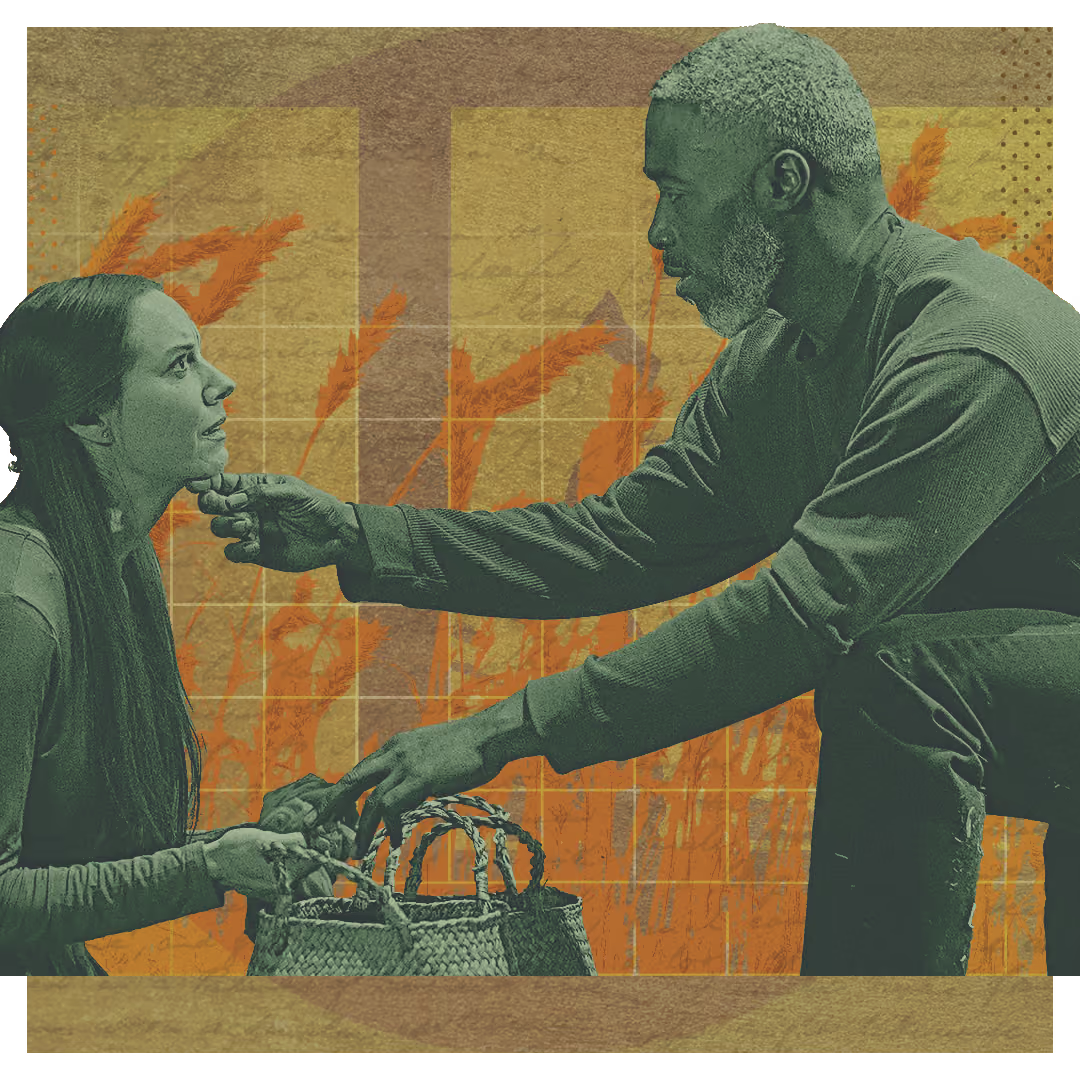
Intro: [upbeat music] Welcome to the Spoken Gospel podcast. Spoken Gospel is a nonprofit dedicated to the idea that every part of the Bible, Old Testament and New, is about Jesus, and this podcast is our experiment to publicly test that belief. Every episode, hosts David Bowden and Seth Stewart work through a biblical text to see how it helps us see and savor Jesus. Let's jump in.
David: [upbeat music] All right. Well, welcome everyone to the Spoken Gospel podcast. Seth, how are you today?
Seth: I'm good.
David: Yeah?
Seth: I am fine.
David: That's good.
Seth: I am-
David: Just fine. Right in the middle of the road.
Seth: Fine [laughs]. Right. I, yeah, I haven't showered yet today, so this is-
David: [laughs]
Seth: [laughs] That's why. If-
David: Yeah
Seth: ... if you caught me post shower, I'd be like, "I'm great."
David: Post shower, you'd be like, "I'm great."
Seth: "I'm great."
David: Yeah.
Seth: But, uh-
David: It's 'cause you're working from home this morning.
Seth: Yes.
David: And I came into the office, uh-
Seth: Yeah
David: ... because I showered
Seth: All dolled up for the day [laughs].
David: I'm all dolled up for the day. Yeah. I got my Spoken Gospel shirt on.
Seth: Oh, wow. We sell- we should give those a- away at some point. Like-
David: We, we have-
Seth: ... like, give them away
David: ... we, we have them. We've taken them to some events, and we've given them to, to some friends, but-
Seth: Oh
David: ... we don't wanna, we don't, we don't have an online store yet.
Seth: Oh, well. One day.
David: One day.
Seth: One day, podcast listeners.
David: I'm sure.
Seth: [laughs]
David: Um, so anyway [laughs]-
Seth: [laughs]
David: ... this is the strangest introduction to the book of Ruth-
Seth: The book of Ruth
David: ... which is what we're talking about today.
Seth: Yeah. I'm really excited.
David: This small, yeah, this small little book, um, that tells a short story about-
Seth: 85 verses
David: ... 80, 85 verses. That isn't-
Seth: Which is like the l- the length of some chapters in the Book of Luke. [laughs]
David: Yeah. That's crazy.
Seth: I think it's, like, 77.
David: Man, that's really interesting. And it tells a story of this foreign woman and her journey, uh-
Seth: Yeah
David: ... to become a full-b- fledged Israelite God-fearing woman. Um, and, uh, yeah, that's one way-
Seth: Yeah
David: ... to look at the book.
Seth: Yeah. The w- that's one way to look at the book. I mean, the short, if you, you're not familiar with, with the story of Ruth, the story is, uh, Naomi is married to a man named Elimelech, and they have, uh, two sons. And they take two daughters, uh, from the land of Moab. Uh, so Moab was traditionally enemies of Israel, or, like, s- kind of second-class citizens, really. They, they were never favored people. They were-
David: Yeah, they were, they were descended from Lot.
Seth: Yeah, whose daughters had incestuous sex with him and then started the civilization. So they were-
David: Right
Seth: ... just always, like, never, like, the most [laughs] reputable-
David: Yeah
Seth: ... in the eyes of Israel. Um, so they're kind of just considered as outsiders. So anyway, what ends up happening is Elimelech, Naomi's husband, dies. Naomi's two sons die, and she's left with two daughters-in-law, and she encourages the daughters-in-law to say, "You will not find any heirs from me. I'm not g- I'm past childbearing age. You guys haven't had children in 10 years. Your likelihood of finding a husband even now in Moab is slim. It's even slimmer if you go with me back to Bethlehem, back to Israel."
David: Mm-hmm.
Seth: "So don't come with me. Stay here and try to carve out the best life you can here in Moab."
David: Right.
Seth: Orpah-
David: And so one half of the two [laughs]
Seth: ... Orpah, uh, the first daughter-in-law, decides, "I'm going b- I'm gonna stay here and-"
David: Yep. Good advice, Naomi
Seth: ... good advice. "I'm not gonna make my life harder than it already is."
David: Yep.
Seth: "I'm gonna stay here." Uh, and I'm sure potentially she had family members that sh- could take care of her, or-
David: That would've been the normal thing to do.
Seth: Right. Yes, that would've totally been the normal thing to do. She had family members-
David: That was the, the, the quote-unquote right decision.
Seth: Yeah, she's-
David: The smart decision. The wise thing to do
Seth: ... uh, her people, like, other Moabites would've accepted her and not looked-
David: Yep
Seth: ... s- cast weird side glance at her. But Naomi, or sorry, Ruth-
David: Ruth
Seth: ... decides to stay with Naomi, and she said, "If you die, I die." This really profound moment of-
David: Mm-hmm
Seth: ... faith. Um, and she moves to Israel, uh, to Bethlehem, the city of David, uh, this, uh, with Naomi, where she meets a man named Boaz.
David: Mm-hmm.
Seth: They, I'm not sure if they fall in love first, but Boaz is incredibly generous to Ruth, um, as she is working really, really hard to provide for her and Naomi. And Naomi, or Ruth, ends up proposing to Boaz [laughs]
David: [laughs]
Seth: And Boaz, and it's not even a proposal. It's not, "Will you marry me?" It's-
David: No
Seth: ... "You will marry me, and you will become my redeem [laughs] k- the redeemer." It's really funny. I, someone pointed that out to me. It's like, it's not a question. It's, it's [laughs]-
David: Yeah
Seth: ... it's a demand.
David: It's like a statement. Yep.
Seth: Uh, she says this. She said, "Spread your wings. I am Ruth, your servant. Spread your wings over your servant, for you are a redeemer." Period. [laughs] No question.
David: [laughs]
Seth: Marry me. Um, and he says, "Yes, I will."
David: Yep.
Seth: Um, and there's, like, a plot twist where this second suitor might come in, but there's some legal jujitsu that goes on.
David: [laughs]
Seth: And the, and Ruth marries Boaz, and Naomi, who was once childless and had no food, suddenly has pantries full of food and a granddaughter, or grandson, who-
David: And her whole house is saved
Seth: ... and her whole house is saved, and that-
David: Her land, yeah, her household, her name, the lineage of her dead husband-
Seth: Yes
David: ... is all saved.
Seth: And it-
David: And
Seth: ... not just her own lineage is saved-
David: Yep
Seth: ... but all of Israel's lineage.
David: That's right.
Seth: Obed, Naomi's grand, uh, son, Ruth's son, ends up becoming the grandfather of King David.
David: Yep.
Seth: And it's, you're like, whoa, that's, and that's in the last line of the book that you fi- [laughs] find out
David: That's the last line of the book. Yep. Yep.
Seth: So it's, it's a really beautiful story from, like, tragedy and death to joy and birth, from famine, uh, and emptiness-
David: To plenty
Seth: ... to plenty and fullness-
David: Mm
Seth: ... and how God is in the middle of all those things.
David: Yeah. That's a good, that was a good summary, Seth.
Seth: Thank you. You're welcome
David: It was the rose-colored version
Seth: The rose-colored version. Let's just-
David: It was, it was the romantic comedy version
Seth: [laughs] What's the dark, gritty details that, uh-
David: It's not dark and gritty. I think-
Seth: The, uh, the real-life version's gonna-
David: I think, I think-
Seth: The non-Disney version is gonna bring to light [laughs]
David: The non-Disney version would probably have some- would probably have less to do with the words suitors and fell in love.
Seth: [laughs]
David: And probably have more to do with, um, like a, a different kind of love that we'll talk about, which-
Seth: Yes
David: ... is, doesn't necessarily have to connote romantic love-
Seth: Right
David: ... but it's called hesed.
Seth: Hesed love.
David: We'll get to that later. So, um, let's, let's kind of position this book now that we have a summary for it.
Seth: Yeah.
David: Let's position this book in the Bible, in the story of the Bible, and, um, just try to get our heads in it. So, um, I, I don't know if, where we, if we wanna start like big and go in, or if we're-
Seth: Well, let's start where it l- ends up in your Bible.
David: Okay.
Seth: So if you're reading through your Bible reading plan, you have just read the book of Judges, and the last three chapters of the Book of Judges are all about, uh, kind of these horrific actions taken against women in a nation that does, that has no king.
David: Mm-hmm.
Seth: And they do whatever they wanna do.
David: Yep.
Seth: I think that's the through line for the book of Judges.
David: All through, yeah, all throughout the book of Judges, it's, "And they did what was right in their own eyes," and so then God punished them.
Seth: Yeah.
David: But then God brought a judge, and that judge did some good things usually, but then they did what was right in their own eyes, and so God punished them.
Seth: Yeah.
David: And so it's this-
Seth: There was no king in Israel. They did what was right in their own eyes.
David: There, there's, there's no king in Israel is like the point of Judges.
Seth: Yes.
David: Is that there's no king in Israel, therefore, the whole country is in disarray.
Seth: Yeah.
David: There, it's a time of crime, of a lack of justice-
Seth: Mm-hmm
David: ... of a lack of law following, and there's no leader to, uh, to help the people follow the law-
Seth: Yeah
David: ... correctly or make people live in right relationship with God.
Seth: And the last-
David: And so it's, it's in this situation. [laughs]
Seth: Right. It's in that situa- in the last three chapters of Judges particular, you have a woman who is raped to death-
David: Mm
Seth: ... and then cut up i- into 12 different parts and then-
David: Right
Seth: ... shipped to the 12 different tribes of Israel, and that begins a civil war where Benjamin is cut off from the rest, and then they go and body snatch a bunch of women to become their wives.
David: Yeah.
Seth: So you have like this just awful series of circumstances in general, but particularly directed towards women, and then in the opening of the Book of Ruth, you get the name Elimelech. So we're t- we're gonna enter into the story about Elimelech. Um, and what's fascinating, the name of the man was Elimelech, and his name means God is king.
David: Mm-hmm.
Seth: And so you've just read a story where there's no king in Israel, and then you meet a man whose name is God is king, and then God is king dies.
David: Yep.
Seth: So you're like, "Whoa."
David: Yep.
Seth: "Who-"
David: There's re- there's really no hope.
Seth: There is no hope.
David: Yeah.
Seth: Naomi has no husband. Her two daughters have no husbands. They haven't had children in 10 years. Will God save?
David: Mm-hmm.
Seth: Will God be a king to Israel? Will he return them? That's [laughs] that's the, that's one way to read it.
David: Yeah, that's the question. Yeah.
Seth: Yeah.
David: The opening line of Ruth is, "In the days when the judges ruled."
Seth: Yeah.
David: I mean, that's so, it position- it... You, you are meant to be thinking about the chaos and, um, leaderlessness of Israel when you read Ruth.
Seth: Yeah.
David: And that's why it ends with, as you said, a genealogy pointing to David.
Seth: Yeah.
David: Because this is all about how God procured for himself a leader for Israel.
Seth: Yes.
David: So yeah, that's, that's its Protestant evangelist, uh, evan- evangelical Bible context. It comes aft- like, in its historical context, right? It comes after Judges-
Seth: Yeah
David: ... during Judges historically. Um, but then-
Seth: Yeah
David: ... if we look at, um, at where it fall, at where it originally fell in the Hebrew ordering of scripture-
Seth: Yes
David: ... we get something completely different. It's very interesting.
Seth: It's so fascinating.
David: In the Tanakh-
Seth: Yeah
David: ... which is the traditional ordering of the Hebrew Bible, um-
Seth: And probably the original ordering of-
David: And probably the original. There's, there's-
Seth: Yeah
David: ... one of two options we have here, and they're both very interesting. Um, but it, uh, but Ruth comes after the Book of Proverbs, which if you remember your Book of Proverbs and the famous Proverbs 31 woman that ends the book, you, imagine reading in, in order, and you read-
Seth: Right
David: ... Proverbs. You read about the Proverbs 31 woman, how she's industrious, and, uh, she's a go-getter, and-
Seth: She's called a worthy woman, just like-
David: She's a worthy woman, just like Ruth is called. Um, and then you turn the page, quote unquote.
Seth: Yeah.
David: You, you pick up the next scroll, and you read about this worthy woman named Ruth.
Seth: And like-
David: It's just, it's so cool
Seth: ... it's, it is really cool, and if you read it, there's so many parallels between Proverbs 31-
David: Mm-hmm
Seth: ... and the Book of Ruth. The first one is actually direct- the first nine verses are actually directed towards the king, but think about verse eight and nine. "This king speaks up for those who cannot speak for themselves, for the rights of those who are destitute. He speaks up and judges fairly, and he defends the right of the poor and needy."
David: Mm.
Seth: Na- na- uh, Naomi and Ruth are poor and needy. They are destitute, and traditionally they can't speak for themselves.
David: Right.
Seth: And Boaz in this, in this story defends the poor and the needy, provides for them extravagantly, and then literally goes to a courtroom and speaks on their behalf. [laughs]
David: Yeah.
Seth: Like, "A wife of noble character," so this is the, the wife then. Uh, she says she, um, she selects wool and flax and works with eager hands. This is what Ruth does in the fields. She gets up while it's still night, and she provides food for her families. Does the same thing.
David: She got up in the middle of the night and proposed to Boaz.
Seth: Yes. She considers a field and buys it and out of her earnings, she plants a vineyard. Naomi initiates the sale-
David: Mm
Seth: ... of her own property at the end of the book. She, uh, she, her hand does not go out at night. In her hand, she holds a distaff and grasps a spindle with her fingers. She's just, like, working hard.
David: Yeah.
Seth: She opens her arms to the poor. When it snows, she goes out. [laughs] Like, ev-
David: Yeah.
Seth: Her husband is respected at the city gate when he takes a seat among the elders of the land.
David: Which Boaz was at the city gate.
Seth: Which, yes.
David: Yeah, whenever all the law proceedings went down.
Seth: The, the ending of the story. She's clothed with strength and dignity, and she can laugh at the days to come. This is all, and then you turn the page, and that woman is on, in your Bible.
David: Yeah.
Seth: Ruth is right there.
David: It's cool.
Seth: So fun. I really love-
David: It's super cool
Seth: ... this ending.
David: And it frames an interesting way to read Ruth as, um, not, it's not wisdom literature Right? But i-if you read it with wisdom literature and Proverbs ringing in your head, it does make sense because, uh, wisdom is applying God's, uh, knowledge and will-
Seth: Mm-hmm
David: ... and commandments into life at the right time.
Seth: Yeah.
David: And that's what she does, and that's what Boaz does, and that's what Naomi does. And, like, there's wisdom throughout, and we, we, we're able to see how people, when they obey the law of God with love for their neighbor, good things happen.
Seth: Yes.
David: And it's like, oh, the Book of Proverbs rings true because Proverbs all throughout says, "If you do this-
Seth: Mm-hmm
David: ... like if you obey-
Seth: Right, right, right, right
David: ... God's commands-
Seth: Yeah
David: ... then it will go well for you." And, you know, tr- uh, you know, Naomi's dead husband did not obey God's law. He left the land and didn't trust God and married a Moabite, you know, woman, all this kind of stuff. But then the- Naomi and Ruth come in, and they start obeying, and Boaz starts obeying, and things start going really well.
Seth: Yeah.
David: And it's like, oh, the Book of Proverbs-
Seth: Proverbs works
David: ... is proving true.
Seth: Yeah.
David: Yeah, Proverbs works.
Seth: Yeah.
David: Wisdom works. Um, so that's just very, an interesting way to, to read it-
Seth: Yeah
David: ... for sure.
Seth: And I think, too, you have, um, Ruth as not just a wise and noble woman, but as a law follower, um-
David: Mm-hmm, yep
Seth: ... in a, in a marriage with another law follower, Boaz.
David: Correct. Yeah.
Seth: And one of the fascinating things about Ruth is that even though she's a Moabite, she essentially converts to-
David: Yes
Seth: ... and becomes a Yahweh-fearer.
David: Yes.
Seth: So this is in chapter 1, verse 16. Uh, she says, "Where you go, Naomi, I will go, and where you lodge, I will lodge. Your people shall be my people, and your God shall be my God, and where you die, I will die, and there will I be buried." This is incredible moment of s- hesed, steadfast loyalty to Naomi, which should hyperlink you back to Deuteronomy, where God gives a lot of His people on-
David: Mm-hmm
Seth: ... Mount Sinai, and He says, "You shall be my people, and I shall be your God." And then the people respond by saying, "We will do this, and if we don't, we will die."
David: Mm-hmm.
Seth: So, like, all that law language is right there. So not only is it after Proverbs 31 and is she this wise woman, she's also obeying the law in a wise way. So the reason I bring that [laughs] up-
David: Yeah
Seth: ... at all is that traditionally, in, uh... This book was read during the feast of Pentecost.
David: Oh, right, right.
Seth: So-
David: Which was celebrating the giving, not only the harvest, which is very appropriate for Ruth, but also the giving of the law.
Seth: Yeah, so the giving of the law. They celebrate the fact the law comes to the people of Israel, and they read the Book of Ruth because you have-
David: Mm-hmm
Seth: ... a woman who shouldn't find the law beautiful or good-
David: Mm-hmm
Seth: ... who's not a native to the land of Israel, sees the law as good and then upholds it herself and then acts like it's true.
David: Right.
Seth: So fun. Like, such a fun... I think that's fun. [laughs] Anyway.
David: No, it is fun. It, it is.
Seth: Um-
David: It, it's really awesome. Uh, it provides a really different way to think about the, the law, especially in, if you're just following kind of the linear, historical narrative of the Old Testament. You don't see a lot of people just, like, loving the law and doing it well. You see a lot of people breaking it.
Seth: Yes.
David: You know? Like-
Seth: Yes
David: ... Judges and Joshua, and even Numbers, you see people breaking the law that was just given, but in Ruth, you see what happens when someone loves and upholds the law, and it's, like, beautiful. And, like, the good news is that she was brought into the covenant people of God and given the blessings. Like, the law says if you obey it, then you'll live in the land, uh, you'll have plenty of crops. I... You know, you'll-
Seth: Mm-hmm
David: ... have children that won't die, and all this kind of stuff, you know? And that's what happens to Ruth when she becomes an Israelite.
Seth: Yeah.
David: She receives the blessings of living in the promised land with God.
Seth: Yeah.
David: Which is cool. Like, God was true to His word. So not only does Proverbs work, the law works.
Seth: Yes.
David: Like, God works.
Seth: Yes.
David: God's promises are true, which is just cool.
Seth: And there's even links between Ruth and the Book of Psalms, which is the book after Proverbs.
David: Mm-hmm.
Seth: In the traditional ordering, it would be-
David: Right
Seth: ... Proverbs, Ruth, Psalms.
David: Psalms.
Seth: And so there, there's this phrase, like, "Cover me with your wings"-
David: Mm-hmm
Seth: ... which is used multiple times-
David: Multiple times
Seth: ... throughout the book, Book of Ruth. And, like, there's all the this, like, Psalmonic language that's picked up later.
David: Mm-hmm.
Seth: So it kind of prepares you for some of that language as you move into the Psalms in the traditional ordering.
David: Yes, which I think, um, considering the order of how some of these things had to have been written, um, I, I would say that the author of Ruth is probably pulling on Psalmonic language that was used to describe the protection of God to, to describe Boaz-
Seth: Yeah
David: ... and the spread your wings.
Seth: That's right.
David: And I, so I think it... I say that to say that I think this book, um, is meant to set up categories for us for how we should be thinking about how God, you know, protects us, treats us, and ultimately how this is fulfilled in Jesus-
Seth: Right
David: ... which we'll get to later.
Seth: Well, and that's a good point.
David: But there's, like, a literary proof. There's a literary proof-
Seth: Yes
David: ... of, like, even the original authors wanted us to think about this as a parable about God's love for us.
Seth: Yes, and that's crucial. This book, you, we can talk about, you know, all the different contexts, Judges, Proverbs, uh, the Feast of Weeks and Pentecost, but the book is about God's action-
David: Mm-hmm
Seth: ... in these people's life. Like, it's like we, we say it often enough, the Bible isn't about us. It's about Jesus. [laughs] Like-
David: That's right
Seth: ... and often, like, often, like, it's not even about the main characters that you're reading about. It's about what God is doing through those main characters.
David: Mm-hmm.
Seth: And that remains true here.
David: Well, yeah. Let, well, let's, let's take a quick break, and then let's talk about God, God's action in this book and some of the interesting things that we see there. [gentle music]Okay, so, uh, we mentioned that this book is about God's actions with his people, um, in order to save them and in order-
Seth: Yeah
David: ... to provide for them. Uh, I think a really crucial word here that we'll talk about later is to redeem them.
Seth: Yes.
David: Um, and so i- it's really interesting, and maybe you, you can throw in some extra ones, but, like, there are just all of these ways that we see God sovereignly working-
Seth: Yeah
David: ... uh, kind of in the minutiae and in the fine details, even behind the scenes of this story.
Seth: And what-
David: Right?
Seth: ... we should name before we even talk about-
David: Mm-hmm
Seth: ... how God works is the fact that God's rarely-
David: Mentioned
Seth: ... mentioned.
David: Right.
Seth: So, like, the characters will talk and make reference to God, but there's, like, no dreams. There's no miracles. There's no visions.
David: Nope.
Seth: God doesn't speak to anybody. Even, like, the prayer that Boaz offers when Ruth comes to him and makes the marriage proposal, she quotes his own prayer back to him, saying, "I want you to answer your own prayer." [laughs]
David: Oh.
Seth: Like, she uses the same words that he uses.
David: [laughs]
Seth: So it's like-
David: That's funny
Seth: ... she's appealing to him to answer his prayer-
David: Uh-huh
Seth: ... and not to God.
David: Right.
Seth: It... There's, like, two times where God is, like, specifically mentioned, that the Lord-
David: Mm-hmm
Seth: ... brought, like, um, food to this, to Bethlehem in the beginning, uh-
David: Right
Seth: ... I think chapter-
David: Yeah, we're, yeah. We, we, we-
Seth: The Lord has visited his people-
David: Yes
Seth: ... and given them food, and then at the very end, there's-
David: Which is on, which is on the lips of somebody, right? It's not-
Seth: It's Naomi
David: ... a narrative detail. Yeah.
Seth: Yeah, Naomi.
David: It's, mm-hmm.
Seth: I don't think the narrator actually ever, um, describes-
David: Mm
Seth: ... God doing anything. So the, the point is you don't have g- a ton of divine action.
David: Mm-hmm.
Seth: So you have to look for it-
David: Right
Seth: ... elsewhere. [laughs]
David: Yes.
Seth: So, yeah.
David: And so we see it, uh, you know, like, classic, we know two big things, and, well, you even named one that the, that the, um, the text actually gives us, that, one, God is sovereign over the womb.
Seth: Mm-hmm.
David: Right?
Seth: Right.
David: And, and, two, that he's sovereign over rain and famine.
Seth: Yes.
David: Uh, and then there's just all these happenstance circumstances, right, where it's like-
Seth: Ruth goes to a field that just so happened to be Boaz's.
David: It just ha- happened to be Boaz's field.
Seth: Yeah.
David: Ro- uh, Boaz just happened to be her kinsman redeemer. Boaz just happened to be kind and willing to show, uh, you know, lo- love to this woman, you know-
Seth: Yeah
David: ... that he didn't have to. Uh, he just so happened to, there just so happened to be a closer heir, and that closer heir could not take on the economic burden of redeeming Ruth.
Seth: Yeah.
David: Uh, uh, Boaz just so happened to be sympathetic to Ruth's crazy request whenever she proposed to him, as you said. You know?
Seth: Right.
David: Just, she just so happened to become pregnant, and that just-
Seth: Yeah
David: ... and that just so happened-
Seth: After 10 years of not having
David: ... after 10 years of being barren.
Seth: Yeah. Right.
David: And that just so happened to be a male, right?
Seth: Right.
David: And that just so happened-
Seth: Who just so happened to be the son of David [laughs]
David: ... to be the son of David.
Seth: Or the, the father of David.
David: The great, the grand- the grandfather of David.
Seth: Yeah.
David: And so it's just, it's crazy how many-
Seth: So-
David: ... things had to just, "Oh, I guess that was a coincidence," to happen, you know?
Seth: And especially considering the time of the judges.
David: Yeah.
Seth: You have nothing but... When God does show up, it's, like, in judgment.
David: Mm-hmm.
Seth: It's in a judge to judge wickedness.
David: Yeah.
Seth: And so you have the story of Ruth, where God is active, not to judge, but to bless, to redeem, to save, to give life, even in the middle of a nation going crazy.
David: Mm-hmm.
Seth: Which I think is [laughs] really important to name and really beautiful. Like, God is working in ways that we don't always see to accomplish our good and his purposes so that we would see him as loving and faithful to us. And I, I... It's so important. [laughs] It's, like, so important.
David: It's so, it's so important, and I think, I think it's really good to name, like, one, like you said, during a time of social, political unrest where everything's just going crazy. There's war, corrupt leadership, um, crime. All this stuff is happening, swirling around. God is s- is not gone or abandoned.
Seth: Yeah.
David: Um, he is working, and he's even, like, guarding people and having, like, like, he, there's a Boaz in the middle of Israel-
Seth: Yeah
David: ... during this time.
Seth: Right.
David: Like, how could a guy like Boaz exist? He even says, like, whenever Ruth comes to glean from his fields, "Don't go glean from any other fields. Glean from here because, you know, it's safe here."
Seth: Right.
David: "Other way- other places, you might get hurt." You know? Like some-
Seth: Yeah, like, I was really ta- taken aback, like, I'll say, "Oh, like, she, her life is in danger if she's a woman-
David: Yeah, it was a dangerous thing-
Seth: ... alone in a field"
David: ... especially during that time.
Seth: Yeah.
David: That's right. But then the other really important thing to see, uh, on a more personal level, 'cause I think we all ha- uh, have experienced, you know, in this age, like, times of political unrest and social unrest, so it's good to know God's working behind the scenes. Um, but also on a personal level, like, whenever you are economically struggling, famine, right?
Seth: Mm-hmm.
David: Like, whenever you just can't put food on the table or you lost your job, you know, or, like, your, someone close to you dies. You know, like, everyone dies at the beginning of this story.
Seth: Mm-hmm.
David: Whenever you can't get pregnant or you're having struggles with fertility. Like-
Seth: Yeah
David: ... all of these things are things that just make us feel like God is not there, or that he doesn't care, or that he's incapable of doing something.
Seth: Yeah.
David: And the story of Ruth shows us that God is intimately involved and is bringing something far greater out of that than we could've ever hoped for or imagined.
Seth: Yeah.
David: I mean, who would've, who would've-
Seth: Right
David: ... guessed that King David was gonna come out of this story of, of treason and, and, like, uh, abandonment of the Promised Land and Moabites, and it's like, wait, David's at the end of this story? [laughs]
Seth: Yeah.
David: Like, it's crazy.
Seth: K- like, at the beginning, Elimelech dies.
David: Yeah.
Seth: God is king.
David: God is king is dead.
Seth: Is dead.
David: [laughs]
Seth: Which is [laughs]... It's... Like, I think about all, just the different, like, people in my life, political factors in my life, uh, causes that I think about and support and wanna succeed, and I see them fail.
David: Mm.
Seth: And in that moment-I'm tempted to believe God as king is dead.
David: Mm.
Seth: Like, what I thought God was doing is not happening.
David: Mm.
Seth: And now, what, how, what, what next?
David: Yeah.
Seth: How could he possibly move now? Um, which, and I think Ruth does a really good job of heightening that up because it, the story centers around three women, all of whom are widowed, two of whom are foreigners.
David: Mm-hmm.
Seth: And so normally, like back in the patriarchal narratives, or even in just the rest of the Old Testament up to this point, there's normally a relative that's known about somewhere. There's normally another father figure or a brother or somebody who can step in and provide redemption.
David: Mm.
Seth: Uniquely in the Book of Ruth, God as king is dead. There are no heirs apparent. We have widows and foreigners leaving their homes, where there's literally nothing in the opening chapters of Ruth that gives a hint that God could save-
David: Right
Seth: ... that God could move. All the things we're used to expecting from the Book of Genesis, like an unexpected heir or the ingenuity of a woman, or whatever it is, aren't there.
David: Yeah, they're just not there yet.
Seth: They're [laughs] not there yet.
David: Yeah.
Seth: It's just like this really profound moment of hopelessness, and the book- the question the Book of Ruth wants you to wrestle with is, will you trust God when it looks like he's not working?
David: Yeah. And, like, that's what we see Ruth do. We see her, like, give herself over to Yahweh and the people of Israel and the land of Israel in the midst of extreme hopelessness, poverty, loss, mourning. It's, it's amazing. It's like... And I think it's just cool, too, to just see, um, how faith is an appropriate response to hopelessness.
Seth: Mm. Yeah.
David: 'Cause they're just, they're usually butted against each other, you know? And like, you can have faith in hopeless. You can have hopeless faith. Does that make sense? [laughs]
Seth: Yeah, yeah.
David: It's just, it's interesting. It's like, I don't know what I can hope in, but I'm gonna just have faith.
Seth: Well, maybe this is an opportunity to talk about how Jesus in the Book of Mark tells everybody he comes in contact with, "Don't tell anybody that I've come."
David: Mm.
Seth: "Don't tell anybody that I'm here." Like, the hiddenness of Jesus is a huge theme throughout at least Mark's version of the story.
David: Yeah.
Seth: It's like, are there ways that we can see, like, the hiddenness of God in the Book of Ruth as parallels to the hiddenness of, the, the planned hiddenness of Jesus in the Gospels?
David: Hmm, that's interesting.
Seth: 'Cause you have these-
David: Uh, yeah
Seth: ... these desperate people.
David: I mean, so yeah.
Seth: Right? Like-
David: Right. Yeah, yeah. I think I see something. So, like, you know, the, the reason why Jesus, um, you know, was, was, was saying, "Not yet. Don't tell anybody yet. Let... Keep it hidden," was because they just, they didn't have good news to share yet. Like, he, they didn't have the right message to share yet, because they were gonna go around and be like, "There's this healer."
Seth: Yeah, yeah.
David: You know? Or like, "The, the, the Messiah has come and he's a miracle worker." And it's like, that's not who it is, and so don't go and tell everybody yet. The other side of it is, like, he needed to control the chaos until his hour had come, you know, before he went to the cross.
Seth: Until he was ready to die.
David: Yeah, until he was ready to die. And so, um, it's interesting then that you have this hiddenness of God. You have Jesus kind of working almost behind the scenes in all these different areas of Galilee and Jerusalem during his ministry, only to culminate in a surprise twist ending of him dying on a cross, but then something greater than anyone could have possibly imagined-
Seth: Right
David: ... him rising from the dead and ascending as King above all kings to the right hand of the Father. Like, so you have this hiddenness, twist ending, and surprise triumph.
Seth: Yeah.
David: And that's kind of the same literary structure that Ruth takes on, right? There's all this hiddenness, what's gonna happen?
Seth: There's death, famine-
David: I feel like something's happening. Yep
Seth: ... childlessness.
David: Yep.
Seth: Barrenness.
David: And then surprise ending twist. There's Boaz, and then, oh, but it's even better than just getting married and having your house saved. It's the king, like, King David's line.
Seth: Mm-hmm.
David: So there might be something there. I don't know.
Seth: There might be something there. Uh, anyway, I just, I was thinking about that as you were talking.
David: Yeah.
Seth: Um-
David: That's interesting. I've never thought of it like that, but yeah, it's interesting. Um, so yeah, I mean, the hiddenness of God, you know, him working his sovereignty, uh, I mean, we've kind of talked about it from, like, a, a very, um, a detail-oriented level, but from a very big level, it's, it's, you know, God was working through the events of Israel, even through all her political unrest, to bring about a monarchy. You know, God is-
Seth: Right
David: ... moving the big chess pieces around, too. You know?
Seth: Yeah.
David: And I just think it's, it's cool to see that.
Seth: There was no king in Israel.
David: Yeah.
Seth: Like, the Book of Ruth assumes you know that history.
David: Yep.
Seth: It assumes you know who King David is. It assumes a lot of information about its readers.
David: Mm-hmm.
Seth: And y- you're wondering, well, how does God go from Judges to David?
David: Yeah.
Seth: Like, how does that happen?
David: This is, and this is the story.
Seth: And this is the story.
David: Yeah.
Seth: Through the faithfulness of Ruth-
David: It's cool
Seth: ... the monarchy that will be, uh, that will father the Messiah, uh, happens through the story of Ruth.
David: Well, then let's talk about that. Let's talk about this monarchy that fathers the Messiah. Let's talk about this line-
Seth: Okay
David: ... that goes from Ruth to Jesus, but then we got to back up even more to really get the full story of what's happening, because the opening of Ruth cues us in, if you are a Old Testament Bible reader, you know, if you were reading this story at this time, when you open this book, it should feel very familiar to you, some of the themes and images that are here. So you have, um, a people leaving, um, Israel because of a famine, uh, y- [laughs]
Seth: Yeah
David: ... which is, like, something that's happened before. You have-
Seth: So that's happened in, uh, that was Abraham, right?
David: Yep.
Seth: Abraham, there was a famine in the land.
David: There was a famine. Yep. It, it happened-
Seth: And so they moved to the p-
David: Yep.
Seth: Okay.
David: Yeah, it happened to the, the Israelites went, uh, or, you know, uh, uh, Jacob and his-
Seth: Jacob
David: ... 12 sons-
Seth: Yes
David: ... went from, he sent his sons from Is- the Promised Land to Egypt during a famine to get-
Seth: Mm-hmm
David: ... food.
Seth: Yep.
David: Um, and so this has happened again and again and again.
Seth: A few times before.
David: Yep. Uh, you have barrenness.Um, you know, which is-
Seth: Like, the, the, the, uh, the messianic line is threatened by the childlessness of-
David: Always
Seth: ... the women.
David: Yep.
Seth: Yeah.
David: Yep. Sarah, Abraham's wife, was barren. Uh, Rachel-
Seth: Mm-hmm. Yeah
David: ... was barren.
Seth: Yeah.
David: Right?
Seth: Yes. She was.
David: Uh, uh-
Seth: Leah wasn't.
David: There's-
Seth: Rachel was
David: ... Le- Leah, yeah, Leah wasn't, Rachel was. That's what it was.
Seth: Yeah.
David: Uh, anyway, and so you have all this-
Seth: Sarah has a child when she's 100 years old.
David: Yeah. [laughs] So there's, like, all these things happening that should cue you in to the fact that, oh, this is like I'm reading Genesis again.
Seth: Yes. And-
David: I'm reading Genesis again
Seth: ... and that might be the biggest takeaway as a reader that you can think-
David: Mm-hmm
Seth: ... about, is that this is a new type of, um, patriarchal narrative, patriarchal-
David: Yeah
Seth: ... narrative. And when I say patriarchal, I don't mean, uh, like, all the negative connotations. I mean the founding-
David: Yeah, male-oriented
Seth: ... yeah, I mean-
David: Yeah
Seth: ... the Founding Fathers. Like, this is the founding mother of Israel. Like, you had the Founding Fathers who left because of a famine, whose family was endangered because of childlessness, who moves to a new land voluntarily, like Abraham.
David: Mm-hmm.
Seth: Uh, you have the protect- you have, um, like, a, a wedding in a strange place like, um, Rebecca was ch- was- had that wedding proposal at the well.
David: Yeah, yeah.
Seth: You have, uh, Ruth in the middle of a, a threshing floor.
David: Yeah, that's funny.
Seth: You have a woman, uh, using her sexual initiative to overcome male inaction.
David: Oh.
Seth: So you have, like, a Ta-
David: Like Sarah with the kings. Oh, or Ta- yeah, with Tamar and Judah
Seth: ... Tamar, uh, right. Um, I'm just trying to... There's some other, there's other, there's so many parallels be-
David: There's so many parallels with Genesis
Seth: ... between-
David: Yeah. And I think what we need to remember then about Genesis, why is this important, is Genesis is tracing the promised seed of Eve.
Seth: Mm-hmm.
David: Like, that is what Genesis is all about. There are 10 genealogies in Genesis, and each of them are showing us, um, where the promised seed of Eve is heading. Because if you'll remember back in Genesis 3, after the fall and after the curse that God puts on humanity and on the man and the woman, he also makes a promise to Eve that one of her descendants will end up rising up and will crush the head of the serpent-
Seth: Yeah
David: ... um, and will, like, make everything wrong right again. And so Israel is waiting for this. And so Genesis traces that seed, you know, all the way from Adam through Seth, through Noah, through Abraham, Isaac, Jacob, the 12 tribes of Israel, and then we go into chaos in Judges.
Seth: Yeah.
David: And we're like, "Where's the promise?" Like, where's this line? Like, you know, if you were pulling a f- uh, a thread through the Bible, trying to keep that l- that line of promise tight-
Seth: Yeah
David: ... it seems that that line is sagging in, like, Judges and Joshua, and you're like, "I wanna pull it tight again," and Ruth comes along and yanks the other side of that cord-
Seth: Yeah
David: ... and makes it tight again.
Seth: Mm-hmm.
David: Right?
Seth: That's exactly right. Like, there's all these-
David: And does that by pulling on Genesis
Seth: ... threads throughout Genesis to the messianic line continuing.
David: Mm-hmm.
Seth: Famine, famine, childlessness, uh, foreigners, [laughs] like-
David: Yeah
Seth: ... all, like, um, male inaction, uh-
David: Right
Seth: ... the lack of bride. All, all that's happened before-
David: Yes
Seth: ... in the history of Israel, in the patriarchal narratives, in the stories of Abraham, Isaac, and Jacob, and then you have the same thing happening again here in the Book of Ruth. Exactly right.
David: Yeah.
Seth: The mes- the Messiah will come through the faithful, through the faithfulness of Ruth and Boaz.
David: Mm-hmm.
Seth: Yeah.
David: And, uh, surprisingly, the central character of this new patriarchal narrative-
Seth: Mm-hmm
David: ... is a woman.
Seth: It is a woman.
David: It's a woman. And, like-
Seth: This is... Yes.
David: Which would just be like-
Seth: It's not insignificant. [laughs]
David: It's not insignificant at all. And I think it's really hard for us, you know, even with all, even with gender inequality and things like that, that still, you know, exists today, I think it's still really hard for us to understand how strange and, like, out of character it would be to have a f- nation founding literary genre be started and then put squarely on the shoulders of a woman back in this day and age.
Seth: Yes.
David: Like-
Seth: It's astounding
David: ... it's astounding.
Seth: There's a lot of f- feminists and l- more li- liberal scholars who wanna, will wanna call the Bible a patriarchal construction.
David: Mm-hmm.
Seth: The Bible is just a, a book about men written for men, um, s- to advance male interests.
David: Yeah, it's antagonistic towards women-
Seth: Yes
David: ... they would wanna say.
Seth: And the Book of Ruth would respond to that by saying, "No."
David: "No." [laughs]
Seth: "Absolutely not." You have a f- you ha- we don't know who authored the Book of Ruth. Um, it could've been a woman, but we don't know that. But what we do have in the Book of Ruth is female main characters, which is-
David: Mm-hmm
Seth: ... not normal for a lot of our books of the Bible. You have all the plot drivers, the initiative is taken by women within-
David: Mm-hmm
Seth: ... the story, and it's the faithfulness and in- the ingenuity of a woman-
David: Mm-hmm
Seth: ... that ends up securing the messianic line.
David: Right.
Seth: Without Ruth going to Boaz and ask, telling him that he will marry her, we don't have a King David-
David: Right
Seth: ... and we don't have a Jesus.
David: Which is exactly what happened back in the story of Judah and Tamar.
Seth: That's exactly what-
David: Judah the man was, you know, male inaction and wasn't gonna do anything to continue his promised line. And so Tamar did something insane, which we've talked about on the podcast before-
Seth: Yeah
David: ... you know, to trick him into sleeping with her to continue the line.
Seth: Yeah.
David: It was female action that in or- that, that brought us King David and brought us King Jesus.
Seth: Yes.
David: Like, it's crazy. And-
Seth: And it-
David: Yeah
Seth: ... serves as a rebuke to, a rebuke and a restoration of what Adam failed to do in the, in the Garden.
David: Yeah.
Seth: So the, the serpent tempts Eve to eat the snake, and Adam does nothing.
David: Eat the, eat the fruit.
Seth: To, yeah, to eat the snake. [laughs]
David: Eat the snake. [laughs]
Seth: To eat the snake. [laughs] Take of my body, [laughs] uh, the snake.
David: Mm.
Seth: The snake, uh, Adam sits there saying nothing-
David: Yeah
Seth: ... while, uh, the woman-Uh, while Eve, like, eats the fruit.
David: Uh-huh.
Seth: So, like-
David: Yep
Seth: ... when you have Tamar and you have Ruth responding to male inaction with initiative, you have a undoing of the fall-
David: Mm
Seth: ... and a return back to Eden.
David: Yeah.
Seth: Like, which, [laughs] it's amazing.
David: Yeah, a new sh- sh- this is a new and better Eve, who is obeying and acting rightly where her predecessor fell-
Seth: Yes
David: ... in order to bring about the promised seed that was, you know, promised to Eve. Like, this, Ruth is a new Eve.
Seth: She's a new and better Eve.
David: Which is why, which is cool, 'cause at the end of the book, what do we get? We get harvest and plenty and-
Seth: Children
David: ... health
Seth: Life.
David: Yeah, it's, it's like-
Seth: Ooh
David: ... oh, is it Eden?
Seth: Yes.
David: A little bit of Eden coming? Yeah. Interesting.
Seth: And then, and think about this. Well, you normally jump to, um, Jesus as, as at the end, but the proper telos, the proper end of the woman's role within scripture is the Church. Eve-
David: Mm
Seth: ... leads us to the bride of Christ, the Church, and today, the Church as the bride of Christ, the descendant of Eve, brings new life, or should be in the communities that there is a church, brings new life to the communities, brings a, a restoration of what was lost. The poor are cared for, the, um, sick are healed, and, um, the Messiah's rule and reign continues because of the actions of the female church.
David: Mm.
Seth: Because of the action, and, uh, the church is always portrayed, uh, or most often portrayed as a female, as a bride, as a woman-
David: Yeah
Seth: ... as the telos, the end of what Eve was supposed to do in the Garden-
David: Yeah
Seth: ... a bringer of life in a world of chaos.
David: And there's two really big things you, you said there that I wanna, I wanna pick up after our next break, but you said that, that, you called J- you know, Jesus the High King, which I wanna talk about, is really important. And then you're, you're talking about this, uh, community of people that are creating good and almost creating Eden around them because of the way that they're living. Um, and, uh, I wanna go back and talk about that and, you know, the, how the law leads to loving our neighbors and everything like that after this break. So-
Seth: Cool
David: ... all right. We'll, we'll go there. [gentle music]
Seth: Okay, so you said we wanted to come back after this break and talk about how Jesus is the High King.
David: Yeah.
Seth: If Ruth leads us to the Church, who's the queen of the Kingdom of God, who is the king and why is kingship important to the Book of-
David: Yeah
Seth: ... Ruth?
David: Well, I mean, so first off, the link between Ruth and Jesus is, um, direct and obvious.
Seth: It is so direct. [laughs]
David: It's so direct and obvious.
Seth: It's so direct. [laughs]
David: So not only do we know that Jesus is the Son of David, all throughout the Gospels he's even called, "Son of David, Son of David," you know?
Seth: Yep.
David: Uh, but Matthew's genealogy walks us through that gen- you know, that, that line. Um, and what's interesting about it is we don't only hear about how Ruth is in Jesus' line, right? We also hear about two other women that are in Jesus' line.
Seth: Mm-hmm.
David: We hear about Rahab, which is-
Seth: Who is Boaz's mom
David: ... crazy. Who is Boaz's mom.
Seth: So [laughs]
David: So Boaz's mom is the prostitute Rahab, who-
Seth: From-
David: ... sheltered the, the, the spies when they came into Jericho.
Seth: Yes. Like, wait, what?
David: [laughs] That is crazy.
Seth: That blew my mind when I read it the other day. I was like, "Wait, this is-"
David: It's like, so Boaz is, so which is crazy too, when we're talking about, like, how Boaz was, like, this righteous man in the middle of all this unrighteousness, and his mom was a prostitute.
Seth: That is crazy.
David: Like a former prostitute.
Seth: That's, yeah.
David: Like, it's just like, this is what the grace of God can do to people.
Seth: Well, Israel is going crazy.
David: It can change a family.
Seth: It's the l- it's the spiritual lineage of faithful women that is like-
David: Yeah
Seth: ... [laughs] that is, like, c- anyway, yeah. It's amazing.
David: So that's cool. So, like, God used a Moabite in Ruth, he used a prostitute in Rahab, and then Tamar-
Seth: Mm
David: ... which w- we've talked about already on this, uh, is also in Jesus' genealogy.
Seth: Yeah.
David: And she was also probably a foreigner-
Seth: Mm-hmm
David: ... uh, or was a foreigner.
Seth: Uh, we, it's never named, but because Judah married off his other sons to Canaanite women-
David: Uh-huh
Seth: ... it's assumed that potentially Tamar was also.
David: Okay. Yeah.
Seth: Uh, we, we don't know.
David: But, yeah.
Seth: Maybe.
David: And, but, and she pretended to be a prostitute in order to-
Seth: Yes
David: ... continue the line. So it's like all this strange ingenuity by th- these females who have-
Seth: These females [laughs]
David: ... put their faith in God. These, these women-
Seth: These females [laughs]
David: ... these women who have put their faith in God is just astounding. And so anyway, um, this all leads us to Jesus. Um, and the reason why Matthew starts his gospel with a genealogy, the reason why Luke includes a long genealogy in his gospel, is because he's pulling on all of this, all these promises and all of this, uh, sovereignty of God throughout the story of the Bible.
Seth: It goes back to what you, what you said, like, the who, who will be the promised-
David: Mm-hmm
Seth: ... snake crusher.
David: Right.
Seth: Like, where is that line l- ending to? And the reason Matthew and Luke have those genealogies is to show you the straight line from-
David: Mm-hmm
Seth: ... either Adam or from Abraham-
David: Abraham
Seth: ... that, uh, the Messianic line ends here. The snake crusher ends in Jesus.
David: That's right.
Seth: Yeah.
David: Yeah. And so I think the m- I think when we think about Jesus as the fulfillment of this, this lineage, there's a lot of things that you, I, I wanna talk about, but when we think about Ruth in particular, I think we need to think about Jesus as the king who brings order to chaos.
Seth: Yeah.
David: Like, this is the time of the Judges when everyone was doing-
Seth: The rightful heir to the throne
David: ... yeah, when everyone was doing right in, right in their own eyes, when everything was messed up, when, you know, like, crime and chaos ruled the land, and Jesus comes and brings peace and love and order and law and redemption to the land. And, um, that's what he does, Jesus does as king, both for us personally-Right?
Seth: Right.
David: And he does that personally f- for us by being our kinsman redeemer.
Seth: Yep.
David: You know, he-
Seth: Can you define that for, for us? So-
David: No one can.
Seth: [laughs]
David: You know, uh, there's a lot of, uh, ambiguity around this practice, both, uh, whenever a k- a kinsman redeemer is talked about in the Old Testament law and when it's practiced here. There's a lot of scholars who don't even think those are the s- same things.
Seth: Yeah.
David: That what's described in the law and what actually occurs here are two different practices. Regardless of that, basically what is happening here is, um, there... And you can read about this in the law, that, um, whenever someone who has a land-owning Israelite dies-
Seth: Mm-hmm
David: ... uh, in order for their land to stay in their family and in order for the n- their name to continue on, um, which are two very important things to God in the Old Testament-
Seth: Yes
David: ... that the land would not be, uh, divided up differently than the way He divided it so that there would be justice and equity among His people, and then also that the names of His people would continue because He knows them by name, has made promises to them by name, and has promised to keep them. So, like, name and land is really important to God.
Seth: Yeah.
David: When, when a land-owning Israelite dies, um, what there's s- something that's supposed to happen in order to keep that land in the family and keep that name alive. So one of their kin-
Seth: Mm-hmm
David: ... so it could be a younger brother, uh-
Seth: Normally it's not younger brother. Yeah
David: ... normally it's the next in line.
Seth: Yeah.
David: It's the younger brother is normally what, how this has happened. The younger brother would marry the widow and procreate with her, um, if she hasn't had any male descendants yet. And so that's, that's what is originally supposed to happen with a kinsman redeemer.
Seth: Well, okay, then maybe we mi- because that's the l- the Levite marriage laws, not the redeemer laws, right?
David: Right. Yeah, the, the-
Seth: And they're so weird. It's, they're, they're being blended together, but-
David: That's why people don't think that-
Seth: Okay
David: ... that's what this is talking about.
Seth: Got it.
David: So that's the o- that's the law code that we have, right? So then we... But what happens is, and what we've even said on this podcast before-
Seth: Yeah
David: ... is that the law is not completely exhaustive.
Seth: Right.
David: Right?
Seth: Right.
David: So there are other ways to-
Seth: And-
David: ... live out the essence and the heart of the Levite redeemer.
Seth: And technically then, too, that means that Naomi is not normally, would not normally be a candidate to come under the kinsman redeemer laws because, one, she's a female landowner, and there's never, in the law, there isn't a specific place where it says a widow can own the husband's land. It doesn't say that she can't, but it doesn't say that she can either.
David: Mm-hmm.
Seth: And the fact that it's the daughter-in-law, not a blood, a, a blood relative of Naomi-
David: Yeah
Seth: ... that is being redeemed by Boaz also means she's, like, almost two steps removed from-
David: Yep
Seth: ... the normal laws of the kinsman redeemer redemption thing happening.
David: Right, and it also-
Seth: So the point-
David: Yeah, and it, well, n- to, to double down what you're saying-
Seth: Yeah
David: ... uh, and it also seems like there is money involved-
Seth: Mm
David: ... that there's probably a lien or something, a debt on the land Naomi has, um, that whenever she dies or whenever a certain term expires, that land would go out of her keeping. So when Boaz redeems Ruth and marries Ruth, he also redeems, which means buys.
Seth: Yeah.
David: He buys Naomi's land.
Seth: Yeah.
David: And so it's, comes at great expense to him. He actually purchases Naomi's land, but leaves it in her name.
Seth: Yeah.
David: He pays for the deed.
Seth: Yes, and the fact that there is another person who's clos- more closely related to-
David: Mm-hmm
Seth: ... uh, Naomi than Boaz-
David: Right
Seth: ... and he refuses, should tell us that in order to become this redeemer, it required great personal cost.
David: Yes.
Seth: Like, there's a great-
David: Yep
Seth: ... like, financial, emotional, like, you have to [laughs] like, you have to marry somebody, share your inheritance with that person's s- that person's children. Like, it comes at great personal cost to be this redeemer.
David: That's right.
Seth: So to tie the bow-
David: Yeah
Seth: ... all the way back to King Jesus-
David: Uh-huh. Yes
Seth: ... in order for Jesus to be king who also redeems His people, the Book of Ruth should be pushing us along this narrative of in order for the king who loves the law and to redeem His people actually reign and i- i- institute that kingdom, it will come at great sacrifice to Himself.
David: Mm-hmm.
Seth: It will mean sharing His inheritance with people that don't deserve it.
David: Mm-hmm.
Seth: It will mean taking His, the riches of God's grace and giving it to foreigners, widows, the poor, and the destitute.
David: Mm.
Seth: It should mean and should re- recognize to us, in order for that to happen, that means He suffers some loss, and Boaz, he lost financial gain, potentially.
David: Oh, yeah, big time. Yeah, when the other-
Seth: But-
David: ... when the other potential kinsman redeemer was first approached with this economic opportunity to take over, uh, you know, and redeem N- Naomi's land, he's like, "Yeah, sure, I could do that."
Seth: Yeah.
David: And then he learns that it also comes with Ruth. He's like, "Oh, well, then that would ruin me financially"-
Seth: Yeah
David: ... is what he says.
Seth: Right.
David: And it's like, oh, this must have been an expensive transaction.
Seth: Yes.
David: And so, yes, great personal cost, so for Jesus it must have come at great personal cost. I just wanted to double down on that.
Seth: Yes. It... And so, and I think, so Jesus is the new and better Boaz.
David: Yes.
Seth: And He is the rightful ki- He is the son of Boaz. [laughs] Like, you know-
David: Yeah
Seth: ... like Boaz has a son who becomes King David, and, like, Jesus continues in that faithful family lineage-
David: Yeah
Seth: ... of, like, you have, you have a history of families going all the way back to Rahab, in Boaz's case, of people at great cost to themselves, great risk to themselves, trying to save the people of God.
David: Yeah.
Seth: That's what Rahab did, that's what Boaz does, and that's what David did. That's what Jesus does exemplary in the fact that He dies for His people. And then Ephesians tells us the riches of His g- like, we are heirs to His inheritance.
David: Mm.
Seth: Like, it's like we, [laughs] like, He should not have to divide His inheritance in half. He, He has no right.
David: Right.
Seth: He has no need-
David: No. Yeah
Seth: ... to, like, split his inheritance with other people, yet He chooses to because He is a good king-
David: Mm
Seth: ... and a good son of Boaz.
David: It's so good. I just think, too, like, about, um, Ruth's financial position and, um, and how she got this blessing, right? So she was so poor that she had to go and just roam about people's fields and look for, uh, pieces of wheat that, um, you know, as the, as the, as the workers of the field went through, and they, you know, picked it and tried to, and were putting it in, in barrels-
Seth: Mm-hmm
David: ... it fell out.
Seth: Yeah.
David: You know, like, uh, and the, and the, and she would just pick up spare pieces of grain from the ground.
Seth: Right.
David: And this was a practice called gleaning, and this was something that the poorest of the poor did.
Seth: Yes.
David: Right?
Seth: Well, it-
David: Yeah
Seth: ... it's exactly right.
David: It, it-
Seth: And Jesus does it in the Gospels. He goes by a field-
David: Jesus does it in the Gospels, yes
Seth: ... and he picks up head- heads of grain-
David: Mm-hmm
Seth: ... and the Pharisees get mad at him for it. [laughs]
David: Yep, because he did it on, because he did it on the Sabbath.
Seth: Right. Yeah, yeah.
David: Yeah. But, uh, you know, so, like, that's, that's her economic standpoint. She is the poorest of the poor, a widow who has to go and, and beg for food, basically. And Boaz notices her, brings her in, and instead of her begging for food, he actually says, "Hey, just come eat with us," you know, and, like, "Eat your fill." And it says that she ate as much as she could, and there was still some left over.
Seth: Mm-hmm.
David: And then he sends her home with, like, more than, uh, like, a month's worth of wheat, you know-
Seth: Yeah
David: ... an ephah of wheat or whatever it is, and, like, lets her even use his threshing floor to prepare it so that whenever she takes it home, it's actually usable. Like, it's just, like, insane kindness to this woman. And then w- what does Ruth have to do to get the blessing of salvation and redemption that Boaz could offer her? She lays at his feet.
Seth: Mm. Yeah.
David: Like, I just love... Like, that's the Gospel. Like, how do we-
Seth: Yeah
David: ... move from debt and poverty and loss and hopelessness and barrenness to the, all the blessings and redemption God has for us? We come and lay at his feet and say, "Put your wings around me, God."
Seth: Yeah.
David: Like, "Come and wrap me up. I need you to buy me back." Like [laughs]-
Seth: That's good
David: ... and that's, that's what's required of us.
Seth: That's good.
David: To, it's just, that wasn't a work.
Seth: Yeah.
David: It was, it was like, it was a weakness.
Seth: Yeah.
David: It was just coming and putting yourself at the feet of the master and saying, like, "Put your arm, put your wings around me."
Seth: Let's do-
David: Like, that's the Gospel.
Seth: That is the Gospel. So let's do the other side of that, too. So if Boaz shows us positively what-
David: Mm-hmm
Seth: ... Jesus is like, if Ruth shows us, um, not passively, but faithfully-
David: Mm-hmm
Seth: ... what, uh, it m- looks like to receive salvation from God-
David: Yes
Seth: ... how is Ruth herself a type of Christ in the way that she initiates-
David: Mm
Seth: ... salvation for her and for her own people? So, like-
David: Yeah
Seth: ... one, you have, she chooses to leave her homeland-
David: Mm
Seth: ... to come to be and make a people that is not her people, her people. [laughs]
David: Yeah.
Seth: Jesus leaves home to represent a people that is not his people. Whenever, um, Ruth goes to the field, she works exceedingly hard and is a- almost, like, brash in the way that she does it. She goes up to the workers in the fields and doesn't just ask to do the work that's normally required of gleaning, which is picking up off the ground. She asks to pick among the sheaves. So this is above and beyond what the law would've required. And the, the, the, the pe- workers in the field say yes, and so she... Essentially, all I'm trying to say is she works hard.
David: Yeah.
Seth: She's bold.
David: Yeah.
Seth: She then goes, at one point, um, later, she is not only the re- the recipient of, like, all this hesed, kindness, love by Boaz, but when she goes to Boaz and proposes marriage to her, Boaz says, "This is a great kindness that she did-
David: Mm
Seth: ... by initiating this marriage proposal." Um, and so I want, I just wanna stop-
David: And probably a kindness to Naomi, because-
Seth: Yes
David: ... the, the, Ruth is Naomi's-
Seth: Unpack that
David: ... savior.
Seth: Yeah.
David: So, so we need to understand here that the, the story begins and ends with Naomi, her, her mother-in-law, right? And she is the one who says, "No longer call me Naomi," you know, happy or joyful or-
Seth: Right
David: ... I can't remember exactly what-
Seth: Call me bitter.
David: Yeah, "Call me Mara."
Seth: Yeah.
David: Bitter. Uh, and then at the end, she's worshiping and she's happy and she, and it's that, "I have a son," is what she says, right?
Seth: Right.
David: So Ruth is a surrogate for Naomi.
Seth: Mm-hmm. She's the one-
David: Ru-
Seth: ... who provides Naomi, who stands and represents-
David: Oh, my gosh
Seth: ... Israel-
David: Oh, my gosh
Seth: ... as the founding fa- founding mother of Israel.
David: Yes. But also, think about this. We said, "Oh, it's kinda strange that Boaz isn't really, you know, a brother or something-
Seth: Right
David: ... to be the redeemer." Well, it's because Ruth is the kinsman redeemer. Like, Ruth is the one, is the, is the Levite marriage one. Like-
Seth: Oh
David: ... Ruth is the one who is the, the, the closest relative to the bereft-
Seth: Mm-hmm
David: ... who needs her land saved, Naomi. And so she goes out and ingenuitively and self-sacrificially, which Boaz names as a kindness-
Seth: Yeah
David: ... ends up procuring for herself a husband in order to provide a son to be an heir to Naomi's land so that her name and land can go on.
Seth: Mm.
David: And so Ruth redeems Naomi.
Seth: Fascinating.
David: Yeah.
Seth: It's through the actions of Ruth, who is a type of Christ, who leaves-
David: Yes
Seth: ... her home, who works hard, who sacrifices her own self-interest, who secures for herself, um, a marriage, [laughs] which-
David: Mm-hmm
Seth: ... I'm trying to find, like, how does Jesus secure for us marriage, but, like, we're told, Ephesians 5, like-
David: Yeah
Seth: ... Jesus, like, the Church is his bride.
David: You're right.
Seth: He secures marriage so that the lost Naomi, the childless Naomi, the hungry Naomi-
David: Yeah
Seth: ... would be filled, would be filled up.
David: That's right. We, we, and we are Naomi. You know, I think we, we're also like, we're Ruth, but we're also N- you know, we are also Naomi.
Seth: Yeah.
David: We are hopeless.
Seth: Mm-hmm.
David: We have no future. We have no inheritance.
Seth: God the King is dead.
David: And we have... God the King is de- and we have no way to provide for ourselvesWe have no way to get ourselves out of the hole that we've dug for ourselves with all of our sin and the debts. The- just said she had, probably had a lien and a debt against her land. We have a lien and a debt against our lives, you know? And, and, and Ruth goes and fulfills all the law requires in order to purchase Naomi's debt back.
Seth: Mm. That's-
David: And that's what Jesus does
Seth: ... exactly right. Yeah.
David: He, he is the Ruth who goes and does all that the law requires, and Boaz, to go do all the law requires to purchase our debt back, to be our redeemer. That's what the word redeem means.
Seth: Yes.
David: It means to buy back.
Seth: Yeah.
David: And so, like, Jesus buys us back by paying our debt of death on the cross.
Seth: Mm.
David: And that's just a beautiful thing.
Seth: It really is. It really is. And I, I, I, yeah. I wanna keep ... I'm, I'm l- excited to spend another four weeks, or however long we end up spending in, in Ruth.
David: Yeah.
Seth: I-
David: So, um, I think one of the last things I wanna, I wanna name here, um, is, is King Jesus is not just king over Israel, right? He is not just king of one people.
Seth: Yeah.
David: This is really important because a lot of people believe that the purpose of Ruth, the reason why it was written, was to show that David's Moabite ancestry does not disqualify him for the throne-
Seth: Right
David: ... because it was God's work behind the scenes that got him there, and it all happened according to the law. And so Ruth is there to show that, that people outside of the family of God, outside the promised people of God, can be brought in to the promised people of God, right? And we see that not only with, like we've said, with Ruth, who was a Moabite, but with a- you know, uh, with Jericho Rahab and-
Seth: Yeah
David: ... Canaanite Tamar. Like, God has always been bringing Gentiles and enemies-
Seth: And-
David: ... into his camp.
Seth: Yeah, and his kingdom is secured by people like those. His kingdom-
David: His kingdom is secured by people like those.
Seth: It's like, like people, like-
David: That's good
Seth: ... yeah. And, and think about, like, even what Jesus says. Like, "I came to the Jew first." Uh, to the Jew first and then to the Greek, right? Like, Paul says that.
David: Mm-hmm. Yep.
Seth: But-
David: Yeah, Paul says that
Seth: ... what also happens at the end of Jesus' ministry, the Jews reject Jesus.
David: Mm-hmm.
Seth: And it's actually Gentile believers who begin the-
David: Wow
Seth: ... um, the, the, the early church is made up primarily of Gentile believers. They're the ones that... I mean, we have obviously Paul. You have the, the, the 12 apostles. You have the Jewish church.
David: Well, yeah, but I, but, but I think about Paul reflecting on this, right? Paul tells us this is happening in Romans.
Seth: Right. This is what I'm talking about.
David: Paul says that, yeah, so many Jews have disbelieved, therefore, is this even true? Like, is, is this even the, the fulfillment of all the promises of the Old Testament if all the Jews don't believe? And he says, "Yes, because not all Israel is true Israel." Instead, the Gentiles have now been grafted into this tree-
Seth: Yeah
David: ... and they have now received the promises of God.
Seth: Yes.
David: Yeah, they are... That's really interesting that, uh, just as a Moabite woman was brought in to continue the promises of God, so Gentiles outside the people of God have been brought in to continue the promises of God in the world.
Seth: Yeah.
David: That's really interesting.
Seth: Yeah.
David: And yeah. I love that.
Seth: And that doesn't invalidate the Jewish place within the salvation history.
David: No. Yeah.
Seth: But like Paul says, it's supposed to bring humility-
David: Yeah
Seth: ... um, and rejoicing.
David: Yes.
Seth: Humility in the fact that, like, God can raise up anybody he wants.
David: Mm-hmm.
Seth: And rejoicing that the salvation that is possible, that God purchases, that's for his people, is for all people in all places at all times.
David: Yep. That's right.
Seth: And I think even-
David: Yeah, and so, yeah
Seth: ... a, a, a way to say it-
David: Go ahead
Seth: ... another way to say it, like, Ruth isn't... I think she s- in some senses, she ceases to become a Moabite, and she becomes an Israelite here.
David: Definitely.
Seth: Like, the reason why it leg- this story legitimates King David is because it proves that Ruth was a true Israelite. She followed the Torah.
David: Mm-hmm.
Seth: She committed herself to the law. She acted worthily like the Proverbs 31 woman.
David: Yes.
Seth: She secures for herself redemption for the people of God. Like, she is a true Israelite.
David: Yes.
Seth: Uh, just like... Yeah, and it j- and I, I wanna also, like, double down. Like, Jesus was a foreigner. Yes, he was a son of Israel, a son of David, but he was also God. Like, there is nothing more-
David: Yeah
Seth: ... foreign to humanity than God.
David: Yeah.
Seth: So the fact that Ruth is a foreigner images God in his divinity while he's living on the Earth as a sojourner and a stran- stranger.
David: Yeah, I mean, and what's also interesting, uh, is if King Lemuel, this n- this sounds like a left hook, I think, but Proverbs 31 was written by King Lem- Lem- Lemuel-
Seth: Yeah. Lemuel
David: ... who, um, I don't think was an Israelite.
Seth: Oh. Oh, that's right. He wasn't. He wasn't. [laughs]
David: And so the Proverbs 31 woman was written by a foreigner. [laughs]
Seth: That's something I forgot about that.
David: I just think that's amazing. Uh, so anyway, I, I think, I, I mean, we would, we, we would really be, um, we'd be missing a huge opportunity if we missed, um, just a, a note here to say that Ruth should also provide encouragement for, um, and correction to those on both sides of racial inequality, that, like, those who have been outcasted and hurt, uh, by racial inequality, um, should see, like, honor in the person of Ruth-
Seth: Mm-hmm
David: ... who, like, God loves-
Seth: Yeah
David: ... and works through and, and, and exalts. God loves to exalt those who have been oppressed and marginalized, and he does that in Ruth, and it should correct those who, who are holding onto some kind of ethnocentricity to say, like, God is using and will use everyone, and around the throne of Heaven will be every tribe and every nation, every skin color, every language. And, like, Ruth is a beautiful picture of how if we don't-acknowledge that God will use other races to our shame.
Seth: Mm.
David: Like, we will be displaced in a sense. [laughs]
Seth: Yeah.
David: Like, my- I just think it comes as correction-
Seth: Yeah
David: ... to any kind of racial superiority or anything like that, that people want to propagate.
Seth: Yeah.
David: And, and we just need to be aware of it.
Seth: And I, yeah, even think about just, like, what's happening in Christianity today.
David: Mm-hmm.
Seth: For a long time, at least, uh, we're Americans, like, for a long time, America has been the center for Christian activity. Like, we've been sending out the most missionaries. Like, the, the higher population of Christians are here, have been in the States for a long time. But now, more Christians are in Africa, Asia-
David: Mm-hmm
Seth: ... and South America than there are anywhere else in the entire world.
David: Right.
Seth: More and more, we get missionaries from Nigeria flying to America to preach the gospel to our pagan nation. Like-
David: Yep
Seth: ... like, our Am- American ce- centerness of Christianity is ending, and it's-
David: Yep
Seth: ... being given to those that we have tr- at least America has trad- traditionally marginalized.
David: Exactly. They are the Ruths coming to save us.
Seth: Yeah. [laughs]
David: [laughs] So I think it's good. I just wanted to make sure we named that.
Seth: Yeah.
David: Um, well, man, this is, this is cool. I, I love this book. I've really come to love this book, and I just think it's amazing the care that God takes to put into not only operating in the world to bring about His purposes-
Seth: Yeah
David: ... but that, like, we get little glimpses of those stories.
Seth: Yeah.
David: I just, isn't it gonna be amazing when there, in, like, I just could picture this Heaven library, where there's every story of God's sovereignty written beautifully like this, that I can go pick up and be like-
Seth: Wow
David: ... "Whoa, God did what during that?"
Seth: Yeah, yeah, yeah. That's pretty cool.
David: Like, that's crazy.
Seth: [laughs]
David: It's kinda like you were saying, how, like, we get these patrilineal genealogies throughout the Bible.
Seth: Which means, like-
David: Which, that just means, like-
Seth: ... father
David: ... yeah.
Seth: Well, the line of the fathers.
David: Yeah. The line of the fathers.
Seth: Yeah.
David: And, um, Ruth reminds us that there are these women alongside all of these fathers, and they show us that, like, there are these stories of faithfulness and God's sovereignty and ingenuity that we just don't even know about, and I just w-
Seth: Yeah
David: ... wish I could know them. Like-
Seth: In the, uh, genealogy at the end of Ruth, in Ruth 18:21, the phrase is, "Boaz fathered Obed."
David: [laughs]
Seth: That's, in the patrilineal genealogy, that's the-
David: Yeah. [laughs]
Seth: ... that's the entire story of Ruth in three words. [laughs]
David: Yeah.
Seth: And, like, I love the fact that you're right. Like, there's just all this history and texture and color because of the Book of Ruth, and there are, there are warehouses of stories like that-
David: Yeah
Seth: ... in Heaven.
David: It's so cool.
Seth: Um-
David: And I just, I, I think ultimately that, it comes down to, you know, what, what, uh, Peter said about Jesus in the Book of Acts, in chapter two.
Seth: Mm-hmm.
David: When he said that, uh, Jesus was given up according to the definite plan and foreknowledge of God.
Seth: Mm-hmm.
David: That the death of Jesus on the cross and everything that meant and everything that bought and everything that, um, that fulfilled, you know, it was because God was just working in all the color and texture and detail of history in order to pull off the grandest love story ever told, which was Him dying for us on the cross.
Seth: Yeah. Mm-hmm.
David: And all we have to do to receive that redemption is fall down at His feet in need, as poor people begging for redemption.
Seth: Yeah.
David: And He says, "Oh, what a great kindness this is that you're here." Like, [laughs] it's amazing.
Seth: It's amazing.
David: That's so cool.
Seth: One of my favorite quotes-
David: Oh
Seth: ... from this, from, as, in my study, was from a woman named Abe, Amy Bird, and she said, "Ruth is not a canon within the canon for women's Bible studies."
David: Mm-hmm.
Seth: Like, "Ruth is not a canon-
David: Yeah
Seth: ... within the canon for women's Bible studies. It is the story of a God who saves both men and women, Jew and Gentile, for the fame of His own glory."
David: Yeah.
Seth: And I was like, that's, that's good. [laughs] That's good.
David: That's good. That was really good.
Seth: So.
David: All right. Well, thank you all for listening. Uh, this has been our introduction to the Book of Ruth. We hope it's been helpful. Uh, we're thankful for you, and, uh, we will see you next time.
Seth: Goodbye. [upbeat music]
Outro: Thank you for listening to the Spoken Gospel podcast. Spoken Gospel is a nonprofit that gives all its resources, like this podcast, away for free because of supporters like you. To help Spoken Gospel in our mission to speak the gospel out of every corner of Scripture and view all our free resources, visit spokengospel.com. [upbeat music]