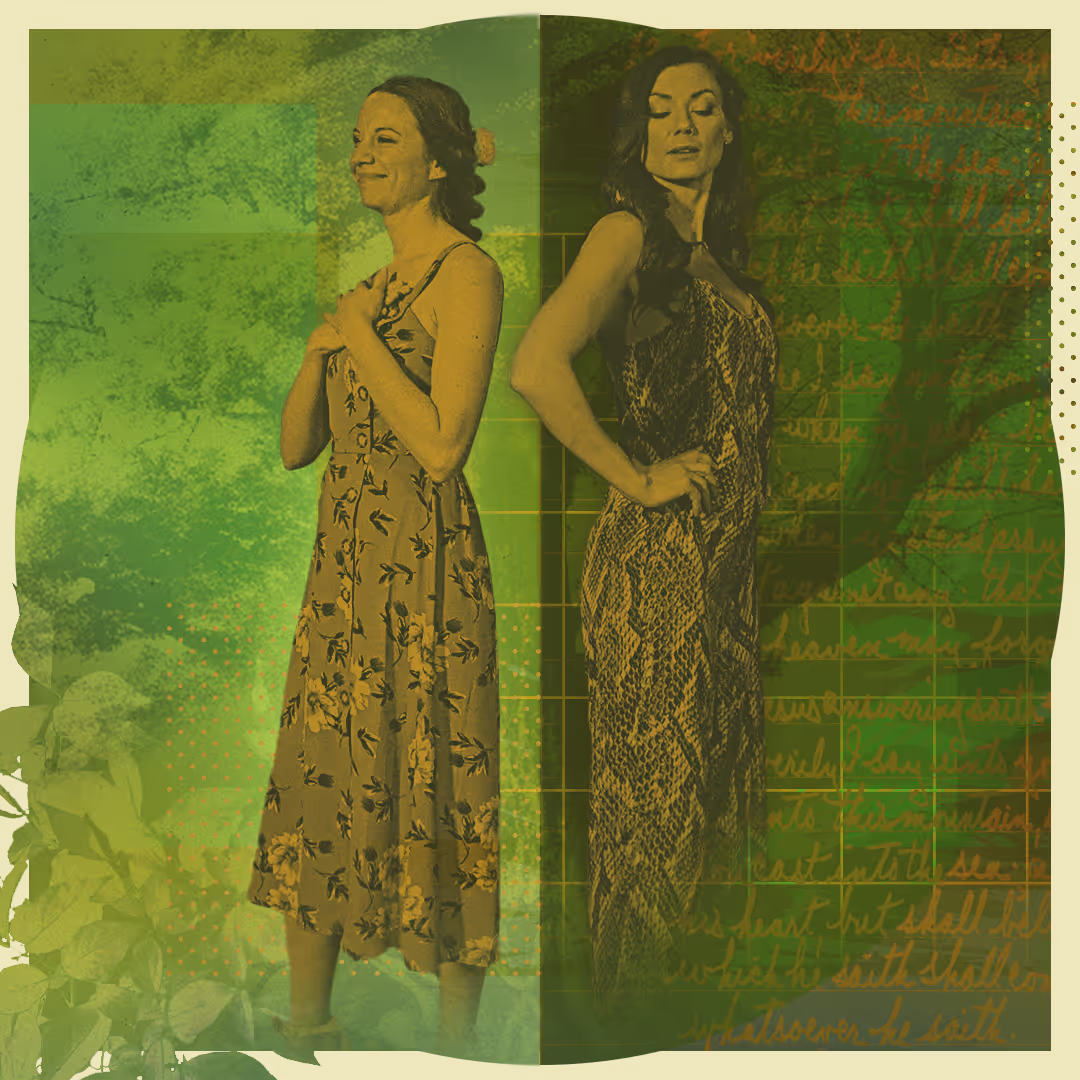
David: [gentle music] Adam and Eve are put in the garden, and they're told not to grasp wisdom for themselves. "Don't grab the knowledge of good and evil for yourself."
Seth: Okay.
David: Um, some of our friends have said that's, uh... "Don't define good and evil for yourself."
Seth: Mm-hmm.
David: "Don't be wise in your own eyes," Proverbs will say.
Seth: Yeah, that's how, uh, Judges says it.
David: And Judges talks about it that way.
Seth: Yeah.
David: So it's a very biblical theme-
Seth: Mm-hmm
David: ... to talk about being wise in your own eyes, grabbing and defining-
Seth: Mm-hmm
David: ... good and evil for yourself.
Intro: Welcome to the Spoken Gospel podcast. Spoken Gospel is a ministry that's dedicated to speaking the gospel out of every corner of scripture. In Luke 24, Jesus told his disciples that every part of the Bible is about him. In each episode, hosts David and Seth work through a passage of scripture to see how it's all about Jesus and his good news. Let's jump in. [upbeat music]
David: Well, welcome back, everyone, to another episode of the Spoken Gospel podcast. We are in our second episode on the Book of Proverbs. Last episode, we looked at what are proverbs, these pithy sayings, why is it in poetry? Are proverbs meant to be obeyed or learned from? How do we see Jesus in all that? It was a fun little chat.
Seth: Fun chat.
David: Today, we're gonna look at a couple things. What does it mean to say that the fear of the Lord is the beginning of wisdom?
Seth: Okay.
David: And we're gonna look at where all wisdom began in Genesis 1 with the creation story, and how Proverbs flows into that story.
Seth: I'm so, I'm so glad, because the fear of the Lord is a question I always... I, I-
David: Yes
Seth: ... always think about, like-
David: Same.
Seth: Uh, I've got ways that I, I make that make sense for me. Uh, but it's not also a phrase I interrogate-
David: Yeah
Seth: ... all that often in my Bible study. It's like, "Okay, let's really dive down-
David: Mm-hmm
Seth: ... and what, figure out what it means to fear, uh, fear the Lord."
David: Yes.
Seth: Uh, and I remember... I don't even remember where this is, but, like, it always catches me off guard in Genesis, where God is referred to as the fear of Isaac.
David: Oh!
Seth: And I'm like, and I'm like, "What does that mean?"
David: Yeah.
Seth: And I like, "I'll figure that out later." [laughing]
David: We'll figure that out later. [laughing] Whatever you don't understand in the Bible, just admire.
Seth: Just admire it. [laughing]
David: Yeah. A friend of mine told me that recently. Um, well, okay, let- let's look at the beginning of the story of the Bible.
Seth: Genesis.
David: Uh, but to do that, let's start by looking at it through the lens of Proverbs.
Seth: Okay.
David: So Proverbs chapter 8 talks about the beginning of the world and gives us a different vantage point of the same narrative, and so, uh, wisdom is talking, as she has been for a while. Wisdom in Proverbs is personified as this woman-
Seth: Mm
David: ... calling out in the streets, and in the gates, and, and everywhere, just begging people to listen to her, 'cause she knows right from wrong. She knows what will give you life.
Seth: Mm.
David: And she just wants life for you, and she's begging you to have it, and so she's this... She's wisdom in- she's wisdom incarnate.
Seth: Man.
David: Begging you.
Seth: I already have a question that I know w- we might have to answer later. [chuckles] But like, why is she a woman?
David: Yeah. Well, let's, let's, let's, let's, let's put a pin in that one.
Seth: Okay, we'll put a pin in that one.
David: We'll put a pin in that one.
Seth: I wanna know that one.
David: 'Cause I think we have good answers for that.
Seth: Okay, okay, okay.
David: But the narrative-
Seth: The narrative right now-
David: We'll take it there
Seth: ... wisdom is calling out.
David: Wisdom's calling out.
Seth: A woman is calling out.
David: And then verse 22 of chapter 8, "Yahweh possessed me at the beginning of his work, the first of his acts of old. Ages ago I was set up, at the first, before the beginning of the earth. When there were no depths, I was brought forth, when there were no springs abounding with water. Before the mountains had been shaped, before the hills, I was brought forth, before he had made the earth with its fields, or the first of the dust of the world. When he established the heavens, I was there. When he drew a circle on the face of the deep, when he made firm the skies above, when he established the fountains of the deep, when he assigned to the sea its limit, so that the waters might not transgress his commands, when he marked out the foundations of the earth, then I was beside him, like a master workman, and I was daily his delight, rejoicing before him always, rejoicing in his inhabited world, and delighting in the children of men." And so wisdom is how God made the world, [chuckles] is the simple way to say this.
Seth: Yeah.
David: It was by, through, and with wisdom that God formed-
Seth: Yeah
David: ... everything that was formed.
Seth: I know, I know that Arius taught this, that Jesus was a created thing.
David: That's right.
Seth: Uh, he believed that this verse was talking about Jesus.
David: Yeah.
Seth: And I, I... You know, it's obviously, Jesus was not a created being.
David: Yes.
Seth: This is just orthodox Christianity since Arius brought it up. [chuckles]
David: Yep.
Seth: Um, it is shocking to me how much like a god wisdom seems-
David: Mm
Seth: ... in this passage of, like... 'Cause I was like, "Oh, that's the Holy Spirit, right?" The, the, his-
David: Oh, sure, yeah
Seth: ... the Spirit hovering over the face of the waters before creation arrived, or just, like, that co-creator thing is how John talks about it in John 1.
David: Yep.
Seth: Uh-
David: From him-
Seth: Through
David: ... through him, all things were made.
Seth: Yeah, that's right.
David: Yep.
Seth: And so I'm like, this, from other places, I associate the role of creation with, like, a role in creation with God itself.
David: Yeah.
Seth: Uh, so it's just kind of shocking to me-
David: Yes
Seth: ... to, to read that.
David: Yeah, I think it's fair to say that Jesus is wisdom, but wisdom is not Jesus. [chuckles]
Seth: [chuckles] Okay, yes.
David: And I think that clears it up.
Seth: [laughing] Okay.
David: [laughing] It's like, calm down, Arius.
Seth: Calm down, Arius.
David: I think-
Seth: You don't have to go that far
David: ... I think we're gonna be okay here. So but what we wanna say here is-
Seth: Yeah
David: ... that in the beginning, God made the world with wisdom.
Seth: Yeah.
David: Like, that's the paradigm.
Seth: Yeah.
David: And, and so then when we go to Genesis chapter 1, and we see that he's making the world with order, and balance, and structure, there's wisdom in it.... it, it is a wise telling of how the world is made, and then he puts human beings in that garden, in that paradise, in that wise world, and he puts before them the tree of life and the tree of the knowledge of good and evil.
Seth: Mm-hmm.
David: This tree of knowing. Uh, you could, you could... It might be a stretch, some might quarrel with this, but you could call it a tree of wisdom. I mean, Eve looked at it, and it was desirable to make her wise. And so God puts this wisdom tree in the Garden of Eden, and so in a sense, I think we have to grapple with the story of Genesis 1 to 3 as a wisdom narrative.
Seth: Right.
David: Right?
Seth: And that's what, and that's what the Book of Proverbs is clearly teaching us to do-
David: That's right
Seth: ... is to, to recognize that wisdom was present at the creation of the world-
David: That's right
Seth: ... and that there was a choice between life and- and we talked about this in last podcast, how Proverbs, life and death are on the line in Proverbs.
David: That's right. Yep, and God said, "If you eat the fruit of the wise tree-
Seth: Yeah
David: ... you will die."
Seth: Mm-hmm.
David: And then the other choice is the tree of life.
Seth: Mm-hmm.
David: There's both here.
Seth: Yeah.
David: And so it is a choice of life and death.
Seth: Yeah.
David: And so what we- what we're invited to think about in, in this wisdom exercise is, why did God put the tree of the knowledge of good and evil in the Garden of Eden?
Seth: Okay.
David: Uh, and why, why... I think everybody's asked that question.
Seth: Yeah, yeah.
David: Like, why... If, if it was just gonna cause them to sin, why did he put it in there?
Seth: Mm-hmm.
David: And I think there's a story happening here.
Seth: Okay.
David: And it leads us to what the beginning of wisdom is-
Seth: Okay
David: ... and it's the fear of the Lord.
Seth: Okay.
David: That Adam and Eve are put in the garden, and they're told not to grasp wisdom for themselves. "Don't grab the knowledge of good and evil for yourself."
Seth: Okay.
David: Um, some of our friends have said that's, uh, "Don't define good and evil for yourself."
Seth: Mm-hmm.
David: "Don't be wise in your own eyes," Proverbs will say.
Seth: Yeah, that's how, uh, Judges says it.
David: And Judges talks about it that way.
Seth: Yeah.
David: So it's a very biblical theme to talk-
Seth: Mm-hmm
David: ... about being wise in your own eyes, grabbing and defining-
Seth: Mm-hmm
David: ... good and evil for yourself, uh, making wisdom you-centric instead of God-centric.
Seth: Mm-hmm.
David: So who defines right and wrong? Who defines good and evil? Who defines life and death? Who defines wisdom and folly? That's the question that's on the line here.
Seth: That's the... That, that was what the tree represented.
David: That's what the tree represented.
Seth: Yeah, yeah.
David: And God said, "Don't eat from it right now."
Seth: Mm-hmm.
David: So the wisdom of the garden was the word of God. Listen to the word of God-
Seth: Mm-hmm
David: ... and you, and that's all the wisdom you need.
Seth: You'll have life-
David: That's the knowledge
Seth: ... and-
David: Yep
Seth: ... plenty and-
David: Yep
Seth: ... Eden.
David: That's right. That's the knowledge you need. Um, so don't reach out and grab for it, or you'll, it'll, it'll lead to death.
Seth: Yeah.
David: And so what would've kept them in right relationship with God? What would've kept them in a wise-
Seth: Mm-hmm
David: ... world?
Seth: Mm-hmm.
David: It would've been listening to God's command-
Seth: Mm-hmm
David: ... fearing his command.
Seth: Yeah.
David: Um, and so the fear of the Lord is this humble posture where we say, "I don't know. God knows."
Seth: Mm-hmm.
David: And I think the best place to see that posture is in one of the most famous verses in the Bible in Proverbs.
Seth: Okay.
David: Proverbs 3:5: "Trust in the Lord with all your heart, and do not lean on your own understanding. In all your ways acknowledge him, and he will make straight your paths. Be not wise in your own eyes. Fear Yahweh and turn away from evil, that it might be healing to your flesh and medicine to your bones." That's-
Seth: It's like I could hear-
David: ... this is Eden
Seth: ... God saying that to Adam and Eve.
David: Absolutely!
Seth: It's like, "Here, trust in me."
David: Just trust in me.
Seth: "Not in your own understanding."
David: Yep.
Seth: Yeah, it's like-
David: I kn- I know it can seem really smart, and efficient, and obvious to just go ahead and grab good and, the knowledge of good and evil-
Seth: What seems right to you. Yeah
David: ... Just grab, grab it. It's right there! Just grab it. But that's not how he wanted to grow the wise-
Seth: Mm-hmm
David: ... people that he had birthed there in Eden. He wanted to do it his own way, and, and some, some people say eventually they would have eaten from the tree of the knowledge of good and evil at the behest of God.
Seth: Mm.
David: But not then. They weren't supposed to grab it for themselves in that moment. They were to lean not on their own understanding-
Seth: Mm
David: ... and not define good and evil for themselves.
Seth: They're supposed to listen to God.
David: They're supposed to listen to God. So, and, and that, and, and, and that's defined in, in chapter 3 here as, "Fear the Lord." So the fear of the Lord, I think we could distill into, is don't lean on your own understanding, but instead, trust in the Lord with all your heart.
Seth: Mm-hmm.
David: Let him define what is right and wrong, what is good and evil, what is life and death.
Seth: Okay, that's help... I mean, so if I'm just hearing you-
David: Yeah
Seth: ... it's like trusting the Lord is the beginning of knowledge.
David: Yeah.
Seth: Fools des- Yeah, yeah.
David: Yeah.
Seth: So think I have just so much in that word, "fear".
David: Yeah.
Seth: So defining it as trust is, like, comfortable.
David: Yeah, yeah, yeah.
Seth: Is there nothing I'm supposed to make of the choice of the word "fear" at all?
David: Mm.
Seth: Or is that, is that just, like, my, a psycholog- a psychologized understanding of the word, "fear"? Like, I should have, like... Like, there, that trepidation when you reach the edge of a cliff.
David: Mm.
Seth: It's not a bad fear.
David: Right.
Seth: It's natural when you come face to face with a 1,000-foot drop.
David: Right.
Seth: Uh, it's like bef- or before I go and stand before a president, or a king, or a man with a lot of power, my reactions or, will matter more in that room-
David: Right
Seth: ... than they matter everywhere. Is that, is that-
David: Yeah
Seth: ... It's like, 'cause I, I have that sense of fear, too. I have, like, "Oh, I'm scared, I'm terrified. That's a monster."
David: Yes, that's the fear.
Seth: And then I have the other type of fear, where I am approaching great power.... mm, and I just feel the weight of all the consequences before me.
David: Yeah.
Seth: And so I'm like, should I be im- importing that sense to it, or as well- or is it, "No, no, no, you really should be simply trusting the Lord?"
David: Man, that's such a good question.
Seth: [exhales]
David: Uh, and I think it's helpful that you brought up even just the picture of going and seeing the president or something.
Seth: Yeah.
David: That would put a fear in you, uh, not that he was gonna chop off your head or something [chuckles]
Seth: Yeah, yeah, yeah.
David: But that's an, an important moment.
Seth: Right.
David: The eyes of someone powerful are upon you-
Seth: Mm-hmm
David: ... and what happens in that room has a greater import-
Seth: Mm
David: ... than what happens outside of that room-
Seth: Mm-hmm
David: ... uh, because of who is in that room. So in the Garden of Eden, at the creation of the world, Eden was the place where Heaven and Earth overlap. It was where God and man co-inhabited.
Seth: Mm-hmm.
David: And where God is, so are his eyes, and so is his presence, and so is his wisdom. It's brooding there.
Seth: Mm-hmm.
David: And so to fear the Lord is to be aware that he's in the room.
Seth: Mm. Yeah.
David: And he's watching, like, he's there.
Seth: Yeah.
David: It's... That matters! Like, we are living with God. Wisdom is a, a, is an understanding and an awareness that what I do in life is under the sight of God.
Seth: Mm-hmm.
David: Now, I think we can get in dangerous water there really quickly, where we can be like, "And God's just waiting to smite me when I mess up."
Seth: Right.
David: Or, or... Yeah.
Seth: Yeah, yeah, yeah.
David: And it's like, well, that's not the Biblical God that we see.
Seth: That's not... And, and that's not really... It's like, sure, the president could order off with your head.
David: Right.
Seth: But it's like, that's not the type of fear-
David: Fear, right
Seth: ... that we're talking about here. And another way I was think- as you were talking, it's like, you- we've said a few times that life and death are on the line-
David: Yeah
Seth: ... in the following of the wisdom. So there's just, in moments where every step count, it's like-
David: Yeah, yeah, yeah
Seth: ... it places you in this frame of mind where every step counts, and that's not a negative thing. That's just the truth of the matter.
David: Right.
Seth: Like, I think of, like, a, a tightrope walker.
David: Yeah.
Seth: Not because... J- just for the sake of the metaphor-
David: Yeah
Seth: ... it's like every step matters-
David: Right
Seth: ... between falling and staying on the wire.
David: Yeah. There's a safety net, you know. Sure.
Seth: There's a safety net. It's like, right. It's like, there's, like, there's grace, right? [chuckles]
David: Right. Yeah.
Seth: But, but, like, every step matters.
David: Every step matters.
Seth: Right. And so, like, so that's close to what-
David: Mm
Seth: ... I should be thinking here.
David: Yeah. I think it's also not just like... I, I don't know quite how to say this.
Seth: Yeah.
David: It's not just who's in the room, but who's in the room? [chuckles]
Seth: [chuckles] Yeah.
David: It's not that there is a grand power or important person in the room, it's that that person is the holy, omnipotent-
Seth: Mm
David: ... benevolent God.
Seth: Yeah.
David: That Yahweh's in the room. It's, it's not fear of Elohim, right? You know, you know, it's fear of Yahweh-
Seth: Mm-hmm, personal God
David: ... is the beginning of wisdom, the personal God, fearing Him, knowing that He's in your-
Seth: Oh, and that the word is Yahweh-
David: The-
Seth: ... verse 7 is what you're saying.
David: Yes, yes.
Seth: Oh, I understand.
David: And it's like, fear of Yahweh is the beginning of wisdom. Being afraid of some false god you made up, who's petty and petulant, is the beginning of folly, [chuckles] perhaps.
Seth: Mm-hmm.
David: But f- but knowing that you are in relationship and proximity with Yahweh-
Seth: Mm-hmm
David: ... fills you with a different kind of life.
Seth: Mm-hmm.
David: That it, it adds val- it adds value and import to everything-
Seth: Yeah
David: ... you're doing because you're in the gaze of God. So even in, uh, chapter 5, in verse 21, it's, it's l- it's, it's asking you like, "Hey, w- why should you live wisely? Why should you do this?" And it, it, it even talks about, why should you be faithful to the wife of your youth, the- your first wife? Why be faithful to her? Verse 21: "Because man's ways are before the eyes of Yahweh, and He ponders all his paths." So, like, God's watching, and that-
Seth: Mm
David: ... doesn't have to mean to smack you.
Seth: Right.
David: Right? It means that my life is not a private one.
Seth: Yeah.
David: I'm in communion with Yahweh, and so for Israel, they are God's-
Seth: Mm
David: ... people. They were in God's land, next to his temple-
Seth: Mm, mm
David: ... where he lived, in his house. They were kind of like Eden.
Seth: Yeah.
David: And they were to live before the Lord with-
Seth: Yeah
David: ... fear.
Seth: Should I feel stressed out by that?
David: [chuckles] That's a good question.
Seth: B- [chuckles] That's, that's... I'm like, "I think there's a way to spin this positively. I'm in the presence of the-
David: Yeah, yeah
Seth: ... benevolent God, but, like, this also stresses me out."
David: Yeah.
Seth: Like, every, every decision is life and death is on the line?
David: [laughs]
Seth: I am in the presence of the most powerful-
David: Yeah
Seth: ... covenant God in the universe? Uh, my life-
David: Let-
Seth: ... is to be marked by-
David: Yeah, let's-
Seth: Yeah
David: ... let's, let's, let's pause here, 'cause yeah, I think it's really easy to split.
Seth: Yeah.
David: We are, we are now, how quickly we forget what the o- like, the purpose of-
Seth: Yeah
David: ... fear of the Lord is the beginning of wisdom, to trust in His wisdom.
Seth: Mm-hmm.
David: So when we're saying that we're a f- we, we have fear of the Lord-
Seth: Mm
David: ... because God's in the room, is not saying, "God's watching, so watch out."
Seth: Mm.
David: It's saying, "Listen to Him, 'cause he's right next to you. He's right there."
Seth: Mm-hmm.
David: He's with you. There's a witness in your life, and he's, he's saying like, "Let me tell you understanding and wisdom, my son. Let me give you instruction. Let me tell you the wise thing to do," and you would be a fool not to give credence, and reverence, and respect-
Seth: Mm
David: ... and an awesome awareness-
Seth: Yeah
David: ... that the God of the universe is whispering how to live in the world he created.
Seth: Yeah.
David: And so he's there not... He- we're told why he's there and why you should fear him.
Seth: Yeah.
David: It's because he's talking, and he has something more important to say to you-
Seth: Yeah
David: ... than anyone else.
Seth: In all my metaphors of, like, standing on the cliff's edge, or on the tightrope, or walking into the, the president's chambers-
David: Mm-hmm
Seth: ... uh, there was a sense of, like, judgment, or like-
David: Oh, yes
Seth: ... my actions are being judged.
David: Yes.
Seth: And like, what I do in the next moment determines life or death.
David: Oh, man.
Seth: But what you're saying is, like, no, he's invited you into the room.
David: ... to, to talk to you.
Seth: Yeah, like, or there's something-
David: Well, I, okay, I think I have it really clearly now.
Seth: Yeah, yeah, yeah.
David: So here's the deal: you're walking to death right now.
Seth: Okay.
David: God's not the death bringer, you are!
Seth: Okay.
David: You are walking towards death. You should be afraid of that. [chuckles]
Seth: Right.
David: But there's something more that you should give credence to, a different voice, who's saying, "Look, can I show you the way to life?"
Seth: Mm.
David: "Listen to me, I have the way to life."
Seth: It's an intervention.
David: It's an intervention. You're already al- al- going to off the cliff, and he's like, "There's a cliff there!" You should f- fear that voice and listen to it. You should give credence to that voice. Like, if you're driving, and all of a sudden, you... someone says, like, "Watch out!"
Seth: Yeah.
David: Ah! I'm, I'm awake and afraid. Why? Because I was headed towards death.
Seth: Yeah.
David: And this, this voice came and said, "Can I show you the way to life?"
Seth: Yeah.
David: God's not the death bringer, we are.
Seth: Yeah, and it's like I'm assuming... like, in all my imagination, I'm assuming that the only reason I'm in God's presence is to be judged by him.
David: Oh, man. [chuckles]
Seth: But, but the, the, but the, the reality is, no, the judgment has already come by my own actions.
David: That's right. I've brought death into the world-
Seth: And I-
David: ... and I'm gonna fall into the trap that I built.
Seth: And then the Book of Proverbs is God, like, grabbing me-
David: Yes
Seth: ... and saying, "Hey, look where we're headed, man." [laughing]
David: Look where we're going, dude! [laughing]
Seth: "I come from a very wealthy place.
David: [laughing]
Seth: Um, I've got life and fruit. So much fruit." [laughing]
David: Come on, man, I got fruit for days.
Seth: "I'm gonna tell... Let's, let's turn around."
David: Yeah.
Seth: "Let's, let's... If we go that way" [laughing]-
David: It's gonna be really good.
Seth: It's gonna be really good.
David: It's gonna be so good.
Seth: "And I love you. You're my son."
David: Yeah.
Seth: So that's-
David: Ah
Seth: ... that's a really helpful-
David: Yes
Seth: ... reframing of, of f- of, like, just the image of fear, and then the fear that I have in that moment is like, "Oh, the most powerful being in the universe just told me to, to turn left for fruit."
David: Yep.
Seth: Like, that's, that's, that's, oh, oh, oh, and I'm now... Oh-
David: Yeah
Seth: ... I'm now seeing properly the thing in front of me, the cliff edge.
David: That's right.
Seth: Oh, I'm afraid of that. Oh, I-
David: Someone, someone yelled, "Fire," in the building.
Seth: I should be afraid of...
David: Yeah, that's right.
Seth: Yeah.
David: So it's like, I- by an appropriate fear of the Lord's commands, I'm also, like, exposed to, like, the true, the true reality-
Seth: The true reality
David: ... of where I'm headed.
Seth: Mm-hmm.
David: Like, okay.
Seth: Yeah.
David: I think about the difference between the voice of Lady Wisdom and the voice of another character, Lady Folly-
Seth: Mm
David: ... in this book, and, um, we hear from both of them, and they have very similar offers to us. "Hey, come here. I've got food. I've got wine. We're gonna have a good time together." But they mean very different things.
Seth: Yeah.
David: And God's voice comes and tells us how to understand them.
Seth: Yeah.
David: And we kind of get a, to peek into their houses, and in the house of Lady Wisdom, there's flourishing-
Seth: Yeah
David: ... and life and beauty and goodness. And do you know what's underneath the porch of Lady Folly's house? A bunch of dead bodies.
Seth: Mm-hmm. Yeah.
David: And it's like you're walking into Lady's Folly, Lady Folly's house, and God grabs you-
Seth: Mm
David: ... and says, "Son, you're walking into a grave."
Seth: Mm-hmm. Mm-hmm.
David: I'm afraid of that.
Seth: Mm-hmm.
David: Fear has grabbed hold of me-
Seth: Yeah
David: ... but it's for my life.
Seth: Yeah.
David: It's to stay me from death. That's just... That's good.
Seth: Yeah. Okay.
David: All right, and, and isn't that the paradigm set up in Genesis 1?
Seth: Yes.
David: "If you reach out and grab from this tree, you will die. L- fear the Lord-
Seth: Mm, mm.
David: ... because I'm trying to give you life."
Seth: And look, it's all around you.
David: It's all around you!
Seth: Like, I-
David: Here, stay here, please.
Seth: Stay here, yeah.
David: Can we keep hanging out?
Seth: Yeah.
David: Hello?
Seth: Yeah.
David: Where'd you go? [chuckles] Why did you leave?
Seth: Yeah.
David: The voice of the Lord is always calling you back in, and into life, and away from death.
Seth: Mm. It's like when God does finally come, after they eat the fruit, there is that judge- the fear of judgment that comes in that moment, right?
David: Mm.
Seth: But it's... And, like, there are consequences. Like, death comes, right?
David: Yeah.
Seth: Death comes. But the very next thing that comes is the promise of how to get back. A- another piece, the wisdom of the seed-
David: That's right
Seth: ... that will be born.
David: Yeah.
Seth: The promise of the seed that will be born and bring them back to Eden.
David: Yeah.
Seth: So it's like even, even in that moment of, like, where the king must act like a king-
David: Mm-hmm
Seth: ... and do justice against those who, like-
David: Yeah
Seth: ... have broken his wisdom, or however-
David: Sure
Seth: ... we wanna talk about that.
David: Well, l-l-let's lean into that.
Seth: Yeah, yeah.
David: 'Cause I'm, I'm about to try to connect a few things here-
Seth: Yeah
David: ... that I'm not prepared to connect.
Seth: Okay, okay.
David: But I'm getting a little midrashy here.
Seth: Okay. [chuckles]
David: So I'm about to, like, try to do something live in the room.
Seth: Right.
David: So... 'Cause there is something I wanted to talk about, but that made me think of-
Seth: Yeah
David: ... of something different. So God made this world.
Seth: Mm.
David: He gave us this world, and, um, we can look around and understand it, and wisdom is knowing how to interact with it properly.
Seth: Mm-hmm.
David: And so he gave us the tree of the knowledge of good and evil.
Seth: Yeah.
David: And, and to, to misuse it is to grab it for ourselves.
Seth: Yes.
David: To use it properly is to go, "I'm not supposed to take that for myself." Why? Because the Lord's words are my wisdom.
Seth: Mm-hmm.
David: It's, it's a, it's a portent and a warning to me-
Seth: Yeah
David: ... to say, "I need to run to the Lord for wisdom, not to that tree. I need the Lord. Oh, my gosh! Okay-
Seth: Yes. Yes, yeah.
David: ... let me go fear his words." Instead, we, we took it, and, and we-
Seth: Yeah
David: ... their eyes were opened. They knew things.
Seth: Mm-hmm.
David: Like, they, they were given knowledge-
Seth: Mm-hmm
David: ... all because they took the stuff surrounding them-
Seth: Mm-hmm, mm-hmm
David: ... and started to manipulate it for their own ends-
Seth: Mm-hmm
David: ... for, for different and fallen purposes.
Seth: Yeah.
David: And so God's like, "Okay, now that you have knowledge, and now that you, you... things have been revealed to you, and you weren't ready for them-
Seth: Mm-hmm
David: ... I wanted to mature you and get you ready for how to live out in the world, but you've grabbed it for yourself. Well, now, when you go out into the world, you're gonna live in a broken way."
Seth: Yeah.
David: "And so now thorns and thistles are gonna grow up. There's gonna be more pain.
Seth: Mm-hmm.
David: There's gonna be more death. Why? Because y- I hadn't trained you in how to live with the grain of the universe yet, how to be Eden bringers. And so now you're like, 'Oh, I'm ready to go. I'm ready to go live, and, and have-
Seth: Mm-hmm
David: ... I have knowledge.'
Seth: Mm-hmm.
David: Well, all you're gonna do is warp the world around you now."
Seth: Mm-hmm.
David: And so really the curse is, like, God telling them the reality of the broken decisions that they're bringing to the world.
Seth: Yeah.
David: And so in the very next chapter, that's what we see.... um, I mean, for example, it's not God that brings death on Adam and Eve's children.
Seth: Mm.
David: It's their own broken choices.
Seth: Mm.
David: It's Cain that brings the first death-
Seth: Mm-hmm
David: ... against his brother, Abel.
Seth: Yeah.
David: He's misusing the tools around him, things that were made for life and flourishing, and maybe agriculture, he starts using those to kill his brother. He's, he's, he's using life to create death.
Seth: Yeah.
David: And then that continues to happen, um, as Cain's line continues. So a- as you go through his genealogy, you meet people, and you hear about the technological advances that they make.
Seth: Mm-hmm.
David: And if you're not reading them in the right way, you might think, "Oh, Cain's thriving!"
Seth: Yeah.
David: You need to use wisdom-
Seth: Mm
David: ... 'cause look what happens here. So the, the first person we meet, they, um, they start... They're, they're known for b- uh, raising livestock-
Seth: Mm-hmm
David: ... is the first one. Well, animals were not yet allowed as food. This, the, the- that happens after Noah.
Seth: Mm.
David: So they're, they're again grasping for something that God has not granted. Then, then we're shown that there's, there's someone who brings in the invention of the lyre and the pipe. Uh, these are musical instruments.
Seth: Right.
David: Um, but and you may go, "Oh, music's nice."
Seth: Yeah.
David: But in the context of, uh, the ancient Near Eastern world, uh, these things were used more for seduction, especially these instruments, for seduction-
Seth: Mm
David: ... and for divination.
Seth: Mm.
David: And so now they're starting to listen to other gods, and they're trying to-
Seth: Mm
David: ... gin up the, the, the words of other gods instead of Yahweh.
Seth: Mm-hmm.
David: And then there's bronze and iron. Well, good, metalwork is good-
Seth: Mm
David: ... right? That's fine. Yeah, sure.
Seth: Yeah.
David: But what were they using it for? Well, violence starts covering the world.
Seth: Mm-hmm.
David: They're making weapons, and they're-
Seth: Yeah
David: ... they're bringing death. So they are- they have knowledge of good and evil. They n- they now know more than they were supposed to, and they couldn't bear up under the weight of their knowledge, and so they start twisting the world into brokenness because they have knowledge, but they don't have wisdom. And so they start breaking the world, and bringing-
Seth: Yeah
David: ... more wilderness and less Eden.
Seth: Yeah, uh, and another way to frame that is like, we have this moment where Adam and Eve choose to reject the wisdom of God-
David: Mm-hmm
Seth: ... reject the fear of the Lord, reject the wisdom of God. God confirms that choice by saying, "Okay, go into the world."
David: Yeah.
Seth: "You, you will operate with a deficit of the wisdom that I, I, I, I promise you. Like, there's a way-
David: That's right
Seth: ... to receive it-
David: Yeah
Seth: ... but you c- but I will allow you to continue to reject it."
David: Right.
Seth: And so when Cain goes out, and there's, there's moments of people receiving the wisdom of God and life coming-
David: Mm-hmm
Seth: ... and that happens all throughout the Bible, but in Cain, we have what happens when you do not fear the Lord.
David: Yeah.
Seth: And it's interesting that all those things you said, like, okay, we can think of those positive and negatively.
David: Yes.
Seth: It's like, oh yeah, that bronze is, fills the temple one day.
David: Yeah.
Seth: Musical instruments fill the temple one day.
David: That's right.
Seth: Uh-
David: They facilitate hearing the voice of God.
Seth: Livestock are used to remind Israel that their sins are forgiven. [chuckles]
David: Yeah, [chuckles] all these good things.
Seth: All the good things. Uh, but-
David: But reached for early and not at their proper time.
Seth: Yeah, or re- yeah, or without the fear of the Lord.
David: Yeah, without the fear of the Lord.
Seth: Without the fear of the Lord.
David: The wisdom.
Seth: Um, a lot of death-
David: Yeah
Seth: ... and, like, the first death in Scripture comes from not fearing the Lord.
David: Yeah.
Seth: Yeah.
David: And so... That's so good, Seth. Yeah, and so let's go back now, back into the garden, and there's two voices operating in the garden.
Seth: Okay.
David: There is the voice of God-
Seth: Mm-hmm
David: ... who's giving them the command.
Seth: Yeah.
David: And they should fear that voice, but then we're introduced to another voice-
Seth: Mm-hmm
David: ... and that is the voice of the serpent, the snake who comes and uses wisdom-
Seth: Mm
David: ... to manipulate and, and, and mold, let me say mold, and shape, and teach Eve at the tree. So it, we're told that the, the serpent is craftier than any of the other beasts.
Seth: That word, crafty wisdom?
David: Is, is used pretty regularly, is wisdom.
Seth: Crazy.
David: And so he ha- he's bringing his wisdom to bear on Eve, and there... But it's, it's not God's wisdom. [chuckles] This is a counter wisdom, and it, it's the wisdom that always comes to us and says, "Let's use the good world God made to bring death instead of life."
Seth: Mm.
David: There are two voices.
Seth: Mm-hmm. Right.
David: One is the voice of God saying, "Let me show you how to use the world for life."
Seth: Mm-hmm.
David: And then there's a voice of the serpent saying, "Let me show you how to use the world for death." And so Proverbs picks up on this, and it, it presents these two voices as two women.
Seth: Yeah.
David: Lady Wisdom and Lady Folly. So now let's go back into chapter 3. Let's go back into the-
Seth: Mm
David: ... Garden of Eden-
Seth: Mm
David: ... because we're introduced to, uh, basically, we have two voices in the garden. We have the voice of God-
Seth: Mm-hmm
David: ... that gives the command about everything and how to live in this world, how to treat it. He says, "Be fruitful and multiply, have dominion, subdue the earth."
Seth: Mm-hmm.
David: "I've created this good thing, and I'm gonna show you how to wisely-
Seth: Mm
David: ... bring life and flourishing to that world."
Seth: Mm-hmm.
David: Then this other voice comes, and it's the voice of the serpent, and he-
Seth: Yeah
David: ... uses the word, uh, that is often translated in our Bibles, craftiness. He's craftier than-
Seth: Okay
David: ... any other beast, but that's the same word that's often used throughout the Bible to talk about wisdom.
Seth: Like-
David: It's not necessarily a negative term. It's used positively throughout the Bible.
Seth: Other place in the Bible translated is just wisdom.
David: And yeah, it might be, it might be translated, um, uh, prudent-
Seth: Mm
David: ... or crafty.
Seth: Mm.
David: But it, what I'm trying to say is, it, it's not a negative term.
Seth: Not necessarily negative.
David: Yeah, it is a function of wisdom, and-
Seth: Mm
David: ... everywhere else in the Bible, it's used positively.
Seth: Mm-hmm.
David: Uh, and so, uh, he uses wisdom, he uses prudence, he uses skill, uh, to offer Eve a different way to get life. So instead of saying like, "Hey, God wants to hold out on you and make you depend on him, [chuckles] and then you'll get life and flourishing, you can just reach out for it and grab it yourself, and you'll have life, and you'll be like-
Seth: Yeah
David: ... God, and you'll know everything he knows, and you can carve a path for yourself."
Seth: Mm-hmm.
David: And that tempts Eve. It's a shortcut to wisdom.... it's a promise of life.
Seth: Short cut to life. Yeah.
David: It's a promise of life, and a quicker way to get it.
Seth: Mm-hmm.
David: Uh, or a different way to get it-
Seth: Yeah
David: ... or a more, I don't know, like, a more self-sufficient way to get it. You could-
Seth: Yeah
David: ... probably populate that with-
Seth: Right
David: ... a whole bunch of different words.
Seth: That's right. Yeah, and I'm just automatically thinking of all the different types of things Lady Folly says in the Book of Proverbs-
David: In Proverbs
Seth: ... where it's like, "Come and sleep on my bed of roses." Like-
David: "Yeah, it's gonna be real great."
Seth: And it's like, okay, that's a type of happiness-
David: Yep
Seth: ... or a type of life.
David: Right.
Seth: But there's bodies under the floorboards.
David: That's right. [chuckles]
Seth: As we said before. Yeah.
David: Yeah.
Seth: It's like, it's like there's... And we, we always, like, make that distinction normally.
David: Yes.
Seth: Like, there's a- so if it feels good in the moment versus what will last forever-
David: Yes
Seth: ... there's a temporary happiness, eternal. Like, we, we understand-
David: Yep
Seth: ... that distinction.
David: That's right.
Seth: And that's happening here.
David: And so you're so right to make the connection between the words of the serpent and-
Seth: Yeah
David: ... Lady Wisdom-
Seth: Yeah, yeah
David: ... and her words, because it's the same paradigm.
Seth: Mm, mm.
David: You've got two voices in the Book of Proverbs. You've got the voice of Lady Wisdom, who is the voice of God, calling out to, to his people, "Oh, simple ones-
Seth: Yeah
David: ... let me mold you and let me make you wise, so that you might have life." But then you have the voice of Folly, who's saying, like, "Forget all that. There's a different way to life, and it's way easier. Come do this."
Seth: Mm-hmm.
David: "But don't you know that leads to death?"
Seth: Yeah.
David: And these two voices... And so throughout the biblical story, we have these two voices, and we n- and, and basically we need someone to come and silence the voice of the snake, and tell us what's true.
Seth: Yeah.
David: And we need someone to help us learn and, and, and hear how to hear the voice of wisdom and the voice of God, and put the fear of God [chuckles] in us.
Seth: Yeah. It's interesting even to think about, like, the Torah that way, like, the laws that God gives his people. So they just come out of Egypt. They've been indoctrinated-
David: Yeah
Seth: ... in the ways of Egypt for hundreds of years. They're about to be their own people, and Pharaoh, too, is d- described like the serpent in, in Genesis.
David: Yes, he is. Yes, he is.
Seth: So it's like the Torah is, like, the alter- it's like the alternate wisdom.
David: That's right.
Seth: The true wisdom of God to, like, combat the wisdom of the snake that they've lived under for centuries.
David: Yeah, that's really, really good. Yeah, the snake, you could call it Pharaoh.
Seth: Yeah.
David: You, later, you call it Babylon.
Seth: Yeah, yeah, yeah.
David: You, you could call it the wisdom of the world-
Seth: Yeah
David: ... you know, the, the voice of the serpent.
Seth: Yeah.
David: There is this theme, uh, and it gets ingrained in us, where it's just like-
Seth: Mm, mm
David: ... I think this is how... I think this is who God is-
Seth: Yeah
David: ... and I think this is how the world works. I think this is how to treat one another, and Egypt gets in our bones.
Seth: Yeah.
David: And then the Torah comes as the voice of Lady Wisdom-
Seth: Mm, mm
David: ... and says, "Um, maybe treat one another with equity."
Seth: Yeah.
David: And [laughs]
Seth: Yeah. There's something far better than what you think life is right now.
David: That's right.
Seth: And it's like, that's the, the C.S. Lewis line, like-
David: Yeah
Seth: ... "No, we're content making mud pies in the slums, because we can't imagine what a holiday at sea is like."
David: Yeah.
Seth: And that's, that's the invitation of wisdom itself. It's like you're contenting yourself with defining good and evil on your own terms.
David: Yeah.
Seth: But true paradise is listening to the, the voice of the Father, fearing the, fearing the Lord.
David: That's right.
Seth: Um-
David: I think you're right to, to also bring this up, because you kind of have this counter-wisdom, uh, that comes up a lot. Um, and it comes up in this kind of, I don't wanna over-engineer this, but this, like, male-female dynamic.
Seth: Mm-hmm.
David: So you have Adam and Eve in the beginning, a king ruling with his good wife.
Seth: Mm-hmm.
David: And then you have... A- and that, that kind of falls apart. We t- just talked about that. And then you get, uh, the, the Torah, counter wisdom, and you have Moses as this kingly figure, and his people, Israel, as the, the woman figure there, come to rule alongside-
Seth: Yeah
David: ... him, and bring wisdom and light to the world. And then you have Solomon, the ultimate king of Israel-
Seth: Mm-hmm
David: ... who should be the one to obey Torah fully.
Seth: Yeah.
David: He asks for wisdom, to understand Torah, and to know right from wrong, and to apply it. And, and the Queen of Sheba comes-
Seth: Mm-hmm
David: ... and rules with him for, for... A- and it's, it's amazing, what, what happens. The Queen of Sheba comes, and when she leaves, she leaves with more treasure than she came with-
Seth: Yeah
David: ... and she's astonished at what's happened.
Seth: Yeah, yeah, yeah.
David: So you get this kind of, again, male-female-
Seth: Mm
David: ... wise dynasty happening. Um, and then here in Proverbs, you get it again.
Seth: Mm-hmm.
David: You have the son and Lady Wisdom.
Seth: Mm.
David: So he's like, "My son, marry Lady Wisdom."
Seth: Yeah.
David: "Uh, be that king, and get Lady Wisdom at your side." So you asked earlier, "Why is-
Seth: Yeah
David: ... Wisdom portrayed as a woman?" I think this is one of the reasons why-
Seth: Yeah
David: ... is because that's the paradigm, is a king who binds this wise woman to his side, and only then can he b- build a fruitful kingdom of wisdom-
Seth: Yeah
David: ... that, that blesses the earth.
Seth: And there's, like, something of a redemption story for Eve in it, too.
David: Absolutely, yeah.
Seth: So you have the first woman, exercised foolishness.
David: Oh, that's so good.
Seth: But in Proverbs, you have-
David: She becomes wisdom incarnate.
Seth: Yeah.
David: Yeah.
Seth: And she brings about life for the world.
David: Yeah, that's so good.
Seth: Yeah.
David: And so what I wanna do with this meditation of we need someone who fully submits to the voice of Lady Wisdom-
Seth: Mm
David: ... someone who fully has the fear of the Lord, who trusts in him and not his own understanding-
Seth: Yeah
David: ... um, because it wasn't Solomon. Because as soon... You know, Solomon-
Seth: Mm, mm
David: ... he was supposed to be super wise and marry this one wise wife, and instead, he gets 700 concubines-
Seth: Yeah
David: ... and just screws the whole thing up, royally, uh, pun intended.
Seth: Pun intended.
David: [chuckles] Um, and, and so we're still waiting on this k- and then we get, you know, the men of Hezekiah in, in Proverbs, and we get Lemuel and Agar and, you know, all these other kings, you know, that were close, and they had wisdom, but not perfectly. And then you get the, the Rabbi, Jesus. [chuckles]
Seth: Mm-hmm.
David: You know, you get this... You get Jesus-
Seth: Yeah
David: ... he comes, and you only, we... In, in our, in our Bibles, we only have one story of him as an, as a, not a baby and not a man.
Seth: Yeah.
David: And I just think it is the coolest story to think about-
Seth: Mm
David: ... in terms of, of this, uh, meditation. So let's go to Luke.... uh, chapter two. So in Luke chapter two, um, Jesus and his ex- family and extended family, uh, they've gone into Jerusalem, um, as they are-
Seth: Yeah
David: ... you know, always doing in terms of the traditions and the rhythms of life, to follow the law and go to different festivals, and things like that, and Jesus is 12.
Seth: Mm-hmm.
David: He's come of age, you know, and, and there's this tradition that some people have talked about, uh, where you o- o- on- when you're 12 and you go into Jerusalem, you go in with your mother, but then you leave with your father. It's kinda like this-
Seth: Mm
David: ... rite of passage.
Seth: Mm.
David: And so some people have speculated, like, "Is that why Jesus [chuckles] got left behind?"
Seth: It's like-
David: Because, like-
Seth: I thought you had him. [laughing]
David: I thought you... [laughing] The switch got messed up.
Seth: "Well, that was next year, he's only 11!"
David: [laughing] No, but he's-
Seth: "He's 12, you dummy!"
David: ... definitely 12. [laughing] Um, and so but I think what's fascinating, if that is, like, a cultural thing that we should be thinking about, is Jesus did stay with his father.
Seth: Mm.
David: But he stays in the temple.
Seth: Mm, mm-hmm.
David: And that's what happens whenever he's lost and his parents come looking for him. He's like, "I was supposed to be with my dad."
Seth: Yeah.
David: "I came of age." [chuckles] Right?
Seth: Yeah. Yeah, yeah, yeah.
David: And, and he- and what is he doing? He's sitting there with the teachers of Israel, and he's asking them questions, and he's trying to learn. He's following instruction. He's trying to find wisdom. He's sitting under the teaching of the voice of God.
Seth: Mm-hmm.
David: And what do we hear at the end of this story in, in verse 52? "And Jesus increased in wisdom, and in stature, and in favor with God and man," which is exactly what Proverbs-
Seth: Yeah
David: ... promises us to do if we fear God and love wisdom.
Seth: It's, it's als- uh, you- this is awesome because it's also the way that, uh, Samuel is described.
David: Mm.
Seth: This is a direct quote from the Book of Samuel.
David: Oh.
Seth: And in the story, the Hebrew ordering of the Bible, you have the Book of Judges, where everybody does what is right in their own eyes.
David: They're all following their own wisdom.
Seth: And then Samuel comes, and he grows in wisdom and stature-
David: Oh
Seth: ... and he begins the crowning of David, the king-
David: Yeah
Seth: ... who would rescue the people of God from their-
David: That's cool
Seth: ... from their evil and sin.
David: Wisdom saves God's people.
Seth: Wisdom saves God's people.
David: Yeah.
Seth: That's right.
David: And so Jesus grows in wisdom, and then he becomes this wise teacher.
Seth: Mm-hmm.
David: He becomes wisdom incarnate in the world, and I, I think as we th- as we talk about looking at the raw material of the world around us, and those who listen to the voice of the serpent, those who've listened to the voice of Lady Folly, they grab the raw material of the world around them, and they twist it for a wrong purpose.
Seth: Mm-hmm.
David: So, uh, oh, we could make musical instruments for divination, or we can make musical instruments-
Seth: To honor God
David: ... to honor God!
Seth: Yeah.
David: Well, I, I think one of the most amazing things is the way Jesus saw humility, and death, and the cross-
Seth: Mm
David: ... is his wisdom culminates there. The wisdom of the cross is foolishness to the world, but he saw in the cross the way to defeat the snake- [chuckles]
Seth: Yeah
David: ... the, and the voice of Lady-
Seth: Mm-hmm
David: ... uh, Folly, and defeat death itself to save the world. And what the world saw as a cross, as a torture device, as a, as a effective and humiliating method of execution, Jesus saw as a way to save the world.
Seth: Mm-hmm.
David: And up there on the cross, the, the, the snake's voice seems to have won. Like-
Seth: Yeah
David: ... "Save yourself. Get you down!"
Seth: That's right. That's right.
David: "What you gonna do?
Seth: Yeah.
David: Where did, where'd all your wisdom lead you?" And yet Jesus went under that shame, and that humiliation, and that-
Seth: Mm
David: ... folly, and rose from the dead to show that his wisdom-
Seth: Mm, mm
David: ... is greater, that he actually understands how the warp, and the woof, and the grain of the world operates. Because as he only ever did what was wise in the eyes of the Father-
Seth: Mm, mm
David: ... therefore, he could only ever have life.
Seth: Yeah.
David: And so even the death that Lady Folly said would come if he did those things-
Seth: Yeah
David: ... had no hold.
Seth: Yeah.
David: And so he silences the lies of Lady Folly by showing-
Seth: Mm, mm
David: ... this is what eternal life looks like. This is what-
Seth: Yeah
David: ... glorified life looks like. Resurrection life looks like this. It's through death-
Seth: Mm
David: ... and humbleness-
Seth: Yeah
David: ... and it's through fearing the Lord and doing what he says, even if it goes to death, even if he puts you in a garden, puts a tree of the knowledge of good and evil in there, and says, "Don't eat it." That doesn't make sense!
Seth: Mm.
David: Why would you do things like this? " 'Cause I want you to listen to my voice."
Seth: Mm-hmm.
David: "Well, I want my son to go to a cross." Why would you do it like this? Like, I'm gonna sweat drops of blood asking for another way, 'cause it doesn't seem smart, but it's wise.
Seth: Yeah.
David: That's the way God saved the world.
Seth: Yeah, it is interesting that the whole book o- of Proverbs tells us to pursue life.
David: Yeah.
Seth: And the Torah says, say, "I said before you life and death-
David: Yep
Seth: ... pursue life." And really, and Jesus sums it up for us, "What, uh..." The way that you summarize all of that is by loving God and loving neighbor.
David: Mm.
Seth: And then the way the Book of Proverbs summarizes all that is by fearing the Lord. And what I'm hearing you say, too, is that the wisdom of the Book of Proverbs, and the wisdom of the Torah, and the wisdom of Jesus, um, isn't about life at all costs.
David: Mm.
Seth: Which is, I think, one way to interpret what it means to b- have a wise life.
David: Yeah.
Seth: Things that bring you life, choose life, right?
David: Right.
Seth: I- it's, uh... It's genuinely the wise life is listening to the Lord.
David: Mm.
Seth: Um, and that might not mean life.
David: Right, 'cause ultimately, life comes from Him-
Seth: Yes
David: ... not through your own devices.
Seth: Not through the, the, the betterment of the world around us through wise living-
David: Yeah
Seth: ... in accordance with the patterns of the world.
David: Right. Those things might happen.
Seth: Those things might happen, but there's a deeper and hidden wisdom-
David: Yeah
Seth: ... a secret magic-
David: Oh, [laughing] yeah, yeah, yeah
Seth: ... before the dawn of time. But, like, this is how Paul talks about it in, uh-
David: That's right, and it looks like folly
Seth: ... First Corinthians. It looks like folly.
David: Yeah.
Seth: But-
David: How is the cross wisdom?
Seth: And everything in the Bible might teach you that it's... Much in the Bible might teach you that it's folly. The book of Proverbs says to pursue life.
David: Mm.
Seth: "I said, before you life and death, choose life."
David: Mm.
Seth: But-... the wi- wisdom has never been about getting life at all costs.
David: That's right.
Seth: It's been about fearing the Lord-
David: Yeah
Seth: ... even when-
David: And Jesus feared the Lord unto death.
Seth: Unto death.
David: And it was life to him and the world.
Seth: That's right.
David: Yeah, I think you're absolutely right, and Proverbs puts a really fine point on this. Uh, kind of, uh, in the middle of the book, you get this verse in chapter 15, verse 33: "The fear of Yahweh is instruction in wisdom, and humility comes before honor."
Seth: Mm.
David: So to humble yourself under the Lord's instruction brings honor, but it's humiliating.
Seth: Yeah.
David: And Jesus is, like, embodying this proverb-
Seth: Mm-hmm, mm-hmm
David: ... when he says, "I know that in humiliation I will receive honor-
Seth: Mm
David: ... because I believe Proverbs."
Seth: Yeah.
David: So, yes, it was the cross. Yes, it was humiliating. Yes, it was shameful. Yes, it seemed like folly.
Seth: Mm-hmm.
David: But I know that humility precedes honor, that that's the way the world works.
Seth: Right.
David: That's the grain of the universe. If you want life, pursue death.
Seth: Yeah.
David: Do you wanna be great? Be the least. Like, Jesus is actually doing a better job of applying Proverbs-
Seth: Yeah
David: ... than the, all the other kings of the world.
Seth: Mm. It makes me think, like, as I've been processing Proverbs with you, like, when I read a proverb, I should listen to it because it will bring me life, right?
David: Yeah.
Seth: Like, it's the wisdom of Father-
David: Yeah
Seth: ... telling me to bring life. And we've said multiple times that these, these are patterns. There's sometimes where it's... it may work out, and maybe in some contexts you shouldn't apply that bit of wisdom. Like, you're supposed to use wisdom! This is a-
David: Mm, mm
Seth: ... general principle that you're supposed to apply, and you're angling, though, towards the fear of the Lord and, and, and life itself.
David: Yeah.
Seth: But what this makes me think is that, that angling towards life, in, and in light of the resurrection of Jesus, is that, like, true wisdom is, like, angling towards death, and, like, the harder thing.
David: Mm.
Seth: So you have two paths before you.
David: Yeah.
Seth: Which one, which one do I take? Uh, a wise man, you know, takes the path with more rocks. You know, like-
David: Yeah, yeah, yeah.
Seth: There, there's a sense that the choices we make will be humiliating.
David: Yeah.
Seth: And we- and often that will seem to work against the life that the, the proverbs tell us to pursue.
David: Mm.
Seth: But Jesus promises that when we choose the harder and humiliating, and maybe even the unwise thing, by other, any other standard-
David: Yes, right
Seth: ... it brings about life.
David: Yeah, I'm totally tracking with you.
Seth: Yeah.
David: I think, a, a maybe a short way to say it is it's not really about redefining what the path looks like, but the destination.
Seth: Yeah.
David: That we have to redefine what, what do we mean by life?
Seth: Mm-hmm.
David: And life for whom? And life in what way?
Seth: Mm-hmm.
David: That the life Jesus brought, he lived a humiliating, impoverished, servitude life [chuckles]-
Seth: Yeah
David: ... that ended in death.
Seth: Yeah.
David: But he's now glorified at the right hand of the Father and is pouring out life for all nations, and will remake heaven and Earth, and Eden will come back.
Seth: Mm-hmm.
David: And he will be the king who rules and brings his good rule to the world. Why? 'Cause he was servant. He took the, he took the-
Seth: Yeah
David: ... the path with more rocks.
Seth: Yeah.
David: But it wasn't the rocky path that made it right.
Seth: Right.
David: You know, it's not-
Seth: Mm-hmm
David: ... like, we don't wanna be, uh, ascetics here-
Seth: Right
David: ... where, you know, the, the more beat up you are, the better you are.
Seth: No.
David: It's that he was choosing things that tended the world toward life, but he did so in a world that hates light and life-
Seth: Mm-hmm
David: ... and a world that tends toward death.
Seth: It will pr- like, the world's response to you choosing it will be-
David: Yes
Seth: ... humiliation.
David: That's right.
Seth: And life.
David: Oftentimes.
Seth: And, and the Christian response should be to lean in in that moment-
David: Yes
Seth: ... because something greater than simply life- [chuckles]
David: Yep
Seth: ... is on the line here. Like-
David: So I, I think I have the perfect place to land-
Seth: Yeah
David: ... this idea as we wrap up the episode. So l- we meet Lady Wisdom at the beginning of the Book of Proverbs.
Seth: Okay.
David: And then we meet, in a sense, we meet her again at the very end. Uh, you might have heard of the Proverbs 31 woman.
Seth: Mm-hmm.
David: Right?
Seth: Every Mother's Day. [chuckles]
David: Every Mother's Day, the Proverbs 31 woman. Well, this is Lady Wisdom incarnate.
Seth: Mm.
David: At the beginning, she's this cosmic figure who was-
Seth: Yeah
David: ... before the beginning of the world, and at the end of the book, she's here, doing stuff, and, like, going to the market, and making trades, and-
Seth: Mm-hmm
David: ... and making shrewd business deals. Like, she's walking and talking and-
Seth: Yeah
David: ... alive. And I think we have to see, of course, Jesus is ultimately wisdom incarnate.
Seth: Yeah.
David: We've talked about that. But I think the beautiful meditation here as well, and the church has recognized this for a long time, is that, who is this woman who's living wisely and doing these things? Let's look at some of the things that she does. "She is far more precious than jewels, and the heart of her husband trusts in her." This is verse 10 and 11 of chapter 31. Um, th- verse 13: "She seeks wool, and flax, and works with willing hands. She is l- uh, she is like the ships of the merchant. She brings her food from afar. She rises while it is yet night, and provides food for her household and portions for her maidens. She considers a field and buys it, and with the fruit of her hand, she plants a vineyard. She dresses herself with strength and makes her arms strong. She perceives that her merchandise is profitable. Her lamp does not go out at night. She puts her hands to the distaff, and her, uh, hands, uh, hold the spindle. She opens her hand to the poor and reaches out her hands to the needy. She's not afraid of snow for her household, for all her household are clothed in scarlet. She makes bed coverings for herself. Her clothing is fine linen and purple. Her husband is known in the gates when he sits among the elders of the land. She makes linen garments and sells them. She delivers sashes to the merchant. Strength and dignity are her clothing, and she laughs at the time to come. She opens her mouth with wisdom, and the teaching of kindness is on her tongue. She looks well to the ways of her household and does not eat the bread of idleness. Her children rise up and call her blessed. Her husband also, uh, and he praises her."... and the fear of the Lord is in her." It, it kinda goes on there. But what the church has said for a long time is this is describing Christians.
Seth: Hmm.
David: This is describing the bride of Christ, that Christ is the king, right?
Seth: Right, right.
David: The Adam-
Seth: Yeah
David: ... and has married Lady Wisdom-
Seth: Mm-hmm
David: ... in the flesh, which is his church-
Seth: Yeah
David: ... whom he's perfecting and using, right? And so-
Seth: Yeah
David: ... Jesus has filled his church with his spirit, and through his spirit of wisdom, we are working in the world. Like, hospitals exist-
Seth: Yeah
David: ... and orphanages exist, and, you know, people would say there's a lot of laws and morality and ethics that exist because of the wise woman of the church and the influence that she's had on the world. And so the church is now Lady Wisdom incarnate, and you could also get there a different way. If Jesus is wisdom incarnate, and we are now the body of Christ on Earth, same thing.
Seth: Right, right.
David: You get there the same way.
Seth: Right, right, right.
David: But, uh, we are wisdom incarnate, and, and it's our job as Lady Wisdom to act this way, to bring justice, equity-
Seth: Yeah
David: ... um, y- you know, righteousness to the world around us.
Seth: Mm-hmm.
David: It's why you and I started Spoken Gospel, right? Because we're like, "The w- this would be good for the world, I think." It's why, um, we have amazing Christian people running a few homeless shelters downtown. It's why the churches you and I attend are, are-
Seth: Mm-hmm
David: ... a blessing to its congregants and to the city around it. It's why a lot of the Christians I know are leading banks in our city in completely different ways than the non-Christians are leading banks in the city.
Seth: Yeah.
David: They're lending to the poor and to, uh, marginalized communities and ethnic groups that others won't.
Seth: Yeah.
David: Why? 'Cause we're Lady Wisdom incarnate, and we're bringing Eden into-
Seth: Yeah
David: ... the world in a different way. This is the call-
Seth: Mm-hmm
David: ... of the Christian-
Seth: Yeah
David: ... to be a wise liver in the Kingdom of God.
Seth: Yeah. That's awesome.
David: Yeah.
Seth: That's awesome. I, I also kept thinking about, uh, like, verse 30, "Charm is deceitful, and beauty is vain, but a woman who fears the Lord is to be praised." Like, that, that is, that is what it means to be wise, to fear the Lord.
David: Yeah, fear the Lord.
Seth: And I was just thinking about Mary, like, Jesus' mother.
David: Yes! [chuckles]
Seth: Uh, like, she fears the Lord. She listens to some- to something that seems impossible.
David: That's right.
Seth: She says "yes" to the Lord, and the Son she bears is the Son of, the Son of the Book of Proverbs.
David: Yeah.
Seth: And he brings the life of Eden.
David: She was first filled with wisdom.
Seth: Yes!
David: Right, the wis-
Seth: Is that, is that what it says?
David: Well, no, j- I'm just saying, like, i- sh- if Jesus is wisdom incarnate-
Seth: Right. That's right
David: ... she was filled with wisdom incarnate [chuckles]
Seth: Yeah [laughs]
David: ... in her womb-
Seth: Yes
David: ... physically.
Seth: Yes.
David: It's amazing.
Seth: Yes.
David: Yes, she... Yeah, she was... Yeah, she obeyed the voice of the Lord and was filled with wisdom [chuckles]
Seth: Mm-hmm.
David: Like, physically [chuckles]-
Seth: Yeah
David: ... she's acting out in her body the reality of Proverbs. [chuckles]
Seth: Mm-hmm.
David: That she heard the voice of the Lord, submitted to it in humility, and was filled with incarnate wisdom. [chuckles] It's so cool.
Seth: A true redemption for Eve.
David: A true and final redemption for Eve and her line.
Seth: Yeah.
David: Yeah.
Seth: Yeah.
David: So-
Seth: Merry Christmas!
David: Merry Christmas. [laughs]
Seth: [laughs]
David: When is this coming out? I don't know.
Seth: I have no idea. [chuckles]
David: I don't know, but-
Seth: Merry Christmas
David: ... merry Christmas, regardless. [laughs]
Seth: [laughs]
David: It's gonna be great. Well, thank you all so much for joining us, uh, as we continue through the Book of Proverbs. We'll continue next episode looking at the cast of characters throughout the Book of Proverbs. We're gonna meet the sluggard and the, the wicked man and the upright man, and what are all these characters doing in the book, and how do- should we think about it? And we'll also meet, uh, a new way to talk about our protagonist in the book. We've called him the Son. Next episode, we're gonna call him Pete.
Seth: Pete.
David: And you're gonna learn why.
Seth: Okay.
David: So join us for that.
Seth: Love it.
David: Thank you for being with us. We'll see you next time. [upbeat music]
Outro: Thank you for listening to the Spoken Gospel podcast. Spoken Gospel creates short films, devotionals, and podcasts like this one. Everything we make is free because of generous supporters like you. To see our resources, visit spokengospel.com or subscribe to our YouTube channel. Thanks for listening. See you next time. [upbeat music]