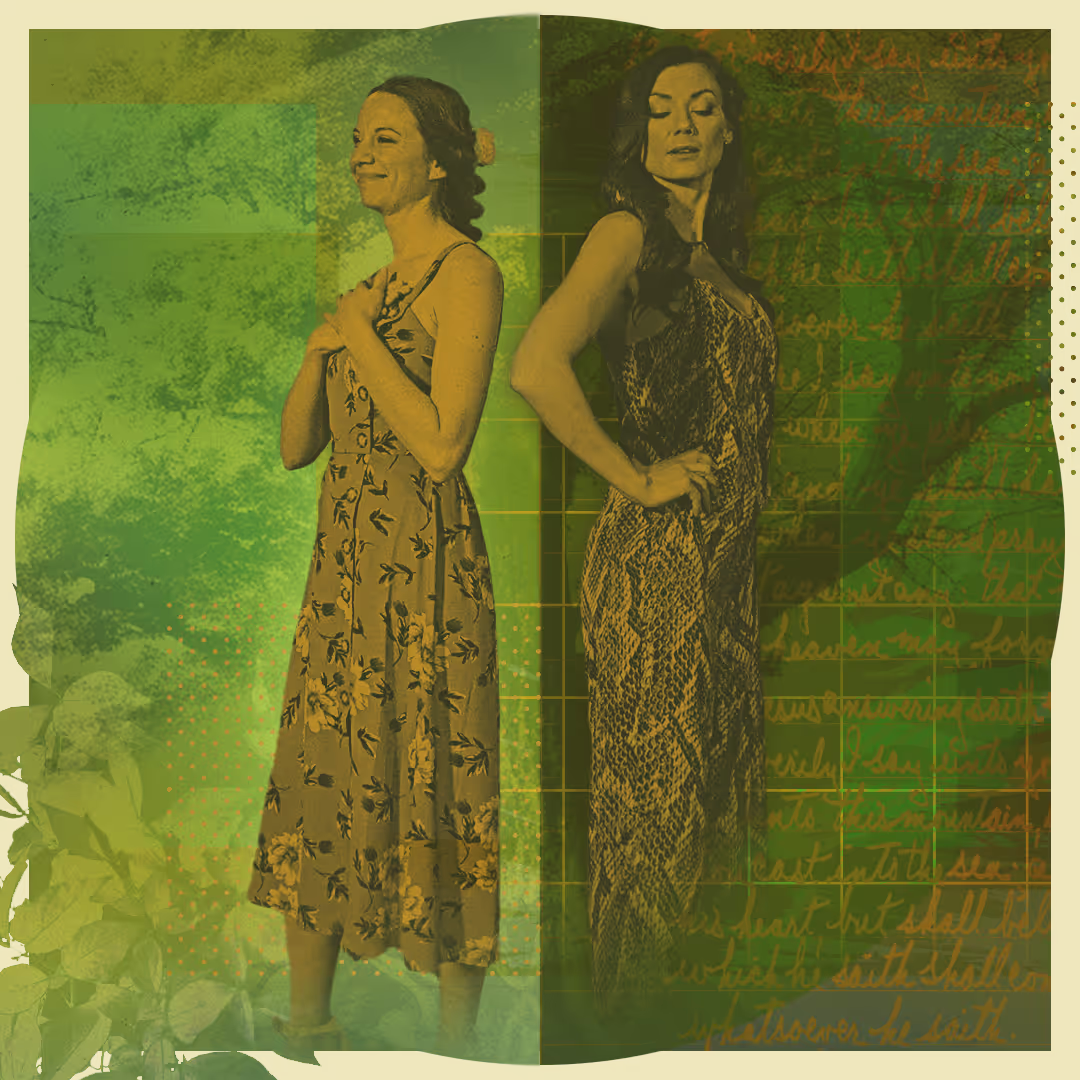
David: You guys ever heard of this, like, category of the Proverbs 31 woman? Raise your hand if this is a, like, a, a phrase you've heard, the Proverbs 31 woman. Okay.
Okay, good. Uh, I, I'm just gonna, like, dismantle some sacred cows, so I wanna know how many people I was gonna offend in the congregation today, and it looks like I got most of you, so I'm very excited. Um, yeah, so Proverbs, um, we're gonna wrap it up here today.
Um, we, we- I was gonna do this lesson on Mother's Day, which would be super appropriate, I think, uh, but I was, like, talking to Hayden about everything I wanted to talk about, and he's like: "I don't think that fits the middle of a series, uh, 'cause you're talking about the whole Bible." And I was like: "Fine, I'll go at the end when everybody's on vacation." Um, [laughing] so... But you guys are here. You guys look wonderful.
This is, it's looking pretty full today. You guys look great! So really excited to bring this word to you.
Let me pray for us and myself, and we'll dive in. Oh, Jesus, we wanna hear Your voice. You are wisdom.
Your Spirit is the voice of wisdom, and we wanna follow You into bringing Your flourishing kingdom into this world. So make us like the Proverbs 31 woman, that we might be to the praise of Your glory. Holy Spirit, please be with me.
Spirit of wisdom, fill me. Spirit of wisdom, fill my brothers and sisters in this room. Let us hear Your voice, and let us conform to the image of wisdom revealed in Your Son.
In Jesus' name, Amen. Okay, so Proverbs 31 introduces us to the third main woman in the Book of Proverbs. We know the first two.
We, we were introduced to them on our, uh, four weeks ago, on, on the beginning of this series. We had Lady Wisdom, and we had Lady Folly, and now we get the wife of noble character, the Proverbs 31 woman. And throughout Proverbs, these two other women, Lady Wisdom and Lady Folly, have been locked in a very public battle with the protagonist of our story, the young man to whom the king of Israel is writing.
And so we have to get all the categories in our head. We've got the king of Israel writing the letter of Proverbs to his princely son, showing him that he needs to navigate his life according to wisdom. And so in order to help him do that, he shows him imaginatively, like he's walking through the city square, and there are these two ladies on each side, yelling at him and screaming at him and calling out to him and pleading with him to follow them.
Lady Wisdom is saying, "Follow me, and you'll have life and blessing and righteousness, and you'll bring flourishing to the world through God's kingdom." And then Lady Folly is saying, "Oh, follow me, and you can come hang out with me and come into my bed, and ultimately, my house leads to death and Sheol and chaos and destruction." And so this princely man is trying to figure out how to navigate life when wisdom and folly are vying for his mind and his heart. That's the drama of the book of Proverbs. So now, in Proverbs 31, we see a woman who brings all the wisdom that we've been exploring and everything, all the hundreds of things we didn't explore, all the wisdom of Proverbs to bear in the world.
We see what Proverbs looks like lived out. We see Proverbs incarnated on the Earth, doing work in the community and what happens because of it. And what happens is, when wisdom is incarnated in the world, everything around it is brought life and abundance and blessing, and that's what we see this Proverbs 31 wife of noble character doing.
And to understand not only why Proverbs chooses to end its, its book in this way, but also why it's so important and why it's actually the story of the whole Bible, we're gonna have to obviously zoom out a little bit and get some broader context. And so let's remember, the book of Proverbs is God trying to bring wisdom into the world, and I think that's one of the reasons why the book ends with wisdom being brought into the world, incarnated through a human being operating in wisdom in his world. But more than that, Proverbs is very interested in bringing God's wisdom to God's king in the world.
That's the main point of the book of Proverbs, that you have Israel's king trying to pass on wisdom to his son so that Israel's kingdom, God's people, might be ruled by wisdom. And that's because our world right now, and whenever this book was written, is not ruled by rulers, by kings, by principalities of wisdom, but by kings and rulers and principalities of foolishness and chaos and destruction and idiocy, [chuckles] and that's who rules the world. And so God's trying to usurp the king of foolishness, of alternative wisdom, and put His own king over the world back on the throne to bring order and peace through a wise king.
So when we get to Proverbs 31, and you have this idea of a, of a, of a prince marrying a queen who is wise and them becoming one, you have this picture of a wise king ruling his people once again, and that should bring flourishing and peace and order back to the world. And so for Proverbs and for the nation of Israel, for the biblical story, literally the fate of the world is on the line when it comes to Proverbs 31. The world needs a wise king following God's wisdom in order for the world to be made right, because without a wise king, the world falls into chaos and death.
And that is the problem that we are introduced to on the first page of the Bible in the Garden of Eden. That is the story that is being told and furthered and ultimately completed in the story of Proverbs 31. So let's go back to the beginning of the biblical story-... and see how all of this maps on to how our story begins.
So the first wise king of the world was God himself, and we see his spirit hovering over death and chaos and disorder over the waters of the deep, and he rules and has dominion and wisely uses his power to bring the world into order and flourishing and life and beauty. And so God, the King, uses wisdom to create the world. In fact, in Proverbs eight, twenty-two to thirty-one, we get this description.
I, I've put a, a selection up here 'cause it's much longer, and I'll, I'll even read a shorter selection. But this is God, side by side with wisdom, who I would argue is Jesus, the second person of the Trinity, and then through the Holy Spirit, the Trinity of God is working wisely in wisdom to create everything that he created on days one to six in the world. Okay, so here we go.
Proverbs eight, twenty-two says this, "The Lo-" Oh, oh, sorry, this is quote. This is Lady Wisdom talking in, in the book of Proverbs. So this is wisdom's voice in Proverbs speaking.
So Wisdom says, "The Lord possessed me at the beginning of his work, the first of his acts of old. Ages ago I was set up, at the first, before the beginning of the earth. When he established the heavens, I, Wisdom, was there.
When he marked the foundations of the earth, then I, Wisdom, was beside him." All creation sprung out of God's wisdom. From the beginning of the story, we see that God's wisdom leads to creation, to life, to flourishing. The knowledge of God wielding wisdom is what created everything we know.
And more than that, because God's wisdom created the world, that also means that God's wisdom is imbued into everything that is in the world. I think Hayden talked a little bit about this in his first sermon, introducing us to this book. The, the way the world was intended to operate, the way our bodies were intended to be used, the way our minds and emotions, relationships, nature itself, all of those are governed by the wisdom of God.
Everything that the world was intended to be, God put like this grain into it, like the grain of wood, and, and when you sync up with that grain of wood and you follow its texture, things tend to go smoothly 'cause you're working with the wisdom of God, with the intention for which he made the world. You're using the raw materials of the world the way God intended. Whenever you go against the grain, against wisdom, that's when you get a handful of splinters, like Hayden talked about in our first lesson.
So God made the world through wisdom. The next thing he does is he makes wise rulers to rule that creation alongside him. He makes Adam and Eve and gives them wisdom on how to rule the world.
He gives them everything they need to know to, to bring his life and his garden and the flourishing of Eden to the rest of creation. He tells them to be fruitful and multiply. He tells them to have dominion.
He tells them to eat of every single seed-bearing plant in the garden, except one. We'll get there. And as they listen to God and, and work in the garden, they're syncing up with the grain of the universe.
They're, they're partnering with God's wisdom, and as they do, they would be God's rulers, his king and his queen, Adam and Eve, his king and his queen, spreading God's life through God's wisdom. So he gives them everything they need. That's the wisdom of God.
What he said to them in the garden, his commands, what he revealed, how he told them to live and to be in the garden, that's the wisdom of God speaking to Adam and Eve. "Go and eat of every seed-bearing plant. Uh, be fruitful and multiply.
Have dominion." That's God's wisdom speaking to his people. "Follow me. This is the way of the world.
This is the way I set it up. Come and obey and flourish, and there'll be life and peace, and it, it'll cover the earth. Just sync up with my wisdom.
There's one thing, though, Adam and Eve, I don't want you to reach out and take for yourself," and you have this tree called the Tree of the Knowledge of Good and Evil. Now, in a Hebrew mind, that language is a wisdom category. Knowledge, good, evil, how to navigate those two things, that's a wisdom category.
So we are squarely in the genre of the Book of Proverbs whenever we reach the Tree of the Knowledge of Good and Evil on the first pages of our Bible. The Tree of the Knowledge of Good and Evil represents the desire to know things apart from God's wisdom. The Tree of the Knowledge of Good and Evil represents the desire to know things apart from God's wisdom.
It represents the attempt to use the created world and our created bodies in ways that God's wisdom did not intend. It twists and bends God's creation in rebellion against the purpose that God had for the things that he made. So wisdom, and God wanting us to follow his wisdom, and, and the grain of the universe, and bring f- life and flourishing into the garden, that's why the Tree of the Knowledge of Good and Evil is there.
Uh, this is the one thing he tells us not to take for ourselves. And I just wanna take a moment to just emphasize, the Tree of the Knowledge of Good and Evil isn't some forbidden tree or some poison fruit or some magical thing that if you touch it, everything breaks. I, I think of, uh, Abu in the movie Aladdin-
David: ... right? Whenever he goes into the Cave of Wonders, and he's like, "Take only the lamp and touch nothing else!" You know, and everything like that, and then Abu sees a big ruby and touches it, and then everything starts melting, and they, they almost die. Um, that's not what the tree of knowledge of good and evil is.
It's not this magical ruby, okay? It was a willful, volition choice of Adam and Eve to choose to define good and evil for themselves apart from God's wisdom, to choose to use the raw material of the world for their own ends instead of God's ends, to go against the grain of the universe. So it wasn't this poison fruit that they ate, and it was like, "Oh, no, it's magic, and it did something." No, what they realized is they could live a life apart from God's wisdom.
There were other ways to operate in this world other than the way God revealed. There's a way to be human that God did not intend, and we can go figure it out for ourselves, and so that's what they did. And they did this because this alternative wisdom, this other voice, the voice of folly in the story, slithers in, in the for- form of a serpent.
So again, we have the same story as the Book of Proverbs happening in the Book of Genesis. You've got God's voice, the voice of wisdom, the voice that created the world, all the categories that Proverbs sets us up for us, over and against the voice of folly, Lady Folly, questioning all those things and trying to lead people to death. So it's the same story that's being told in Genesis and in the Book of Proverbs.
And so the serpent comes to Eve, this representative woman of all [chuckles] humanity, and i- he says to her that there's a different way to achieve the goals that God has set up for them. So God was like, "I want you to have flourishing life. I want you to be like me.
That's why I made you in my image. I want you to spread my garden around the world, and here's how to do it: Live in my garden, eat, enjoy, work the ground, be fruitful and multiply, have dominion. This is what I want you to do.
Just trust me and live in the way I've told you to be human in the world." The serpent comes as an alternative voice, and he says, "There's a different way to do that. You can do that a different way. You could just eat the fruit for yourself, and you can be like God.
You'll know good and evil for yourself. You won't have to depend on His voice to tell you what's right and wrong. Instead, you can just decide for yourself, determine your own fate, and you'll carve out your own path here in this world.
And you know what? It's gonna be better for you, 'cause you'll be like God. You'll get to make all your own decisions.
You can say, 'This is right, that is wrong. I'm gonna do this and not that.' You won't have this dependent relationship on God anymore to tell you what's wise. You can be wise in your own eyes.
Oh, how good does that sound? Let's do that." And so that's what Eve does. She decides that she's going to be wise in her own eyes.
That's what Adam does. He's gonna be wise in his own eyes. They're gonna determine what's right and wrong for themselves, and they're gonna try to carve out a path in this world that is different from the way that God called them to carve out that path, and that path does not lead to life. [chuckles] They always think it does.
We always think that the paths we carve for ourselves in this world, that are anti to God's strange and seemingly foolish ways of wisdom, we always think those ways will lead to life, but they only ever lead to death, and that's exactly what we see throughout the story of the Bible. Right away, we see Cain using, uh, the tools of his world to kill his brother, Abel. Death is brought into the world because they're not following the wisdom of God, but the foolishness of man.
"Oh, I can, I can free myself from this guilt I feel and this comparison I feel by just killing my brother. Uh, maybe, maybe I'll be more favorable in the eyes of God if this one who I'm being compared to is gone. I'll just kill him.
There's a different way to get what I want." And as you see Cain's line unfold, you see more and more people twisting the good things that God made in the world for evil ends. And I'm not gonna go into all of those examples, but it's a fascinating way to read the genealogy of Cain, as you see human beings twisting technologies, uh, for, for God's... or for evil ends. And so you, you see that trend continue.
We're, we're trying to find a good ruler who will come in and rule the world with wisdom once again, and yet, over and over and over again, as God tries to put good rulers on the throne, wise leaders for Israel and his world, what happens again and again is that the rulers of Israel, they listen to the voice of folly instead of the voice of wisdom, and they end up bringing death and destruction and chaos into the new kingdom, the new Eden, Israel, that God was building in the world. And so the kingdom of God never flourishes, it never pushes back darkness, it never corrects the folly and, and bent towards death that our whole world has until we get this little glimmer of hope in Israel's history. You get King Solomon, the son of, of Israel's ultimate righteous king, King David, and he asks God to give him wisdom above all else, and God does.
And so you have this pinnacle of a wise king. Maybe he's the one who will rule Israel in such a wise way that it finally restores Eden to Earth, that it finally pushes back all the brokenness in people's hearts and in politics and in, in how we treat our money and how we treat our poor. Maybe he'll bring this new sapiential rule to the world that will cover it in, in wisdom and peace and shalom.
And so I feel like that's the heart that Solomon had when he wrote this book. He's like, "I want this!" Like, and I, I don't know if at this point he didn't know if he couldn't... if he could- if he was, like, compromised, too compromised to do it 'cause he messed up royally. Ha, pun intended, he was a king.
Okay. Uh, thank you. [audience chuckling] Thanks, Jesse, I appreciate that. Good dad joke, you know?
Good, love a good pun. And so I don't, I don't know when he wrote this book [chuckles], but, but I have to assume that he has this ache to see wisdom manifested, incarnated, in a wise ruler who will bring the reign of God back to Earth, and so he writes this book.... and I think that's the hope that we need to have in our heads as we finally reach Proverbs 31. That would there finally be a king who doesn't listen to the voice of folly, but listens to the voice of wisdom, and in fact, joins himself to her in such a way that they become one, and can again, like a new Adam and Eve, the wise king and the wise wife, join together and rule the world with God.
That is what the hope of Proverbs 31 is offering to the Prince of Israel, to the son of Solomon. Be a wise king. Join yourself to wisdom, and through you, God will bring flourishing and life to the world.
So let's take a look at what this wise woman, this wife of noble character, looks like, this, this wife of the prince. Let's take a look at a few things here. Um, as I was trying to go through and group them and talk about them in different ways, all these wonderful, bafflingly successful, um, very aspirational things that this text talks about, um, this woman, two things in particular popped out to me.
So I'm just gonna talk about two things, uh, in Proverbs 31 about this woman. You could go so much deeper, but I think these are the two I wanna highlight before we, we kinda see how the story continues. The very first thing, and maybe the most important thing, is how her description begins and ends.
So a lot of times in Hebrew writing, you'll have a bookend. Uh, what, what do we call it, a mark? We call it a sandwich, right?
Yeah. We have a- we got a proverb sandwich now, and the sandwich of the, the, the, the woman of noble character is how treasured she is. It's how treasured she is.
"An excellent wife who can find?" It's like, you know, looking at, looking at the wife and going like, "There's no one like you. You are so much better than anything I've ever seen in my life." She's far more precious than jewels. I'd take her over treasure any day.
The heart of her husband, the one boasting in her, trusts her fully. "Oh, you, uh, yeah, I'll leave the house. I know everything's fine.
I, I'm not worried. You go out, do whatever you want. I, I...
You have my full trust because I love you so much, and you're so incredible." And he will have no lack of gain. Everything we do together, we just like... E- everything gets better when I'm with this woman.
She does him good and not harm all the days of her life. So there's this treasuring that the, that the husband and her community has for this woman. That's how it ends, too.
She, uh, her children rise up and call her blessed, verse twenty-eight, and they say this: "Many women have done excellently," there's lots of great women here, "but you surpass them all. Charm is deceitful, and beauty is vain, but a woman who fears the Lord is to be praised. Give her, uh, of the fruit of your hands and let her works praise her in the gates." So again, she's lifted up in the gates.
The glory and praise of this woman ends the, the story of Proverbs 31 as well. So, so I just want us to hone in on this one fact, 'cause it's gonna be so important later, that the defining characteristic of the Proverbs 31 woman, this, this wisdom incarnate that the prince marries himself to, her defining characteristic is that she's treasured, that she is loved, that she is desired. And I think that's so important to say because that has been the intent and the, and the, the heat of the Book of Proverbs.
It's trying to get the king to love wisdom. And so at the end of the book, you see a king obsessively adoring wisdom incarnate, and I think that's the, that's the point he's trying to make is, look at what beauty can happen whenever one of God's rulers incarnate in the world loves wisdom intently and treasures her above all else. So wisdom is highly treasured.
And then in the middle of these treasuring languages and the, and the, and the praise of the people, you have the other main thing that we could break down in a whole bunch of different ways, but the main point is this: the wise wife and everything she does brings flourishing to the world around her. That's Eden. Everything she touches just, like, bursts with life and b- blessing and provision and flourishing, a- and that's because she's being like the new Eve, like what, what Eve was intended to be, because she's partnering with the wisdom of God.
She's syncing up with the grain of the universe, and so everything she does just flourishes with life. And so you start to see even, like, the merchants around the world start getting affected by the wisdom that she is utilizing. And so the world is becoming a more peaceful, abundant, flourishing place because of this marriage of the prince of God's people and the wisdom of God, and so there's flourishing all around her.
This is in direct contrast [chuckles] to how Lady Folly is described. I, I, I always was wondering, why does Proverbs end with this incarnate woman showing us wisdom? And I think we've already talked about many of those reasons, and I think they hold a lot of water.
As I continue to unpack the language in this text, I would- I was looking for a lot of the, the vocabulary that was being used, and a lot of them were, were very rarely used throughout the rest of the Bible. Um, in fact, like the linens that this, this woman is dressing her bed with and things, is only used two other places in scripture. I thought this was so interesting, uh, 'cause it's not...
I thought, I was, I, I read linens, and I was like, "Oh, that's like priest language. Maybe this is a priestly thing that's happening." No, it's not priestly linen. It's like exotic, imported linens.
You guys are like, "Why are you telling me about this?" I, I'll get there, I promise. Um, the only other time it's used outside of Proverbs is when Samson, if you remember the story, Samson is like: "Hey, if, I'll make a bet with you. If you can solve my riddle, I'll give you thirty garments." Well, that word is this imported fine linen.
Okay, the only other time that word is used is to describe Lady Folly.... Lady Folly dresses her bed with the same exotic linens as the wife of noble character. And I'm like, so that just immediately pings something for me.
I'm like, why is Lady Wisdom getting her bed ready the same way as Lady Folly? Something's happening here. So I start to look, and sure enough, there are dozens of allusions and connections between Lady Wisdom and, or the, the wife of noble character in Proverbs thirty-one, and Lady Folly.
And what's happening is, all the things that is, that are said of Lady Folly, Lady Wisdom redeems and repurposes. So again, that's what wisdom does. W- we have the raw material of the world.
We have imported linens, [chuckles] and you can use them in two different ways. You can use them wisely to get a bed ready for your husband, whom you love, or you can use them as a trap, and a snare, and a luring device to try to get other married men to come sleep with you. Same piece of raw material of the world that God made in his good creation, but used in two very different ways: wisdom and folly.
And so there's this contrast that ends the Book of Proverbs, and what we see is wisdom wins. Like, wisdom is the one that the king listens to, that he joins himself to, and here's all the flourishing that happens. So why the comparison, though?
Why, why do this comparison? I, I think the main reason is to emphasize what the entire Book of Proverbs has been trying to do all along, which is make us long for, crave, desire, be thirsty for wisdom over and against folly. This is how the whole first part of the Book of Proverbs begins, is this king pleading with his son to love, and treasure, and go after wisdom.
Proverbs four, five to nine is one of the, the hottest parts of this. He says, "Get wisdom, get understanding! Do not forget my words or turn away from them.
Do not forsake wisdom, and she will protect you; love her, and she will watch over you." So this is like husband and wife language here. "The beginning of wisdom is this:" Get it! [chuckles] "Get wisdom. Though it costs everything you have, get understanding.
Cherish her, and she will exalt you. Embrace her, and she will honor you. She will give you a garland of grace for your head and present you with a glorious crown." The whole Book of Proverbs is trying to get the prince that is being written to, and us today, trying to get us to long for wisdom.
Hey, guys, get wisdom, because folly, and alternative wisdom, and the snake brain thing that's trying to get us to use God's good word for our own ends is messing everything up. It's killing us and the world around us, so please get wise. Wise up!
There's a better way to live, and it's only revealed in the wisdom of God. We all need to have our affections stirred and craving the wisdom of God, because like Eve, we always go after alternative wisdom. We long for quick fixes, not long obedience.
We prefer to get rich instead of finding contentment. I mean, think of all the life hacks or, or all the alternative wisdom that we've, we've filled our lives with. We say things like this: we say, "Well, I'll get more done, and I'll be more efficient if I don't rest on the Sabbath," right?
Why, why, why take a day off? It's so much more efficient to, to, to work seven days or to, to... I'll mow my lawn today, 'cause if I don't, well, then I can't do this, and I can't do that.
It's like, rest? No, rest is stupid. Rest is folly.
Taking the day off, that's not the American way. [chuckles] Okay? Um, we say things like this: "I'll provide for myself and my family more if I save what I have instead of giving it all away generously. I'll be more rested and at peace if I protect my me time instead of investing in an exhausting Christian community." [audience laughing] Uh, we, we tell ourselves this: "You know, I think nursing a secret porn addiction is a better way to satisfy, satisfy my desires than chastity and purity.
I think I'll be safer if I don't get involved in other people's problems. I think it's better if I surround myself with people who agree with me and help me grow than if I surround people, with myself with, with people who challenge me. I think I'll be happier if I can just, you know, disassociate and, and numb out my anxiety, and my depression, and my fears with alcohol, and distractions, and entertainment." But where has all of these- where have all these thoughts led us?
To depression, and brokenness, and more anxiety, and more death, and more fractured relationships, and more fractured societal systems, and economic systems, and broken hearts, and broken minds, and broken marriages, and broken parent-child relationships. We only know how to break everything with the way we try to figure it out. Everything we try to do, we just break it, just like Adam and Eve.
Because we're like, "No, no, no, I know where I'm supposed to go. I wanna bring life and, and, and have a good life, and bring flourishing to those around me, and, and I know how to do it. And it can't be rest, and generosity, and, and, and, and chastity.
It can't be that way. That's stupid. That's foolish.
I know how to do it." And every time we say no to God's wisdom and yes to Lady Folly, we just break the world more, and we break ourselves more, and we bring more death and destruction for ourselves and for others. We are in desperate need of a new, wise king who marries himself to wisdom and shows us how to be the kingdom of God in the world, who lives according to wisdom and can finally bring the garden back to Earth. We are in desperate need of the king described in Proverbs thirty-one.... and that's exactly who Jesus came to be.
He is the son of the son of the son of the son of the son of the son of Solomon. He is the ultimate king, prince, that Solomon was writing to, that wanted to long for wisdom above all else, and Jesus actually did this. He married wisdom.
He was filled with the Holy Spirit, the voice of wisdom, who hovered over the chaos of the beginning of the world and brought order and life into it. Jesus is the one who created the world in wisdom. He is wisdom itself incarnate.
Just as Proverbs thirty-one, we see a woman walking around incarnating wisdom and touching things and bringing flourishing to them, this is just a story here on, like, ink on paper. In Jesus, a real human lived who showed us what wisdom actually looks like in the flesh, in our actually broken world. He went around, and He brought life and flourishing to everything.
So a- as- think about it, as He went around and, and healed diseases, what was He doing? He was being the Proverbs thirty-one woman. Everywhere He went, death and destruction and chaos and suffering were fleeing, and life and flourishing and peace were coming back.
As He drove out demons, He was doing this. As He was teaching wisely the Torah, He was doing this. As He brought his disciples out of the broken world that they were living in and said, "Come, follow me," He was doing this.
He was being wisdom incarnate in the world. He's the only one who passed the test of the voice of Lady Folly. Lady Folly came to Jesus famously as the serpent in the wilderness, as Satan testing Him in the wilderness after His baptism, and he gave Him three tests.
He's like: "Look, I, I know why you're here. You're here 'cause you wanna be king of the world. That's your job.
I know why you came, and I can give you different ways to do this." So since Jesus came to show the world that He was God, Satan tempts Him to do so by turning stones into bread in the wilderness. 'Cause that's exactly what God did for the people in Israel. He brought bread out of nothing in the wilderness, and so if Jesus did that, He'd prove to everybody that He was like God.
Shortcut, life hack. Here we go, Jesus, I know how you can prove to everybody you're God. But in wisdom, Jesus would show that He is God by providing people bread through His flesh on the cross.
"That's stupid! That's folly," the world would say. No, it's the wisdom of God.
Since Jesus came to be King of the world, to rule the nations with peace and justice, Satan comes to Him, and he tempts Him to worship him. If Jesus just worships Satan, then Satan will hand over the nations of the world that he's been given to Jesus. He's like: "I have control of the nations right now.
They've been given to me. All you have to do is worship me, and then I'll make you king." But that's, that's the shortcut. It's the life hack.
But in wisdom, Jesus would take the kingdoms of the world from Satan by dying under his power on the cross in order to rise from him and plunder him in his resurrection victory. Well, that's stupid. Why would you die to win?
That's wisdom. The third temptation, since Jesus came to show Israel that He was the Messiah, the promised King of Israel, Satan tempts Him: "Well, here, I got a plan for that. Let's go to the most crowded, religiously significant place in Israel.
Let's go to the temple. You get up on top, throw yourself off the building, and because you're the Son of God, because you're the Messiah, scripture says angels will catch you before you land, and your foot won't strike the ground. And everyone will see that miraculous thing and be like, 'Oh, this must be the prophesied one from the Old Testament.' I got a life hack for you, Jesus.
This will be the way easier way to do it." But in wisdom, Jesus would show that He was the Messiah by taking the throne of Israel through an ascension that came after being lifted up on a cross and receiving a crown of thorns. He would take the highest throne above all thrones when He received a glory that could only come through death and humility. Jesus passed the test.
He's the wise King who only ever listened to the voice of Lady Wisdom. And the good news is, after this wise King took His throne, He married Lady Wisdom, and Lady Wisdom today, the Proverbs thirty-one woman today, is the Church of Jesus Christ. We are the bride of Christ.
We are the wife of noble character that the wise King has married and is now joining with Him to incarnate His wisdom in the world and bring flourishing to all the death and destruction around us. We all, collectively, men, yeah, men, women, children, young, old, people in this industry, that industry, people who work at home, who work in the business place, people in this part of the world, that part of the world, doesn't matter. We, the collective body of Christ on Earth, the incarnation of wisdom filled with the same spirit who filled Jesus, we, the Body of Christ, are now partnering with the King of the universe to be the new Adam and Eve with Him, ruling and reigning on the Earth to bring His wisdom to the world.
When we sync up with the way God wants to do things, we heal our neighborhoods and our homes and our hearts and the nations around us because we're ruling alongside our wise King. Proverbs thirty-one is a picture of us all. Okay, how do we listen to the voice of Lady Wisdom instead of Lady Folly?
Come back next week. I don't know. We're not preaching this again, so I, I, [chuckles] this is another sermon.
Here's the deal, and we'll, we'll hopefully we'll have time to pray about this at the, at the end, uh, during ministry time. But the voice of, of Lady Wisdom is the Spirit of God.... Uh, uh, Lady Wisdom in the Book of Proverbs says as much.
She says, "I will pour out my spirit on them." Who else said that? Th- this is the church answer. Jesus, "I'll, I'll pour my spirit on you!" Right?
So the, the voice of Lady Wisdom is the Holy Spirit that lives in us. What em- what empowered Jesus to do the work that he did, that, that, that helped him to listen to the voice of the Father and not any other voice in the world, to, to be the wise king on Earth? It was the indwelling of wisdom, the person of the Holy Spirit.
So as we think about these terms of listening to the voice of the Spirit, being guided by the Spirit, as we think about those terms, we can, we can think about the Book of Proverbs, and we can think, "This is kind of what the Spirit of God sounds like right here. He sounds like this, 'cause He, He wrote these words, He said these words, He breathed these words, and so let me learn to tune in to the voice of the Spirit in me to navigate the world and sync me up with the grain of the universe." The last point I wanna make is this, uh, 'cause I, I've actually heard... I don't know if you've ever done this, but I've, I've heard people, especially women, comparing themselves to the Proverbs 31 woman, which is not a fair comparison.
She is crushing it. Like, [laughing] she puts us all to shame, and, like, whenever it says, like, "Look, many women have done excellently," that's us. Like, there's lots of amazing women out here, uh, but y- this is an unrealistic expectation that is kind of set up for us here, and that's the point, 'cause it's not about one individual.
It's a- the collective church can do this in the world, but not one individual, and so I just wanna, I just wanna say, i- if you have just been playing this comparison game of, like, as the bride of Christ, you might even think just as the bride or spouse of my own partner or as a human, as a person trying to be incarnating the will of God in this world, I've just not lived up to Proverbs 31. Uh, and I, I just, I just don't think I'm, I'm, I'm quite cutting the mustard with, with what God would expect of me. Can I just say, again, the controlling characteristic of the Proverbs 31 woman is not her industry.
It's not her profitability. It's not, it's not her capitalistic endeavors or however we wanna define those things. It's not the flourishing that she brings.
The number one characteristic of the Proverbs 31 woman, remember we said this, is that she's highly treasured. Church, [laughs] we just like, uh... It's like we need to see it to our own hearts, like, we are the beloved bride of Jesus.
Yeah. When He looks at us, He's like, "There's no one like you! Like, oh, I want you more than jewels.
Like, I treasure you above all else. You know what I do? I go around Heaven all day, and I'm like, 'Hey, Father, you know how much I love my bride?
She's so beautiful. I love her so much. I treasure her above all else, and one day, I can't wait till I get to lift her up above all the world and the city streets and praise the glory of her beauty for all to see.'" Like, He's forming us, Paul says, into the spotless, pure bride of Christ, fit for the King on the day He returns.
Yes. And that's the difference between Lady Folly and Lady Wisdom. When Lady Folly's husband leaves in Proverbs, she cheats on her husband, wrecks the house, and turns her front door into a gate to the grave.
But the lady of [chuckles] Proverbs 31, when her husband is out in the city streets and in the gates, she's getting all the house ready. She's making everything ready for the husband to return. So that's why we get to partner with our kingly husband, Jesus, today.
We get to partner with Him in that, getting ready for His return, so that when He sees us, He's like, "Oh, I love this bride of mine so much. I wanna exalt her and lift her up." So may we receive the affection of our bridegroom, Jesus. May we let Him treasure in us.
Can we do that at least today? Can we just let Him treasure in us as His bride? And then can we partner with the King in bringing His wise rule to the world to heal all the death and foolishness that's around us? [upbeat music]
Outro: Thank you for listening to the Spoken Gospel podcast. Spoken Gospel creates short films, devotionals, and podcasts like this one. Everything we make is free because of generous supporters like you. To see our resources, visit spokengospel.com or subscribe to our YouTube channel. Thanks for listening. See you next time. [upbeat music]