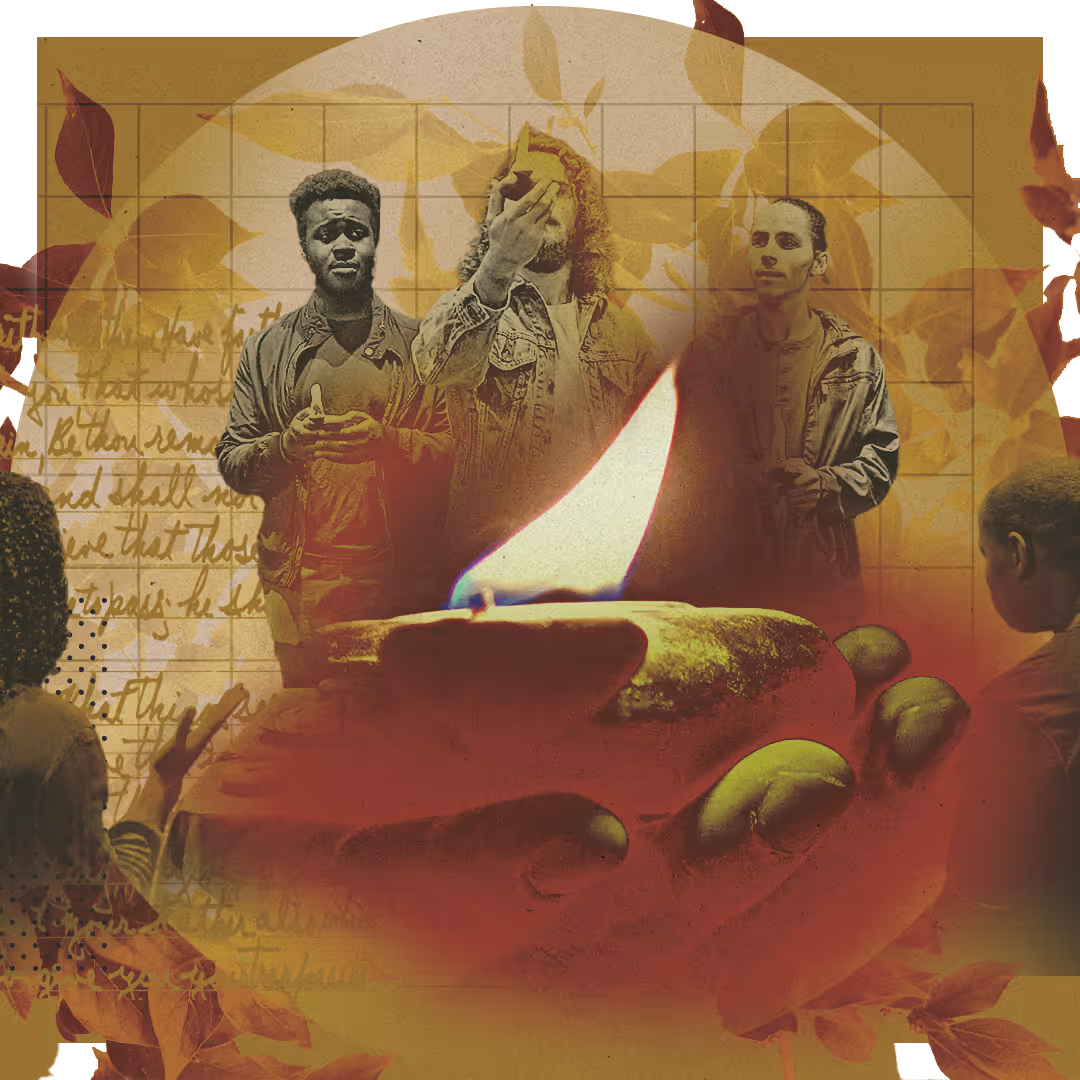
David: [upbeat music] He's interacting with an ancient riddle as a good, wise Ethiopian from the South, and as someone who's deeply concerned with all of these issues being brought up, and he's puzzling over a riddle he cannot solve.
Christine: Yes, he's invested on a wisdom level-
David: Yeah
Christine: ... on, yeah, on all sorts.
David: Who is this person who had justice denied them, who was cut off from the land of the living without descendants, and yet has his days prolonged and his children outnumbering those of any fertile family ever? I can't solve this riddle. Who is it? [upbeat music]
Christine: Welcome to the Spoken Gospel podcast. Spoken Gospel is a ministry that's dedicated to speaking the gospel out of every corner of Scripture. In Luke 24, Jesus told His disciples that every part of the Bible is about Him. In each episode, hosts David and Seth work through a passage of Scripture to see how it's all about Jesus and His good news. Let's jump in. [upbeat music]
David: Well, welcome, everybody, to the Spoken Gospel podcast. Thank you so much for joining us. We are continuing our journey through the book of Acts, and a few housekeeping notes here as we begin. We are still waiting on Seth to rejoin the podcast. He's been busy, and, uh, we also lost Josh, who's been with us for the last few episodes, because he is at home sick. So, uh, prayers for all of them if you're, if you're listening to this, but I do have my dear friend and co-laborer Christine with me, as always, ready to jump into Acts. But before we do, we'll kind of geo-position ourselves here in the text and try to remember where we've been, because to be honest, friends, we've been hopping around quite a bit, and we're going to continue hopping around 'cause we're gonna continue our journey in Acts 8, but then we're gonna go back in time to Acts 6 and 7 to meet Stephen back in Jerusalem, and then we're gonna fast-forward back ahead to see Saul on the Damascus road. So bear with us as we jump around, but hopefully there's some, some method to the madness, and you can start piecing the puzzle together as we do. So today we are in Acts 8. So Christine, how are you feeling about Acts 8, the second half, when you think about it? What, what does it make you think about?
Christine: I'm very excited, and it makes me think about what we try to do here at Spoken Gospel all the time.
David: Mm-hmm.
Christine: We hold Philip up quite a bit as a model that we want to follow in terms of leading people to Jesus from any part of Scripture, and we see Philip doing that in this episode, so-
David: Yeah
Christine: ... I'm excited.
David: It is special. This is probably my most quoted Bible story because of that very thing when people are like, "So what do you do at Spoken Gospel?" I, I say, "We do the second half of Acts 8." [chuckles]
Christine: We try to be Philip.
David: We try to be Philip. And so there are people all over the world who open up their Bibles and read it and don't understand what it says, and beginning with that very passage, whatever it may be, we try to do what Philip did and lead them to Jesus, and so it's a super special passage for us. But before we jump into it, we need to be asking the question: How did we get here, and what's been going on? And so rewinding all the way back to Acts 1, I believe it's verse 8, we have the commission that Jesus gave to His apostles, His sent ones, His prophets in the world, to go into Jerusalem, Judea, Samaria, and the ends of the earth, and this kind of forms a bit of a table of contents for the book of Acts, as we've talked about. And it also shows the conquest of God's rule and reign over the world, His kingdom, moving from its epicenter in Jerusalem out into the divided kingdom that broke back in the Jeroboam, Rehoboam days after Solomon, and then into the ends of the earth, because it's always been God's plan to use His people, the sons and descendants of Abraham, to be a blessing to the nations, to the Gentiles, to all the peoples of the world, and so Jesus is empowering His people to do that work. Yeah, anything else, like, from that altitude [chuckles] that you're thinking about?
Christine: Okay, you mapped on a lot of stories onto that because I heard you say Abraham and the children of Abraham, which
Christine: is very cool, and also you talked about Jeroboam and Rehoboam and the divided kingdom.
David: Yeah.
Christine: So those are two very different parts of the Bible, and we are- our text comes from neither of those. [chuckles]
David: That's true.
Christine: So [chuckles] do you wanna unpack a little bit more what each- how each of those are talking to this, or-
David: Yeah, sure
Christine: ... should we just talk more about it?
David: No, it's a good question, and s- and it, I think it'll bear on our, our talk today. But the idea here is that you have, at the beginning of the Bible, you have this Eden paradise with God, where man is dwelling with God in his garden temple, and He partners with humans and gives them the role of going out and having dominion over the world to bring the rule and reign of God, but also the image of God, to all of creation. What happens instead is that humans divide and fight and fill the world with violence and a corrupted image and end up marring the world that God created. And so God raises up one man, Abraham, and decides that He's going to work through his descendants to bring blessing to the world and unite them into his family and to free them from the violence and corruption and marring that they've been filling the world with.... and so as he does that, he, he, you know, he has a family. This is Israel, and they end up getting a land in Judah, in Israel. We could [chuckles] talk geography a whole lot 'cause it's gonna come up in our passage today. But to cut to the chase, all these disparate tribes that were kind of spread out and even at odds with each other throughout the times of the judges, after they've entered the land, needed a king to come and unite them, and this is what King David does. But after King David and his son Solomon, the northern 10 tribes split from the southern two tribes, and you have this divided kingdom. And I think we talked about this a bit last time because it's the, it's the area of Samaria that makes up this northern part of the kingdom, which was really given over to a lot of idol worship, uh, particularly early on in the divided kingdom after Solomon. Then the southern kingdom, uh, whi- which is where Judah is, which is where Jerusalem and the Temple are, it was supposed to be the pure center of Israelite religion, although it became corrupted as well. And so the idea of Acts 1:8 is that from that epicenter of pure religion, where God has chosen to make Himself dwell, well, He does that at Pentecost, as we saw, and He comes and fills His people as He filled the temple, and then sends them out from Jerusalem, like David, to go and bring Samaria, the northern kingdom of Israel, back under a united rule. And now that that's done, you've got kind of the 12 united tribes again, in a sense, with Samaria and Jerusalem being united as Peter the Apostle went to them and brought them into the church and gave them the same Holy Spirit they had. Now what happens? Well, now we need to go to the ends of the earth, and the Kingdom of God that began in Eden is now going to spread again. And so we're kind of going back to David and Solomon's reign, in a sense of themes, and going, "How is this reign going to spread out to the nations and free them from all the chaos and all the evil and all the violence that keeps corrupting the world?" Does that answer [chuckles] your question? [laughing]
Christine: [laughing]
David: After my giant monologue?
Christine: Thoroughly. [chuckles] Uh, well, I heard you say several, several things there, which was cool to put together 'cause I heard uniting and also expanding.
David: Mm-hmm.
Christine: And so you mentioned the tribes and the 12 tribes, and then you mentioned the apostles, which I was like, "Oh, okay, that's the 12, uh, representation of 12 going out-
David: Right
Christine: ... and doing the works of the ascended son of David, who we saw take his throne in Acts 1 and 2, and the, yeah, the outpouring of that kingdom into people's hearts, and then they're taking that mobile kingdom-
David: Mm-hmm
Christine: ... or the, yeah, the expansion of that kingdom, which involves conquering places that were previously divided, not by violence, but by bringing them in-
David: Mm
Christine: ... to the kingdom. Because as you mentioned, Samaria, from the outset, was kind of a nefarious place.
David: Right.
Christine: It was syncretistic at best, apostate at worst, and everything [chuckles] in between, and Judah, sadly, was no better in its later half, and so we- yeah, and the prophets talk about, like, this desperate
Christine: need and even God's promise for, you know, a branch from Jesse-
David: Right
Christine: ... which wouldn't even be Solomon. It would be David.
David: Mm.
Christine: Like, David is the offshoot of Jesse, and so we're also in Advent, so I'm thinking about all these songs [chuckles]-
David: Yeah
Christine: ... that have Jeremiah and others quoted.
David: Yeah.
Christine: And so we need a David, and we found that David, the one that the prophets foretold, in Jesus.
David: Mm.
Christine: And He is on the throne and spreading His kingdom of peace, and He's doing that through
Christine: His offspring, His descendants-
David: Yeah
Christine: ... His co-heirs, and so I see a David-Solomon parallel there.
David: Totally. What I like thinking about this idea of being united, and then the idea of conquering is-
Christine: Expanding
David: ... expanding, is we are united to Christ, and then we, we, we work in Him to spread His rule and reign across the world. And so this goes all the way back to how we began the Acts podcasts on, Acts begins with the phrase [chuckles] like, the telling you what Jesus began to do and teach was my first volume that Luke wrote, you know, to Theophilus. And now this is by, you know, ipso facto, what the apostles will continue to do and teach is not separated from what Jesus is doing in the world, that this is Jesus in His people, expanding His kingdom through His people. And so as the new David, He unites the divided kingdom in His church and now is, through His people, going to the ends of the earth. And so what's really cool then is, as we think and meditate about that, and as we think about Samaria coming into Christ, into the new Messiah, into the new David, [chuckles] and going under His rule again-
Christine: That's healing an old wound.
David: That's healing a very old wound.
Christine: Centuries.
David: Yeah. As we think about that, it, it thematically makes sense that we go, "Okay, so that was David's rule thematically. Now, what about Solomon's rule? How is that being fulfilled in the church?" And what's amazing is, after the Davidic rule in the Christ comes to Samaria, now the Solomonic rule, [chuckles] in a sense, that the Solomonic theme comes up in the second half of chapter 8, which we're gonna look at today with Philip and the Ethiopian eunuch, and so we're gonna unpack that. But just get ready to jump into Solomon's story, especially when he's visited by the Queen of Sheba. So we're gonna talk about all that, but before we do, let's reorient ourselves to who is Philip and what is he doing here. Christine, do you want to talk about where Philip came from?
Christine: Sure. I love Philip. [laughing]
David: [laughing]
Christine: Um, he's pretty cool. He was one of the seven deacons that was kind of ordained in Acts 6, which we have not covered yet, but we will later in a future episode, which I'm very excited about, too.
David: [chuckles]
Christine: But part of the criteria that qualified him for this position of caring for people in the church was that he was full of wisdom and of the Holy Spirit, and that's true of his six fellows as well. So-... you mentioned Solomon earlier. I think of Solomon, I think of wisdom.
David: Mm-hmm.
Christine: And we talked about, like, that's important, and so we know that Philip is someone who, at least at the outset, was put in a position to care for this new kingdom because he is full of the Spirit and wisdom, and-
David: Oh, wow.
Christine: Yeah.
David: That's cool. I don't think I've actually ever made that connection. It's- well, b- because I think the Solomon meditation for me is new, so I haven't thought about how he's full of wisdom and then kind of goes and fulfills the role of Solomon that we're gonna talk about. That's really neat!
Christine: It's really cool.
David: Okay, that's super cool.
Christine: It's really cool. But also, we noted that he's in Samaria right now, not in Jerusalem, which was where his role was, and that is-
David: His role was in Jerusalem?
Christine: Yes.
David: Yes.
Christine: It was, yeah.
David: But then he got kicked out or had to flee because of persecution.
Christine: Yes. Yes.
David: Which is amazing, and like a sidebar, but it's like, it's incredible that the Gospel spreads through persecution.
Christine: Yes.
David: Yeah.
Christine: 'Cause we talked about conquest and expansion, but persecution doesn't sound like-
David: Mm
Christine: ... conquest?
David: Unless you have-
Christine: And so-
David: -a cross in your story.
Christine: Unless, unless death is not the end of the story. [laughs]
David: [laughs]
Christine: So more on that, um, later, but yeah.
David: So that does kind of separate a bit of... I've not thought about this before, how Philip got to Samaria versus how he got to the Ethiopian, because how he got to Samaria was fleeing persecution, and he finds himself here and sees the Gospel expanding through persecution. But now he gets this kind of s- prophetic call to go to, what is it? Get up and go?
Christine: Yes, arise and go, or get up and go, depending on your translation, but that maps onto how prophets in the Old Testament were called by God.
David: Yeah.
Christine: They were told, "Arise and go," usually to a city, or, "Go and tell this, these people such and such," and most prophets who were obedient rose up and went.
David: Yeah.
Christine: And I'm thinking of an exception to that rule. [laughs]
David: [laughs]
Christine: Looking at you, Jonah.
David: [laughs]
Christine: But he had the same commission: "Get up and go, arise and go to the city of Nineveh."
David: Mm.
Christine: Here, the second half of Acts 8 opens with, "Now an angel of the Lord said to Philip, 'Go south to the road, the desert road that goes down from Jerusalem to Gaza.'" And so we have this commission, and very next verse, "So he started out, and on his way, he met Ethiopian eunuch, an important official." So we see a very obedient, Spirit-filled [chuckles] person who-
David: Yeah. So there's so many things I want to jump into, especially with South and Ethiopia, but before we do that, now I'm just thinking about this idea of a prophetically called minister of Christ not going to a place because he's fleeing persecution, and God's working through it, but because he's been called to go, like one of Israel's prophets. But he's not going back to Jerusalem. He's going to the south, and he's being sent, and he's being sent by an angel of the Lord. What does that light up in your head when you think about this? We've not talked about this, but-
Christine: We haven't.
David: What, what does this light up in your head when you think about this?
Christine: Well, angel of the Lord is also Old Testament language that refers to messengers of God and sometimes Christ Himself.
David: Yes, the pre-incarnate.
Christine: Yes. Yes, Jesus appearing to people, and we, uh, that's a rabbit hole, but [chuckles] there's-
David: A good rabbit hole. [laughs]
Christine: It's, it's a very good one. You all should go down it. But the idea, the reason why we know that can't be merely an angel, a creature, and is God referred to as the Angel of the Lord, is because this figure receives worship.
David: Mm-hmm.
Christine: And we know that the Bible is very much against worshiping anything other than-
David: Yes
Christine: ... the one true God.
David: Yeah.
Christine: So we know that Jesus appears in the Old Testament occasionally and is called the Angel of the Lord. But regardless of whether this is the angel of the Lord, namely Jesus Himself, or if it's just an angel, the fact that it's Philip that gets to go on this special mission-
David: Mm
Christine: ... and it's not Christ-
David: Peter
Christine: ... or Peter or, or an angel-
David: Oh, yeah, right
Christine: Like, the, the fact that-
David: He doesn't send an angel to go to the Ethiopian.
Christine: No.
David: He sends a human.
Christine: He sends a human.
David: Oh, yeah, that's crazy.
Christine: So I love that meditation-
David: Mm
Christine: ... how God works through people. And another prophetic element is, okay, the angel of the Lord tells Philip to go, and then the Spirit continues to speak to Philip and gives him further instructions on what to do with who he sees. And so the Spirit commanding people to do things, and the Angel of the Lord commanding people to do things are all prophetic imagery that are put onto Philip in this.
David: Yeah, and so is it... I, I feel like it has to be significant that he's getting this very
David: paradigmatic, prophetic call from the Old Testament, and he's being pictured as this new prophet of God in Christ, in the Church, going to the nations, and he's not going to Jerusalem.
Christine: Yeah.
David: I just find that extremely significant-
Christine: Yes
David: ... because there are very few times that the prophets are sent specifically to the nations. I'm not saying it doesn't happen, but it's not the pattern.
Christine: Yes.
David: You know, it's, you get your Jonahs, right? You get your Ezekiel going to Babylon, and it's not great stuff. You, you get your-
Christine: Yeah
David: ... Nahum, Obadiah. Oba- yeah, yeah, Nahum talking about Assyria. Yeah, Obadiah talking about what? Edom? Yeah, and then, you know, and then you get your, your kind of woes from afar. "Oh, woe to you, you know, all these nations that I talk about, but I'm saying it from Jerusalem." So it is interesting, and yet he's not bringing like, like Nahum, like Obadiah, like Jonah, he's not bringing woes to the nations, right? He's bringing salvation.
Christine: Yes, and-
David: W-
Christine: ... he is still proclaiming what would be a prophetic message.
David: Yes.
Christine: He's proclaiming the Kingdom of God and the Messiah of God.
David: That's right.
Christine: And we'll see that the call is the same, "Repent"-
David: Mm
Christine: ... which is the, the repeated message of-
David: Yeah
Christine: ... all God's prophets.
David: Turn, oh, turn, oh, you nations.
Christine: Yes, come back.
David: He will, yeah-
Christine: Come back
David: ... he will be favorable to you. Yeah.
Christine: So yeah, and the fact that he's going to Ethiopia or going to a representative of Ethiopia also shows that the Gospel is expanding-
David: Yeah
Christine: ... even farther.
David: Well, let's talk about that. Let's talk about going south in the Bible.
Christine: Okay.
David: So for those of you who are unfamiliar with this idea-... north, east, south. These aren't necessarily points on a compass or points on a map in biblical thought. Sometimes they correspond with each other, like Ethiopia is south of Israel. [chuckles] It is-
Christine: They're geographically accurate, but they're also s- doing something theologically-
David: Yes
Christine: ... in the Bible.
David: And so when the Bible talks about the South, what is it, is it talking about, and where do we see it in the Bible earlier?
Christine: Well, so you asked about south. South is often depicted as, like, the source of ancient knowledge.
David: Mm-hmm.
Christine: And we'll see that when the Queen of Sheba comes and visits Solomon because she's heard of wisdom, and that the word south there, or even the direction south, isn't significant unless you are
Christine: aware of that idea that, oh, the queen is supposed to be this representative of someone in a region that possesses all the kinds of wisdom.
David: Mm-hmm.
Christine: And Egypt was known to posses- or, like, renowned to have ancient wisdom, and there are mystery, mystery religions or cults associated with that, but-
David: Yeah, but it's this idea of... And, and if you're flipping through your Bible right now, being like, "Where does it talk about this?" We're, we're not talking about that. We're, we're, we're talking about information and worldview and culture that the original recipients and authors of the Bible would've been familiar with, that the South was a place of ancient wisdom, and it was this place where even- is it that even pre-flood wisdom would've been held, or was it kind of after the flood?
Christine: I'm not sure.
David: Okay.
Christine: But-
David: I don't know if that's a distinction that is made.
Christine: I don't know.
David: But it was this, like, repository or safe-kept place for ancient wisdom, and so a- and Ethiopia itself was kind of seen as the ends of the earth.
Christine: Yes.
David: And there, on the ends of the earth, is where this deep, ancient wisdom lies. And so when you have, in the story of Solomon being visited by the Queen of Sheba to come and learn his wisdom and see his kingdom, it's a absolute reversal of those stories and myths that the, that people would've been used to. Because you would go to the South to get wisdom. You would, you would go- want to peer into their kingdoms and see what, what they're all about. But now the Queen of Sheba is coming to visit Solomon to get his wisdom and see Yahweh's kingdom, and it's this subversion of where does ancient wisdom actually lie?
Christine: Yes, and yeah, it's a commentary on it. Because to say that someone from the South is coming to learn wisdom from someone else would be like saying that, you know, professors from Harvard are coming to learn from you.
David: Oh, right, yeah.
Christine: And that, that says something-
David: Yeah
Christine: ... about the wisdom that you would have or the knowledge that you would have, or if, like, the best financial people were coming to you to get advice-
David: That's right
Christine: ... that says something about your wisdom in the subject.
David: There's a third-party credibility, is what we would call that. It's like when you log on to a website, and it's like, "Here are some of our clients," and it's like, "Oh, they have AT&T and GE," and it's, "Oh, wow, they must, they must be successful."
Christine: Yeah.
David: Like, it's... They have something that they want, so-
Christine: Yes
David: ... it adds validation to them.
Christine: Yes.
David: So the Solomonic kingdom is a kingdom of wisdom because the wisest figure is coming to them.
Christine: Yes.
David: Okay.
Christine: Yes, which is showing that the Spirit of God is indeed with Solomon-
David: Hmm
Christine: ... that he sends the Queen of Sheba away, not just with answers to all of her questions, but with even more riches than she came.
David: Yes.
Christine: Yeah.
David: Yeah, which is a cool part of the story, how it ends. So the Queen of Sheba comes and visits Solomon and doesn't add to his kingdom or add to his wisdom. Instead, she leaves enriched, both... Does she only en- leave enriched, like, sapientiously [chuckles] like, only in her knowledge, or does she actually leave with treasure?
Christine: With treasure.
David: Yeah, I thought so.
Christine: Yes.
David: Yeah.
Christine: Yes.
David: That's-
Christine: With a lot... Yeah.
David: With a lot of treasure.
Christine: You can... Yeah, that's in, uh, 1 Kings 10 and 2 Chronicles 9. Chronicles is retelling the Kings story, but yeah, we see the Queen of Sheba leaving Solomon with having gained a lot more than she came with.
David: Hmm. Yeah.
Christine: So, and she also brings him a lot of treasures and stuff from her country, but the idea that she comes away having gained wisdom and-
David: Yeah
Christine: ... knowledge from this king and, you know-
David: This tiny nof- nothing kingdom.
Christine: Yes, he's the second in a dynasty [chuckles] that-
David: Right
Christine: ... of a kingdom that just-
David: That just emerged
Christine: ... found the light of day.
David: Yeah.
Christine: Yes, it's like... Yeah.
David: That is weird.
Christine: Yeah.
David: Yeah, that's really weird. That's saying something, and it's-
Christine: It's saying something
David: ... and it, and it's not because of who Solomon is, but who's with Solomon.
Christine: Yes.
David: Yeah.
Christine: Yes.
David: And so, so catch that, everyone. Like, this is the idea here, that you've got David, you know, the anointed king, unites the tribes of Israel, and then his son, who is given the spirit of wisdom, is visited by the Ethiopian queen of the South, and yet leaves with more wisdom and riches than she came, and takes that back to the ends of the earth, which is Ethiopia, her kingdom. So as we come into the story of Philip, this is what is lighting up the brain of the first-century reader of this text, and what Luke is pulling on here is he's saying, "Look, we have the Messianic King, who is uniting the, the tribes of Israel in him, in the body of Christ, in his church, and now he is sending his heirs out into the world, and they are encountering a Ethiopian principal, like, servant of royalty, who is going to request wisdom from him, and then take the riches of that wisdom back to the ends of the earth in Ethiopia." So, yeah, anything else at that level, Christine, you wanna double-click on, or should we charge ahead?
Christine: Should we talk about the eunuch more, who he is?
David: Let's do it.
Christine: Or should we talk about the story?
David: No, yeah, I think, I think we're set up. So verse 27: "So he got up and went," Philip did. "Now, there was an Ethiopian eunuch, a court official of the Candace-... the queen of the Ethiopians, in charge of her entire treasury. He had come to Jerusalem to worship, and was returning home. Seated in his chariot, he was reading the prophet Isaiah. A lot of detail about this guy-
Christine: Yeah.
David: -and none of it is inconsequential. [chuckles]
Christine: No.
David: None of it is like-
Christine: Luke is very careful.
David: "Oh, let me just round out the picture here." No, no, no, no, no. Things are happening.
Christine: Yes.
David: All right, what do you wanna pick first?
Christine: Oh, man.
David: [chuckles] Close your eyes and point, and we'll have a great conversation.
Christine: [chuckles] Honestly, though, you can't go wrong. Yeah, uh, we can-
David: Should we just go in order? We've talked Ethiopia.
Christine: Sure, yeah.
David: So Eunuch is next.
Christine: Eunuch is next, which I think connects to his position-
David: As a court official.
Christine: As a court official, yes.
David: So unpack that.
Christine: He is working for Candace, the queen of the Ethiopians, which Candace is not necessarily a name, it's a title.
David: Yeah, which my-
Christine: For Ethiopia
David: ... yeah, which my translation even says, "The Candace."
Christine: Okay.
David: Yeah.
Christine: So, like, the Caesar.
David: The Caesar.
Christine: The-
David: Yes.
Christine: Yeah, Candace is a position in Ethiopia referring to royalty.
David: Right.
Christine: And he is in charge of the treasury, which is huge. Again, we talked about the Queen of Sheba and her treasury.
David: Her riches, yeah.
Christine: Here is, here is a guy in charge of the treasures of Ethiopia-
David: Yeah
Christine: ... who is on his way to, from Jerusalem, and he is a eunuch because of his very important role. He- part of what that's doing there, we'll get into some of the things that does for him as a non-Israelite.
David: Mm-hmm.
Christine: But what that has to do with his office is that a eunuch will not have divided loyalties, because he won't have a family to take care of, and so he can be fully committed to his official position, which is one that we know he's very highly educated, 'cause he's reading, and-
David: Big deal. And re- and reading a different language?
Christine: Possibly.
David: Possibly.
Christine: Well, he's reading a Greek scroll of Isaiah.
David: Yeah.
Christine: And so Greek was pretty well spoken throughout-
David: Even down in Ethiopia.
Christine: Yes, I presume-
David: Wow
Christine: ... and especially for his high-
David: Yeah
Christine: ... position, but it, it wasn't his first language.
David: That's true, and if you're traveling around, you're, you're like, "I gotta know Greek."
Christine: Yeah.
David: The world is becoming Hellenized.
Christine: Yeah.
David: Okay.
Christine: Yeah, and to be fair, Greek probably wasn't his first language-
David: No
Christine: ... but that's, that's information-
David: Okay
Christine: ... I do not have
Christine: [chuckles] or know.
David: Right.
Christine: But he is, he is reading his own scroll. He is very, very wealthy because he has a scroll-
David: Yes
Christine: ... which he might have gotten during his time in Jerusalem. Again, we're not sure.
David: Just to hop up on a soapbox-
Christine: Go ahead.
David: [chuckles] Scrolls were so expensive [chuckles] and-
Christine: Yes
David: ... so rare. I just want to always double-click on this when I can, to be like, the fact that you might have a Bible at home, or maybe multiple of them, is a modern marvel and miracle.
Christine: You don't know how rich you are.
David: We are richer than the Queen of Sheba here. Like, the fact that, that scroll was handwritten, the parchment itself had to be meticulously pounded and created, and even the creation of the, the material that it went on was so expensive and time-consuming. You didn't have paper mills, and so it's just incredible not only to, to kind of round this guy out as, "Oh, he was wealthy," and beyond that, he so wanted to know what the God of Israel had to say, particularly about a particular topic, that we'll talk about, that he spent a small fortune to acquire this scroll for himself.
Christine: Yes.
David: Okay.
Christine: Yeah.
David: Soapbox over.
Christine: [chuckles]
David: But treasure your printed Bibles. They are a modern miracle. [chuckles]
Christine: Yes.
David: Okay? [chuckles]
Christine: Yes.
David: There we go.
Christine: They're great, yeah, and he only has a scroll of Isaiah. The-
David: Right
Christine: ... Bible wasn't composite like it is for us-
David: No
Christine: ... and so, to say nothing of the New Testament, that doesn't exist yet.
David: The technology of a codex, like a bound piece of content, was not invented for a long time, time to come.
Christine: So, yeah, he's very fortunate to have this copy, and it shows that he is just very, very intrigued by the, the Jewish faith, which a lot of people were. Um, Romans were, too, at the time, 'cause first of all, the Jewish faith was very old, and they were fascinated by things older than them. So they're like, "Oh, this is an ancient belief or religion that has been around for a long time," and so they-
David: There was a cultural fascination.
Christine: "And they worship an unseen God."
David: Yeah.
Christine: "How do they do that?"
David: Yeah.
Christine: Is, like, they don't have idols for him or anything, and so they were fascin- like, a lot of-
David: Mm
Christine: ... people in that time were fascinated with the Jewish faith. But here is someone who has no connection to Judaism, who actually, yeah, not only pays a time costly pilgrimage to Jerusalem-
David: Right. Yeah, that's a long trip.
Christine: He didn't take any highways. There were none. [chuckles]
David: No.
Christine: He also has a scroll, and he's in his chariot, so yeah, again, official of the treasury of Candace, but he-
David: Yeah, okay, and so w- and, and we're, we're circling an issue without saying it, which is really helpful, is the other reason, maybe the religious reason or the spiritual reason why eunuch is important here is, you know, you don't have to be a genius to realize two things here are on the line for him, especially as it regards Israel's religion. One is, at the, at the bare minimum, he cannot have children. There's no lineage that he can create biologically as a eunuch, which had to have been part of his psyche [chuckles] and part of the way he processed the world, and maybe a longing of his heart. More importantly is becoming an Israelite, being covenantally belonging to Israel, especially around this time, was highly necessitated to be circumcised, and beyond that, to be allowed into the temple where Israel's worship was centered, eunuchs were not allowed into certain parts of that.
Christine: Nor were Gentiles.
David: Nor were Gentiles.
Christine: But-
David: So he was double excluded-
Christine: Yes
David: ... from the Israel that he was so fascinated with, from the Yahweh he was so fascinated with. And so he is an outsider of outsiders. At least we're intuiting here that he's longing to be on the inside and doesn't know how, and so he's reading this Isaiah scroll-... trying to figure out, how can I be brought inside? Because it's talking about, in Isaiah 53 and 54, it's talking about this suffering servant, this, this anointed king, this new leader that the God of Israel is going to provide, who's going to heal my wounds, in 53, and then give me more children than those who are fertile. And these are two of the things that he is so curious of how to be- how can I be restored as a eunuch, not only physically, that's not his main goal, but restored to fellowship with this God, and then how can I create a legacy of life for this people if I cannot be fruitful and multiply? And so it's fascinating, all the things happening here. What have we, what have we skipped in setting up the Ethiopian?
Christine: Um, I wanna be careful not to get into his head too much-
David: Totally
Christine: ... 'cause we don't know what-
David: We don't know
Christine: ... his heart's desire is. We can guess pretty strongly that it is to be a part of the family of God.
David: Mm-hmm.
Christine: So I think, I don't think what you're saying, anything you're saying there was wrong, but I wanna kind of, like, re-emphasize it. So that, yeah, Gentiles could enter the Kingdom of God.
David: Yes.
Christine: There was a way the temple allowed Gentiles to do that, but that, that way of getting in, of becoming an Israelite, was outside of the possibility for the eunuch, 'cause he couldn't get circumcised. And that, in a sense, even though he made a bodily pilgrimage-
David: Mm
Christine: ... to Jerusalem, the temple system would still prevent him from being all in, from being completely included in the kingdom. And so whether or not it was at Jerusalem that he bought this Isaiah scroll-
David: Mm
Christine: ... and is coming back, reading it, he- I mean, he's more than halfway done with Isaiah if he's in [chuckles]-
David: Gosh, yeah
Christine: ... 50-
David: He's already 53
Christine: ... 53, 54. But I think it'd be cool to look at what he's, yeah, what he's reading and the surrounding context, which he kind of hinted at.
David: Yeah.
Christine: And then also the immediate one, 'cause the Spirit tells Philip to, "Go and keep close to the chariot," and Philip does engage the eunuch in his reading, which he was likely reading out loud-
David: Mm-hmm
Christine: ... 'cause that's what people did, but.
David: Yeah, so, uh, yeah, before we jump into that, you said something that just made me wanna round out a picture for people. That when you, when you think about the Second Temple period, and the, Herod's temple that Jesus went into, it's not the clean-cut version that you read, like in Exodus, and the tabernacle just made permanent. There were extra things happening that we have actually found archaeologically, and that Jesus was railing against whenever He went and overturned the tables and drove out the money changers. He says that, you know, "This was supposed to be a house of prayer for all nations." That's the same word for the Gentiles, "But you've made it into a den of thieves." And so he's saying, "This was supposed to be," as we talked about in the beginning of the podcast, "the epicenter for the blessing of God to go out from the temple into all the earth, and yet you're walling up the blessing, and you're keeping the Gentiles out." So there were signs everywhere that places that the nations were originally allowed to come into near the temple, they were barred from in the 1st century. And so that's why it's amazing you get these pictures like in Ezekiel, and even brought up again at the end of R- Revelation, of these rivers of water flowing out from the temple and watering the nations and, and bringing their healing, and they were damming it up and keeping it for themselves, and were going opposite of their calling. And so the eunuch's biological condition isn't the only thing precluding him from involvement. There were provisions for that, and there could have been a way made, but in, in the temple period of that time, it was just nearly impossible for him to find an inroad, especially if he doesn't know what the Scriptures say. He doesn't have a way of, of getting on the inside here, and so he's, he's swimming upstream.
Christine: Yes. Yes, and that river flowing out of the temple in Ezekiel and Revelation is a reminder of Eden-
David: Mm-hmm
Christine: ... 'cause Eden was a mountaintop, a dwelling place of God, where riv- out of which rivers flowed and watered the valleys.
David: Yeah.
Christine: And so-
David: Yeah, if you ever read Genesis [chuckles] and go, "Man, these... What are these rivers doing here, and how are they intersecting?" It's like, oh, they're all streaming down-
Christine: Yeah
David: ... out of Eden-
Christine: Yes
David: ... to water the world.
Christine: Yes, if rivers are flowing in four different directions-
David: [chuckles]
Christine: ... then it's because they're on, they're coming from a mountaintop.
David: Yes.
Christine: And so that whole imagery is meant to
Christine: signify that the blessing goes out, like you said, from the mountain, from Eden. And so with that parallel, this is the eunuch coming to hopefully receive the outflowing blessing of dwelling with God, being as humanity was meant to be, and there are people, supposedly from the inside, stopping up the, the springs.
David: Yeah.
Christine: And so it's really sad.
David: It is.
Christine: But Jesus did say that when he talks about, like, water flowing out from within you, um, in J- it's in John, right?
David: John.
Christine: Yes. That is another picture of like, you're gonna have Eden inside of you. You're gonna have paradise flow out of you-
David: Yes
Christine: ... with l- streams of living water-
David: Yeah
Christine: ... through the Spirit. So fortunately for the E- Ethiopian, the Eden has left the temple building. [chuckles]
David: That's right. Eden has left the building.
Christine: And is running next to his chariot right now-
David: Yeah
Christine: ... about to ask him some questions.
David: And there are some rivers of living water about to burst forth because human beings are bigger on the inside. And so [laughing] it's pretty awesome. All right, so yes, so Philip comes alongside him 'cause the, the, the Spirit in, uh, verse 29 says to Philip, "Go over to this chariot and join it." So Philip ran up to it and heard him reading the prophet Isaiah, and like, as Christine said, um, yeah, uh, people would often read out loud, not in their heads. That was a later kind of way to read, and so he hears him reading, and Philip asks a... My favorite question, I think, I think this has become one of my favorite questions, is, "Do you understand what you're reading?" I have a, I have a- I'm too- I'm way too much of an introvert to actually do this idea, but I love the idea of, like, an opposite of a prank show, but it's like a real-world, like, hidden camera show, where you find people reading the Bible in public, and you just go up to them [chuckles] and ask, "Do you understand what you're reading?"... Operation Philip. And [laughs] in the beginning with that very passage, you preached to them the gospel. So-
Christine: I had, I had a very similar or a close experience like that on an airplane one time. Um-
David: Did somebody ask you, or did you ask somebody?
Christine: No, it was a long flight, and I was sitting next to this older couple, and we started talking, and the wife was reading off of a Kindle.
David: Mm.
Christine: And the gentleman said, like, said to me, like, "She never knows what she's reading." And I was like: "How do, how does she not know what she's reading?" And he said, "Well, she just has over 500 books downloaded, and she doesn't know-- like, we don't know how to see the title. So she literally just reads that Kindle and is reading who knows what, and she gets to the end of whatever book she's reading and starts a new one."
David: Oh, my goodness. [laughs] That's crazy!
Christine: And it was so weird, and immediately, Philip came to mind. Like, do you-
David: That's funny.
Christine: Forget-- Do you understand? Do you even know it?
David: Do you even know?
Christine: These people don't even know what they're reading.
David: Yeah.
Christine: And I actually had, um, a printout of the Sermon on the Mount with me-
David: Yeah
Christine: ... at the time that I was reading. And so it's kind of a funny moment 'cause I was like: "Well, I can give you something where you know what you'll read. Here is the Sermon on the Mount [chuckles], and I let them have the copy."
David: That's amazing.
Christine: But it was a funny Philip-adjacent moment-
David: Yeah
Christine: ... where-
David: Which is, is just a funny way to talk about, like, what... Yeah, what does Philip mean when he asks this question, "Do you understand what you're reading?" Because he's not probably saying what the, the people on the flight were saying [chuckles] of, "Do you know the title of the work, and its, and its authorship?" Or he, he probably had some sense of that, or he wouldn't have bought it. He didn't just pop into a thrift store and, you know, pick up a random scroll.
Christine: Definitely not.
David: Yeah.
Christine: The Scroll of Isaiah would not have been in a thrift store-
David: No, [chuckles] right
Christine: ... to begin with. And so, yeah, he did not have the luxury of having hundreds and hundreds-
David: No
Christine: ... of book on a Kindle. He-
David: He might have commissioned this scroll even.
Christine: Possibly.
David: Yeah.
Christine: Or at least paid a-
David: A handsome amount
Christine: ... huge amount for it.
David: Yeah.
Christine: Yeah, so.
David: And so he knows what he's reading in terms of genre, book, in, in those kinds of terms, but he is reading something out loud, a section of it. And my assumption, which I don't know if it's right or not, is that Philip is asking: "Do you understand what I just heard you reading out loud?" Like, what that means.
Christine: Yes.
David: And then I think we know that that's what he means because of how he responds. The, the eunuch says, "How can I, unless someone guides me or unless someone teaches me?" Which is just the best answer, and one we all need to get more comfortable responding, [chuckles] with.
Christine: Yes.
David: Yeah.
Christine: Yes.
David: We go, "No, I'm supposed to understand this all by myself." No.
Christine: Nope.
David: No, we need each other. [laughs]
Christine: Nope. If the eunuch had trouble reading what to him was an ancient text and understanding it-
David: Ooh
Christine: ... we need even more help.
David: We have-
Christine: So we're-
David: ... another 2,000 years between us and that text.
Christine: We are even further removed in time and culture and-
David: Wow
Christine: ... space from Isaiah, and-
David: We all need a Philip.
Christine: We do.
David: That's so good.
Christine: We desperately do.
David: And so he invites Philip to get in and sit beside him. Now, the passage of the scripture that he was reading was this, quote, "Like a sheep, he was led to the slaughter, and like a lamb silent before its shearer, so he does not open his mouth. In his humiliation, justice was denied him. Who can describe his generation? For his life is taken away from the earth." Now, like many of you, the eunuch had questions. Like I, he had questions [chuckles], and he asks Philip a particular question. He could have asked 100 questions. He asked this question: "About whom?" So he asks a person question, "About whom, may I ask you, does the prophet say this, about himself or about someone else?" So, Christine, like, what are you wrestling with here? Why is he reading this passage, and why is he asking the question of whom?
Christine: It's, uh, not mentioned by name who this person is in Isaiah. He's called the servant. But
Christine: I don't know. It's a good, it's a good thing to stop and think about. Why did Luke highlight this part? An easy question could have been like, "Well, he might have talked to Philip, and Philip said, 'This is the part I heard him, you know, reading, and this is what I asked about.' " But also, very poignantly, this is a very specific part in Isaiah about Jesus, and we talked about the conquest of, you know, the ascended son of David in Jesus, who, whose gospel is going out into all the world, even to Ethiopia at this point. So it's a nice setup of Luke to have the Ethiopian scratching his head about, "Who is this about?" [laughing]
David: [laughs] Yeah.
Christine: Which I think is why we like this so much, too.
David: That's very true.
Christine: But just even in the context, we have him reading about, like, someone who's cut off without offspring, which would have hit home for the eunuch.
David: That's right. Who can describe his generation?
Christine: Yes.
David: Uh, who can talk about his kids?
Christine: Yes.
David: No one, 'cause he didn't have any.
Christine: Yes, but then he also has offspring later. So there's-
David: Right
Christine: ... like-
David: Which is, I think, his hope.
Christine: Does-
David: He's like, "Hold on." Yeah.
Christine: Does he have offspring or not? And then there's also a wider context about a barren woman having children, which again, you're like, "Did you hear what you just said there? That's mutually exclusive." And foreigners and eunuchs even bo- being bound to Yahweh, which is in 54.
David: Mm-hmm, 54.
Christine: So again, we only have, like, this passage, so I'd love to keep jumping into these sections, but he's circling what Jesus does with
Christine: death and with life.
David: Mm.
Christine: So-
David: Oh, because of the he didn't have kids, but he has kids.
Christine: Yes.
David: Yeah.
Christine: And with his dying and being raised again, like, it's not only the no kids or kids thing that-
David: Right
Christine: ... 53 is describing. It's also, he is cut off from the land of the living.
David: Yeah, for his life is taken away from the earth.
Christine: Yes.
David: He died.
Christine: Yes.
David: And yet-
Christine: But nevertheless, he shall prolong his days?
David: Yeah.
Christine: Like, the Ethiopian's like, "Okay, wisdom, m- my wisdom's failing me at this point. What riddle is this?"
David: That's so good. He's interacting with an ancient riddle as a good-... wise Ethiopian from the south, and is someone who's deeply concerned with all of these issues being brought up, and he's puzzling over a riddle he cannot solve.
Christine: Yes, he's invested on a wisdom level-
David: Yeah
Christine: ... on, yeah, on all-
David: "Who is this person who had justice denied them, who was cut off from the land of the living without descendants, and yet has his days prolonged and his children outnumbering those of any fertile family ever? I can't solve this riddle. Who is it?" And it's the, it's the answer to the question that solves the riddle, which once, once [chuckles] once Philip sits down with him and shows him how it's Jesus, it's incredible, which we'll get to. Before we do, I think we've talked about 33 really well. His humiliation was denied him. Who can describe his generation? He's taken away from the Earth. What about, "Like a sheep led to the slaughter, and like a lamb silent before its shearers, so he opened not his mouth"?
Christine: I think that's speaking partly to the sacrificial language or the sacrificial nature-
David: Mm, mm-hmm
Christine: ... of Jesus's death, but also the injustice of it, that He didn't
Christine: retaliate against the injustice. He was silent-
David: Mm-hmm
Christine: ... like a lamb before its shearer, and so-
David: Yeah, this was not someone who was giving up protest or defending His life, or though justice was denied Him, and He was killed, He didn't protest it.
Christine: Yeah.
David: He wasn't against it, so he's like, it's adding to the mystery and the riddle-
Christine: Yes
David: ... that, who is this person or this who- this whom that can tick all of these boxes? [chuckles] Because-
Christine: Yes
David: ... I do not know of anyone-
Christine: Yes
David: ... that can tick all of these boxes, who can go before injustice, willingly hand his life over to them, die, and yet have his days prolonged and have a bunch of kids-
Christine: Yes
David: ... or heirs.
Christine: It is a mystery, even in the world.
David: It's a mystery.
Christine: I mean, if you just pause and think about it-
David: Yeah, if you pose this like a m- like a, like a riddle.
Christine: 'Cause it very much is one-
David: Yeah
Christine: ... I think, or at least I think it'd be fair to say that the-
David: This would be-
Christine: ... Ethiopian at least entertained that because life and death are, you know, in constant struggle in the world.
David: Mm-hmm, mm-hmm.
Christine: You see, and this was rehearsed in a lot of ancient religions, too, of like winter and then spring-
David: Right
Christine: ... day and then night.
David: Tension of life and death.
Christine: Yes-
David: Yeah
Christine: ... and even, even giving birth with people who could, was like a near-death experience-
David: Yes
Christine: ... but it brought life, and there was struggle. And so-
David: Yeah, oh, yeah
Christine: ... and even with, like, kingdom expanding, like, death and life are in constant struggle. And interestingly, okay, maybe not with sacrificial animals, 'cause those are docile. They are led, and they are killed without a struggle. He- the metaphor is not, "He was caught like a bird in a nest," or, "He was caught like a wild animal and like a deer trying to get through- free."
David: Mm.
Christine: There are other examples in nature that could present even a human facing death, but this human faces death like a lamb.
David: Yeah.
Christine: And is this the prophet? Which is interesting 'cause follow-up question, Ethiopian eunuch, if this person that the prophet is writing about died, how can it be the prophet?
David: Yeah.
Christine: Is an interesting, I don't know, question [chuckles] I'd want to ask him.
David: Oh, man, yeah.
Christine: But it's fun, it's fun to think about it, and if you don't know the context, how is he-
David: Yeah
Christine: ... how is he trying to make sense of it?
David: So Philip answers him in verse 35: "Then Philip began to speak, and starting with this scripture, he proclaimed to him the good news about
David: Jesus." He gives him the answer to the riddle.
Christine: He does.
David: So who is this? It's Jesus, and here's why all of this is good news to you. And so he, I mean, like you guys are probably all filling in the blanks of the riddle for yourself, he shows him how Jesus willingly, silently faced injustice and handed His life over, laid it down to His oppressors, and contended with death and was cut off from the land of the living, yet His days were prolonged. He defeated death. He rose from the dead, conquering it and subduing it, and now, not only does He hold life in Himself as the one who holds the keys to death and Hades, but He gives that life to others, to many descendants and heirs, and is covering the world with life. Rivers of living water, here we are again, and so he preaches to him some version of this that's probably way better, but Philip gives him the Gospel this way.
Christine: Yeah, which it's cool to think about it that way, of introducing just the prospect of resurrection and how life came out of death with this suffering servant.
David: Mm.
Christine: And I'm just trying to keep with the part that's being highlighted. This was a death that brought out life, but it was cut off from the Earth before it filled it with life.
David: Mm.
Christine: And so all these things would've been very pertinent to the rest of the, the biblical story, which I don't know how much the eunuch knew about, you know-
David: Yeah, true
Christine: ... the Exodus story, but we know that the, that Philip got to, like, how baptism is, how you participate in that-
David: Right
Christine: ... how you enter the Kingdom of God is that is you being cut off and then raised to new life, and that is how you enter the Kingdom of God, through baptism.
David: Ho- hold on. Hold on. Okay, so he invites the eunuch to step into the prophecy that he's been reading.
Christine: Kinda, [chuckles] I guess.
David: I mean, yeah, he's like, "So this is about Jesus, and now it's going to be about you."
Christine: That's-
David: "And you are going to, like a lamb, be led to the waters of baptism, to a death, to slaughter-
Christine: Oh, wow
David: ... and you are going to die, and who can describe your generation right now? But we're gonna cut you off from the land of the living. You're going to die in Christ. Nevertheless, you will live, and the life you now live, you will live by faith in the Son of God, who loved you and gave [chuckles] Himself for you," Galatians 2:20, and-
Christine: And receive a new name.
David: And you s- yeah.
Christine: That's Isaiah 56-
David: Oh
Christine: ... God promising eunuchs that He will give them a name.
David: Yeah. Oh, my gosh, so that's really neat, and so, yes, we don't know the full-... gospel or Bible study they did, or how long they journeyed together on their very, on the very long road [chuckles] that he had ahead of him. But they, they do, and yes, as Christine alluded to, in 36, as they were going along the road, they came to some water, and the eunuch said, "Look, here is water. What is to prevent me from being baptized?" Why, oh, why does he word it in this way, Christine?
Christine: I think it shows his humility, maybe his hope he's afraid of getting deferred again-
David: Yeah
Christine: ... that-
David: I've had lots of things preventing me so far.
Christine: Yes, I have journeyed to Jerusalem. I have gone to the temple. I have holy writ in my hands, and yet I'm prevented from entering the Kingdom of God. I'm prevented from God's family. Is there anything preventing me from being baptized? And Philip says, "You can."
David: Yeah, and there's absolute silence on the question. Other- there's only action. There's- n- it's not, "Oh, nothing!" It's just immediate action.
Christine: Yeah.
David: He commanded the chariot to stop, and both of them, Philip and the eunuch, went down into the water, and Philip baptized him.
Christine: Yeah.
David: Absolutely nothing prohibited him-
Christine: Yeah
David: ... which is, this is the Gospel going to the Gentiles, going to the ends of the earth, going to those who are cut off, those who are disqualified, those who are prevented, those who had no way of access. Now, in Christ, they have access, which is-
Christine: Yeah
David: ... awesome. It's the dividing wall of hostility dropping down.
Christine: Yes.
David: And all people from all nations, in all conditions, can now be united with Christ in His death and resurrection.
Christine: Yes, yes.
David: It's amazing.
Christine: And unless you have a King James Bible or some of the older Western translations, you'll notice that in, a verse is skipped in between 36 and 38.
David: Mm.
Christine: You go from 36 straight to 38, so you probably have 37 in a footnote, which is Philip's response to the Ethiopian eunuch's question, "What is to prevent me from being baptized?" And he says, "Well, if you believe with all your heart, you may." And the eunuch says, "I believe that Jesus is the Son of God." He believes Philip's message-
David: Mm
Christine: ... about this, this suffering servant who
Christine: died and rose and who is the Son of God. I mean, this is-- he just committed treason against Rome, at least, [chuckles] by claiming Jesus to be the Son of God-
David: Right
Christine: ... which is death, but what does he do? He stops, and he goes into a death in baptism and becomes the firstfruits of the Gentiles.
David: Yeah, it's amazing, and that, that verse that's, that, uh, some ancient authorities have in the text, that a lot of modern translations take out because of textual, uh, criticism, and like, "Oh, it maybe wasn't original." That's, you know, uh, not, not a conversation for now, but it is cool that the, that the answer he gives is, "What, what prevents me?" He says, "Nothing but allegiance to Christ." [chuckles]
Christine: Yeah.
David: He's like, "If you want to be in, you're in. You know, come and join-
Christine: Yeah
David: ... Christ."
Christine: Yeah.
David: "Yeah, pledge allegiance, believe in Him, join Him, die to self, raise to Him. That's the only thing that prevents you."
Christine: Mm-hmm.
David: And so he comes out of the water, and the Spirit of the Lord snatches Philip away, and the eunuch saw him no more and went on his way rejoicing. That's a strange thing to happen after a baptism. I've never seen that one happen before. Uh, any thoughts on what's occurring there? [chuckles]
Christine: That's a cool scene.
David: [chuckles]
Christine: I mean, that's another... Trying to avoid modern ideas of jumping from place to place and staying within the Bible's parameters, uh, you have the spirit taking prophets away.
David: Mm-hmm.
Christine: You see Ezekiel being taken from vision to vision, whether that's in or out of the body, [chuckles] we don't know. But we know that here, the Spirit takes Philip away. Apparently, Philip's task is complete. Um, he was commissioned to speak to the eunuch and to, you know, keep close to the chariot long enough to have this conversation and to bring this man into the kingdom, and he's now leaving with more treasure than he, [chuckles] than he came-
David: Yeah
Christine: ... uh, kind of like the Queen of Sheba. And he appears at Azotus and continues spreading the Gospel to all towns, so.
David: Yeah, it's interesting you bring up the prophets again, and Ezekiel, because I think there is a bit of that happening here as well, uh, that we're getting clued in on. Not only is Philip this newly commissioned prophet of God, like we talked about earlier, and we see the, in the get up and go, and he goes, and then now in the Spirit snatching him and taking him away to some other place. He's filling this prophetic role of these Old Testament prophets. But in that, as your brain kind of clicks in to that genre and those parallels, we then see this idea that the eunuch goes back on his way rejoicing, like Christine said, with more treasure than he had. He's fulfilling this Queen of Sheba story, but he also now has the Spirit of God in him, and he's riding on a chariot, which if you have Ezekiel-
Christine: Whoa
David: ... in your brain when that's happening, you are seeing something really cool happen because Ezekiel tells the story of God riding on a throne chariot, which if you look in your Bibles, you're not gonna see that exact language. But it's this idea that He's being carried by these many strange creatures, and He's enthroned upon them, and He's riding on this vehicle that has wheels within wheels and eyes on the wheels, and you put all those together in a, in an ancient mindset, and you're like, "Oh, this is a, this is a god's-
Christine: The fastest vehicle known to man.
David: Yeah, it's the fastest omnidirectional vehicle known to man. It's a godly throne chariot. It's a, it's a throne chariot of, of heaven, and He is, and Yahweh is leaving Jerusalem in Ezekiel's vision and heading toward the nations, both as a picture of the fact that He is leaving the temple because it's about to be destroyed by the Babylonians, but also as a way that He's riding out to and toward the nations. And so here you have the Ethiopian now with the Spirit of God enthroned on his heart, riding on a new chariot, like the throne chariot, away from Jerusalem and toward the nations. And so God is riding out to continue to expand the Kingdom of God to the nations as Ezekiel saw Him.
Christine: ... So cool.
David: So cool.
Christine: Yeah.
David: So much is happening.
Christine: And he's the
Christine: th- third generation of a non-biological family tree.
David: What do you mean?
Christine: So to speak. Well, assuming Philip knew about his position and what that entailed, and I don't know their conversation on the chariot, which, yeah, the Spirit joins the chariot when Philip joins the eunuch on-
David: Yeah
Christine: ... his chariot, and then they ride together for a while, which is mind-blowing. But, and this is just me fantasizing, but I can't imagine he didn't talk about Jesus and his mom.
David: Mm.
Christine: Like, you're talking- you're worried about not entering the family of God or the Kingdom of God because you can't have children of your own. Well, let me tell you how the suffering servant came into the world.
David: Yeah.
Christine: He came into this world without a father.
David: Yeah.
Christine: And he himself had no children of his own. He did not biologically beget any children, and yet Isaiah foretold of him long ago that he would have many offspring. You can be a part of that kingdom.
David: Mm-hmm.
Christine: You can be one of his children, and it's just, it's beautiful.
David: It's so good. Okay, closing thoughts here, Christine. How, as we're reflecting on this, do we see Jesus in the story? Uh, we've pointed out a lot already. I'll, I'll talk a, a bit, and then I'll, I'll let you give some closing thoughts as well. O- one, one thing that, that's here is, and I'll talk a little bit about Spoken Gospel as well and why this is so special to us, but what, what I think we want to always remind ourselves of is, in Acts, is this is, uh, you know, the Luke's Gospel talked about all Jesus began to say and do, and Acts is him continuing that work through his people. And so what I love in this picture is we see this excluded, prevented, cut off man who is trying to get the treasure of Yahweh in his hand, so he buys Scripture, and he goes to Jerusalem, and he leaves without the answers or the inclusion that he sought. And we see Jesus in Philip-
Christine: [exhaling] So good
David: ... pursuing him.
Christine: Mm-hmm.
David: He, he runs to him. It's the Spirit that said, "Go." That's the Spirit of Jesus, is commanding Philip to go, and so Jesus, the risen and ascended omniscient King of the universe, sees a Ethiopian eunuch-
Christine: It's so beautiful
David: ... on the road and pursues him, runs him down, and sits with him, and walks him through who he is and how he wants to be in him and with him and incorporate him into his family. And so it's just amazing to see the pursuit, the loving pursuit of Jesus in this story. And then it's just really neat for us as we think about this. At Spoken Gospel, this story, it is our paradigm for how we think about ministry, and so this is what we try to do, is we try to take every passage that someone might be in, um, and we'll be doing this hopefully until we die. [chuckles] But that we try to take every passage that someone is in and do what Philip did because they're in that passage for a reason. I think it's so important that we- we've looked at the reasons why the Ethiopian might have been in this passage, and it's deeply personal, and he's riddling over it. And people get stuck in passages or are drawn to passages for reasons, and so we want to meet them there and respect the context that they're in and respect the questions that they might be asking if they're asking good biblical questions. Uh, like, "Who is this man?" Great Bible question, and answer them in such a way that maps onto how Philip answered the question, which is beginning with that very passage. He preached to him the good news of Jesus in such a way that his life was transformed, and he could be incorporated into the family of God in baptism. And so that's just so special to us, and it's so special, not also the formula by which Philip did this, but who he was doing it with, which is a man of the nations, um, and a- and also a cut-off man of the nations. That we want to be able to go to people of any people group and any social class or any kind of religious standing a- and, and bring the gospel to them, which is why we're focusing on things like translation and contextualization and accessibility through different platforms because we want to come alongside any chariot and any language in any book and do what Philip did. So that's our little heartbeat of Spoken Gospel that we just didn't want to miss the opportunity to share with you all about. All right, Christine, closing thoughts on Acts 8.
Christine: Oh, wow. Everything you said. Yeah, I love that we see the gospel expanding in and including more and more people because we saw the gospel and the Holy Spirit come to Jerusalem, and we got to see Old Testament things fulfilled and the apostles filled with the Spirit and spreading the kingdom, and we'll talk more about how that pans out a little more in Jerusalem. But it's not a big step to say, "Oh, Jews who've been awaiting the Messiah, accept the Messiah." That seems to be a logical next step, but then to have half-breed Samaria come in, syncretized Samaria come in, is like, wow! And then we have the second half of Acts 8 here, where a Gentile is included, and it goes to the nations, and in a way, we have, you know, we have touched all three tables of content by the end of Acts 8 here. We see a Gentile filled with the Spirit, filled with life, to go and spread that life in his home country, which is just so beautiful. And, and kind of like how, what you were saying, it's, it's okay to not know what the Bible is about. It was written a long time ago, and what's important is to be able to ask questions about it and get help with it. We all need help with our Bibles 'cause they're hard to understand. And I love that, kind of like how you're saying, Philip doesn't, um, say, "Ah, don't worry about that," 'cause there can be confusing or scary passages of Scripture where if you bring that up, it's like, "Well, let's not talk about that one."
David: Mm.
Christine: And, well, but that's the one I'm struggling with right now. How is God good if this is in the Bible?
David: Yeah.
Christine: Or how can I trust the Bible if this is in the Bible? And we don't have to-... be ashamed of parts of the Bible or shy away because we don't understand, or we have puzzling questions about it, or even are struggling, you know, with, "What does this make God to be?" We're not the first ones to struggle with those passages, and it's also good that we are not the first ones to have the Bible in our hands. We're in the 21st century. We've had teachers for s- centuries upon centuries-
David: Yeah
Christine: ... um, come to these passages, expound on them, and the further back you go, the closer you get to those contexts. And so it's good to have teachers that you can rely on [chuckles]-
David: Mm
Christine: ... and learn about and just, yeah, not have shame about not understanding an ancient text. If it was hard for the wise Ethiopian of the South, it's hard for us-
David: So good
Christine: ... many, many centuries later. So praise God for the wisdom of His Spirit that fills His people today, and that, yeah, nothing, nothing prevents us from entering the Kingdom of the ascended Jesus, except our hesitancy.
David: [chuckles]
Christine: So what are you waiting for? [chuckles]
David: What are you waiting for?
Christine: Yeah.
David: That's so good. Amen. Well, that is so good. That is gonna do it for our episode today. We are gonna jump backwards, uh, in the next episode and talk about the first Christian martyr, Stephen-
Christine: Ah
David: ... uh, which is gonna be incredible, and then we're gonna talk about the guy who approved of his murder, Saul, in the following episode. So join us for those, will you? We will see you then. [upbeat music]
Christine: Thank you for listening to the Spoken Gospel podcast. Spoken Gospel creates short films, devotionals, and podcasts like this one. Everything we make is free because of generous supporters like you. To see our resources, visit spokengospel.com or subscribe to our YouTube channel. Thanks for listening. See you next time. [upbeat music]