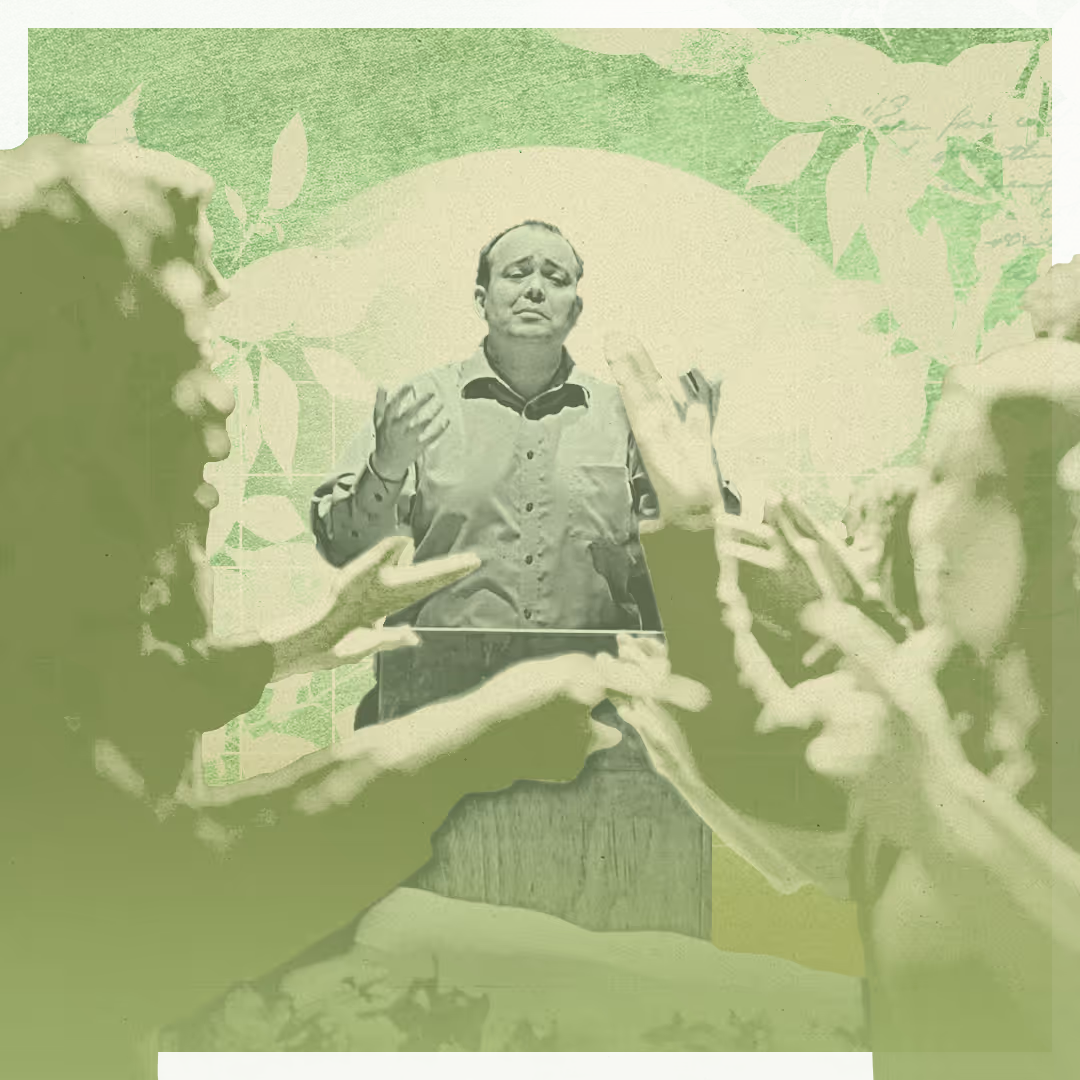
David: The greatest gift, you know, is the word "reason." Gift, the grace, the greatest gift is, "Here I am. Like, this is what I look like. Come be with me." I'm like, "What a gift."
Intro: Welcome to the Spoken Gospel Podcast. Spoken Gospel is a ministry that's dedicated to speaking the gospel out of every corner of Scripture. In Luke 24, Jesus told his disciples that every part of the Bible is about him. In each episode, hosts David and Seth work through a passage of Scripture to see how it's all all about Jesus and his good news. Let's jump in.
David: Well, welcome everybody to the Spoken Gospel Podcast. Thank you so much for joining us. We're on our last episode of our, I don't know what we're calling, hard parts in 1 Corinthians series. We've looked at topics like food sacrifice to idols, head covering, and now we're in chapter 14 looking at the idea of spiritual gifts like tongues and prophecy, as well as something that Paul says about women's role in the church. And this has caused lots of discussion for people throughout the centuries.
Seth: I mean, prophecy, tongues, women's relationship, like we're—
David: We're in it. We're in it. This is it.
Seth: We're in it. Yeah.
David: But I think by the end of this, we'll see a really beautiful thing that Paul's trying to do here. And hopefully we'll all leave with maybe a little bit more of the right thing on the line and a little bit less of the wrong thing on the line. And hopefully see Jesus a little more clearly. So I think it's helpful to kind of reorient ourself where we are in Corinth here. Corinth is a pagan Greek city. They're kind of wealthy and they have just received the gospel. And we like to talk about here as we've been exploring Corinthians, that this is like a picture of the first church in a pagan culture and what it looks like.
Seth: Right.
David: Maybe it is, maybe it isn't.
Seth: But you have this, you have a church that started and everyone that starts coming is from Corinth.
David: Right.
Seth: And they have no idea what, they have no context for the Jewish faith.
David: That's right.
Seth: That would've given them some background on how to operate in a Christian context.
David: Sounds very different than Galatians.
Seth: Yes. And so it's like, you just, well, I guess what I did in the pagan temple, Works here.
David: Works here. Yeah, right.
Seth: It's the same.
David: Religion, religion. Religion, religion. God, God. It's all the same. And so we've looked at a few of the ways that those pagan practices have made their way into the church in Corinth and how Paul has been pushing against that in his letter. We looked at food sacrifice to idols and how that was making its way into the church and how they were basically equating feasting with demons in the pagan temples with feasting with Jesus. Same, same. I can eat with both gods. No, you can't.
Seth: Yes.
David: And how you interact with that affects everyone around you. He's looked at how head coverings were used in the temples of pagans and how they were bringing those practices into the church. And if you want to learn more about that, go to our last episode, not opening that can of worms again right here. But again, we're going to come to this idea of a pagan practice that's making its way into the Corinthian Christian church. And now it has to do with spiritual gifts. On one side and how the church service is structured in a sense.
Seth: The order of worship?
David: The order of worship or the— Liturgy? Yeah, the liturgy. Let's call it that. Let's call it the liturgy, the order of a church service. What should it look like?
Seth: Yeah.
David: Because pagans had an idea of what it should look like and they're bringing those ideas into the Christian church and they're achieving a different purpose in their pagan worship than they're trying to achieve in the Christian church. So—
Seth: And what little other context I know about this passage is that even amongst Christians, there seems to be a divide between how best to practice the spiritual gifts, especially concerning tongues.
David: Yes.
Seth: And I think we talked about this in our intro podcast, but the idea is that for whatever reason, the Corinthians found the spiritual gift of speaking in tongues to be superior to the other spiritual gifts. And were kind of practicing it ad nauseam in the public assembly in a way that was puffing themselves up as a way to prove their spiritual superiority and to dismiss other people's gifts. Yeah.
David: Let's talk about that. I think there's two things there that can be really helpful as we try to get our head back into Corinth around these ideas. So first let's talk about the idea of spiritual gifts in Corinth and a pagan culture. And then let's talk about tongues specifically.
Seth: Yes. Okay.
David: So spiritual gifts in a pagan culture, I found this really fascinating. So in a pagan worldview, we have these Greek gods and everything like that. These Greek gods would often be portrayed in their idols or in their statues or in their temples as having achieved these great and mighty feats. They were powerful, they were strong, they were wise, they were cunning, they were fertile, they were whatever.
Seth: What's that one where somebody's holding the head of Medusa?
David: Oh yes.
Seth: I forget that. But it's a victory.
David: I know, I know. I can picture what you're talking about. But yes, some exploit.
Seth: Yeah.
David: Think Hercules and the defeat of the Titans or something like that. Some big exploit of the gods. And so what would often happen is pagan worshipers would see some of their unique abilities, or if they were particularly skilled or gifted at something, they would say that they got that from their gods and that their gods granted them that gift that they possessed to them. And the hope was that the gods that favored humans the most, those humans would become more and more like their gods and escape maybe the sticks, the river Styx and the shadowy gloom realm.
Seth: They become immortal?
David: And they could make their way to Olympus. Okay. Tiny, tiny, tiny percent even thought that. But that was the idea. That's the only way to achieve oneness with God or God status or escape death is to become mighty in your deeds. And those deeds you could only get mighty in is if the gods granted you their strength as a gift to you.
Seth: And was that called?
David: I don't know if it was called a gift. Yeah, yeah. I didn't find any ancient language around that. but the concept is solid.
Seth: Which is fascinating. So when we say spiritual gifts, well, that's a— the translation of that is from the word charismata, which means a gift of grace. So even just the word Paul uses to talk about the gifts that God gives to his people already undercuts something of this— Earned. This earned, valorious, merit-based way that you climb to Olympus. It's like, no, God, when God gives things, they're gifts of grace. I'm just going to define it differently from the beginning. And every time you hear the word gift, in case you're worried—
David: It's a grace.
Seth: It's grace. It's a gift of grace.
David: And so what's interesting about it too is that those gifts from the gods in a pagan context were for the building up of the individual. And that one person would become a hero and achieve Olympian status. And it was almost done at the utter denial of everyone else around them. And because they, they can't all go to Olympus, so this one person is going to try to have the best gifts, the greatest strengths, the most talent, the most accomplishments, so that the gods would notice and elevate them.
Seth: Yeah.
David: And who cares what happens to everybody else? It's, it's not— they're a very collective society until you get to some of these issues.
Seth: Yeah.
David: And so, uh, that's, that's this kind of concept of this pagan spiritual empowerment.
Seth: Okay.
David: So there was a context for it.
Seth: Yes.
David: Okay. Then the other side of the pagan spiritual context for these gifts was they would practice spiritual ecstatic speech where in their revelry, we've talked about multiple times, in their pagan temples, they would get drunk, they would eat to the point of throwing up, they would have huge sexual exploits in their temples. And as they're doing this, they would just rile each other up with all kinds of activities, one of which was an ecstatic speech. And they would all kind of—
Seth: And ecstatic just means mumbling, kind of in a trance-like state.
David: Trans-like, yes.
Seth: Yeah, yeah, yeah.
David: And they would do this thing all at the same time usually. And it wouldn't communicate anything or accomplish anything concrete or the building up of wisdom or knowledge.
Seth: But it was evidence that they were in touch with the spirit. Yeah. Yeah.
David: And oftentimes, sometimes they would even call that prophecy, that they were hearing from the demons and speaking their words after them. And so you've got this context. And again, I said this a few times in the last couple of episodes, we are trying to historically reconstruct things here based on paintings and vases and a few bits of history. This is not a perfect reconstruction. That's impossible. But I think we're getting a sense.
Seth: But there was something going on. Yeah. There was a, if you were the average Greek citizen, you would have some kind of theological rubric from a gift from the gods, normally to achieve your own greatness.
David: Yes.
Seth: And you would also have a category for spiritual experience leading to ecstasy and a loss of control. Pleasure, I guess. Yeah.
David: And that rambunctious environment was proof that God was with you.
Seth: Yeah.
David: Or the gods were with you.
Seth: Yes.
David: Yeah.
Seth: Okay.
David: So Paul's going to push against a lot of this clearly because as people became Christians and started following Jesus, Jesus was the God giving them gifts to help them on their path toward him.
Seth: Yeah.
David: And these were amazing, miraculous spiritual gifts, gifts like prophecy that allowed them to hear the voice of God and speak that intelligibly to others. Gifts like healing where people would be—
Seth: All sorts of miracles.
David: All sorts of miracles. And they would see them healed. And all of this was done, Paul says, not to build up the individual or to elevate the individual, but to build up the church, to build up the body of Christ and to elevate the body of Christ collectively, to build up the church.
Seth: Yeah. Verse 3, it says, "On the other hand, the one who prophesies for their upbuilding and their encouragement." in their consolation. Paul seems to have— this is kind of like the goal of what spiritual gifts are supposed to accomplish. That's right.
David: Yeah. Just a few chapters ago in chapter 12, he uses the image of a body and he talks about how some people think the eye's the best or the ear's the best or the nose is the best. Yeah. But what's an eye without the rest of the body? Just a goopy orb. It doesn't do anything. It's got to be connected to a whole body to have value. And so sure, you have that gift, but it's only valuable if it's used collectively with the whole body. Because not everybody has the same gifts and no gifts should be elevated above the others. And then he says the one thing, the most excellent thing that you can do, your rubric for the gifts is love.
Seth: Yes.
David: He talks about love and how everything should be done in love. Because at the end of the day, the spiritual gifts which point you to Jesus and reveal Jesus to you and how to look more like Jesus, that's the point of the gifts. They will all pass away because the one that they reveal and the one that they're turning you into will show up. And Jesus will come and you won't need the gifts to tell you about him anymore, 'cause he'll be there. So what do you have left? Love. The love you have for him and the love he has for you. So that's the only thing that matters. It's the ligaments of all of this.
Seth: Which kind of goes back to what we started this little series with too in chapter 11. Like how do we engage with the food sacrifice to idols issue? It's like the rubric there is like— Love of brother. Love of brother.
David: Yeah, totally. And so he then hones in after that kind of excursus into this issue around spiritual gifts and people elevating themselves over one another, using the gifts to divide and not loving each other through the gifts. He then hones in on how to practice the gifts in a church gathering. And he specifically focuses on two gifts, kind of, I don't want to say it this way, but I will just for dramatic effect, pitting them against each other.
Seth: Well, yeah, because in chapter 12 he lists a whole bunch and now he's going to talk Talk about two. Two in particular. Yes. Speaking in tongues and prophecy.
David: Exactly. Speaking in tongues and prophecy. And I think he elevates these two, one, because they both, I think, have cultural context for what these means. We talked about the ecstatic speech of the pagans, divinely inspired speech is maybe how they would think about it. And they also had the idea of prophets and prophetesses, those who spoke on behalf of the gods. I mean, that idea has been around for a long time. Think about Balaam all the way back in the book of Numbers. He was a prophet who heard from the gods.
Seth: Yeah. I mean the Bible's full of prophets.
David: Yes. And pagan and Jewish prophets. That's just a normal thing that people have been able to hear from the gods and share what they heard.
Seth: And I guess we don't have to define, I mean, we could talk about defining speaking in tongues, but the mission of the church began with this miracle of languages. That's how the church started in Acts 2. There was a miracle with languages that allowed the gospel to go forward.
David: Yeah. And just to say it, that word tongues is just the word language.
Seth: Yeah.
David: You speak in languages. So yeah, it's right. We've seen this powerful gift come to the church where they're able to speak in a way that crosses language, linguistic divides so that the church might advance and its gospel so that the church might be built up in love. And you could even say that Peter in that Acts 2 moment was prophesying. That he was speaking God's word to preach the gospel for the advancement of the kingdom. And he was doing it through the gift of tongues.
Seth: Well, that's what they say later. 'Cause he quotes Joel 2, "Your sons and daughters will prophesy," referring to him speaking in tongues.
David: And so it's interesting that these are not only culturally conditioned ones, but they're also very fundamental gifts that have gone to the— that have enabled the spread of the church. But I think the other reason, other than these that we've mentioned, that he highlights them, is that they do seem to have, at least in Corinth, and I think maybe more generally, maybe two distinct purposes. At least in Corinth. Let me just say that. At least in Corinth, the way that they were using the gift of languages, the gift of tongues, it seemed to be building up themselves. And we'll talk probably more about that. But the gift of prophecy, where they would hear from God and speak his words to another, was building up other people. Well, which one is more loving? That's the rubric. Well, the one that builds up the other person.
Seth: Yeah.
David: Well then you should eagerly desire that one. And he's kind of flipping the script on superiority in the Corinthian mind where he's saying, you think that what makes you the most spiritually superior is being the most showy in your gifts or the most ecstatic or the whatever. He's like, no, what actually should be most desired is whatever gift builds up the other person more. Yeah.
Seth: That's right. Not to say, I mean, Paul will go on about how he speaks in tongues more than everybody, but what he prioritizes. And he's like, I would rather speak 5 words.
David: 5 intelligible words. Than 10,000. Yeah. A huge number in itself.
Seth: So basically never in the public assembly. However, because I want to build up my brother and sister in Jesus. I want to, whatever liberty I might have, to speak in other languages and the gift of languages. I want to default to the one that builds up my brother in love. Yeah.
David: Yep. And so that's basically what he starts to talk about then. So he begins in chapter 14 with pursue love and earnestly desire the spiritual gifts. So he's like, these two things can exist side by side, that the spiritual gifts do not have to be at the exclusion of loving the other because so far in the pagan mind, eagerly desiring gifts from the gods have been to build up the self and has been an unloving act. He says you can eagerly desire the gifts and pursue love if you understand that the gifts are given to you for the love of the other. And then he says, earnestly desire the spiritual gifts, especially that you may prophesy. He elevates one, like we've talked about, that is very clearly loving the other person. And then he says, for one who speaks in a tongue speaks not to men, but to God. For no one understands him, but he utters mysteries in the Spirit. On the other hand, the one who prophesies speaks to people for their upbuilding and encouragement and consolation. So again, he's comparing these things.
Seth: Yes.
David: If you speak in a language that's a mystery in the Spirit, it's a different language no one can understand, you must only be speaking to God then.
Seth: Yeah.
David: And you build up yourself. That's a good thing.
Seth: Yeah.
David: It's a good thing to be built up and pray to God and use a gift he's given you to do that. But what's better in the corporate assembly is to speak a prophecy to another person and build them up because you're speaking to a person and not privately to God. So understanding that distinction between personal and private worship and what should orderly be done when the church gathers.
Seth: Yeah. I mean, that's super helpful. Paul is continuing what he's been saying since chapter 11. It's like there's a whole bunch of ways that some of the religious practices of Corinth have been assumed by recent converts in the Corinthian church. And he's slowly chipping away at them. Hey, we're not going to— we're going to think differently about food sacrifice to idols. We're going to think differently about our head coverings. And now we're going to think differently about the gifts given by God and the way that they position us in relationship to other people. These aren't for our own benefit, but for the benefit of others.
David: And I think once you have that rubric in your head, Yes. I think you can really read through chapter 14 in a pretty clear way because he kind of keeps making that same point in different ways of trying to show them that if you're going to speak a tongue, do it privately. Or if there's an interpreter who understands your mysterious spirit language, whatever that is, if it's Chinese or a spirit language or whatever it is, whatever that means by languages there, only if there's an interpreter, that has been inspired by the Holy Spirit with a gift, then you can speak it to the public because then you could build up the church. But if that's not happening, then maybe keep it to yourself. And if you have that in your mind, you can kind of make your way through 14 and his arguments pretty clearly. I feel like once I had that rubric in my head, reading through 14 made a lot of sense. I think what can be difficult for people once they have that idea in their head is not necessarily Well, what did Paul mean? But what does this mean for me today?
Seth: Yeah. Should I be speaking in languages? Should I be prophesying?
David: And what does that mean to speak in languages? And should I be prophesying? And I think that is a huge question that I think is, it's polarizing for the church. And it has been for a long time. I think what we can at least say here, I think we want to try to focus on the major things here. I think what we can at least say here is that Jesus is giving us his Spirit to form us into his image and reveal to us himself. And we must do everything we can in the gathered church to build each other up into the image of Christ and behold Christ.
Seth: And not pit our different giftedness against one another.
David: That's right.
Seth: I've been studying this passage just independently. And one of the things that I found fascinating that he does kind of behind the scenes here in that term spiritual gifts is that Paul kind of levels the playing field on spiritual gifts. Earlier in Corinthians, he calls celibacy a gift, a spiritual gift. He calls marriage a spiritual gift. He calls speaking in tongues a spiritual gift. He also calls, later, I think it's the book of Romans, he'll call administration a gift of the Spirit. So I always thought that was interesting, or I thought that was interesting as I've been studying recently. He's doing something where he's like, we tend to, or the Corinthians are tending to elevate some gifts as hyper-spiritual and more worthy of honor and other ones as less so. And Paul's like, they're all gifts from a gracious God and they're all spiritual. So we shouldn't be pitting them against one another. And I think a lot of ways I've seen that happen. And it was interesting. Our church was going through a study on marriage and singleness, And so even thinking about those two things as spiritual gifts and the way that churches can prize—
David: One over the other.
Seth: One over the other.
David: Marriage over singleness.
Seth: Yeah. I'm like, oh, that's fascinating that the tendency to hyper-spiritualize one thing.
David: That's really good.
Seth: Is a common temptation for all folks. And normally it's the one that I do. Yeah.
David: The one that's really good is the one that I practice. Yeah, that's right. And it can happen on the other side too. It was like if you have maybe a minority gift or a gift that makes you feel a little bit more on the outside, you can be tempted to think that your gift is either pointless or that it's so rare and you've got to figure it out. It's like, "All I can do is spreadsheets." All I can do is spreadsheets, or why can nobody else do spreadsheets? I'm so smart.
Seth: Yeah.
David: Yeah.
Seth: Right.
David: Totally. That's really interesting. I think this all leads then to another focus of his, which is order. And so again, like I talked about in the pagan church, you've got this disorder happening. But he says, look, if the Spirit is coming to all believers, you're all going to have something to share with the church, to build up the church. And so he talks about when you gather together, one person might have a hymn, one person might have a prophecy, one person might have a tongue, one person might have this or that or the other. Well, why? Because the same Spirit is filling all of them for the same purpose, to build up the church, but in different ways. So how do you practice that?
Seth: Okay.
David: All at once?
Seth: Presumably not.
David: Presumably not.
Seth: Why?
David: That's my background as a pagan. Whenever I see this thing happen and everybody gets excited all at once, I'm like, "God is here. The gods are doing something." So you want me to kind of chip my way through it in an orderly way? That's not very fun.
Seth: Yeah.
David: Why would I do that? Ah, because there's a reason for it. And it's the building up of the church that we actually want to edify, that we actually want to speak to, that we actually want to correct, guide, encourage, teach one another through the Spirit and through the word of God so that people might see Jesus and become like Jesus. That's the point of the gifts. And so if it's not happening in an orderly way where everybody can do that, then something's broken.
Seth: That's right. Yeah.
David: So I mean, I hear a lot there. I don't know if you've been through a lot of different kind of Christian traditions too.
Seth: That's right.
David: But I've seen this on every side of the spectrum. I feel like at least in my available experience where I've seen if it's too ordered, you're quenching the Spirit. And if you're too spontaneous, you must not be listening to the Spirit.
Seth: That's right. Yeah, yeah, yeah.
David: And so this idea of order is still a live question, I think, for a lot of people. Yeah. What's been your experience with order in worship?
Seth: I've had a whole bunch of different experiences. Been to churches where everyone's speaking in tongues and running around the room. I've been to churches where it's a pretty strict liturgy. Went to an Anglican wedding, which was kind of like a really— normally weddings are kind of like this weird in-between thing where it's kind of a party and kind of loose, but also really formal. And there's ceremonial aspects to it. And the Anglican wedding was not quite like that, but beautiful in its own right. So I've had a lot of different experiences and I've experienced Christian love in all of them. But I would probably say that some are more honoring and more loving than others. Right. And which is why I think Paul's saying here. And I had this odd experience. I went to this pretty conservative Korean church and it's really common in Korean churches to pray simultaneously.
David: Right.
Seth: Yep. And I was like, oh, what about 1 Corinthians 14?
David: Yeah, yeah, sure.
Seth: And it was like, but what was interesting, I had to process it first. And they were all speaking in English, so tongues were not happening. Some of them were speaking Korean, but that's because that was their native language.
David: So two tongues.
Seth: Two tongues.
David: Everyone could understand each other except me, who was as the white guy in the room.
Seth: But I was like, oh, how does this inform what I'm aware of in 1 Corinthians 14? But in the order of service, it kind of made sense. You had a moment where we all prayed corporately, we all listened to the word together, one person prayed, and then everyone offered their own prayer out loud. And it wasn't for anybody else. It was just, I was like, okay, I think that doesn't fall afoul of what Paul's saying here. It's not like an absolute command never to do things simultaneously, but a command to tend towards love of brother in the building up of one another. Right?
David: Yeah. That's right. Yeah. The rubric becomes What is going to actually build up my brother or sister in the church the best? Not what's going to make us look like a Spirit-filled church the most, or what's going to make me feel like I am a super Christian, but what's going to actually practically love my brother and form us into the image of Christ most effectively. And so Paul starts to talk about that. He starts talking about, okay, let's just get— he gets very practical.
Seth: He does.
David: He's like, okay, so let's just say You've got somebody who stands up to prophesy and he's prophesying, he's giving a word that he feels like God has given him. And then somebody else gets a word from the Lord. Well, that person should finish, sit down and let the other person speak. He shouldn't monopolize all the time and be like, "Nope, God's speaking to me. You don't get to talk. I'm talking." He's like, "No, finish, sit down. And then you stop speaking and you stay silent so that this person can get up and share their word." And then let's say that happens and somebody else gets a tongue and there's an interpretation. Well, that person can stand up and share. It's like, is there's this very ordered kind of way to do things. And I think the thing to get from that, I think is what we're knocking at here is so that we can hear the word of God, see Jesus and become like him so that we can be built up as a corporate body into the image of Jesus. Is there anything else you think when you think about this ordered sit down, stand up thing as she processes it?
Seth: I think it's like even in the most spontaneous-looking churches. There's always an order. It might be more heavy-handed in some others, but it's like, hey, we start with singing, or we start, the preacher gets up and does announcements first. There's always an order. There's always a liturgy to the service. And I think it's an active, it should always be an active question. How does the liturgy best serve the body of Christ?
David: It's interesting. We keep coming back to that in all of these issues. We did with head coverings, we did with food sacrifice to idols, is this wise conscience given to the believer to be like, how do I best imitate the love of Jesus in this exact cultural context? It's just a fascinating thing.
Seth: Yeah. Yeah.
David: Another thing, as he talks about the order of the church, he talks about women. So he doesn't just talk about different gifts. He brings women into the equation. And I think some helpful background here is understanding what would the role of women have been in most educational teaching religious moments where people are going to gather in a corporate assembly to hear instruction and to hear from the Lord.
Seth: From what you told me in the previous podcast, it seems like women have a pretty elevated space within the worship of the gods. They have like this kind of the high priestesses showing off their hair, or like you have even cult prostitutes who without their presence, like, I mean, without their exploitation, essentially, you don't have the divine favor of the gods. So is that the case? Were women pretty prominent?
David: Oh, such a good question. So sexually prominent, yes.
Seth: Okay.
David: And there's two hues there. One, some historians paint this picture of these female cult prostitutes that are elevated priestesses with sexual power. Okay. There's a book called The Source. Yeah, yeah. Yeah, did you ever read it?
Seth: I haven't read it, but it's on my shelf.
David: And it goes through a tell, a dig site in Jerusalem, And it tells the story of this little mound's history from beginning to present. And one of the layers talks about this time in Israel's history when it was pagan and it was becoming not Christian, it was becoming Jewish. And yeah, there was this cult prostitute in the story, in the town, and she was the the want of every man and had this kind of mystic power over the men of the city. So some people paint it that way. Others, and you can kind of pick some of this up too from Paul's language, it's like these were shameful sex-slaved shaved-haired women who were subjugated and treated horrifically.
Seth: Yeah.
David: That also makes a lot of sense knowing humans' proclivities to things.
Seth: Yeah.
David: Either way, no matter which version, they had a role in that and that alone.
Seth: Fascinating.
David: So I could go and sleep with my cult prostitute, whether she was—
Seth: She could lead my religious ceremonies.
David: Or a sex slave.
Seth: Yeah.
David: But then whenever it was time to get down to the teaching and the business and the, oh, well, the men go in and do their thing and the women stay out. And there is this separation with the educating of women in this time, their involvement in some of the internal practices of religion and politics. That's just, they weren't there. They did not hold chambers with men in, think about political settings. No, they don't get a voice in that agora kind of moment. And so here in the church, it's like, okay, let's talk about orderly worship. We're here, we're in the inner time of hearing from God, hearing the instruction of the Lord. We're praying together, prophesying together, and we're exercising the gifts for the building up of the church.
Seth: And the assumption is women are not present.
David: That would be the cultural assumption. And then he says, "Women." And he starts talking about their role in the order of the church. And he is fighting, I would say—
Seth: Well, when I read it, I would say it doesn't sound like he's fighting with the— the women should be silent in the churches. They are not permitted to speak. When I read that, I read they are not involved.
David: Oh, sure.
Seth: Right? That's my first assumption. He's fighting for what they shouldn't be involved in. But you're pushing me in a different direction.
David: Well, there's a couple things here. So you have the cultural assumption behind, You also have the fact that he's barely caught his breath from 1 Corinthians 11 where he said, "So women, when you pray and prophesy in the church." Hilarious.
Seth: That's right. Yeah.
David: So it's like, okay, it's assumed they're doing the very thing he's talking about here. So they're a part of it. He just said they're a part of it.
Seth: Which would've been countercultural then.
David: Countercultural.
Seth: Yep. Because if women primarily have a sexual role in religious gatherings and here they have a—
David: They get to pray and prophesy.
Seth: That's something new.
David: Yeah, definitely.
Seth: That's new.
David: That's right.
Seth: Okay.
David: And so we have that assumption. Well then all he's doing here, and we have to be careful with the language because he's repeating a lot of language that he said already. So keep silent and not speak. He's talked about this language with the prophets. He said, when one person is prophesying and another person gets a word, let that person keep silent. It's the exact same Greek word given to the women. So he's folding them into the worship order here.
Seth: And that itself is profoundly countercultural.
David: Exactly right.
Seth: Women would not have been a part of this worship setting. And the fact that he's addressing them at all is kind of wild. And the fact that he's giving them, say, okay, there's a time for you to speak and a time not to speak.
David: Just like everybody else.
Seth: Just like everybody else. Fascinating.
David: And so much so that he even goes, and if they have a question about something that was said, Let them ask their husbands. Now normally, if a husband's leaving a political gathering or something and a wife is like, "So what was the decision?" What is that to you, wife? No. Teach them. You have to answer their questions, men. You're going to teach them. You're going to speak to them. You're going to reveal the word of God to them too. There's not meant to be this, "Oh no, you don't get to know the secrets of God" kind of hidden knowledge thing. And so it is pretty interesting what Paul is doing here. And even if you wanted to take a full women stay silent and just act like even 1 Corinthians 11 wasn't a thing, it's still countercultural that women could even sit in the room quietly. So even if you want to afford that they weren't supposed to speak, which I don't think this is explicitly saying, especially given 1 Corinthians 11.
Seth: Yes.
David: It's at least amazing that they get to sit in and hear the word of God.
Seth: Together with men, which is, I think in a lot of traditional synagogues, men and women sit separately and in all mosques, maybe some reform mosques. So it is a common practice where men and women learn separately from one another. And Paul's explicitly saying, no, the Christian practice is that men and women are equally, they're the glory of God together. They're the image of Christ together and they learn together as well.
David: Yeah.
Seth: Okay. But there's a way to do it without interrupting the flow of service is what's happening.
David: Right.
Seth: Yeah.
David: Yeah. So I think Paul is basically just showing how to have orderly worship of God and he's including all members of the church in that order. And I think it's interesting to tie this back to the first episode we had around food sacrifice to idols and how you had these people who felt free to eat the food. Sacrifice to idols, but Paul told them to limit their freedom for the sake of the lesser, the weaker conscience brother. And it's like we get that theme again happening here where it's like, well, I have a word from God. Yeah.
Seth: Okay.
David: Finish it up, but then sit down and limit.
Seth: Don't monopolize the service. Don't monopolize it.
David: And he's like, well, I'm a man.
Seth: Okay.
David: But also the women have received the same spirit and they also pray and prophesy. So limit your freedoms, limit your liberties, limit your power. For the sake of everyone. And so it is interesting to see how that theme is coming back in here.
Seth: Yeah, it is interesting. I always, I think more on a meta note, think about the good news present here. Think about the good news of a God who gifts his people. It's like in the controversy about spiritual gifts and what is tongues and what is prophecy and should we keep doing them is the assumption that in our Christian life, God empowers us and not simply empowers us in a way of like, in a functional way, in a way that like, you need a job, here's some food to empower you on your journey. Fuel. It's not fuel.
David: It's not fuel. It's not just fuel.
Seth: It's not just fuel. It's a gift. And that's the primary way that Paul seems to talk about the empowerment of the Holy Spirit isn't as fuel, but as a giftedness.
David: As a grace.
Seth: As a grace. As a gift of grace.
David: It makes you more human. Human. It makes you more beautifully human the way God— 'cause a gift of the Spirit is Jesus giving you himself. Like that's— Jesus had all the gifts.
Seth: Yeah, yeah, yeah. Right? You know?
David: And he's giving you himself and he's like, here, here's a better way to be human.
Seth: And it's redundant.
David: What do you mean?
Seth: A gift is—
David: Is grace.
Seth: A gift is something you don't deserve. Right.
David: Yeah.
Seth: It's just given to you. And it's a gift of grace. It's a double graced thing that you've received. Apart from what you deserve, but because you are God's child and a member of his body, he gives you things for your own benefit, but also for the benefit of people around you. So I love that our Lord, when he empowers us for our life as Christians, it's an empowerment through the giving of gifts, which is just— I want to be more—
David: Grace upon grace. Yeah.
Seth: Yeah. I want to be like more receptive and like more softened to that reality where That's true. Where it's like, if I have any speaking skills or like, I don't know, maybe podcasting could be considered a spiritual gift. I don't know. But like, these are gifts given to me that I can't take credit for. Right. Nor should I start comparing myself to other people who don't have the gift of podcasting, you know, like, but to like receive humbly and then give back generously is like the posture.
David: Of having a gift. And using this gift to build up the church.
Seth: That's right. In love.
David: That's right. Yeah. And even now, receiving the ability to sit here and hopefully cognizantly put together a sentence as a grace from God. Oh, God loves me and gave me a grace to be able to serve him in this way. What a beautiful thing. What a gift. And so yeah, that's so true. I am also just thinking about how Jesus rightly orders relationships. We kind of talked about that with men and women in the head coverings passage, and that kind of continued into the body in 1 Corinthians 12, and then love in 1 Corinthians 13, and now we're in 14 and we get women again. And you think about how Jesus rightly orders relationships, and when Jesus was physically here on earth, He brought men into his discipleship program, his rabbi training school, and women. Many women followed him around as his students and he taught them alongside the men. And he brought them out of places like prostitution and gave them grace and saved them and gave them places of honor. And even just thinking in a culture where women would not be allowed to give legal testimony in a trial, Yeah. And their testimony would be thrown out. Like, "Oh no, your testimony's no good here." They're the first witnesses to the resurrection. They're the legal witnesses of the resurrection. Jesus is like, "You know what? I trust the most important news to women." And he's rightly ordering the world. I just think that's just so beautiful. And so we get to reflect that in our worship services by listening to the whole body of Christ filled with the whole Spirit of God. Turning us into the image of God. Yeah.
Seth: I was reading somebody recently. We talk about a Christocentric reading of scripture, but there's also a Christo-iconic way to read scripture in which what Paul's inviting us to do is to center our church practices around the image of Christ. And so how did, what did Jesus look like in his exercise of the gifts? In his experience of his rights and his relationship to women will let the church become the image of its Savior. Make it become Christo-like. Yeah.
David: It's so good to think about that question. Again, that discernment, conscious wisdom question we keep coming back to is, okay, which liturgy, which order of worship helps us as a corporate body look more like Jesus today? Is just a good little discernment question. I also can't help thinking about the gifts, the grace of God, which I think all Christians believe in spiritual gifts one way or another. What they are, what the limits of them are is the debate. But I think all of Christians believe the Holy Spirit equips us with what we need to do the will of the Lord. And I just think it's amazing to think about the gifts, at least in 1 Corinthians here, And just thinking about the gift of prophecy, that God is a God who wants to be known. I think the gift of the grace of prophecy precipitates the need of a God who wants to make himself known. He's like, "I want to talk to you. I want you to hear my voice. I want to tell you I love you. And I'm going to use my people to talk to my people because I want you to know me." And I think his spiritual gifts, that's what they do. Is they reveal God to us and form us into God's image. And that's what they're for, is to show us. So the gift of benevolence. Why? Because God is so benevolent. He's so hospitable and kind and humble. And he loves preparing a meal for us and preparing a place of safety and peace for us. And so he gifts people with that so we can see Jesus. I just think that's amazing that God wants to show us himself. He's not this veiled, hidden God. He's, but he's pouring out himself in grace so that we might know him more.
Seth: Yeah.
David: It's just so cool.
Seth: And what's interesting then, as we're talking about the gifts given to the body of Christ, to think about the ultimate given gift given to his people is the body of God.
David: The revealed God.
Seth: That's how bad God wants to reveal himself. He reveals himself in the body of Jesus for his people.
David: It's just his heart is to to show us himself because he knows it's the greatest good.
Seth: Yeah.
David: The greatest gift, you know, is the word reason, gift, the grace. The greatest gift is here I am. Like, this is what I look like. Come be with me. And like, what a gift. Okay.
Seth: Well, I'm glad we went on this journey through the hardest passages in 1 Corinthians.
David: It was fun. At least the hardest passages for me. Maybe other people have harder passages that they would talk about.
Seth: What's next?
David: I don't know. I got to go figure that out.
Seth: It's gonna be a journey.
David: It's gonna be a journey, but it's gonna be awesome. I appreciate you being here, Seth. This was really fun. Christine, thank you for all your help on this. And thank you, everyone listening and watching. We're so grateful that you're part of the Spoken Gospel family, and we will see you next time.
Outro: Thank you for listening to the Spoken Gospel Podcast. Spoken Gospel creates short films, devotionals, and podcasts like this one. Everything we make is free because of generous supporters like you. To see our resources, visit SpokenGospel.com or subscribe to our YouTube channel. Thanks for listening. See you next time.