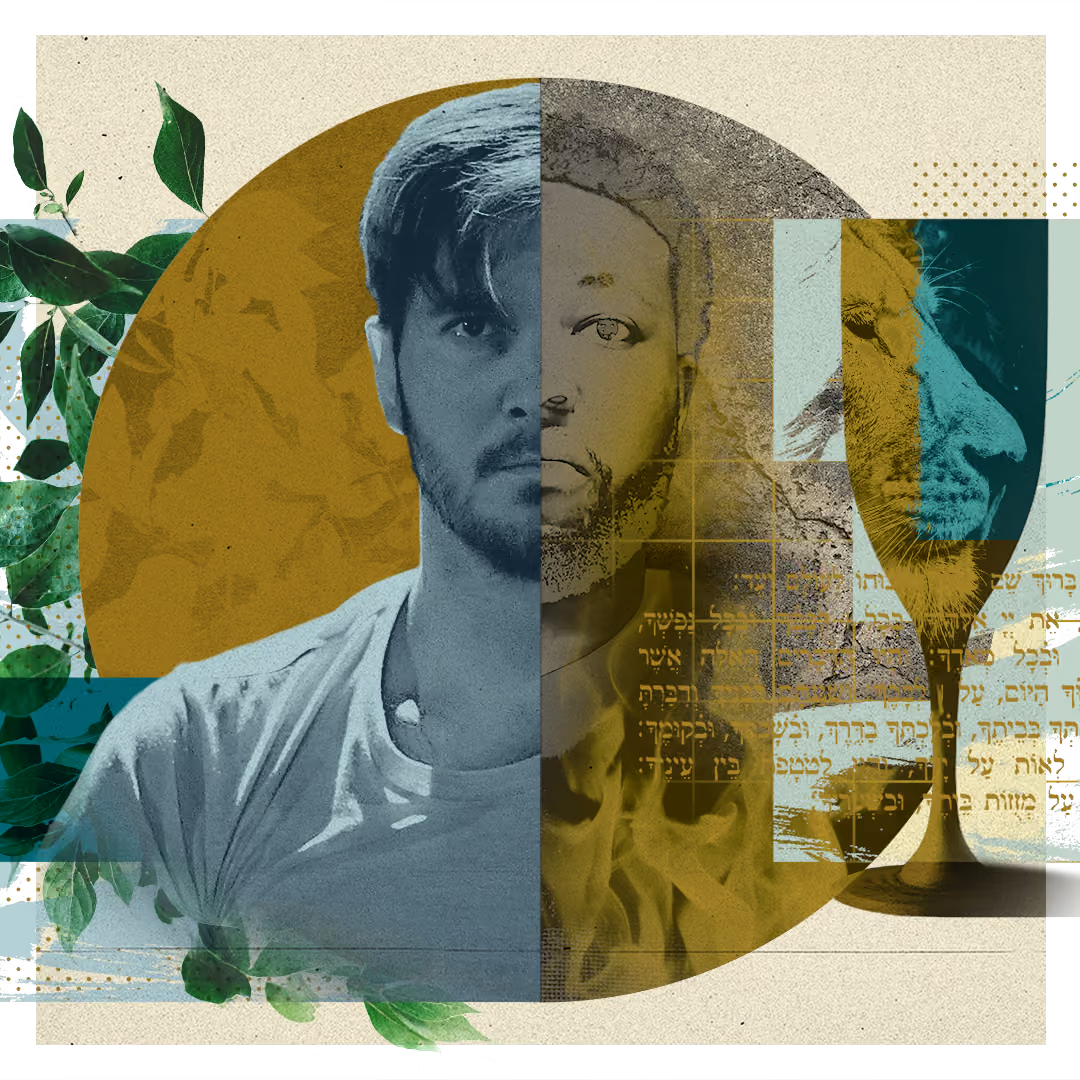
David: What's amazing is the promise of this story is it holds out that inside the flames of Babylon, wherever you are right now, you are being refined into the gold image of Jesus right beside you. And you're being made into his image so that you can step out of the fire, you know, like be in Babylon as his image, as his bearer, like so people can look to you and see that the kingdom of God actually has claim over this territory. And not whatever, you know, nationality lays claim to the land.
Intro: Welcome to the Spoken Gospel Podcast. Spoken Gospel is a ministry that's dedicated to speaking the gospel out of every corner of Scripture. In Luke 24, Jesus told his disciples that every part of the Bible was about him. So each week, hosts David and Seth work through a passage of Scripture to see how it's all about Jesus and his good news. Let's jump in.
David: Well, welcome everyone to the Spoken Gospel podcast. Thank you so much for joining us. We are continuing in Daniel with chapter 3 today. Seth, how are you?
Seth: I'm ready to talk about Daniel 3.
David: I hope so.
Seth: The fiery furnace.
David: Yeah, what a furnace.
Seth: The most famous passages of scripture, maybe.
David: I mean, they made a VeggieTales—
Seth: they made VeggieTales out of it. It's in every kid's Bible. If you grew up—
David: gruesome story to put in the kids' Bible.
Seth: It really is. And then we burned them alive and people died. Let's put it— let's put that in the kids' Bible.
David: Has kids' Bible written all over it. So funny.
Seth: So yeah,
David: that one's not in the Jesus Storybook Bible though, is it? I don't—
Seth: oh,
David: I think it's just Daniel in the Lion's Den from—
Seth: it is. Yeah, Daniel in the Lion's Den. That is the more famous one than the fiery furnace. I mean, they're—
David: and we'll get there.
Seth: Shadrach, Meshach, and Abednego. I mean, it's classic.
David: It's a classic.
Seth: Yeah.
David: So let's talk about that.
Seth: Yeah. What's funny about the beginning of this story is that we just ended with a story about a giant statue being smashed, right?
David: Nebuchadnezzar has this dream where there's this giant statue that he is the gold head of, and then this uncut stone comes and strikes the foot and it falls down to the ground. And it's like this warning against Nebuchadnezzar to be like, don't be the big statue.
Seth: Yeah. And then the very next thing, he builds the statue.
David: Yeah.
David: What's going on?
Seth: So when I first heard that, uh, and because, you know, at the very end of Daniel 2, he like bows down to Daniel and says, your God is Lord of Lords and King of Kings.
David: Like, oh man, God really got—
Seth: and then he builds his own statue. And so I'm like, okay, maybe he's just really stupid.
David: Yeah, he's got the memory of a goldfish.
Seth: Yeah. Like, so maybe he's just, or he's just like playing the pluralist. He's like, I can pay honor, homage to your God. Your God is great. That's right. But I'm still going to build the statue to my own pride. And I kind of took it just kind of as like, he's just being kind of ignorant. He just admitted the God of Daniel spoke to him, but doesn't really take his advice and built it anyway. So that's the first way I took it. Yeah. Which is, I think, fair.
David: Yeah, it's at least like obviously ironic.
Seth: It's so obviously ironic.
David: Yeah.
Seth: But I think maybe more true of Nebuchadnezzar and makes sense of like the rage and fury that we see throughout Daniel chapter 3. Right. Those are the words used to describe him. Rage. He keeps fury. I mean, burning. He, he's this.
David: Yeah, he is the furnace.
Seth: He is this furnace.
David: Yeah.
Seth: And the idea of the nations of furnace is like throughout the prophets or like in Psalm 2, the nations rage at God. Like there's this, anyway, what makes a little bit more sense of that, uh, when Nebuchadnezzar hears the interpretation of his own dream, that there is a cosmic mountain coming to smash his kingdom. He just straight up disagrees. He says, no, no, no, no, no. There is no other kingdom besides my own.
David: Right.
Seth: I am the ultimate sovereign of the universe. Right. And so what does he do? He builds a statue, the tallest ever built.
David: Right.
Seth: A statue that bridges the gap between the earth below and the heavens beneath. He builds a new Tower of Babel.
David: Right. But it's in his own image and it's all gold.
Seth: And it's all gold. He is the final word on who rules the world.
David: He is the bridge between heaven and earth.
Seth: Yes. He makes this—
David: Oh, that's interesting.
Seth: Ultimate stand. Like, no, there is no coming kingdom. There's no unmade, there's no divine kingdom coming. I'm the—
David: I am the divine king.
Seth: I am the divine kingdom.
David: It's also interesting that he makes the whole thing out of gold, whereas in the dream the head was just gold.
Seth: Yeah.
David: And then there was this like brittle material down at the bottom, the stone struck. I wonder if he's thinking like, oh, the problem is my kingdom has an Achilles heel. I can fix that. I'll make the whole thing gold and then the stone will plink right off.
Seth: Right. Maybe he is. He's, we don't know.
David: But anyway, yes, he's either being obstinate, ignorant, or stupid. Like something is happening.
Seth: At the very least, he's extremely proud.
David: Oh, I mean, yes. And that's going to— we're going to come full circle on that in the next chapter.
Seth: And I think this probably plays into the ultimate point of what's on the line in Daniel chapter 3 is who is the ultimate sovereign, right?
David: I mean, that's— and that has been the question. That is, is like Nebuchadnezzar claiming to be a god in a sense here comes and deposes Yahweh's house, the temple of God in Jerusalem.
Seth: Yep.
David: And so who's in control?
Seth: Who's in control? And then throughout this narrative, we're going to get like hints that Nebuchadnezzar thinks he is the ultimate sovereign. You have him calling all of the satraps, prefects, governors, counselors, treasurers, justice magistrates, officials of the provinces.
David: I almost started beatboxing.
Seth: I know. And he repeats that multiple times throughout the letter. And then he calls all the musicians. He says all of the horns, pipes, lyres, trigons, harps, and every kind of music. And beatboxers? And beatboxers, and the vocalists, and the a cappella singers from wherever. The point though is that King Nebuchadnezzar is rallying every force he can to celebrate his own sovereignty.
David: Yeah.
Seth: Every official, every politician, every government bureaucrat, Come worship me. And all these different musical instruments, they're representative of different nations that Babylon has conquered. And they're even described using like, what's the word, transliteration? Like when you just take a word from one language to another.
David: Oh yeah, yeah, yeah.
Seth: They're just all from different languages. These words aren't Aramaic. Oh, so the flygon from over here, the trigon from over here, the harp, the bagpipe, these are all like other language— languages using their ritual or their national instrument to praise the one true sovereign, King Nebuchadnezzar.
David: They're all being amalgamated.
Seth: Yes.
David: Into this worship of Nebuchadnezzar.
Seth: The one music is supposed to call all people.
David: I see.
Seth: To worship the one master between heaven and earth. Nebuchadnezzar.
David: So, I mean, if that's what's on the line, that's what's on the line, then, I mean, it's really important then at this moment to name something really clear that's happening here. That there's a biblical theme being fulfilled in a really bad way. And that is, um, all throughout the, the prophets and like all throughout the, the imaginative scope of the Old Testament up to this point, there is supposed to be this day when the mountain is raised up and like God comes to his people. And what's going to happen? The nations are going to stream from every tribe and every language and every nation. They're going to come and they're going to bow before God, and all nations of the earth will be blessed as they come to this place and worship the one true God. And that's supposed to be God coming to his people, and all nations streaming there. And Nebuchadnezzar is fulfilling that, right, but in himself.
Seth: And what's interesting, we talked about how Babylon is just a new iteration of the Tower of Babel, right? And what's interesting about the power of Babylon is that, that it overcomes the curse of Babel. The Tower of Babel tried to unify worship in this giant tower that spanned heaven and earth to consolidate worship of themselves. And then what did God do? He dispersed the languages. Yeah, but now we have a kingdom that's so powerful it can overcome the curse of Babel and gather in all the languages and musicians of the world to celebrate a new potential sovereign. Nebuchadnezzar. So it's really interesting.
David: Okay.
Seth: And as you keep saying, like, isn't this supposed to be God's kingdom?
David: Right?
Seth: Isn't this— isn't God's kingdom supposed to be this universal? Isn't God the true sovereign here? Isn't this the kingdom God promised to build on behalf of Israel? But now it's happening while Israel's enslaved to Babylon.
David: Yeah. I just can't help but think about like this.
Seth: Okay.
David: You've got— it's also like, you know, I don't want to get too deep into this, but it's like, it's also kind of an inverse of the Garden of Eden where you have God making us in his image. And now you have the new God making an image, right? Anyway, well, no, think about what an image was supposed to do.
Seth: An image in the ancient world marked the boundaries of territories. If you were a king and you conquered a nation, you place an image of yourself there on the edge of a contested border. No, this land belongs to—
David: Whosever statue that is.
Seth: Whoever statue that is. So when God creates the world, and makes us in his image and tells us to go throughout all the world.
David: This world is mine.
Seth: This whole world is mine. And as far as you go, humans, right? You proclaim my rule. Yeah. And so Nebuchadnezzar is trying to make the final image.
David: That's right. He's trying to conquest the world, finish the work of the Garden of Eden, but make his image set up instead of the image of God.
Seth: Yes.
David: Yes.
Seth: He's created this anti-Eden. Right.
David: And so I'm just thinking about like, okay, you've talked about all these categories of like this giant gold image made in the image of fallen humanity or of Babylon. You're talking about overcoming the curse of the dispersed nations and all the languages. And it's like, oh, we have one kingdom rule now. We can, we can do everything without God now. Like, we are God. We don't need God. We can overcome God's curse.
Seth: That's the claim of Babylon, right?
David: And so I'm just like, man, just pull back for a second. It just sounds like secular humanism. Oh, where it's just like the pinnacle of everything is the perfection of the human race. Yeah. Even if it's supplemented with technology.
Seth: Well, that's precisely the point, right?
David: I'm just saying they're using technology.
Seth: Yeah. Babel was built on technology.
David: Yes.
Seth: Yes. We haven't progressed beyond Babel.
David: I'm just thinking of like Google Translate.
Seth: Yeah.
David: Right, right. It's like, oh, we've overcome the curse of Babel. Google Translate.
Seth: Did you ever watch Star Trek growing up?
David: Oh yeah.
Seth: I watched The Next Generation all the time. Captain Jean-Luc Picard, the best of the captains.
David: Careful, we don't want to lose—
Seth: we don't want to lose the Kirk fans. But the universal translator, they could speak to any language in the galaxy, right? And there was even one episode where they couldn't, like, speak to this language, and the whole thing was overcoming that barrier. Like, the humanity had progressed beyond poverty, progressed beyond all— even the barriers of language. They had become The new Eden, right? The new kingdom of God, but the empire of Babylon at the same time.
David: Yeah. So I'm just thinking about that and like humans were the new gods.
Seth: Yeah.
David: Yeah. I just think we like, we in our techno, in our technological advances, I just think we, we believe we've progressed to the point where we can bring heaven to earth. We can bring the good life ourself.
Seth: Well, that's the promise of technology, right? And a strong leader.
David: Yes.
Seth: The more technologically advanced, the stronger our leader.
David: Yep.
Seth: We can transcend our limits. Right.
David: If we had Apple and Steve Jobs infinitum, we could solve every problem.
Seth: Yes. Right.
David: And that's just like, that's the height of Babylon.
Seth: The height of Babylon is trusting in technology and political power.
David: It's just interesting to think about the fruit of the tree as an iPhone.
Seth: Right. And also just like the unoriginality of this type of idolatry. Yeah. Like political power and technology talk to each other and that's been that's been the temptation since the Garden of Eden. You can know more.
David: Right, right. And isn't that the promise of technology?
Seth: Right. Know more. Know more.
David: Yeah.
Seth: Have more power with less effort.
David: Right.
Seth: Everyone can bow at your feet because you know everything. 'Cause you can just type it into Google real fast.
David: It's just interesting to try to locate the new—
Seth: Yeah.
David: Nebuchadnezzar statue today.
Seth: Yeah. You know, I mean, one place to locate it is in all of us, but you're right.
David: Yes, totally.
Seth: But in every nation there.
David: Yeah, but also like this was a sociopolitical reality. Yes. Where you had the, the kingdom of the earth claiming dominion over everything. It's like, man, that's like Google. Like, right, right. You're right. I'm not trying to be like apocalyptic or anything here.
Seth: I'm just like, well, Daniel's trying to be apocalyptic. I know, I know.
David: But you know what I mean?
Seth: I was like, anyway, I think it's a good point and it puts it all on the line. It's like, what's, what, who's the universal sovereign? Is it Google? Is it Nebuchadnezzar?
David: Right.
Seth: Is it Steve Jobs? Is it the Illuminati? Is it Donald Trump? Who is it? Is it, is it Putin? Who is in control of the world? Yeah, that's what's on the line, right? So Zuckerberg, Zuckerberg. So now let's all set up verse 8. Therefore, at that time, certain Chaldeans came forward and maliciously accused the Jews. They declared to King Nebuchadnezzar, O king, live forever. You and your king have made a decree that everyone should work. Oh, we haven't even talked about this. He builds the statue. Why? So that all people will bow down and worship him.
David: Right.
Seth: So we just glossed over that important— like, we've talked about the statue and the kingdom and what it represents. Like, And then he says everyone must bow to him. The universal declaration of sovereignty is that all nations, all people, all languages will bow to Nebuchadnezzar. That's—
David: I mean, that's actually a helpful thing to meditate on for me, probably as more of a modern person, where there's this direct link between sovereignty and rule and worship. Like, we, you know, I just, I have a hard time connecting, and I don't know if this is going to out me as like a terrible Christian or something, but like, probably I have a hard time connecting with the phrase worthy. Like when, when we're worshiping, you know, worthy, worthy, worthy. And like, I've learned some things that help me understand that a little bit better. Like, God, you're worthy of all worship. You're worthy for your name to go around the world. And I'm like, yeah, I don't disagree with that, obviously. But I have a hard time just understanding what it means in my heart.
Seth: Mm-hmm.
David: And I'm like, oh, this kind of helps is it's like you bow down to the person in charge.
Seth: Mm-hmm.
David: And it's like, you're sovereign. He's proven he's sovereign. So you bow down. There's a link between sovereignty, dominion, and worship and homage.
Seth: Yeah.
David: I'm just like, okay, that's, that's a helpful way to get back into that culture for me a little bit.
Seth: Yes.
Seth: Anyway, so I don't bow today. Right. You don't bow today unless you bend your head down to look at your phone.
David: Bow hard to the kingdom of—
Seth: Yeah. I mean, like, if you look up your phone pickups and just look, I mean, just in the imaginative universe of bowing down your head to look at a screen.
David: Right.
Seth: And whatever extent that's an actual moment of worship for you, your phone pickups tell you how many times you bow down to Babylon.
David: Yeah.
Seth: In a day anyway. Yeah. Just a meditation on the theme. So the universe— are you laughing?
David: I am laughing. So I'm like, I'm gonna have to just put that one down before I run too far with it.
Seth: So everyone must bow down.
David: Yes.
Seth: But a group of politicians in Nebuchadnezzar's court realize the Jews, Shadrach, Meshach, and Abednego, refuse to bow down and they will not bow before the statue. So a couple of interesting things here. One, Nebuchadnezzar is not the sovereign he thinks he is.
David: Because not everyone's bowing.
Seth: You have 3 people who refuse to bow. He's like, this is supposed to be the last word on who rules the world. And as soon as the decree is given, 3 people refuse to bow. And then on top of that, his officials who are supposed to be united in this moment are now using it as an opportunity to gain favor in his sight. He— there's division within his own ranks. Ah, and they're using this universal call to worship and submit to one ruler as an opportunity to jockey for position within his own kingdom to gain more power. It's like his kingdom, the thing that he wanted to, to display his universal sovereignty.
David: Yeah.
Seth: Is already cracking and showing he's not as powerful as you think he is, even among his most loyal.
David: Yeah.
Seth: The most, those most loyal to him.
David: That's interesting.
Seth: So do you—
David: I was curious about this in verse 8.
Seth: Yeah.
David: It says that they came in and maliciously accused the Jews. Certain Chaldeans came and maliciously accused the Jews. And then it's not until they're quoted that they say that it's certain Jews that you've appointed over your affairs, and they named the three. Was it— was there more widespread Jewish rebellion to this idea? And then Shadrach, Meshach, and Abednego are representative heads that are held accountable?
Seth: Perhaps.
David: Okay.
Seth: Uh, the Jews could just be a reference to the three Jews who are in high office. Yeah. And who actually have a position of authority. Or it could be more representative. I don't know.
David: Yeah, I didn't know. Okay.
Seth: I haven't, I haven't heard that. Okay. But regardless, when Nebuchadnezzar finds out that his universal sovereignty is being threatened, verse 13, he goes into a furious rage, right? Like fury, rage. And he commands that Shadrach, Meshach, and Abednego be brought to him. And then he asked them—
David: yeah, it's important to note, yeah, in the Hebrew language and imagination fury, rage, anger, wrath. These ideas are all tied to the meta, like a language metaphor of heat.
Seth: That's right. And so like angry just means hot nose.
David: Yeah. So you're getting hot. Yeah. And he's going to go throw them into a hot furnace.
Seth: It's just, it's all, it's all combined. Yeah. And then Nebuchadnezzar asked him, is it true, Shadrach, Meshach, and Abednego, that you do not serve my gods or worship the golden image that I have set up? Now, if you are ready, when you hear the sound of the horn, pipe, lyre, trigon, harp, bagpipe, and every kind of music. It's kind of almost funny. Like, as you're reading this, there's so much repetition. It feels like burdened by the weight of Nebuchadnezzar's pomposity. Like, why bring up Nebuchadnezzar in this moment where you're furiously angry? You start listing every single type of musical instrument that you can think of. Why? It's funny. Yeah. Because he's such a pompous, fool, right?
David: He's grabbing for anything.
Seth: He's like, no, no, I am in charge. I've got pipes, I've got lyres, I've got trigods, I've got harps, I've got bagpipes.
David: Sounds like a bad husband and wife argument where they're like, but I did the dishes and the laundry.
Seth: Yeah. Yeah. So he's just, anyway, it's like adding to this picture of very, very funny. So he says, hey, if you bow down, everything will be well and good. But if you do not worship, You'll be immediately cast into a burning fiery furnace. And who is the god who will deliver you out of my hand?
David: Right. And so there's something interesting happening, happening here, because I think we have to remember, like, the polytheistic nature of, you know, Nebuchadnezzar's worldview, that there were gods.
Seth: Mm-hmm.
David: Right. And so when he bows down in chapter 2 to Daniel, he just names that his god must be the strongest god because he's revealed the mysteries that the other gods couldn't.
Seth: Yep.
David: So he's not saying your God's the only God. He's saying your God is God above all gods.
Seth: Yeah, he's a pluralist.
David: Right. But then here, he seems to switch. He's like, I'm gonna make myself the God of gods. And then I'm going to show you that even your God, right, can't deliver me out of your hands. I think it's important that we— yes, because I think as Westerners, it's easier for us to be like, it's an either or. He's either the only God or Yahweh is the only God.
Seth: No, Nebuchadnezzar knows he's fighting with Daniel's God. Yes, the statue, right? He said, okay, I hear you making this claim about the universal sovereignty of this mountain that's coming to knock down the statue. I disagree.
David: Yeah. I'll build a better one.
Seth: I'll build a better one. And so he's like, who's the god that can rescue you from the man who gets the lyres and the trigons and the harps and who can build the statue? No one can rescue you from me. Not from my bagpipes. Um, yes. And I think we should also flag something else that's interesting here. The idea of throwing these faithful Jews into the furnace is like a symbol of Nebuchadnezzar's rage, his smallness, his pride, his vanity, his anger, his ruthlessness, his brutality. But it's also a picture within the broader biblical story of exile itself.
David: Oh yeah, didn't the prophets talk about Yeah.
Seth: Exile as a furnace. So this is Ezekiel 22. And the word of the Lord came to me, son of man, which is a Daniel phrase. Daniel phrase from Daniel 7. It's very significant.
David: Uh, it's going to be even in Daniel 4 or Daniel 3. It's going to be in this chapter.
Seth: It's the son of a god. Oh, okay. Close, but it's, they're all connected imagery. Anyway, the house of Israel has become dross to me. So that's the unfiltered part of metal, the impure parts of metal. Okay. All of them are bronze and tin and iron and lead in the furnace. So these like weaker metals, they're the dross of silver. Therefore, thus says the Lord God, because you have all become dross, therefore I will gather you into the middle of Jerusalem as one gathers silver and bronze and iron and lead into a furnace. Wow. To blow the fire on it in order to melt it. So I will gather you in my anger and in my wrath, and I will put you in and melt you. I will gather you and blow on you with the fire of my wrath, and you shall be melted in the middle of it.
David: Okay, so you have a God who is angry with wrath, and he gathers people and throws them in a furnace in Ezekiel here.
Seth: Yes.
David: And this is a picture of God and his wrath against Israel's sin, gathering them up into Jerusalem to be conquered by— to be conquered by Nebuchadnezzar.
Seth: By Nebuchadnezzar. Yes.
David: And it's like, so literally when Israel goes to Babylon, Babylon is the furnace and all of Israel is Shadrach, Meshach, and Abednego.
Seth: Right. So that it's— that's exactly the point. This is a physical picture. So when exiled Israel reads this story about 3 of them going into the furnace, they're remembering when Nebuchadnezzar sacked Jerusalem and burned the temple and melted it down. And, and what's interesting, Ezekiel 22, that's the end of the story. I will melt you.
David: That's right.
Seth: So when you get to Shadrach, Meshach, and Abednego, that it's— if you're a Jew in exile reading this for the first time, you might be wondering like, well, this is it. They're not going to rise. Jerusalem is in ruins, right? We will be melted. Nebuchadnezzar is God, right? Because he's going to win the battle. He's going to melt us.
David: So Yeah, the wrinkle in the story though is, but what happens when Israel is faithful in Babylon?
Seth: Right. We're told in the very beginning of Daniel 1 that Israel goes into exile during the reign of Jehoiakim.
David: Right.
Seth: And it's because they're this bloody city.
David: Yeah.
Seth: They're built, built a city in the blood of the innocent. That's how Ezekiel 22 starts.
David: Yeah.
Seth: You bloody city.
David: Right.
Seth: So Israel's faithless. That's why there's just melting for them. They're violent, brutal men and women, just like Nebuchadnezzar is. No mercy. Melting. But what if you have Shadrach, Meshach, and Abednego, who have been faithful since the moment they got in Babylon? They will not bow to the god of money and gold or power, technology. They won't bow to Babylon. They won't admit there is another sovereign between this, beside the sovereign God. What happens then?
David: Hmm.
Seth: When they're thrown into the furnace of wrath, they act as leaders who are innocent of Israelites who would have also been innocent. There were innocent Israelites swept up in Babylon's slaughter.
David: Right.
Seth: Like Babylon's coming for the leaders of Israel and their corruption and what they've brought among a lot of the population. But there's always faithful, a faithful few. Those faithful few have been sitting and wondering, is this the end? Am I, is my lot to be caught up in the wickedness of my leaders?
David: Which could be an interesting reason to read the first mention of Jews as corporate Jews. Jews who were refusing to bow to Babylon. And then the representative, what's the word? The certain Jews.
Seth: Certain Jews.
David: So anyway, that's— but totally.
Seth: So yeah, it's like, it's crazy. So much is on the line in this.
David: So the question then is, so there's a battle of gods, right? Nebuchadnezzar versus Yahweh. And then there's this question that's happening of what happens when we know what happens when you throw sinners into the furnace of wrath. They melt away like dross.
Seth: They melt.
David: But what happens when you throw faithful people into the furnace of wrath?
Seth: Yeah.
David: What happens? Yeah, that's the question, right?
Seth: That's the question. Okay. That's the question. And especially because Nebuchadnezzar is the instrument of God too. Like, he's the one who went to Israel and melted Israel in Jerusalem, right?
David: Yeah.
Seth: And now he's— here he is again. He has the statue that covers the whole earth. He is God in a sense.
David: Yeah. And his furnace must burn even hotter. Right. It's like his is the furnace that burned up Jerusalem. How hot must his furnace burn? Yes. And he even, even does that work here. He turns the furnace up hotter to show that like, oh, if you're reflecting on Ezekiel 22 and you thought Ezekiel 22's furnace was hot, I'm going to turn it up.
Seth: Right. Oh, Nebuchadnezzar, we don't have reason. So this is Shadrach, Meshach, Abednego's response. Oh, Nebuchadnezzar, we have no need to answer you in this matter. If this be so, our God whom we serve is able to deliver us from the burning fiery furnace, and he will deliver us out of your hand, O king. Think about that. Shadrach, Meshach, and Abednego are mindful of the prophecies of Ezekiel.
David: Definitely.
Seth: Even though there's no hope in Ezekiel for coming out of the fire, the melting, they seem to have hope that in this fire there might be, right, a resurrection.
David: Well, I mean, they know the rest of Ezekiel. They know the Valley of Dry Bones. They know, you know, they know the rest of the story.
Seth: That's right.
David: And they're like, yeah, I knew there would be a furnace, but there will also be a resurrection.
Seth: But if God does not save us, be it known, you, oh king, we will not serve your gods or worship the golden image that you have set up.
David: Yeah.
Seth: Nebuchadnezzar filled with fury again, and the expression on his face changed against Shadrach, Meshach, and Abednego, which means I wonder if like he was giving them the benefit of the doubt the first time. He was angry, right? But maybe these Chaldeans, they've been jealous from the beginning of the story, so maybe they're just subservient. What were you guys thinking? Did you not know?
David: Did you not know I had bagpipes?
Seth: Right.
David: He's like, oh no, we knew, and we're not still not gonna bow.
Seth: Yeah.
David: And then he got real mad.
Seth: He heated the furnace 7 times more than it was usually heated.
David: Oh wow. I mean, just talking about like the turning up of the furnace, like, yeah, yeah. This, this full and complete destruction is going to come upon you.
Seth: 7 is a Hebrew symbol for completeness, fullness, right? You can't get hotter than 7. No hotter furnace. When on the little dials, you know, you have dials, they don't— they didn't go up to 10 in Israel. They went up to 7, right?
David: You know what I mean?
Seth: Yeah.
David: But his goes to 11.
Seth: Some of the men who are supposed to throw them into the fire dies or stoking the fire. Yeah, that's crazy.
David: That's crazy. That blows my mind. I have trouble with that. Why? I'm just trying to— just from a picture standpoint, I'm like, right, you're— I guess if they're stoking it, feeding the fire, is that— are those the people who get—
Seth: it says in verse 22, because the king's order was urgent and the furnace overheated, the flame of the fire killed those men who took up Shadrach, Meshach, and Abednego. And these three men, Shadrach, Meshach, and Abednego, fell bound into the burning fire. Okay, so you have this overheating, out-of-control furnace, which is a picture of Nebuchadnezzar itself, a picture of Babylon itself, right? Like this flamed, furious, right? Idolatrous, supremely angry.
David: Yeah. And you have the people, the Babylonians, the Chaldeans, or whomever taking them up there. But it's so out of control, everyone gets burned. Everyone gets licked up by these flames. And instead of being thrown into the fire, they fall in because everybody's falling in. Everybody goes into the fire. Everybody's, you know, consumed by it.
Seth: Everyone's consumed by the pride of Babylon, right?
David: Even its own people. And then you— but you have these three faithful men who fall in.
Seth: Yeah.
David: And what happens to them? We know what happens to the Babylonians when they get eaten up by the fury. They just die.
Seth: Then King Nebuchadnezzar was astonished and rose up in haste. He declared to his counselors, didn't we cast three men bound into the fire? And they said to the king, true, O king. And he said, but I see four men unbound, which is interesting.
David: That is interesting.
Seth: One of our other writers pointed out, this is the only thing that burned the fire was the bindings. The bindings, probably metal.
David: Oh, you think?
Seth: I mean, probably like chains.
David: Oh yeah, I guess so. I mean, like, which would then be interesting to think about the dross in Ezekiel 22.
Seth: Anyway, so I think the only thing that melts in the fire is the Babylonian instrument of captivity, which is interesting. Um, and they are not hurt. And the appearance of the fourth is like a son of the gods.
David: All right.
Seth: So this is the big moment.
David: Oh, we're here.
Seth: Shadrach, Meshach, and Abednego are unsinged and a fourth man is walking in the flames.
David: Talk to me about that just so we can talk about this person.
Seth: A son of man. Son of one, like a son of man.
David: One of one, like a son of the gods.
Seth: One like the son of the gods. One of the sons of the gods.
David: What is like, what's the thought here? What's the, what's bad? What's Nebuchadnezzar trying to communicate and saying? One like a son of the gods. Like, who is—
Seth: like, who else can walk among the flames except a god? I think there's like that kind of like basic polytheistic worldview. There are the gods of the flames and the storms.
David: And so it's an assumption. I knew I threw 3 humans in there, right? There's a 4th person in there. He must be some godlike creature if he's going to walk around the fire.
Seth: It could be that he was like— looked different. It could have been that he was like illuminated. Like, like, we don't know. He just whenever Nebuchadnezzar sees him, we just know that he thinks he's like one of the sons of the gods. Like, he thinks he sees a demigod in the fire. That's the only category he has.
David: Okay.
Seth: For what's happening inside.
David: So who is this fourth person here?
Seth: Well, fire— I think to answer that, you have to know what happens the rest of the story, because I mean, if they just walked around for a little while and then died, that might change my opinion about who this one like the son of the gods is. It was Hades. It was Hades. So Nebuchadnezzar comes near the door and he calls out to Shadrach, Meshach, and Abednego, the servants of the Most High God, which is interesting.
David: Most High God.
Seth: Most High God. Servants of the Most High God. That's a really common way for like God's anointed to be described throughout the biblical story.
David: Oh yes.
Seth: Abraham and Moses are called servants of the Most High God. Anyway, they come out, come out of here, and they come out of the fire. And the satraps, the prefects, the governors, and the king's counselors all gathered together.
David: All the people that he wanted gathered for his celebration and the proof that he was the god of gods now has to hear on Nebuchadnezzar's lips that these servants of the Most High God have beaten him at his own game.
Seth: They saw that the fire had not had any power over the bodies of these men. So think about what does the fire represent? The might of Babylon. Yeah, the burning sovereignty. Yeah.
David: That can consume anything at once.
Seth: Yeah. More than likely, this was the furnace that built the statue. This is where they smelted the gold to put on the statue.
David: Right.
Seth: The center of Babylonian power has no power over the bodies of Shadrach, Meshach, and Abednego. Hmm. Why? The son of man, the son of the gods. The only answer is one like the son of the gods has changed the power dynamic in Babylon. That's, that's the answer.
David: I don't know how else to respond to that without just getting to Jesus, right? It's just I can't. And like, I want to because I want to embody the Hebrew imagination.
Seth: Yeah.
David: Where it's like, what would a— he— what would a— well, what would a Hebrew in exile be thinking about?
Seth: Maybe the next verse helps us a little bit. The next verse says that the hair on their heads was not singed, their cloaks were not harmed, and no smell of fire came upon them. We do have one other time in Scripture where a fire was burning and something like the voice of God— that, like, something of God was being communicated, and the thing did not burn up. That was the burning bush, right? The voice of God— not, not a figure of a person, but the voice of God— came out of a bush on fire, and the bush did not burn up. The leaves did not burn up. It was not even singed, didn't even smell like smoke, right? So there, there is a potential— a Hebrew imagination. What else burned but didn't burn? What else was on fire but didn't burn?
David: Yeah, the presence of God.
Seth: The presence of God.
David: Yeah, the presence of God is like a fire that can burn without burning, right?
Seth: And in this passage, it's described as a son of a god. Son of God, not a voice of God, but a son of God, right? I mean, you should get to Jesus as Christians. We read this.
David: Well, I mean, that's why I'm like, I just have to.
Seth: You have to.
David: So like, what I'm just like, the first thing that's coming to my head, we're talking about the center of Babylonian power, right? And the only thing that changes the outcome of what happens when you're thrown into the center of Babylonian power and the heat and its consuming furnace is the presence of the Son of Man, the Son of the Gods in there with it, with them. And I'm just like, man, you just talk about what's the center of, you know, call it— I don't know if you could say capital B Babylon, talking about the almost eternal Babylon. That's Satan's kingdom. Yeah, right. What's the center of his technological power?
Seth: Hmm.
David: You know, it's the grave.
Seth: Right.
David: It always has been the grave. It is his single strongest weapon.
Seth: Yeah.
David: Um, because it takes everybody, you know?
Seth: Yeah.
David: It's the curse.
Seth: I haven't thought about death as a technology before.
David: I mean, it's like, yeah, it's an invention. Like you had humans living with the Tree of Life and a technology is in, in a sense invented to, well, it was the search for new knowledge, the search for technology that brings about death. That's right.
Seth: And that those— that technology and death are like synonymous ideas.
David: Quest for— quest for sufficiency apart from God.
Seth: Yeah.
David: You know, which in a sense could be a quest for interesting, you know, unsanctioned technology anyway. And I'm just like, man, when— but when Jesus, the Son of God, right, joins us in the furnace of the grave, Satan's ultimate weapon, the center of his power, we escape without the smell of death on us. I just like— I mean, it's just a beautiful picture, right, of resurrection.
Seth: It's a beautiful picture of resurrection. Jesus— I think we said this earlier today— like, Jesus doesn't come and put water on the furnace, right? Yeah, yeah, yeah.
David: You could, you could expect that, okay, Shadrach, Meshach, and Abednego are thrown into the furnace, and if God was going to intervene, how would he do it?
Seth: Right.
David: Comes and drop-kicks Nebuchadnezzar and, you know, and douses the furnace with rains from heaven. A new flood comes and covers the fire and quenches it. And he gives— he gives all three of them Samson-like strength and they kill everybody with donkey jawbones. Like, you know, like that's how God would show up, right? It's like, no, what does God do? He joins them in the furnace.
Seth: He joins them in exile. Yeah, he joins them in wrath.
David: Yeah, he goes and bears the wrath with them. Yeah, like bears their punishment with them. It's just so interesting that he goes and suffers with his servants.
Seth: Mm-hmm.
David: It's like we're just saying the same thing, right? But it's like you do have in Jesus, you have this picture of the one who bears punishment. Yeah, the one who enters the fire, the fury, the hot anger of the nations, of the nations that toil in vain against him from Psalm 2.
Seth: Yeah. And from, from God himself, true Most High God against our sin.
David: Because we are in a sense Ezekiel 22. We are Israel deserving of final exile. We in our sin, because like the sins that Ezekiel is talking about is like injustice and defrauding people.
Seth: The city of blood.
David: The city of blood. It's just like, that's us. And we deserve to be melted down in the furnace. And Jesus joins us in that furnace.
Seth: It is interesting how the wrath of God and the wrath of the nations, kind of like two separate ideas, right, are joined together in Ezekiel 22. The wrath of God against bloodthirsty Israel.
David: Yes.
Seth: But the wrath and brutality of Babylon against also innocent Israel, like the innocent Israel who weren't committing the atrocities that their leaders were. And here again in Daniel 3, God has given Babylon power, right? Like, he is the instrument by which Israel has been judged. Yep. But it's also the wrath of the nations against the innocent is also wrong. So that moment when Jesus comes to bear the wrath, he does it in two ways.
David: Yes.
Seth: He bears the wrath of the guilty, of the guilty leaders of Israel. Who built cities of blood and who deserve to be melted in the fire. But he also bears the unjust wrath of the nations. Rome and the Pharisees unjustly killed Jesus, and he absorbs the unjust wrath of the nations in that same moment on the cross.
David: That's right.
Seth: I'm just, I haven't like done that kind of synthetic work of like those, the wrath of the nations and the wrath of God laying on top of one another like that. Yeah. And what happens regardless? What happens?
David: They walk out, right?
Seth: The exiles walk out vindicated. Yeah.
David: Unbound.
Seth: Unbound.
David: Unstained.
Seth: Free.
David: Yeah. So lots of things I'm thinking about there is like, you've got in the fire, like, like when, when Jesus steps into the fire, for us, when Jesus goes to the cross for us, he breaks off our chains. Like, we're no longer enslaved to sin, to the, to the king of this world, right?
Seth: Ruler of this world.
David: The ruler of this world. We're no longer enslaved to it. He breaks that off. And then we step out into new life. Now, now ruling with him, servants of the Most High God. What a, what a high title. Yeah. And then we don't even stink of the flames, right?
Seth: Like, yeah.
David: It— I think like the language from Ephesians and even Revelation is so beautiful when it talks about the bride of Christ, because it talks about us being unstained and pure. It's just— I think it's so easy for me to see myself as like having escaped the furnace, but like I still smell like sin, right? You know, it's like, man, I got out of there by the skin of my teeth. It's like, no, like we walk out of the furnace of our sin and like because of Jesus were completely unstained. And that's— and ultimately that the biblical authors in the New Testament pick up on that idea because they talk about faith being like a furnace. What does it do? It refines you.
Seth: Yeah.
David: You come out like gold.
Seth: That's what— that's how Peter talks about it. 2 Peter. It's like the wrath of the nations of Rome purifies the people of God.
David: Right. And what happens? You come out like gold. You come out looking like what Nebuchadnezzar tried to look like without the furnace.
Seth: Hmm.
David: You are made into what? The image of God.
Seth: Yeah.
David: Jesus comes and forms himself into you like a golden statue of himself.
Seth: Yeah.
David: And you actually get the blessing.
Seth: Yeah.
David: That Babylon was trying to make a curse. Yeah.
Seth: Go all the way back to the Garden of Eden.
David: Yes.
Seth: One of the promises of being saved by Jesus, we were made into new creations. New images like we were meant to be in the Garden of Eden. In the Garden, we were meant to be with God and expand his kingdom, giving honor to him and pushing out the boundaries of Eden. We have become an anti-Eden, trapped in an anti-Eden.
David: Because the snake's lie was, you could be like God, and Eve's answer should have been, I already am.
Seth: I already— yes. The, the wrath of the nations, when the wrath of that dross of God's anger against the dross that's in us. The Babylonian dross that's in us is burned out. We become new images. We no longer worship the image of Nebuchadnezzar, the image of technology, the golden image of ourselves. We become new images, golden images ourselves of the true God and the ultimate sovereign of the universe.
David: Yes.
Seth: Expanding the boundaries of his kingdom, not our own.
David: Yeah.
David: That's so cool.
Seth: And Babel's broken that way, right?
David: Yeah.
Seth: I mean, the Kingdom of Babylon's broken.
David: That is how— yeah, that is how Babylon is broken, is by these little flame-refined golden statues going to every tribe, nation, and language. That's what happens in Acts 1 and 2.
Seth: Yeah.
David: Acts 1 starts off with like its own table of contents, and it's Jesus talking to his disciples about their, their mission to the nations. He's like, all right, You're going to start here in Jerusalem and Judea, and then you're going to go to Samaria and the ends of the earth.
Seth: Yeah.
David: And he's saying like, we're going to start here in a new Eden and we're going to push the boundaries of Eden out. How? Acts 2. Fire comes.
Seth: Right, right.
David: And refines their speech and empowers them with the power of the Holy Spirit to go to the nations and turn back the power of Babel the right way.
Seth: Right.
David: Yeah. And set up little, little statues of God Ethiopia and in Galatia and Pamphylia.
Seth: You know, the curse of Babel was to spread everybody around the world speaking in other languages, right? The promise of anti-Eden, the promise of Babylon, was to gather all the nations back together and worship the false god.
David: Yes.
Seth: But the reverse of that, the promise of Pentecost, is that all those nations can go out into all the world spreading the gospel of the kingdom and God's universal sovereignty over all things.
David: Yeah. The image of God going out into all the world instead of the image of man, instead of the world coming around the image of man.
Seth: Yeah. And I think that also makes sense. Like, who is the son of one, one like the son of the gods? It's called an image of the son of the gods. That phrase image is used 10 times in, in, in this chapter.
David: Wow.
Seth: So it's, it's an important word. Why? Because the image represents universal sovereignty. The universal sovereign. Yeah. Well, Nebuchadnezzar thought he was the universal sovereign when he built the golden statue. But there's a new image, a new universal sovereign in the flames with his people.
David: I see.
Seth: Right.
David: That's helpful to think about. Like, that was the— the furnace was the thing that helped refine the gold that made the statue.
Seth: Mm-hmm.
David: Right.
Seth: Mm-hmm.
David: But in the furnace, when Jesus, you know, the Son of God is in there, he's able to stand in the flames without melting down, without going— he's able to be an image, right? A statue inside the furnace is like no dross in him. No dross in him at all. Yeah. He conquers. Yeah, man. He uses the thing that Nebuchadnezzar, like the technology Nebuchadnezzar used to build his own statue, he conquers just by being in it.
Seth: Yeah.
David: There's a lot of irony there that I can't articulate well.
Seth: But that's what's on the line.
David: And wow, Daniel 3, that's really good news. I'm just like, I can't—
Seth: I—
David: okay, here's rubber meets the road moment for me is like, it's when I read this text and I don't think this is wrong at all. Yeah, but the first like challenge that comes to me is like, man, I want to have the faith of Shadrach, Meshach, and Abednego. And I've heard that sermon and I don't think it's a bad sermon. No, I don't think that's a wrong thing to take away from this.
Seth: You should be able to stand up to Babylon and say, I would rather die. Right.
David: Nothing wrong with that. In fact, I would say that Jesus says similar things to his apostles, like when you go before rulers and everything and don't worry about what you'll say, it'll be given to you. And they say, hey, you know, we can't serve you. We can only serve God. Very similar stuff on the line here. So like, I don't think that's a wrong conclusion to make. But what else is on the line here in the, like, the New Testament imagination of this passage? Seems to be like you are being refined inside. But you are in the furnace of Babylon right now, wherever you are, in any kingdom, any empire. You are in the furnace of Babylon. Like, that doesn't have to be before hangman's noose or before a prison cell or whatever. You are in the furnace right now in the creative imagination of the Bible because you are not in the final full kingdom of God. You live in America or Mexico or Australia, they're all Babylon, right? They're all ruled by sinful leaders and have their own problems.
Seth: Yeah.
David: And so what's amazing is the promise of this story is it holds out that inside the flames of Babylon, wherever you are right now, you are being refined into the gold image of Jesus right beside you. And, and the universal sovereign is in the flames with you right now, and you're being made into his image so that you can step out of the fire, you know, like be in Babylon as his image, as his bearer, like so people can look to you and see that the kingdom of God actually has claim over this territory and not whatever principality, nationality lays claim to the land.
Seth: Yeah. The hope is that— yeah, the hope is that God is with you in the flames.
David: Yeah.
Seth: God will resurrect you from them one day. And then even in Babylon, what happens at the very end of the story? Shadrach, Meshach, and Abednego are promoted, right? They are promoted to greater position of power in Babylon to do more good for God's people, right? Like, and in the midst of all that, God will also give you opportunities to spread his kingdom among the people of God, within churches, within your small groups, within those, within your families.
David: Yeah. Like, yeah. And I am just like, let us finish the story too, because, you know, if the grave is the furnace also, and Jesus joins us in the grave to bring us— and he was resurrected out of the flames just so we could be resurrected out of the grave one day. Like we talked about how there was this time prophesied in the Bible where all nations and languages would gather together to God and they would be with him and worship him forever. And Nebuchadnezzar was trying to, like, create a facsimile of that in a counter Eden in Babylon. But for us, we will pass through the flames of death. We will be resurrected. We will walk out transformed without the stench of death on us. And all nations, all languages, all tribes, all people who have put their trust in the same God that Shadrach, Meshach, and Abednego did, we will all gather around the mountain of God and we will worship him alone forever. Like, that's the end of the story. And what's amazing is Revelation does this work for us in Revelation 5. It literally quotes all of this language. And it talks about how all nations, languages will come around and worship the Lamb on the throne. And they and all the elders even bring musical instruments like harps to the party. And this is literally the end of the Bible is Nebuchadnezzar's false kingdom made a reality like his curse made a blessing.
Seth: Yeah, the Empire of Babylon become the anti-Eden comes true. Eden finally comes in Jesus.
David: Yeah.
Seth: Yeah.
David: It's just such good news.
Seth: Amen. Amen.
David: Well, that's, that's Daniel.
Seth: That's Daniel 3.
David: Next week will be in Daniel chapter 4.
Seth: That's right. With the humiliation of King Nebuchadnezzar, he turns into a beast and eats grass.
David: Yeah, that's awesome. Yeah. Giant tree that gets chopped down and another vision. Lots of stuff there.
Seth: There.
David: And also like the end of Nebuchadnezzar's story arc.
Seth: That's right. And surprisingly, this vengeful, raging, brutal center of pride becomes humbled.
David: Yeah.
Seth: Celebrates the God of Heaven.
David: Yeah.
David: Come back for this. I have some really— I'm just like, I think it's a scandalous story of grace, and I cannot wait to talk about it. So we'll see you guys next week in Daniel 4. Thank you for joining us, and we'll see you then.
Outro: Thank you for listening to the Spoken Gospel Podcast. Spoken Gospel creates short films, devotionals, and podcasts like this one. Everything we make is free because of generous supporters like you. To see our resources, visit SpokenGospel.com or subscribe to our YouTube channel. Thanks for listening. Good morning. See you next week.