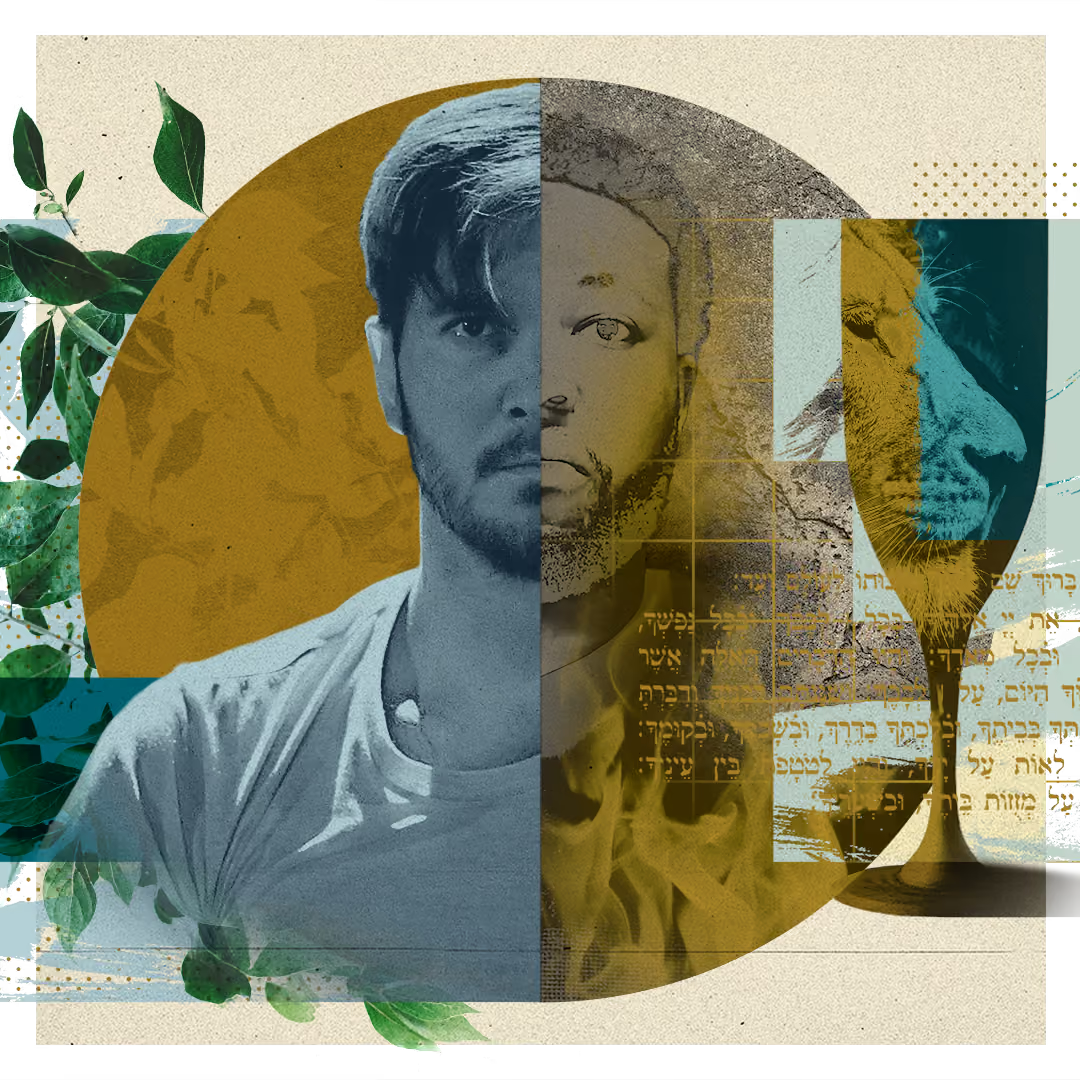
David: How can we as little Nebuchadnezzars get the heart of Jesus into us?
Seth: Mm-hmm.
David: Through the Spirit of God who dwells in us, just like it did Daniel. That's the Holy Spirit's job. So if you like want lowliness, if you want the heart of Christ, ask the Spirit of God for it. Just like Daniel would ask for an interpretation of a dream. Depend on the Spirit.
Seth: Yeah.
David: For that lowly, humble heart. Just like Daniel depended on the Spirit for an interpretation of a dream. Just, mm-hmm. Ask, and he's happy to give.
Intro: Welcome to the Spoken Gospel Podcast. Spoken Gospel is a ministry that's dedicated to speaking the gospel out of every corner of scripture. In Luke 24, Jesus told his disciples that every part of the Bible was about him. So each week, hosts David and Seth work through a passage of scripture to see how it's all about Jesus and his good news. Let's jump in.
David: Well, welcome everyone to the Spoken Gospel podcast. Thank you very much for joining us. We are continuing our study in the book of Daniel today with Daniel chapter 4. Seth, how are you?
Seth: Well, I am ready to be more like Nebuchadnezzar today.
David: That's still— you said that several times just off air and it still weirds me out every time.
Seth: I am surprised by it too. But the more I study Daniel chapter 4, the more I'm convinced that as you read it, you're supposed to be— you're supposed to want to be like Nebuchadnezzar.
Seth: Yeah.
Seth: You're supposed to want to emulate the humility of Nebuchadnezzar.
David: Yeah. Which is crazy off the heels of last week. Yes. Talking about the fiery anger and his like ignorance or pride that made him build the statue he dreamed of. I'm just like, I don't wanna be like that guy.
Seth: He is a tool. He is one of the most powerful men in the world used to brutalize and colonize.
David: Yeah.
Seth: Half of the Mesopotamian Peninsula, or what do, what do you call the Mesopotamian Crescent? Like you, he just, he's just colonized it all. And this man building kingdoms and statues to his own vanity is the man we're meant to emulate in Daniel chapter 4.
David: I don't think I've ever heard that sermon.
Seth: No, there's a lot of sermons I haven't heard.
David: Okay, so, okay, so we just had the fiery furnace. He built the statue to himself, and Shadrach, Meshach, and Abednego wouldn't bow to it. So he throws them in the furnace. One like the Son of God was in there with them, and they came out unsinged. And he was like, okay, your God is the Most High God above all gods. Man, you guys, you guys won the battle of the gods.
Seth: Yes.
David: And Yahweh wins. I guess that's the end of the story of his pride. He's been— he's been rightly humiliated. And now Nebuchadnezzar will be humble forever under God's rule.
Seth: And that's kind of the way Daniel 4 begins. Daniel 4:1 begins, King Nebuchadnezzar to all peoples, nations and languages that dwell on the earth.
David: Oh, gathers them again like he did last time. It was to celebrate his own might at the golden statue.
Seth: But now he's celebrating the Most High God and what he had done for him. How great are his signs, how mighty his wonders! His kingdom is an everlasting kingdom, and his dominion endures from generation to generation. So we know, we know how the story is about to end. Wherever King Nebuchadnezzar is in his pride at the end of chapter 3, he's going to end up proclaiming that God is the, is the one who has the eternal kingdom, which was, remember, on the line in chapter 3, right?
David: Who, whose, whose God did have eternal dominion? Yeah, it's been solved. And it's Israel's God, Daniel's God. And Nebuchadnezzar owns up to that.
Seth: But how does he get there?
David: How does he get there?
Seth: That's, that's what—
David: there's one last act of utter humiliation that he has to go through in order to become this humble king who we should want to be.
Seth: Yeah. So he has another dream.
David: Oh, of course.
Seth: Okay. Yes.
David: Can I ask a question?
Seth: Yeah.
David: What's up with Daniel and all the dreams? Oh, like we just— we have the— we have the— we have the dream of the statue. Now the dream here, we're going to have a vision of a floating hand in the next chapter. You know, we're going to then— 7 through 12 is going to be all visions and dreams.
Seth: Yeah.
David: What's—
Seth: why?
David: Like, you weren't— I'm sorry, you weren't prepared for me to ask you this question.
Seth: I mean, the idea that dreams were part of the way that God, the God or the gods communicated, particularly to leaders, was just a more common assumption back in the day.
David: When kings have dreams, it's the gods opening up lines of communication.
Seth: And often the kings were vessels of their gods. They were, they were the image of God on the earth, right? Like King Nebuchadnezzar is the vassal, the representation, the embodiment of whoever, right? Pharaoh was the embodiment of the sun god Ra. Like, like, you know, like, yes, they are the god.
David: So when they have dreams, they're— it's the gods communicating.
Seth: Yeah.
David: And it's—
Seth: and I mean, part of that could be pride.
David: Sure.
Seth: Oh, I'm the king. I'm God. And I dream. And therefore it matters. So part of that could be pride. But Apart from that, there's just a whole bunch of porousness in scripture where God speaks to people in places where they're able to listen to him. Do you have any additional thoughts on why dreams and visions?
David: Well, I didn't. And then as you were talking and I was asking the question, I like had an idea and I was just like, oh, I mean, the temple's gone. Direct lines of communication with God have been cut off in a sense.
Seth: Right.
David: And so it's like, how's he gonna break through? With, you know, more fantastic forms of communication like dreams and visions, like possibly. Yeah. So anyway, just—
Seth: they also serve as like a hyperlink to the story of Joseph and other stories within Scripture.
David: Yes. Oh my gosh. Yes. That's really good.
Seth: Yeah.
David: Because like, I mean, this is a synonymous moment in Israel's history, right?
Seth: Because you have the first exile was Joseph, right?
David: You have the people of God going into exile And the question everyone's asking at the end of Genesis is, will God's people come out of exile and finish the story? And like when you're in Joseph's story, you're like, I don't know, he's in prison, he's in the lowest place. And then he has all these dreams and visions and interprets them correctly, gets elevated to power, which is— and then provides for the nations.
Seth: He provides the nations.
David: That's what happens with Daniel.
Seth: That's right.
David: Okay.
Seth: So, so at least literarily, I like on like the— on one level, like do Why is God speaking to kings at all?
David: Like, right.
Seth: Like, just like a—
David: Yeah.
Seth: Metaphysical or no, but on a literary—
David: Why is that the plot device?
Seth: Right. It's like it links us to the Joseph narrative. Joseph was the first exile, the first one of the chosen line of God to be thrown into a pit and then sold into slavery. We're told in Genesis that he was stolen from the land of the Hebrews, just like Daniel was stolen.
David: Right.
Seth: From the land of the Hebrews. He interprets dreams just like Daniel. And here, Daniel, in verse 8, we're told that Daniel has the spirit of the holy gods.
David: Oh, and that same thing is said of Joseph.
Seth: Of Joseph. And so the ability, the ability to interpret dreams with the help of the Spirit of God is what provided Joseph a way to preserve the family of God, to provide his family with a way out of famine, but also to bless the whole world during a global famine.
David: Yeah.
Seth: So like Joseph in power, in exile, was able to help his family and bless the world next to the most powerful man in the world at that time, Pharaoh.
David: Right. And then the story continues in Exodus and the people of God do get out of exile and they do come to the promised land. Right. And so it's like if Daniel's a new Joseph, the promise of all these visions being interpreted correctly is though the people of God have gone into exile, there is hope. God will bring them out again, and he will provide for his people while they're in exile, just like he did in Genesis.
Seth: That's right.
David: Okay, that's helpful for me. Yeah. Okay. Well, so there's— the king has another vision.
Seth: The king has another vision. And he calls Daniel. He says, oh, Belteshazzar. So this is his Babylonian name, chief of the magicians, which just— hold on. Oh no, I keep making the joke that How is it that a faithful Jew, a man of God, is now the minister of magic in Babylon? Like he is the prime minister of magic. Like that's his job title. Chief of the Magicians.
David: Chief of the Magicians. Yeah. Cause it's like, I mean, but how else does the, does the King of Babylon know how to refer to somebody who does what he does?
Seth: I know.
David: It's his own worldview.
Seth: It's his own worldview. But I'm like, is there a parallel? Like it's like, like today, like Chief of the Psychologists, like, like, like, I don't know, anyway, or Chief of—
David: I don't know, it was just like Minister of Magic.
Seth: Minister of Magic Daniel.
David: And the reason why that's— that language is here, both, uh, having his, his Babylonian name, and why is he called the Minister of Magic, and you know, the Chief of the Magicians, well, it's because Nebuchadnezzar is writing this in the first person. These are Nebuchadnezzar's words.
Seth: That— we should stop there. This Daniel has been talking. Shadrach, Meshach, and Abednego have been talking. Nebuchadnezzar is writing this chapter of scripture.
David: In verse 4, it says, I, Nebuchadnezzar, was at ease in my house, blah, blah, blah. He goes on and it's like, stop for a second and let's just realize Nebuchadnezzar is now writing the Bible.
Seth: Yeah, it's crazy. Okay, just—
David: that's happening.
Seth: Just so we know, the king of Babylon is writing part of the Bible. He's writing Daniel chapter 4. I just want—
David: really crazy. Okay.
Seth: So Spirit of the Holy Gods hyperlink back to Joseph. And he says this, "O Belteshazzar, chief of the magicians, I know that the spirit of the holy gods is in you and that no mystery is too difficult for you. So tell me the visions of my dream that I saw." And it goes back to this idea of like a king that can bless the whole earth. You just asked, talked about this image of a king that can bless the whole earth.
David: Oh, right back in like in Genesis, you have like Pharaoh with his co-regent, Joseph having enough grain stored up to be a blessing to the whole earth as they're going through a famine, right? Because of an interpretation of a dream, right?
Seth: Okay. So a tree grew and became strong and its top reached the heavens.
David: Oh no.
Seth: And it was visible to the whole earth.
David: Not again.
Seth: So again, so we've been talking about all these different Babel, Babel, Tower of Babel parallels. So we have a cosmic tree that has its roots on the earth and its tops in the heavens. It's this— just like the statue had its roots in the earth, it was stretched up to the heavens, just like the Tower of Babel. And then, or his first vision of this giant statue that's only crushed by a meteor that falls out of heaven. Like, the worlds are the same. He dreams of another cosmic figure that spans heaven and earth.
David: Dude needs to get another idea in his head. He's just like, it's like, I just want to rebuild the Tower of Babel so bad, I can't stop dreaming about it.
Seth: And then Daniel says, its leaves were beautiful and its fruit abundant, and in it was food for all. The beasts of the field found shade under it. The birds of the heavens lived in its branches, and all flesh was fed from it.
David: Sounds like Eden.
Seth: It does sound like Eden. It sounds like the kingdom of God that Jesus talks about in his parables. The kingdom of God is like a mustard seed that grows and spreads out its branches, and the beasts of the earth and the birds of the air find shade in its branches. It's odd that this is being ascribed to King— the King of Babylon.
David: Right.
Seth: And then I saw in the vision of my head as I lay in bed, and behold, a watcher, a holy one came down from heaven.
David: What's a watcher?
Seth: A holy one. It's the word for angel. Oh, it's an angel. It's a— it's an interpreter, a messenger of God.
David: Okay.
Seth: And just to flag, watchers and holy ones are really important characters in the book of Daniel. This is the second time a holy one's shown up. In Daniel chapter 3, when he sees one like the son of gods in the midst of the fire, we talked about how that's a picture of Jesus. Nebuchadnezzar calls it a holy one. He calls it an angel. So in Nebuchadnezzar's mind, he has this really strong category of like divine messengers, divine interpreters, watchers, holy ones. That help him make sense of his visions, or they're a part enough of his reality that he sees them as acting as agents in his world.
David: Okay.
Seth: So just in that, when we talk about things later on, that becomes more and more important.
David: Okay, so this messenger comes down and says something to him.
Seth: Yes, and he proclaims to this giant tree that blesses the world, chop down the tree.
David: No!
Seth: No! Lop off its branches, strip off its leaves, scatter its fruit. Man. Let the beasts flee.
David: Nebuchadnezzar can't keep any of these monuments standing, can he?
Seth: No, he can't. Which is again, it's a picture of the Tower of Babel falling down over and over again. Over and over again. But leave the stump and its roots in the earth.
David: Mm.
Seth: Okay. Bound with a band of iron and bronze amid the tender grass of the field. So that's an odd image. How can you bind a stump?
David: You cut a stump down.
Seth: You'd have to dig underneath it.
David: And then yeah, wrap it up in iron.
Seth: It's not just a tree is the, the, the idea here. Oh, you can't really, I mean, maybe you can wrap around it, but why would you Do that.
David: It's like it's dead anyway.
Seth: The imagery is metastasizing. It's like, it's like multiplying meanings. Okay, we get the image here. Verse 15. Let him— so the tree is now a him. Do you get that? Let him—
David: yeah.
David: Okay.
Seth: Be wet with the dew of heaven. Let his portion be with the beasts in the grass of the earth. Let his mind be chained from a man's and let a beast's mind be given to him and let 7 periods of time pass over him. So this angel says, chop down the tree. It's a tree. Everyone's happy.
David: Everyone's happy in the tree.
Seth: Bind him. So it's now a per— the tree's a person, or interpreted as a person at the very least. And now this tree has sanity, that's a consciousness, and that's taken away and then restored to him. And 7 periods of time pass over it.
David: So the tree becomes a man, the man becomes a beast, the beast lives for 7 times and then becomes a man again. Yeah, that makes sense.
Seth: Yeah. The sentence is by decree of the Watchers. Interesting. The decree of the holy ones, the decree of the angelic beings, the divine beings, the decision by the word of the holy ones. So interesting again, holy ones. We— maybe it is a divine thing. Maybe it is Jesus. Maybe it is God he is seeing. Anyway, to the end that the living may know that the Most High rules the kingdom of men and gives it to whom he will and sets over it the lowliest of men. So, so the angel gives the interpretation. Why does this tree turn stumped? Turn human, turn animal. Why does all this happen? To prove that the Most High rules over all the kingdoms and that he will give the kingdom to the lowliest of men. That's the purpose of the vision.
David: And let's, let's name two really important things here, or at least one really important thing, and then one observation. One is, who does God, who's sovereign over all, give the kingdoms and the power and the dominion of the earth to? The lowly. The lowly. I mean, that's a huge deal.
Seth: Mm-hmm.
David: Just want to like flag that.
Seth: Yes.
David: There's a huge development in Judeo-Christian thought in the world is that the lowly and the meek are the ones that will ultimately get all the power.
Seth: Yeah, that's, that's what Jesus says in the Beatitudes. Totally. Meek will inherit the earth. Yes. Right. Yes.
David: The other thing that's really interesting is, as we were reflecting on Israel's time in Egypt, their first exile, when God brings them out of Egypt and is talking to Moses about why he's going to deliver them and why he's going to swallow up Pharaoh in the sea and all this stuff, he says, it's to show him that I'm God, that I'm sovereign and he's not. And so it's like God is doing the same thing again here. He's like, I am again and again and again, whether over Pharaoh or over Nebuchadnezzar, going to assert that I'm the one who put you on your throne. And I can take it away. I am God and you are not. The same battle lines that Nebuchadnezzar drew in chapter 3 when he erected the golden statue, God is drawing again this time and saying, I'm gonna chop down the tree and I'm gonna prove to you that I'm God and you're not.
Seth: And then he asked Belteshazzar, Daniel, to interpret it for him, right?
David: Because he knows, like, okay, there's a tree and it becomes— it gets cut down and that tree becomes a person, that person becomes a beast, and there's some time and that beast was a person again, but like, I don't know, who are these people? And what is the tree? What does it all mean?
Seth: Right?
David: Yeah.
Seth: And again, he reiterates the spirit of the holy gods is in you. Third time.
David: Okay.
Seth: Third hyperlink back to the story of Joseph.
David: Of this with the spirits of the holy gods.
Seth: So it's like the image of Joseph interpreting a dream. So the story of Joseph is he interprets a dream and then blesses the world and protects people of God.
David: Because the spirit of God is in him.
Seth: Because the spirit of God is in him. And he's able to interpret the dream. So all that's on the line, like, in the interpretation of this dream is the possibility to bless the people of God in exile in Babylon and simultaneously bless all the other citizens of Babylon too. So something about the kingdom being handed to the humble will bless the world and protect the people of God.
David: Okay.
Seth: If Daniel can interpret it properly. He's dismayed. Daniel was dismayed and his thoughts alarmed him. Oh, because it's a negative dream. Yeah, right. Like, it's like, well, the good trees chopped down, the trees chopped down. Or if like he, he's going to— we know Daniel's going to say the tree is you. Yeah, right. You're going to get chopped down.
David: So it's like maybe he was scared to give the interpretation.
Seth: Maybe he was scared to give the interpretation.
David: Last time this guy got some bad news about people not bound to a statue, he turned the furnace up to 7.
Seth: Yeah, he turned the furnace up to 7. He says, this tree is you. You have grown and become strong. Your greatness has grown and reaches to heaven, your dominion to the ends of the earth. Now think about how Nebuchadnezzar described God. His kingdom is everlasting. His dominion endures forever and ever. So it's like Daniel is ascribing to Nebuchadnezzar some of the same things Nebuchadnezzar ascribes to God. Right. And he's using all this Edenic language, the beasts of the field, the birds of the air, this great tree that blesses the world. So after all this Edenic language, he says, this is the interpretation, O king. It's a decree of the Most High God. You will be driven from among men. Your dwelling shall be with the beasts of the field. You shall be made to eat grass like an ox, and you shall be wet with the dew of heaven for 7 periods of time. So 7 periods of time, that could be another hyperlink back to Joseph, like the 7 cows.
David: Oh, sure.
Seth: 7 periods of time of famine and then 7 periods of time of plenty. Yeah, it could be another reference to that. But, and that could be 7 months, it could be 7 years for Nebuchadnezzar. We don't know how long, right, this period of being like an animal is going to last.
David: I mean, it could also be a hyperlink back to creation itself and the 7 days of creation. Yeah, with all the Adamic language. And what's interesting is if he is being like the— like, like an earthly Satan, you know, where he's ruling the earthly Babylon as a king who's leading the nations astray and all this stuff, his punishment sounds very similar to that of the serpent where he's gonna be on his belly. Yeah, it's like he's, he's becomes like a beast and he's on his belly instead of eating dust, which is what the serpent has to do. He eats grass.
Seth: Yeah.
David: You know, it's like, it sounds very— and it's for 7 days. It's until I can recreate you.
Seth: Mm-hmm. That's right.
David: Interesting.
Seth: And then the purpose of it is reiterated. He says, until you know that the Most High rules the kingdoms of men and gives it to whom he will. That's, that's the purpose of this period of time. King Nebuchadnezzar, that you know that God has given you this kingdom.
David: Yeah.
Seth: And that he could give it to somebody else if he wanted to. Yeah.
David: And it's interesting too, because in verses— in verse 27, he says like, so I just— I hope everything I said is acceptable to you. So maybe you should break off all the sins that you do and stop practicing and start— and start practicing righteousness. You know, stop, stop all your iniquities, start showing mercy to the oppressed and like, and then there will be a lengthening of your prosperity. Like, there, there's— there seems to be the potential for this dream not to come true, where he— if he actually repented because of this dream, maybe everything would have been okay and the tree would have stayed up.
Seth: Maybe if he humbled himself, God would—
David: right there—
Seth: not demand he be humiliated.
David: Yes. This way, because he could have just had the dream about it and been like, oh, that was scary, right? I'll change my ways.
Seth: Yeah.
David: But instead Even after Ebenezer Scrooge is visited by the three ghosts, he still doesn't change his ways. Because what does he do next, Seth?
Seth: Well, he— the end of 12 months, a year goes by.
David: A year goes—
Seth: perhaps he's forgotten all about this dream. And the king answered and said, 'Is not?' He goes out on his balcony, just like King David.
David: Yep.
Seth: Looks— goes out to his balcony, surveys all that he can see.
David: Also where Satan kind of took Jesus to like survey a kingdom.
Seth: That's right.
David: Dangerous place in the Bible.
Seth: Dangerous place. High places on rooftops.
David: Stay away from those.
Seth: And then King Nebuchadnezzar says this: Is not this great Babylon, which I have built by my mighty power as a royal residence for my glory and my majesty?
David: A royal residence. That's like temple language.
Seth: Like, is it?
David: Yeah. It's like a place for my glory to dwell. I've built all of Babylon as a mighty temple for my glory to dwell, which is a counter temple, like a counter Eden, which makes sense of how his, like, he has deified himself again, you know, since the very beginning. Come on, dude.
Seth: And it's like he, and he was just warned, the purpose of this dream is that you would know that God is the one who gives kingdoms to who it will.
David: Right.
Seth: And he's saying, who gave me this kingdom? I did. My power, my majesty. Yeah, I got this.
David: It's also interesting here that's like, this is probably the craziest thing that Nebuchadnezzar has to undergo when he's about to become this mindless beast for 7 periods of time. And it's not in reaction to plundering the temple. It's not in reaction to building a giant statue of himself. It's not in reaction to throwing 3 people into a furnace who didn't deserve it. It's in reaction to a prideful thought. Yeah, I was like, man, that puts some weight on the line for me. Like, just like, yeah, those moments that we all have where we just think too highly of ourselves.
Seth: Hmm.
Seth: It also makes me think too, like, God has given Nebuchadnezzar many chances. Yes, like already, like, hey, I give you a chance with a statue, right? I've given you a chance with the fiery furnace.
David: I've been giving you dreams, man.
Seth: I've been giving you dreams and you've taken advantage of my grace over and over and over again. And so what will be your downfall is the thought.
David: Yeah.
Seth: It's not the grand political movements that you make. Right. It's the private thing you said to yourself on the roof when you thought you were alone.
David: Right.
David: That's scary.
Seth: Yeah.
David: That's crazy. Okay.
Seth: And so while the words were still in his mouth, there fell a voice from heaven. O King Nebuchadnezzar, to you it is spoken: The kingdom has departed from you, and you shall be driven from among men. Your dwelling shall be with the beasts of the field. You'll eat grass like an ox. 7 periods of time will pass over you until you know the Most High rules the kingdom of men and gives it to whomever he will. And immediately the word was fulfilled against Nebuchadnezzar. His body was driven from among men. He ate grass like an ox. His body was wet with the dew of heaven. His hair grew as long as eagles' feathers, and his nails were like birds' talons.
David: What is going on here? Like, did God drive him insane?
Seth: I think that's the consensus. Yeah, I mean, we talk— it's like, your mind will be taken to you, and the mind of the beast will be given to you. And we also have an interesting parallel with this passage in Daniel chapter 7. Where the very first beast that comes out of the ocean, a mind of a man is given to the beast.
David: Oh-
Seth: so you have images within Daniel where you have things that are humans and then given the sanity, then are animals and then given the sanity of a human once again. You had that image later on in Daniel, and the fact that you have here this human-eagle-ox hybrid also sets you up for Daniel 7, where you're introduced to these weird creatures that also symbolize empires, worldly kingdoms, kingdoms of the world.
David: I wonder— I— okay, this is just like a funny speculation.
Seth: Yeah.
David: But I do think it's interesting to think about what the satraps— yes, and the astrologers— the astrologers would have been thinking this whole time. It's like, man, he cracked under the pressure. Like, dude had a nervous breakdown.
Seth: Yeah.
David: You know?
Seth: Yep.
David: And actually he just—
Seth: the stars are just not aligned in his favor for this period of time. We have a really good track record of interpreting things, but this one seems pretty clear.
David: And like, how does the king of the most powerful nation in the world disappear? Like, do you think like people were watching him?
Seth: Presumably he had like handlers.
David: They were, yeah, they were watching him. He's, oh good, he ate some berries today. I guess that's okay.
Seth: Yeah, he's like, yeah, because it's like he's just left out in the wilderness, right? He's just like, he doesn't— we never told he comes inside. No, right? There's just a random like astrologer shepherd just following the king through the Babylonian wilderness.
David: It's like, hey, uh, hey Jeff, you're on Nebuchadnezzar duty today. Oh man, that guy's crazy. Okay, anyway, that's not in the story. I'm just wondering what happened during these 7 periods of time.
Seth: I mean, but till I— so we don't know.
David: Right.
Seth: But there is another wilderness with wild beasts. And it's when Jesus is in the wilderness. He said he's driven into the wilderness. The same word used here. He's driven from among men. Jesus, driven by the Spirit into the wilderness. And in that place, he's given a temptation about his ability to rule the world.
David: Right.
Seth: You could rule the world.
David: Taken up to a high place to see all the kingdoms of the earth on a high place.
Seth: Right.
Seth: On a rooftop.
David: Why don't you just repeat what Nebuchadnezzar said?
Seth: Right.
David: And I'll get— I'll make you the new king of Babylon.
Seth: Yeah, our other— one of our writers on our staff pointed out the temptation that the devil offers Jesus is just jump from here and the angels will protect you. Doesn't Scripture say that they won't— you won't dash your foot against a stone? What was the fear of the first statue? That a stone would dash the feet of King Nebuchadnezzar, right? It's interesting. There is like these parallels. There's a temptation in a desert, driven out among the wild animals, about the power of God to preserve the king, a universe, an offer of universal sovereignty. If you just accept, bow to the prince of Babylon.
David: And Jesus already knows what, what, what Nebuchadnezzar had to eat grass to learn, right? He knows thou shalt worship the Lord your God and serve him only.
Seth: Yeah.
David: He knew who was the Most High God. He knew who alone reigned. And so he passed the test. Yes.
Seth: So Nebuchadnezzar fails this test.
David: Yes, he does.
Seth: He becomes an animal.
David: And then it's really interesting then to read that, you know, he has these long hair like eagle's feathers and nails like bird's claws. And the very next verse, you realize, oh yeah, that insane man is still writing this story, right? At the end of the days, I, Nebuchadnezzar, lifted my eyes to heaven and my reason returned to me. It's like, well, I would hope so, because you're writing this, right?
Seth: Yeah.
David: And I blessed the Most High and praised and honored him who lives forever. When I was reading the story, last time, I was, I was just trying to like think about Nebuchadnezzar and like embody what he would be thinking. And after 7 times of being an animal and coming back to my sanity and thinking about how so much of has been taken from me and what I'd been— how I'd been humiliated. And I wonder like if his kingdom was in disrepair, all these, all these things, right? I was just thinking, is he going to be upset with God. How could you do this to me? Don't you know who I am? Like, right, right. What have you done? And instead, he's properly humbled.
Seth: He lifts his eyes up to the Lord. Lifting your eyes up is a symbol of humility. And so he repeats the poem we heard at the beginning. All the inhabitants of the earth are counted as nothing, and he does according to his will among the host of heaven. Remember the Watchers, who are the ones that gave him the verdict, and among the inhabitants of the earth. This is the true cosmic God. He had a tree that had its roots on earth and its branches up in the heavens. He was the universal sovereign.
David: Nebuchadnezzar. Nebuchadnezzar.
Seth: But here you say, no, no, no, there's only one Yahweh. The host of heaven does his will and the inhabitants of the earth.
David: Oh, from heaven to earth his kingdom stretches.
Seth: Yeah, his is the cosmic kingdom.
David: I see.
David: Yeah. No one can say to his hand, what have you done? Which I would think would be the one thing he would wake up from his mania to say.
Seth: Yeah.
David: What did you do to me? What have you done?
Seth: And that's—
David: he's like, that's the one thing I can't say because he's— he's the king.
Seth: Yeah, man. And at the same time, my reason returned to me. And for the glory— as for the glory of my kingdom, my majesty, my splendor also returned to me. My counselors and my lord sought me. And I was established in my kingdom, and still more greatness was added to me.
David: Whoa. Okay. So, yeah, it's like maybe his kingdom was in disrepair, but as soon as he was humbled, everybody came back and he was greater than ever.
Seth: Right. And which is interesting. Now he's repeating the story of Daniel and Shadrach, Meshach, and Abednego. They've humbled themselves and Nebuchadnezzar has lifted them up.
David: Right.
Seth: To positions of authority and power. Nebuchadnezzar has been forcibly humbled, humiliated by the God of heaven. And now he is being lifted up just like Daniel and just like his friends.
David: And just like Joseph.
Seth: And just like Joseph. That's right. Wow. And so the concluding, the concluding line of chapter 4: Now I, Nebuchadnezzar, praise and extol and honor the King of Heaven, for all his works are right and his ways are just, and those who walk in pride he is able to humble.
David: Man, I mean, he's just talking about himself. He's talking about those who walk in pride. Who are you talking about? Yeah, me.
Seth: Some self-reflection finally from the man who built a statue of himself.
David: Yeah.
Seth: Wow.
David: I mean, this is, this is kind of akin to the idea of, um, who do you look to when you want to know that money doesn't satisfy? Oh, you look to the wealthy celebrities who have had it all. Yeah. And when they come out and say, man, I had the cars and I had the house and I had the security and the jet. And I was miserable.
Seth: Mm-hmm.
David: Oh, okay, like it's true. And they, you know, they become Christians, they're like, right, I'm richer now just knowing Jesus than I was when I had everything. You know, like, oh, that's really awesome, like that helps me not cling to money as much or whatever. Those stories are actually kind of inspiring. And it's like, okay, what, what, what hope is there for the proud, you know? Or how do I really know that humility is worth it or that I should give up my pride and and serve God in humility. It's like, well, I look to them. One of the most proud people who ever walked the face of the earth literally built a gigantic heaven-to-earth gold statue of himself.
Seth: Yeah.
David: If that man can be humbled and find joy in God. Yeah. There's no depth of pride that I could get to in my life. No self-aggrandizement or over-self-estimation that I could sink to that God would not be able to pull me out of and give me more joy in just being humble before him. Like, if Nebuchadnezzar can do it, so can I. It's kind of what I'm getting.
Seth: Yeah. Yeah.
David: I just— I'm encouraged by that, right?
Seth: Yeah.
Seth: And like, what's the fear of the proud? If I was to actually humble myself, I'd lose it all.
David: I'd lose everything.
Seth: If I was to actually admit, right, that I wasn't in control, or I didn't have it all together, or I'm not the person they think I am, I, I would lose everything, right? And it's really interesting. It's like I have a, like, an odd relationship with, like, the physical power and blessing that Nebuchadnezzar is given. Like, he's given his throne back, right? Influence, wealth. The nation of Babylon still belongs to him. But what his most basic fear was proved to be untrue. The most basic fear of the proud when offered the opportunity to be humble is that I'll lose everything, right? He's not— he doesn't lose anything. He's given more.
David: He tried to consolidate the nations in pride by building the statue, but instead the nations are consolidated under him whenever he humbles himself before God, right?
Seth: Yeah, when he tries to make the universal declaration of sovereignty, all of it, all of his counselors are fractured with one another, right? But as soon as he humbles himself before God, you are exactly right. Yeah, he has given everything back again. It is like the promise of pride is that we can hold on to our power, right? And what we are shown here is that That's why it's a lie. Holding on to your pride will, will cause the kingdom to crumble underneath you.
David: Right. I mean, it's the story of Eve and Adam at the tree. Yeah.
Seth: Pride.
David: They reached out to try to gain more in the garden than they were given. And what happened? They lost the garden and life itself. Everything crumbled beneath them.
Seth: King Nebuchadnezzar was the tree. Yeah. And he stretched out in pride and was chopped down like Pride does not return to you what you think it does.
David: Yeah, if you think it does, it's a lie.
Seth: It's a lie.
David: Yeah, because the truth here is— and here's the whole point, let's, let's remember the parable. This is almost like a whole lived parable here. And the point of the parable is this: that you might know that the Most High rules the kingdoms of men and gives it to whom he will. And then this is the part I want to focus on: and sets over it the lowliest of men. It's not the proud that will rule. It's the lowly and the meek and the humble. And this is, this is proven in the story here with Nebuchadnezzar. It's ultimately proven in the story of Jesus. Yeah, that you think about the Christ hymn in Philippians 2.
Seth: Before we get to Jesus, can I just pause there? It's like, it's proven here in the story of Nebuchadnezzar that he gives it to the humblest. What evidence do we have that Nebuchadnezzar is the humblest of men? And I was like, oh, because that was the question I just thought. I was like, oh, it's because he's the most powerful man in the world. It is much more difficult for a powerful man to submit to somebody, to admit that there's somebody greater than him. A person with no power or no agency will submit more easily if it means freedom or agency or like an improvement. Nebuchadnezzar wants for nothing, needs nothing, has all the power the ancient world can offer to him.
David: There's almost no one for him to submit to, right?
Seth: He has all— like, so why is he the most humble? Why is he the lowliest of men and given an even greater kingdom after his humiliation?
David: Because he was the most powerful.
Seth: He was the most powerful.
David: Yeah.
Seth: And he admits that it's not his, right? He admits that there's a greater sovereign than that's right.
David: And so then let's use that. And let's say then, okay, so imagine this greater sovereign that King Nebuchadnezzar claims exists, which is the God of the universe who removes kings. He's the king over kings. He's the God over gods. He owns everything and does whatever he wants with it. And no one, when he does something, can say, well, what, what have you done? No one can question him. This God literally has no one to submit to.
Seth: Mm-hmm.
David: And yet this God became the lowliest, became Jesus, becomes a slave, becomes a slave.
Seth: Philippians 2.
David: Yes. Becomes not only a slave, not only like us, not only made in our image, but then as a slave becomes obedient to death, goes in the fiery furnace for us.
Seth: Don't die.
David: Gods don't die.
Seth: Kings don't become like animals. But they should. Yeah, right.
David: The inventor of trees became a tree to get chopped down.
Seth: Yeah, like, mm-hmm.
David: Everyone could rest in his shade, right? Willfully allowed himself to be chopped down. And what's interesting about reflecting on this story with— and we're just riffing on Philippians 2 here and the Christ hymn— that is the very reason why we're told that Jesus was exalted to the right hand of God, given the name above every name. And then what's going to happen? At the name of Jesus, every knee will bow, every tongue will confess, right?
Seth: Yes. Yes.
David: And he's given ultimate authority and power.
Seth: Why?
David: Because he became an obedient slave. Because he was the lowliest. Jesus is the ultimate lowly king. One. Yes, because he actually was the most humble. If you, if you, if you took like, what do you have off the table?
Seth: And just humility as a, as a, it's like, it's a, it's a characteristic in itself, a virtue without action.
David: He was the perfect one who was humble, but also because, yes, he had even more than Nebuchadnezzar and gave it all up. Mm-hmm. And so he is, you know, the most humble squared.
Seth: Yeah.
David: And that's why he reigns as King of all Kings in God's universe, because God has made the world in such a way that it, it will be ruled by the humblest king. And Jesus proved that he's the humblest king, and therefore he gets to rule the world.
Seth: What's so interesting about the story is that I go into this expecting Nebuchadnezzar to continue to be the bad guy, and I come out of this story thinking, oh, Nebuchadnezzar is a type of Jesus, is a type of Christ. He is, he is a universal sovereign according to this. Yeah, metaphor. He is humbled to death, he goes insane, he becomes like an animal, and then he's lifted up and given more authority and honor. The story of Jesus follows the same pattern, right? Like, Jesus is the ultimate universal sovereign, right? His family thinks he's crazy, right? Right. Like, he— and because of his claims to divinity, his family thinks he's crazy, just like Nebuchadnezzar went crazy. The Apostle Paul tells us that Jesus died on a tree, just like we've been talking about, right?
David: The tree And that's called his death foolishness or insanity to those like Nebuchadnezzar.
Seth: Jesus becomes an animal, like a sacrificial lamb. God— but then God lifts him up from the slaughter and gives him more authority than Nebuchadnezzar ever could dream of, right? I'm like blown away by the fact that the villain of history, right, could be a Christ figure, could be a figure of Jesus. Yeah. And I think we talked about this off air, like what a fascinating picture of grace.
David: It's just, it's a scandalous grace. Whenever you open the show and you said, I just am excited to talk about how I want to be like Nebuchadnezzar, I'm just still offended by that turn of phrase. But I could see why, is that no matter how much power I get, I want to be a humble enough man to always be the lowliest.
Seth: Yeah.
David: And what's amazing is the grace not only to be a Christ figure, not only the grace to have not just been thrown down by God the moment he said those words, because he could have been— God was patient with him, right?
Seth: Right.
David: He was patient with him all throughout these other stories in Daniel. He's been patient. Finally, that prideful thing that he said on the rooftop after the dream— surely God could have just taken the kingdom from him right there, had the Medes and the Persians come in now instead of under Belshazzar's reign in chapter 5, and it would all been over. God could have done that and he would have been good to do it. Yeah. But instead, God just continues to show mercy, continues to show grace to him. And so much so that this man who builds an altar to himself, a golden altar to himself, the opposite of Eden, the embodiment of Babylon, the builder of the Tower of Babel thrice over, is an author of Scripture.
Seth: Yeah.
David: This guy gets to write part of the Bible. That's how magnificent the grace of God is.
Seth: And his contribution is how great are God's signs, how great are his wonders. His kingdom is an everlasting kingdom and his dominion endures from generation to generation.
David: Yeah.
Seth: I mean, I trust Nebuchadnezzar when he says that, right? You know what I mean?
David: Totally.
Seth: Nobody like— no, Daniel couldn't have written that.
David: Right.
Seth: And it meant the same thing.
David: No. Right. That's kind of what I was trying to get at earlier.
Seth: Yeah.
David: Like the whole, you trust a very wealthy person when they say money won't satisfy. Yes. I don't trust somebody without money.
Seth: Right.
David: It was like, yeah, but you, you don't really know.
Seth: But you don't really know. Yeah.
David: I trust Nebuchadnezzar when he says pride won't get you there.
Seth: Mm-hmm.
David: Power won't get you there. God will.
Seth: I wonder if I trust Jesus that way.
David: Mm-hmm.
Seth: Like with the authority of a man who's had all power. You know, like, do I trust you? Like, he's had all power and he says it's better to be lowly, right? And he didn't have to give it up, right? Like, you know, it's not that he was forced into humiliation. No, it wasn't that he was wielding that power corruptly. It wasn't he was demanding false worship to himself. He was like, no, I've had all power. I've held it all perfectly. I've had all pleasures I could have with God forevermore, right? And it would be better to be a slave.
David: Yeah. And I think it's— and it's like, that's not a decision that Jesus had to make. It was the thing that was most natural to him. Because when he describes his own heart, he describes his heart as lowly.
Seth: It's not—
David: it's not a characteristic that he lives out. You know, it is who he is, is lowly.
Seth: Yeah.
Seth: He is lowly before he acts it out.
David: Yeah.
Seth: Right. Yes.
David: And so for him to have all power, he always has all power in a lowly way. And from eternity past, those two things have never been in conflict in the, in the Godhead, in Father, Son, and Spirit. They've always held perfect power over everything with a lowly heart.
Seth: Mm-hmm. And then he incarnates it. He becomes— he shows us, shows, demonstrates.
David: Yeah, yeah. And it's better. It's better.
David: Jesus is better than any other human.
Seth: Right, right.
David: It's just better for him to be lowly.
Seth: It's just better.
David: I want to be like that. Yeah, it's just better. It's better to be lowly and die on a cross than to be proud and own the world, you know. Or as Jesus said it, right, it's, it's, it's, uh, what, what does it profit you if you gain the whole world but lose your soul?
Seth: Okay, I've got one last loose end.
David: Oh, okay.
Seth: And then this, this far in Daniel.
David: All right, because this is the end of Nebuchadnezzar's thread.
Seth: That's right.
David: Um, yeah, it's the last dream that Daniel interprets for him.
Seth: Yeah, next is Belshazzar and with the mene, mene, tekeln, parsin, and then the lion's den. We'll get to all that, but It's this idea that Daniel is a new Joseph, right? Okay. And that in so much as Daniel is a new Joseph, this is also a picture of what Jesus is like. So like, I want to complete this idea of like, what unique contribution does Daniel repeating the Joseph story give us color and texture to the type of salvation found in Jesus? That's, that's like, that's like what I'm wondering, right? So what we said is that when Daniel, when the dream— the dreamer is able to interpret the dreams of the one in power, he's able to protect the people of God and bless the entire world, right? Like, that's what happened. Like, Joseph was risen up in power. He was able to create good policy to manage the famine and give food to his brothers as well as all of Egypt and everybody else that came, while at the same time increasing Babylonian power— Egyptian power and strength. And then here It's kind of— there's a different— there's a twist to it. Daniel has already been elevated at this point.
David: Right.
Seth: But his—
David: but it was because of an original interpretation of dreams.
Seth: That's right. And here in this final one, he gives an interpretation that ultimately blesses Nebuchadnezzar and gives Babylon a humble ruler, which would be a blessing to all of them. Right. And as we've said a couple of different times, the reason why Israel was able to exist somewhat freely in exile is because of the policies and the influence that Daniel had in the courtroom. So what I'm thinking is, how is Joseph and Daniel a picture of what Jesus is doing right now?
David: How do faithful people in exile that have the Spirit of God in them bless the, the Babylon they find themselves in?
Seth: Right.
David: I mean, yeah, I mean, that is the picture of the kingdom of God that we have right now on earth, right? That Jesus came, he gave us— and like, he came and he was Daniel, right? He revealed the mysteries of God that have been since eternity past. He was Nebuchadnezzar in that he humbled himself even though he had all power. He was Shadrach, Meshach, and Abednego, went to the fiery furnace of the grave in resurrection, and then he gave us his spirit, right? That is the the culmination of so much the gospel story is that we now have the Spirit of God living in us like Joseph did, like, like Daniel did, but even really to a greater degree. And now, as we find ourselves in Babylon, wherever we are, because we're all in Babylon in different ways, we now, because of the way we're able to see the world and the way we're able to exist with the Spirit of God living in us, we can be a blessing in Babylon, not only to our own family, our own tribe, not only to Christians, right?
Seth: Yeah.
David: But also to Babylonians.
Seth: Yeah.
David: Right.
Seth: It's interesting because in the Joseph story, in the Daniel story, you have the wicked king who's also kind of a symbol of God. And then you have the man of God as his right hand.
David: Right.
Seth: And whatever they're doing together trickles down and blesses the world, right? People of God. And so what's interesting is in Jesus, we have the true king of the universe, the good king of the universe, Father God. It's not a, a like God. Nebuchadnezzar. Yeah. Is a symbol of the divine in some ways. But no, this is actual universal sovereign, the Most High God who has risen up a faithful man of God, in particular a Jew.
David: A Jew.
Seth: Joseph and Daniel are both Jews in exile on Earth.
David: Right.
Seth: And he raises this Jew in exile on Earth. To his right hand.
David: Yep.
Seth: And the universal sovereign in Jesus creates ways in which the people of God can bless the whole world and one another. And I'm thinking the best way to probably think about the way that works itself out practically is like, is the church, right?
David: Oh, definitely. Yes.
Seth: The vital— the way that the kingdom of God blesses the world is through the actions of local churches. All— in all kingdoms, nations, and languages, right?
David: Because it is the body of Christ.
Seth: It is the body of Christ.
David: It is the right hand of God in the world, acting as his vice regent.
Seth: And it's like— it's— this is— and this is like proven throughout history. Christians are the ones who advocated for the liberation of slaves, emancipation. Christians are the ones who built the first hospitals. Christians are the ones who built the first build schools, right? Oftentimes they're the first ones to do literacy work in places that can't read because they want them to read the Bible.
David: Yeah.
Seth: And through those actions, because God is on his throne always, Jesus is his right hand, the people of God have been throughout time been an increasing force for good for the entire world, and in particular for the people of God.
David: Yeah. And it's amazing too that God then tells us that we will reign with Christ. Yeah, that not only is Jesus Daniel, right? We're Daniel. Yeah. He makes us— he gives us a throne too, right? And raises us up so that we could be humble rulers in whom the Spirit of God dwells.
Seth: Yeah.
David: Like ministering to the kingdoms we find ourselves in.
Seth: Right.
David: It's an interesting way, like a creative, imaginative, biblical way to view your own life, right? Is wherever you are, You are in Babylon. Be Daniel and bless the kingdom.
Seth: I don't often try to like make a one for one with like people with political power. Like we should strive for political power, but like there are people with political power right now. Universal Babylonian power right now can pull the strings of Babylon and are Christians or who have just become Christians, who have just humbled themselves before the Lord of the universe. What do they do with that Babylonian power? How can they leverage the— yeah, Daniel's like a challenge big time. Anyway, I'm just thinking of all the ways that the people of God can bless the world and one another because Jesus is on the throne.
David: Um, yeah, I think it's also like another thing to just end on practically for us is if like we've been called to have influence in this world, to rule with Christ, like to have dominion in the world and to use that influence and to use that dominion as a blessing, to bless the world. And I think chapter 4 here would tell us how, how can you be a blessing wherever you find yourself? Be humble. Yeah, be the lowliest person in the room.
Seth: Mm-hmm.
David: And what does that mean, that you self-efface and you self-flagellate and you No, deface yourself. No, you, you bear in you the heart of Christ who loves and shows mercy and is like, is quick to come into the king's chamber and like say, I can save the wise men from death.
Seth: Yeah, right.
Seth: The interpretation of your dream. I haven't prayed about it yet, but I'll get the interpretation. Right.
David: Yeah, totally. And I just think that's so amazing. And how do you do that? Like, how can we as little Nebuchadnezzars get the heart of Jesus into us? Through the Spirit of God who dwells in us, just like it did Daniel. That's the Holy Spirit's job. So if you like want lowliness, if you want the heart of Christ, ask the Spirit of God for it. Just like Daniel would ask for an interpretation of a dream. Depend on the Spirit.
Seth: Yeah.
David: For that lowly, humble heart. Just like Daniel depended on the Spirit for an interpretation of a dream.
Seth: Just ask. Mm-hmm.
David: And he's happy to give and he'll humble you. I think the prayer we've been praying is like, God, can you please humble us without making us eat grass first?
Seth: Yeah. Like, I want to be the kind of person that could be given all power and then also be able to hold it loosely. Right.
David: Without needing to be a beast for 7 times.
Seth: Right. Yeah.
David: So, okay, well, there's the end of Nebuchadnezzar's story. Daniel chapter 4.
Seth: Yes, but not the end of the idea of pride and humility.
David: No, this idea is going to continue, but we're going to get the inverse of it. What does it look when a should-be humble king becomes really proud. Um, and we're also gonna take the shotgun off the mantelpiece that was placed there in chapter 1 when the vessels of the house of the Lord were taken out of the temple. We're gonna see what happens to them, and we're gonna see an invisible hand write Mene, Mene, Tekel, and Parsin and talk about that. And wow.
Seth: And then, yeah, so many things.
David: So many things.
Seth: I'm really excited about the next episode.
David: It'll be be cool. Okay, well, thank you guys for being with us through chapter 4. We'll see you next week in chapter 5.
Outro: Thank you for listening to the Spoken Gospel Podcast. Spoken Gospel creates short films, devotionals, and podcasts like this one. Everything we make is free because of generous supporters like you. To see our resources, visit SpokenGospel.com. Or subscribe to our YouTube channel. Thanks for listening. See you next week.