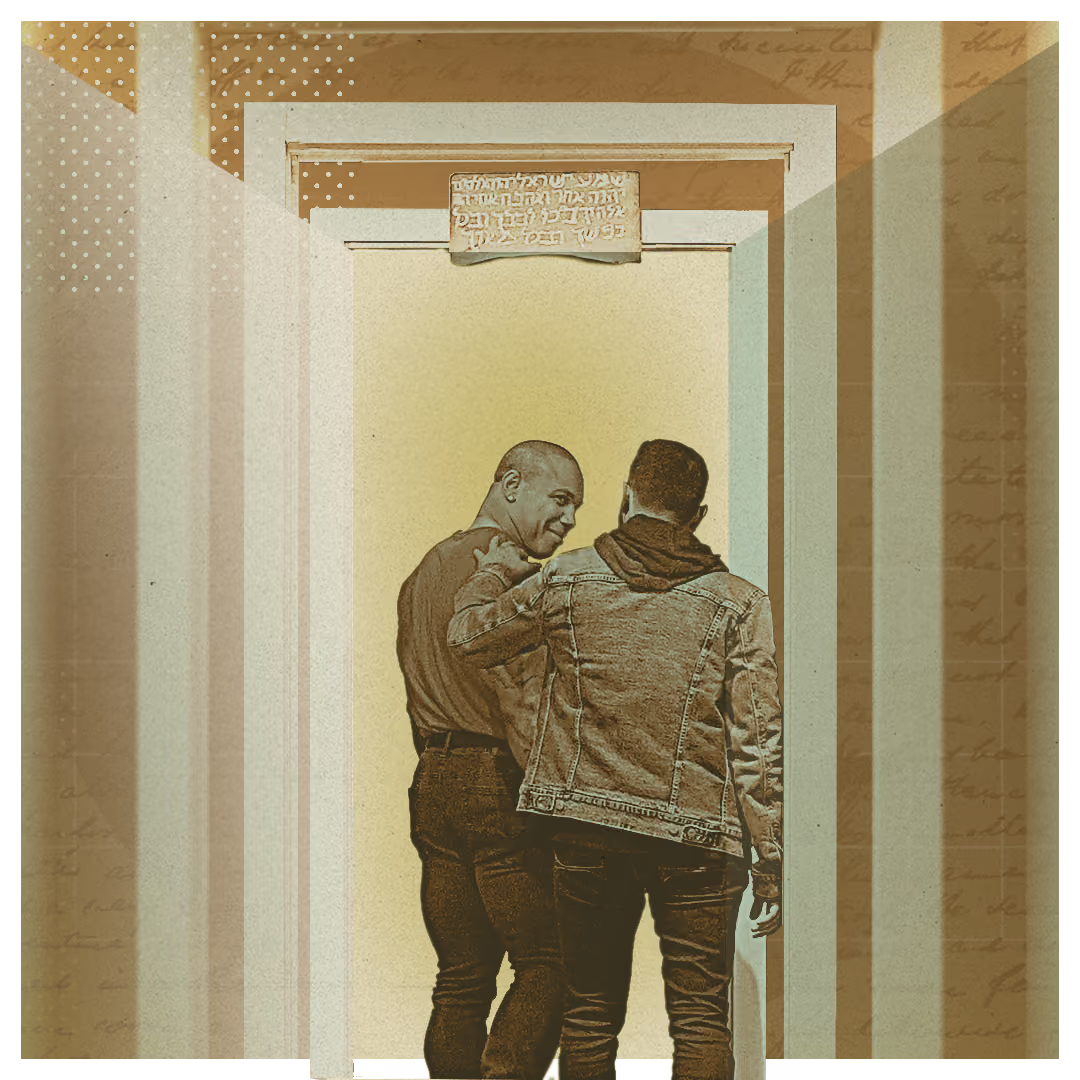
Intro: [upbeat music] Welcome to the Spoken Gospel Podcast. This is our attempt to speak the gospel out of every corner of scripture. We believe every part of the Bible, Old Testament and New, is about Jesus, and this podcast is our experiment to publicly test that belief. Let's jump in. [upbeat music]
David: All right. Well, welcome everyone to the Spoken Gospel Podcast.
Seth: Indeed.
David: We are coming-
Seth: Welcome to the Spoken-
David: We're coming live to you from-
Seth: Live from Oklahoma City
David: ... a hotel room. [laughs]
Seth: It's Spoken Gospel. [laughs]
David: We are in, uh, we are in a hotel room right now. Our church, uh, uh, Bridgeway, is putting on Convergence Conference here in downtown-
Seth: Yeah
David: ... Oklahoma City. Seth drove, uh, down from Kansas City to, uh-
Seth: Just to hang out with you
David: ... just to hang out really. [laughs]
Seth: Yeah.
David: Which is awesome. And so, um, we are, we got to have lunch together, and now we're getting to hang out in the hotel room together and-
Seth: Because behind the scenes, we're actually best friends.
David: It's true. You guys-
Seth: You didn't know that
David: ... you all wanted it to be true in your heart of hearts.
Seth: But it's actually true. [laughs]
David: But it's actually true, we're best friends. And so all your dreams are coming true, and all your dreams are really coming true because we're starting Deuteronomy.
Seth: Such a great segue.
David: S- such a good segue.
Seth: Such a good segue.
David: Okay. So as I started studying the Torah, um, the deepest I've ever had in my life-
Seth: The Torah
David: ... the Torah.
Seth: The Torah.
David: [laughs] That's not even close.
Seth: [laughs]
David: Um-
Seth: All I know is Hebrew has a lot of ah.
David: Oh, a lot of the phlegms.
Seth: Yeah.
David: Um, as I started studying the Torah, uh, and I got to Deuteronomy, I mean, I was really expecting it to kinda be this low point off-ramp.
Seth: Well, the name itself is like-
David: Yeah
Seth: ... to me, like I-
David: Second law.
Seth: Second law, like, oh, gosh.
David: Again?
Seth: I already, oh God, please no.
David: I feel like I got through the first time and was edified.
Seth: Now I gotta do it again. [laughs]
David: It was like, it was a lot of hard work.
Seth: Yeah. Seriously.
David: What's funny is that name is based on a mistranslation.
Seth: Yes.
David: It's like in, uh, Deuteronomy, uh, it talks about how the kings of Israel are supposed to make a copy of the law for themselves, and so that was translated into Latin. They mistranslated it to be a second law.
Seth: Second law.
David: And then that became the title of the book-
Seth: [laughs]
David: ... which is just strange. [laughs]
Seth: Which pretty-
David: Almost, I think every single, uh, title that we have in English for the, the books of the, or the five books of Moses are unhelpful.
Seth: Well, they, they didn't have titles initially.
David: I know.
Seth: Which, so-
David: Well, no, the titles were the first word.
Seth: So the first words of Deu- De- the title for Deuteronomy was, These are the words.
David: Oh, yes. These are the words. Of who?
Seth: Of who? Of where? Of why?
David: Yeah. I wanna know.
Seth: Yeah. [laughs]
David: And so let's answer that question. These are the words of Moses.
Seth: Of Moses.
David: Yeah.
Seth: Moses.
David: So let's, let's kinda set the, let's kinda-
Seth: You know
David: ... set the framework.
Seth: This is gonna be our introduction to the Book of Deuteronomy.
David: Yeah.
Seth: And the hopes is we kinda capture the essence of Deuteronomy chapters one through three.
David: Yeah.
Seth: Uh-
David: While in-
Seth: At the same time
David: ... at the same time. Yeah.
Seth: Yeah. [laughs]
David: Okay. So let, I wanna, I wanna kinda set up Deuteronomy in two, maybe three ways.
Seth: Okay.
David: W- w- the one, uh, that I'm thinking right now is kind of canonically.
Seth: Okay.
David: So, like, if, if, y- you know, the canon of, in the canon of scripture, which so far-
Seth: Is-
David: ... all we have is the Torah
Seth: ... Genesis. [laughs]
David: Genesis, Exodus, Leviticus, Numbers, Deuteronomy, and this is a self-contained unit. There is liter- l- like literary at- attestation to this. There is historical attestation to this. This is a literary unit. It's a, it's a-
Seth: More than likely, Moses was the author of-
David: Yep
Seth: ... the majority of this.
David: Mm-hmm.
Seth: And he wrote this to be thought of as one book.
David: Right.
Seth: One piece of literature.
David: Yes. And so what we, w- what we've kinda looked at here is, is that this fifth book seems to be, like, Moses' reflection on the rest of the Torah. He's looking back at Genesis, Exodus, Leviticus, Numbers, and he's kind of giving... He's not gonna get to go to the Promised Land.
Seth: He's not.
David: He's not gonna get to be with his people anymore. This is his last speech, and so this is him looking at what God has done in the past, what he's promised for the future, where they are in the present, and trying to, like, be pastoral [laughs] in this moment.
Seth: Yeah. It, the really simple way to look at it, in verse five, when you start reading it, it says, "Moses undertook to explain this law," or this Torah.
David: This Torah.
Seth: Which, these teachings.
David: Yeah.
Seth: Like, the purpose of the Book of Deuteronomy is to explain, to expound upon, and to m- make clear centuries of history-
David: Yes
Seth: ... from creation-
David: Yep
Seth: ... to the border of Canaan. Moses is trying to make clear for the new generation, "This is what God has been up to, and this is what you need to take into, with you into the new land."
David: Yeah. And that's really helpful for me, I think, 'cause you, you kinda see that unfold throughout Deuteronomy. You know, we have the, the borders of, um, the, the Promised Land talked about again with the rivers, which should take us-
Seth: Yeah
David: ... all the way back to Genesis 1. We have the promise made to Abraham, Mo- uh, Abraham, Isaac, and Jacob talked about in verse eight of chapter one. Uh, then we kind of walk through this history of the people's travel from slavery through the wilderness to Mount Sinai, and then now to the border of the Ca- border of Canaan. What happened-
Seth: And Moses repeats Israel's history.
David: Yes. Uh, yeah, so, so sh- and then, and then he's gonna, then he's gonna go back into the Torah a bit, and he's gonna unpack the Ten Commandments, and he's gonna unpack some of the sacrificial codes. And, like, we're gonna literally walk back through and get a pastoral commentary. He's g- he's basically expositionally preaching the Torah-
Seth: Right. Yeah
David: ... to the people. And so-
Seth: Do you think-
David: Yeah
Seth: ... he did this at, like, one time?
David: I don't know.
Seth: Just like one massive-
David: I've heard, I've heard a l-
Seth: ... 50-point sermon. [laughs]
David: I, I've, I've r- I've read several opinions on this, and what, what a lot of people talk about is, is that this probably transpired in a day. Like, I-
Seth: I mean, you could read Deuteronomy-
David: Oh, yeah, in-
Seth: ... in, what, an hour?
David: Yeah, in, like, a sitting.
Seth: Yeah.
David: Yeah. So it's not, it's like a long sermon.
Seth: Right.
David: You know, it's not crazy to think that this all happened at once.
Seth: I mean, but it's also not o- out of the question that he, like, "Okay, we're going in next week." And then every day he's educating the people.
David: Right.
Seth: Like, this is a collection of multiple sermons over time.
David: I could also see him, like, I could also see him, um, I could see this kinda going one of two ways, that he wrote this sermon down.
Seth: Okay.
David: You know, 'cause there was that time when God told-
Seth: He also, at this point, would've written the rest of the Torah.
David: Yep.
Seth: So he would've already written Genesis, Exodus, Leviticus, Numbers.
David: Numbers.
Seth: So he would've recorded God's actions.
David: Yep.
Seth: And as a, okay, I've attacked the history of my people from one perspective, as a historian-
David: Yeah
Seth: ... as-
David: A theologian
Seth: ... as a theologian, but now I want to treat it as a pastor to my people-
David: Yeah, definitely
Seth: ... as a shepherd-
David: Yes
Seth: ... as an elder of my, uh, as a-
David: Yeah
Seth: ... of this flock.
David: So we just don't know if he spoke this kind of ex- inspired extemporaneously, and then went and wrote it down, if there was a stenographer there writing everything down.
Seth: Right, right, right.
David: If he wrote it down and then spoke it. I mean, Moses loved to write. He was commanded a couple times to write this stuff down, so it's not out- he was already writing the Torah, so it's kind of-
Seth: At the end of the day, what you should take away-
David: Yeah [laughs]
Seth: ... is that th- m- this is Moses', Moses'-
David: Moses'
Seth: ... Moses', Moses' [laughs] this is Moses' reflection, his explanation of everything that's gone on before.
David: Yes.
Seth: That's the big, that's the-
David: Yeah
Seth: ... big takeaway.
David: Yeah. Okay, so that's kinda the canonical con- context I wanted to set a little bit, um, in terms of how it's put as the fifth book. Um, then I, I wanna, I wanna zoom in to the s- kind of the setting-
Seth: Okay
David: ... of it, and then I wanna look at the story of the Torah.
Seth: Okay.
David: So those are the other two vantage points I wanted to as we set this up.
Seth: So the setting is-
David: The setting
Seth: ... they are on, in the Transjordan.
David: Yep.
Seth: So the land that Gad and Reuben were given before they went into the Promised Land. They're standing there in-
David: Yeah
Seth: ... conquered territory, about to enter in across the Jordan, into the l- the potential new Eden.
David: Yep.
Seth: And before they go in, Moses is like, "Let's talk."
David: Let me give a speech. So, like, the picture I always have in my head that, for me, helps me grapple with Deuteronomy a little bit more is, um, you have Israel just congregated on the banks of the Jordan. And, like, it, this doesn't have to be-
Seth: Right, right, right
David: ... what happened. This is just the picture I'm-
Seth: Right, right, right, right, right
David: ... I have in my head when I read Deuteronomy. And you have Israel just gathered on the banks of the Jordan. I mean, right on the other side of the water is Canaan, and, like, that's the Promised Land.
Seth: They see the, the walls of Jericho.
David: That's where the battle starts. Yeah, Jericho's right over there. Like, that's where we're gonna go march around, and everything like that. And Moses, you know, had to go up on this hill, this li- little mountain, you know?
Seth: Mm-hmm.
David: To peer over into the Promised Land, so he, he kinda get the lay of the land, and that was as close as he got to the Promised Land. And I kind of picture him coming off that mountain, but not all the way off of it.
Seth: Yeah.
David: And it's from that elevated position that he speaks the Book of Deuteronomy over his people.
Seth: I like that.
David: Yeah. It, it's just like, I know that's a definitely a hyperbolic way of viewing-
Seth: Right
David: ... the setting of Deuteronomy, but it's a, it's helpful for me.
Seth: Have you ever wondered, like, how Moses spoke to, like, two million people?
David: Um, yes. But have you ever wondered how God manifests himself in a thick, dark cloud on Mount Sinai?
Seth: In the thick, dark cloud? [laughs]
David: [laughs] In a thick, dark-
Seth: It was a black, uh... [laughs]
David: There's a lot of things that have happened in the Torah so far that-
Seth: [laughs]
David: ... somehow amplifying a person's voice before microphones existed doesn't seem to be that big a stretch.
Seth: Well, I was also imagining, like, there was, like, hundreds of people who were just ampl- like, human amplifiers. [laughs] And so Moses would say something, and then-
David: He, he said-
Seth: [laughs]
David: ... "Remember the covenant."
Seth: Remember the covenant.
David: Shem.
Seth: Remember the covenant.
David: Remember the covenant.
Seth: It's like echoes, like, through the whole congregation. That's, that was also a picture in my mind [laughs] of how this was working out.
David: I like my pictures better. [laughs]
Seth: [laughs] Just a supernatural amplification-
David: Yes
Seth: ... of this sermon.
David: Yes.
Seth: Yes.
David: And there's... Okay, but to back up, okay, to answer that question a little bit more historically accurately, it would not be far-stretched for him to have talked to the tribal leaders-
Seth: Oh, yeah
David: ... at a smaller-
Seth: Yes
David: ... gathering.
Seth: [laughs]
David: Okay, guys? [laughs] Like, he's, he often gathers the leaders and the elders of Israel to give them rules and commands that then they go spread to their people. That's their job.
Seth: Yeah. Yeah.
David: This was dealt with back in Exodus 18. [laughs]
Seth: It's actually the first thing that Moses mentions in his retelling of Israel's history. It's like, "Remember when I appointed 70 elders-
David: Yep
Seth: ... for all of you guys?"
David: Yep.
Seth: That's the first thing he [laughs] mentions.
David: Yeah, so it might've just been-
Seth: Yeah, yeah. [laughs]
David: ... the 70 right there. Which would help with some of this-
Seth: Which, which makes sense
David: ... these historical questions. Okay, and so, okay, so that's, we, we've kinda gone what's happening in the fifth book, so literarily, Moses is commenting on the other four. Uh, what's the setting of Deuteronomy? He's giving a speech at the border of the Jordan River before the people enter into the new land. And then, like, give me, I'm just gonna, I'm gonna set you for a-
Seth: Okay
David: ... task here. Just give me the briefest version of the Torah-
Seth: Okay
David: ... to this point. Like, what's the story that's happened-
Seth: The s-
David: ... that got us here?
Seth: The story is that Adam and Eve had the choice before them between life and death, and they chose death. And the people of Israel are now on the border of Eden, a new, potential new Eden, and they're being offered the same choice. So at the very end of Deuteronomy, in Deuteronomy 30, chapter, chapter 30 verse 15, Moses says to the people, "See, I have set before you today life and good, death and evil. If you obey the commandments of the Lord your God that I command you today by loving the Lord your God, by walking in his ways, by keeping his commandments and his statutes and his rules, then you shall live and multiply," just like the Garden of Eden.
David: Mm-hmm.
Seth: "And the Lord God will bless you, just like the Garden of Eden, and you will enter, uh, and you are entering in to take possession of it."
David: Mm-hmm.
Seth: I set before you the same choice that Adam and Eve had. And what's fascinating, if you look back to the very first chapter in, uh, chapter 39, he says the-
David: Oh, the very first verse in chapter 39?
Seth: Uh, sorry, chapter one, verse 31.
David: Chapter one, verse... Okay, got it.
Seth: "As for you little ones," he calls the, the new generation little ones, "who you said would become a prey, and your children, who today have no knowledge of good or evil, they shall go in there." So he's referring to the older generation when they said that, "Our children don't know good or evil," and yet they won't g- they'll be the ones that go in there. So what does that remind you of? Knowing good and evil. It should remind you of the Garden of Eden. God is r- like-
David: Yeah
Seth: ... but-
David: Oh man, I'm like, I remember reading this for the first time- And I thought he was talking about kids and innocence, right?
Seth: Right.
David: But he's clearly talking about the younger generation.
Seth: Yes.
David: "And as for you little ones," well, which little ones is he talking about, "who you said would become prey." So who are the ones that were said that they would become prey? He's going back to Numbers 13-
Seth: Yes
David: ... whenever they said, "If we go into Canaan, all our kids are gonna die."
Seth: That's right.
David: He's talking about the younger generation that has now grown up. Now we have like, like-
Seth: So-
David: ... adults basically, like Phinehas, Pinhas.
Seth: But there's, but he's still describing them as people who do not know good and evil.
David: Do not know good and evil.
Seth: Which, good or evil. So he's picturing them-
David: Yeah
Seth: ... like a nation of new Adams and new Eves on the border of the new promised land, flowing with milk and honey, with multiplication on the horizon, and he says, "Choose good. Choose life."
David: So it's ki- uh, okay, this is not geographically correct, but it, would this be a helpful imaginative way to view this? Help, see if this is helpful or correct it. So kind of the exit door [laughs]-
Seth: Okay
David: ... to the Garden of Eden for the first Adam and Eve was the tree of the knowledge of good and evil.
Seth: Yes.
David: They went out that door by taking of it and-
Seth: Eating
David: ... choosing the wrong way.
Seth: Choosing death.
David: Choosing death.
Seth: Yeah.
David: The, now, now that same door is swinging on its hinge both ways, and it's becoming the entrance into the n- into that-
Seth: Yes
David: ... same Garden of Eden-
Seth: Yes
David: ... by choosing life instead of death.
Seth: Yes.
David: Does that...?
Seth: Yeah.
David: Okay.
Seth: No, I think that's a helpful, a, a somewhat helpful way to look at it.
David: Yeah.
Seth: It's like-
David: I realize there's probably some complexities in there that aren't helpful, but-
Seth: But at the end of the day, the choice that is before all of us after the fall is between life and death, and Moses is telling the new generation, "Therefore, these are the two choices before you. Choose life. Enter into the new Eden. Multiply. Be fruitful. Be blessed by God. Obey his commands, and obey his laws." This should not s- be surprising for Christians because it is [laughs] the same command Jesus gives to us as well. It's, "Obey my commands. Trust me, and if you trust me, you will be given life."
David: I wonder-
Seth: "Life abundantly."
David: Yeah. I wonder, too, just I, I'm trying to be responsible here with this verse, um, and, and I think this is what's bugging me, but I think there's a good answer to keep getting to your point.
Seth: Yeah, yeah.
David: Because he's telling the story, uh, of Israel at, at this point, right? And so he, he, he talks about how, um, everyone except Caleb and Joshua, right, want- wanted to leave and not-
Seth: Yeah
David: ... go into Canaan back in Numbers 13, and so, uh, this is verse 36. Or no, let me do verse 37. "Even with me, the Lord was angry on your account and said, 'You also shall not go in there. Joshua, the son of Nun, who stands before you, he shall enter. Encourage him, for he shall cause Israel to inherit it.'" So he's kind of foreshadowing the Book of Joshua. "And as for the little ones who said, um, who you said would become prey, and your children, uh, who today have no, who today have no knowledge of good and evil, they shall go in there, and to them I will give it, and they shall possess it. But as for you, return, uh, turn and journey into the wilderness to the direction of the Red Sea." So he's taking us back 40 years ago.
Seth: Okay.
David: Okay, so he, this is something God's had said to Moses that was previously unrecorded-
Seth: Okay
David: ... that Moses is now re- is now recording, and this is something God said, so it, I mean, 'cause knowing, knowing good and evil is a, a picture of Adam and Eve.
Seth: Yeah.
David: But it's also a Hebrew way of talking about innocence and being young.
Seth: Yes.
David: And so, um, what, I think what's interesting here is the, the young generation at that point were the new Adam and the new Eve. They, they were the ones who had to choose life instead of death, and what we saw through Numbers is they were doing it.
Seth: Right.
David: They were obeying instead of disobeying. They were changing the patterns of their parents. They were, um, actually, um, following God and having faith in ways that their ancestors didn't, and so it seems to be that the border of, of the promised land is, is like the, the, the pen, like the, the penultimate or the final, you know, the culmination-
Seth: Yeah
David: ... uh, the mega [laughs]
Seth: The mega
David: ... tree of knowl-
Seth: Yeah, yeah, yeah
David: ... knowledge of good and evil. They've been doing it in the wilderness.
Seth: Right.
David: And now they've been brought to its final door. You know, I'm just, I'm trying to-
Seth: Yeah, yeah.
David: This was an, this was a 40 years old text, so these pe-
Seth: Right
David: ... these people that he's talking about are now 40.
Seth: Yeah.
David: They're not-
Seth: The people that-
David: Yeah
Seth: ... the kids that were under 20-
David: Yeah
Seth: ... could be at least 59.
David: 59, right.
Seth: Could be at least 59. So yeah.
David: Yeah. And so they've been being good Adams and Eves [laughs] out in the wilderness.
Seth: Right. And Go- and Moses is saying, "Continue that pattern going forward."
David: Yeah.
Seth: And what's fascinating, too, here is that also, again, like what's Moses doing? He's explaining the law, making it more clear, interpreting the law-
David: Mm
Seth: ... for the new generation. And in-
David: And when you say law, I think it's really important-
Seth: I mean Torah
David: ... that everyone knows we're talking about Torah.
Seth: Torah.
David: Like-
Seth: The first, the first four-
David: The first fi-
Seth: ... four books
David: ... like 'cause it's, I just think it's also really helpful when you're reading the Psalms. When you're reading-
Seth: Yeah
David: ... Psalm 119, or, you know, you hear Jesus talk about the, the, the law. Like, he's not talking about only the Ten Commandments.
Seth: Right, right, right, right.
David: The law, the law are the first two books of No- of Moses that include creation and, and p- their deliverance out of slavery. I just think, I just wanted to make that parenthetical.
Seth: Yeah.
David: Sorry.
Seth: So Moses explaining, making clear the law, and listen to this in Deuteronomy 1:31. "And in the wilderness where you have seen how the Lord your God carried you as a man carries his son all the way that you went until the place you ca- uh, uh, all the way that you went until you came to this place."
David: Mm.
Seth: So, like, what is Moses doing there? He's using this intense, vivid, emotive metaphor to describe 40 years in the wilderness.
David: Man.
Seth: That's like, this, this is a pastoral move. This is a-
David: Whew
Seth: ... emotive move. This is a metaphorical move. But what's he also making it sound like? Just like God the Father set up Adam and Eve at- In this beautiful land of plenty, he said, "Choose life." God the Father has brought them through the wilderness. So like God brought Adam and Eve through the Tohu va-Vohu-
David: Yeah [laughs]
Seth: ... and the craziness of like the empty space of the world. God has brought them again through the wilderness to the borders of this new Eden, and he's saying, "Choose life once again."
David: Wow. Yeah, and what a, oh, what a picture. I'm just like, I'm thinking about how confused and agitated and, like, impatient must these people have been after 40 years in the wilderness, paying for their parents' sin, having to choose good when all they chose is bad, and they finally get here, and what do they, what do they hear? It's that God himself has gone before you, and he fought for you, and he has been carrying you like a dad carries his baby all the way 40 years through the wilderness just to plop you right here at the banks of the Jordan. Like, a- and he's brought you to this place. Like, a- I'm just like-
Seth: Yeah
David: ... you wanna talk about being pastoral, he's also being extremely theological that God is working through suffering and wandering and questioning.
Seth: He's adopted you as a son. [laughs]
David: Yeah, I mean, there is just so much ha- uh, I love this, this passage. There's, uh, uh, um, David Bolushe, d- have you listened to his album?
Seth: No.
David: Oh my gosh. It's called Labyrinth. Here's a plug. Free plug, David.
Seth: [laughs]
David: If you ever listen to this, I love your stuff. He's got this album called, called Labyrinth that just quotes scripture, and this is one of the lines he quotes-
Seth: Oh
David: ... and it's just beaut- so I love this passage. So anyway, um, so yeah.
Seth: So anyway, so what do we, so what is the Book of Deuteronomy?
David: Yeah.
Seth: So the Book of Deuteronomy is Moses' pastoral, it's his, it's his sermon reflecting on the entire Torah for a new generation. He's reframing their existence, their identity, not as, like, desert Bedouins-
David: Yeah, yeah, yeah
Seth: ... but as sons of God-
David: Who have been carried-
Seth: Who've been carried
David: ... pers- like, persevered
Seth: ... and who are now entering into a new Eden as if they are new Adams and Eves.
David: Yes.
Seth: This is the picture that Moses is trying to give them, and at the same time he's doing that, he's also, like, has this other layer.
David: Mm.
Seth: So there's two layers going on already.
David: Okay. Okay.
Seth: But he's also adding another layer of wisdom. Like, this is-
David: Mm
Seth: ... the wise way in which you are to live, to live. So think about it this way. When Adam and Eve are in the garden, and they're chose to choose between good and evil-
David: Mm-hmm
Seth: ... the knowledge of good and evil-
David: Yep
Seth: ... it's actually a question about w- wisdom
David: Total, total wisdom text. Yes.
Seth: What is true wisdom? Listening to the voice of God-
David: Yes
Seth: ... or listening to the voice of the serpent?
David: Yeah.
Seth: Proverbs will say it's listening to the voice of God. [laughs] Like-
David: I side with Proverbs in this question.
Seth: And here again, it's not just that Israel's choosing evil, that if they rebel against a God who's carried them through the wilderness, who's defeated enemies on their behalf, it's not just evil, it's just dumb.
David: [laughs]
Seth: Like, they're just being-
David: Being unwise
Seth: ... they're just being unwise, so much so that in Deuteronomy 4, uh, in the, in Deuteronomy 4:6, he'll actually call the Torah wisdom. He'll say-
David: Right
Seth: ... Deuteronomy 4:6 he says-
David: Keep them and do them
Seth: ... keep them and do them, for that will be your wisdom and your understanding in the sight of the people. And he goes on to say in that same passage, "Who, when they hear all these statutes, all these laws, all this, all this Torah, they will say, 'Surely this great nation is a wise and understanding people.'"
David: Mm.
Seth: So Moses is also saying at the same time this is a story, you are the new Adam and the new Eve, you're are also living the wise and good life that when you live it, the nations will recognize it and come to follow Yahweh.
David: Wow. It sounds a lot like they will see your good deeds-
Seth: [laughs] Like-
David: ... and glorify your Father in Heaven.
Seth: It's weird how Jesus li- [laughs]
David: Sounds a, Jesus sounds a lot like the Torah.
Seth: It's so weird. Yes.
David: Okay. Let me, can I repeat back something to you-
Seth: Yeah
David: ... and then I think come to a question that I'm wrestling with?
Seth: Okay.
David: Okay. So th- Deuteronomy is the speech of Moses reflecting on the Torah, and, um, he, he's, he's begging people-
Seth: To choose life
David: ... to choose life, uh, because they are new Adams and new Eves, and the way they choose life is by listening to the wisdom of God, right? Listening to his commands and his statutes instead of doing what their parents did, which was listening to the serpent.
Seth: Yeah.
David: And they were-
Seth: Or another way to say it is they should fear God and love their neighbor, and they didn't. Their older-
David: Yes
Seth: ... older sisters didn't do that. Yeah, yeah.
David: Yeah, absolutely. A- and, and so by obeying and listening to God, they will, um, enter into the new Eden by having faith that he will bring them in there, and they will stay in there and live a set apart, bright life that will radiate out to the nations, and, like, that is God's plan for restoring the world.
Seth: Yes.
David: That Eden will continue to go out by people living wisely under his commands.
Seth: Yes.
David: Okay. Um, I don't know if my question has any merit-
Seth: Okay
David: ... at all, or if it's just, like, I have, like, my, my legalism radar is way too sensitive.
Seth: Got it.
David: I, I need to repent of that.
Seth: Define a legalism ra- is it, like-
David: I don't know. It's just any time that I'm, I think a works-based righteousness is being-
Seth: [laughs]
David: ... laid out.
Seth: Right.
David: Because I-
Seth: 'Cause what it sounds, what you're saying is, what it sounds like is that if we're just wise enough-
David: Yes
Seth: ... I'll be saved, the world will be safe, and everything will be fine, and I don't need Jesus.
David: Yeah.
Seth: Yeah.
David: Yeah. And, like, I, I think even, I, and I think even the law itself was never meant to be a works-based righteousness.
Seth: No.
David: It was always meant to be a way that people were living in relationship with God. I mean, the basis of the Ten Commandments, right?
Seth: Is, "I saved you." [laughs]
David: Is, "I saved you already-
Seth: Yeah. [laughs]
David: ... from Egypt."
Seth: Right.
David: And so it was, it was meritless salvation.
Seth: I mean, even here, "I bore you as a chi- a father."
David: Yeah. "I'm the one who's been carrying you. You wanna know why?"
Seth: I've, I've brought you-
David: Yeah
Seth: ... already to the border of Eden. Like, you have, did not earn that.
David: Yeah. You wanna know why Phinehas was faithful when Aaron wasn't? ... me, because I'm carrying him.
Seth: Yeah.
David: Like, I'm doing this work. So my-
Seth: So what's your question?
David: My question is that, like, l- maybe it's not a question, maybe it's just a statement I wanna have made, and that [laughs] and that is-
Seth: [laughs]
David: And that is, like, I, I, I feel like for so long I had a misunderstanding of the law.
Seth: Okay.
David: Okay? And so, like-
Seth: The law as the Ten Commandments, or the law as the Torah? Like-
David: No, like, the law whenever we think about it as Christians today.
Seth: Okay.
David: So, like, when we think about the law, we think about legalism, and that it's like, if I, if Israel obeys all the Ten Commandments perfectly, they would be the new Adam and Eve and spread, you know.
Seth: Yeah.
David: Yeah. But they didn't, and so they needed Jesus to come and obey the Ten Commandments for them.
Seth: Right.
David: Right? Which is, like, part of the gospel, but not-
Seth: Yeah
David: ... there's, like, some nuance in there that breaks-
Seth: Yeah
David: ... if you actually extrapolate the logic out. Because if you sh- this is what happens. If you extrapolate the logic out, what it says is that the new Eden is going to be built by people who are obey, like, who are obeying. That doesn't sound as bad as I think it is now.
Seth: [laughs]
David: What am I wrestling with here?
Seth: I don't know. I, I'm str- I'm trying to, like, read between the lines. Are you saying, like... Well, I think part of the issue is, like, wisdom-
David: Yeah
Seth: ... isn't salvation. So to live a wise life-
David: Uh-huh, yep
Seth: ... does not bring about the ultimate Eden.
David: Mm-hmm.
Seth: But it does bring about a lot of good.
David: Yeah.
Seth: And the wisdom-
David: 'Cause, 'cause wisdom is living in harmony with the way God has built the world.
Seth: That's exactly right.
David: Yeah.
Seth: So, like, the, there will be a lot of good and a lot of s- a lot of evangelism, a lot of great things will happen because wisdom is being lived out. But that doesn't necessarily mean everything will go right.
David: Yeah.
Seth: Because even if Israel was completely wise-
David: Yeah
Seth: ... cho- and chose life, there's still an issue of death. Even if Israel lived the wisest life, made no mistakes in the land of Egypt, never committed idolatry, what's the underlying problem still-
David: Yeah
Seth: ... is that sin and death have entered into the world.
David: Mm-hmm.
Seth: So we talk about, like, this, this new land of, this, Canaan is a new land, new Eden, and that's true, but there's an underlying problem throughout it. Like, we keep trying to, like, amp up the hopefulness because we want our listeners and we want ourselves to be like, get in the mind of the people of Israel, like, "This could be it."
David: Right.
Seth: But even if they got there-
David: Yes
Seth: ... even if they-
David: Did it all perfectly
Seth: ... did it all perfectly, there's this underlying issue that everybody dies.
David: Yes.
Seth: You get to about 100 years old and you die. And eventually, somebody somewhere makes a mistake, because you have an entire sacrificial system where you always have to be atoning for the things that you've done wrong.
David: And not even for the things you do wrong. You have to make atonement for the fact that you live in a fallen world.
Seth: Yes.
David: Like, your body just has blood that comes out of it every now and then.
Seth: Right.
David: And, like, sometimes you get, like, a rash on your forearm, and that has to be atoned for.
Seth: Or you cut yourself working.
David: Yeah.
Seth: And [laughs] like, yeah.
David: Yeah, and it's like, that has to be atoned for because we live in a fallen world. So there is still this pervasive sin that is in the world that is just causing decay, and death is still king, and it's still ruling in a way.
Seth: So what you're wrestling with-
David: Yeah
Seth: ... then is that the way that we're talking about it s- sounds like we're overselling the law. As if we obeyed the law and we're wise, everything would work out.
David: Right.
Seth: In one sense, that is true.
David: Okay.
Seth: If we did obey the law-
David: Yeah
Seth: ... if everyone followed the law and did what God commanded, the world would be a far better place.
David: I think that, maybe that's what I'm wrestling with, is, is the promise of, 'cause I know there's, there's Jewish scholars-
Seth: Mm-hmm
David: ... that talked about the Torah as the new tree of the knowledge of good and evil. Because, you know, it, which is kind of-
Seth: Yeah, yeah, yeah, yeah, yeah
David: ... what he talks about it here. A- and so I think what I'm wondering here is, is there a parallel then, if the Torah is the knowledge of good and evil, was there a promise when God said, "I set before you life and death, blessing and curse, now choose life," was he also then setting before them a hypothetical tree of life again, like there was in the Garden of Eden-
Seth: Oh
David: ... and saying, "If you obey the Torah, then you can come and eat of the tree of life," which was the promise to Adam and Eve.
Seth: Right.
David: Right? If they did not eat of the tree of knowledge, they would have stayed in proximity to the tree of life.
Seth: No. I think maybe-
David: Okay
Seth: ... maybe that metaphor you set up before was unhelpful. I think probably the better way to think about it is like, "I set before you life and death. I set before you the opportunity-"
David: Blessing and curse
Seth: ... blessing and curse-
David: Good and evil
Seth: ... but also the being part of the seed of the serpent or the seed of Eve.
David: Yeah.
Seth: So if you choose to be part of the seed of Eve, you will be included in a line of people leading to Christ.
David: Mm.
Seth: But if you choose to be a part of the seed of the serpent, you will die soon.
David: Yeah.
Seth: You'll experience destruction.
David: And you'll be exiled. There's a big promise that comes later in Deuteronomy, which is a sign of being rejected.
Seth: Right.
David: Yeah. Okay.
Seth: So let's, let's, let's wrap a bow on this. Like, what's-
David: Okay, sure
Seth: ... like, what's, so what's the, so Deuteronomy is Moses' reflection and tr- attempted clarification on the, the centuries of history that have passed for Israel.
David: Mm-hmm.
Seth: It's saying to the new generation on the border of Canaan, "You guys are like new Adams and new Eves on the border of a new Eden. Don't be like Adam and Eve, who chose death."
David: Right.
Seth: "Instead, choose life."
David: Right. Because, uh, and I think, like, this c- c- comes right after the passage you read in Deuteronomy 4, if you continue to teach life to your children and their children's children and their children's children children, then generations after you, life will continue. And because he's like, "Remember, there was this promise made to Abraham and Isaac and Jacob," and, like, he's pulling us back to Eden with all this language. And so I think we are meant to see that this life is not necessarily meant to be some kind of, um, maybe, like, 15th century or e- well, let's just be modern.
Seth: Right.
David: You know, 21st century view of eternal life in Christ, they were just thinking, like, "Oh, good life."
Seth: Yes.
David: Right? And a, and a life in God's blessing. And a life in the land, and a life where have children, and they're not stillborn, and they are favored by God, and they lead to more children, that eventually one day there will be someone to finally deal with this underlying death problem.
Seth: Right.
David: Who will crush the head of death forever.
Seth: And I mean, it's not, we're not reading that into this story because Moses himself throughout the to- the Book of Deuteronomy will say, "You will try to obey this law-
David: Yes
Seth: ... but you will not be able to."
David: So this is a hu- this is a huge thing in Deuteronomy.
Seth: So we're like, we're hinting at it. We're like, we're like dancing around the tension.
David: We're kind of dancing around this tension.
Seth: But like Moses actually names this-
David: Yes
Seth: ... and says like, "You could be the new E- Eden-
David: Yes
Seth: ... but actually-"
David: This is helpful.
Seth: [laughs]
David: I think this is helpful. Let's, okay, we've both been kind of not trying to talk about some-
Seth: Yeah
David: ... of the meat of Deuteronomy because we know we're gonna address it in future episodes. But I think this i- in this tension of, well, can we pull off our own salvation or not?
Seth: Right.
David: Can, can I get to the tree of life by myself or not? It seems like I can.
Seth: Right.
David: But like we're gonna come across in Deuteronomy real soon.
Seth: Maybe that's the way we're supposed to feel.
David: Yeah, you're supposed to.
Seth: Totally supposed to feel in the first few chapters, "Okay, we can do this-"
David: Yeah
Seth: ... until Moses, in devastating clarity, what verse is that?
David: Oh, dude, it's all throughout. Like, we'll come a- we'll come across it, but like over and over and over again, Moses is going to show that he knows that they will not obey. They will break God's law. They will build false idols, and then they will be exiled from the land. They will choose evil over good. They will get cursed over a blessing, and they will die instead of have life.
Seth: And that's because the underlying problem of sin-
David: Yes
Seth: ... and-
David: Has not been dealt with
Seth: ... death-
David: And it can't be dealt with
Seth: ... has not been dealt with.
David: Right, and it, it can't be dealt with through our own obedience.
Seth: Right.
David: If it could be, then a people group who has been carried like a baby by Yahweh, who has seen him appear on a mountain, who has experienced miracle after miracle of his sovereign involvement in their community, who has been like brought miraculously to this land, who will then experience a conquest of a land unprecedented in military history, like that would be the people who would finally be able to have seen enough of God's glory and have the, the faith necessary to obey, but they don't.
Seth: Yes.
David: Like, if anyone could have perfectly obeyed the Torah, it was this generation.
Seth: Yeah.
David: Like, that's what we should feel. They're the new generation.
Seth: Right.
David: They're the new Adam and Eve.
Seth: The-
David: They're not acting like their parents.
Seth: Yeah.
David: They're gonna do it.
Seth: Yeah.
David: And in Joshua, oh, it's, it's starting. They're walking around Jericho, and the, its falls. Oh my gosh, it's happening.
Seth: Yeah.
David: And then they like, they, I mean, get to Judges, and it's like the worst.
Seth: [laughs]
David: You know what I mean?
Seth: Sure.
David: And it's like, okay, so it's not us that are gonna bring it about. And I think that-
Seth: Hmm
David: ... Deuteronomy, as it closes the Torah, it just throws us forward in desperate hope to one who Moses will talk about, I believe it's in chapter 18, when he talks about, "There will be another prophet like me." And we know he's not talking about Joshua there. We'll talk about that when we get to the episode.
Seth: Yeah.
David: "Another prophet like me who's going to do be- bigger and better things than I, I'm gonna do." And like what Deuteronomy ends up doing is it ends up thrusting our hopes into the future of who is going to be this-
Seth: Hmm
David: ... new Moses-
Seth: Right
David: ... who is actually going to bring us into the promised land once and for all, who's going to bring us into a place of life, but without the underlying problem of death.
Seth: And maybe you get a hint of that in Deuteronomy one through three because he says, because so we talked about how God carries a, carries Israel like a, a, a father holding-
David: Yeah
Seth: ... his kid, his kid. But in Deuteronomy 2 and Deuteronomy 3, it recounts all these battles that Israel won throughout the book of Numbers against Egypt, whatever else. And what's fascinating is that Moses, when, as he's reflecting on these victories that he's had, kind of changes the narrative a little bit to match what we're saying right here.
David: Mm-hmm.
Seth: Before in the book of Numbers, when they defeated Og, when they defeated Sihon, they defeat, uh, in the, particularly those two, those two-
David: Yep
Seth: ... are mentioned.
David: Yep.
Seth: It's really based on Israel's faithfulness.
David: Right.
Seth: They were faithful.
David: They believed that God-
Seth: They believed
David: ... would give them the victory.
Seth: And they, they earned it.
David: Right.
Seth: But here in Deuteronomy, Moses says, "And God gave him into your hand."
David: Right.
Seth: "God will give you him into your hand. God will give you the land into your hand."
David: Right. Yeah.
Seth: So there's this sense that Moses knows that if the new Eden's gonna come, it will be by God's hand.
David: Hmm.
Seth: So even though there's this hope and there's this expectation, "Choose life-
David: Yeah
Seth: ... so that you might enter into the new Eden," there's also this understanding that God must give you that new life.
David: Okay. Let me repeat back what you said-
Seth: Okay
David: ... 'cause you're making a really awesome point.
Seth: [laughs]
David: Okay, so you're saying, we, we looked at, remember when Israel was just walking around the wilderness, and it looked horrible, and they're suffering, and they're like, "What is going on?" Deuteronomy, in Deuteronomy, Moses pulls back the veil and shows us the spiritual reality, right, behind the physical situation.
Seth: Yeah.
David: And we get to see, oh, it was like God was carrying you like a daddy carrying his baby.
Seth: Yeah.
David: That's what's happening. Okay, let's look at another situation.
Seth: You were walking and crying.
David: Yeah, yeah, yeah.
Seth: [laughs]
David: Let's look at another situation. Let's look at the battles that you've won recently, right? There was this one time you were like, "We wanna go take that army," and God let you, and so you believed in faith that he would give you, he would give those people over to you. You went. You won the battle. You're like, "Yes." Let's pull back the, the curtain. What do we see? It was actually God sovereignly working and handing this preordained people over to you. This was all of God's working, not based on what you were doing. So it's, it's not your wilderness wanderings. It's not your, your, your victory in battle or even your faith. Okay, let's look at an- at another situation now at, at, like a m- mi- a mac, um, what am I trying to say?
Seth: Macro?
David: Macro level. We looked at some micro levels. Let's look at macro level. All of Deuteronomy is saying believe, trust, obey, and let's pull the curtain back and say, "You can't perfectly-
Seth: Hmm. Right
David: ... but God will perfectly do it for you, just as he carried you through the wilderness, just as he-
Seth: And it doesn't-
David: ... defeated the enemies for you. And it doesn't, yeah, it doesn't-
Seth: It doesn't say that he will do it for you. He says, "There will be another prophet."
David: Right. Yeah.
Seth: So, like, there's a sense, so, like, the hope is not in The hope at this point is, like, there will be a prophet who will do this for you.
David: Yeah.
Seth: There will be somebody like me who can lead you-
David: Yeah
Seth: ... properly.
David: Yes.
Seth: Who can lead you into wisdom, who can lead you into obedience, and who can not just, like me, avoid death for a time, but solve the problem of death-
David: Mm
Seth: ... and solve the problem of sin-
David: Yeah
Seth: ... so that the new Eden can come.
David: Yeah. Okay, so why, why should we be excited for people to be reading Deuteronomy, Seth? What are some thoughts that you have about that?
Seth: Well-
David: I'm springing this question on Seth-
Seth: Springing this question on me
David: ... out of nowhere.
Seth: I mean, what, c- I think we've said this a couple times already, but, like, one of the most helpful things I've done as a Christian is be a part of this podcast and, like [laughs] spend hours working through the Torah. Like, I understand my New Testament better-
David: So much better
Seth: ... because I've spent many hours-
David: Yeah
Seth: ... in the Torah. So for no other reason-
David: [laughs]
Seth: ... you will benefit from the Book of Deuteronomy because it's gonna help you understand the words of Jesus better. It's gonna help you understand the words of Paul better. It's gonna help you understand how we as New Testament believers, thousands of years removed from this, are actually sup- are, are supposed to live because God's movement in the Earth did not start with Jesus. [laughs] It actually started thousands of years before.
David: Yeah.
Seth: God's been working since the creation of the world, and sometimes we as Christians want to, like, short-circuit that and say-
David: Yes
Seth: ... "Oh, he started the day I was born," or, "He started the day that Jesus rose from the dead."
David: Yeah.
Seth: Like, we, like-
David: Or, or when he was born.
Seth: Or when he was born.
David: Yeah, yeah, yeah. God's plan started on Christmas.
Seth: Right. [laughs]
David: Yeah.
Seth: And, like, we live that way sometimes.
David: Yes.
Seth: But to actually inhabit the space of Deuteronomy is like-
David: Mm
Seth: ... oh, no, no, no. Genesis 1 to 11 is about the proto history of the world.
David: Yeah.
Seth: From the first Adam to the first family God makes a promise to, there are centuries.
David: Mm.
Seth: And between that family and Israel going to the Promised Land, there are centuries. And from the beginning of time, God has been trying and working his way to save a people, has been the point of his, of his creation of the world.
David: Yeah.
Seth: So the reason why you should be excited about Deuteronomy is because you're actually getting a glimpse into God's plan to save a people from the beginning of time.
David: Yeah. I think that's a brilliant answer.
Seth: [laughs]
David: Uh, I couldn't agree more, and I, and I really think that Deuteronomy 1 t- 1, 1 to 4 even would really agree with you as well because what is it doing? It is showing the younger generation that their story is part of a much bigger story, that God's faithfulness in their future is rooted in God's faithfulness in their past.
Seth: Mm-hmm.
David: And, and I just feel like for-
Seth: Yeah
David: ... us today, it's, I mean, this might be an inane connection. I hope it's not, but like-
Seth: Insane connection?
David: Inane.
Seth: [laughs]
David: No, inane.
Seth: [laughs]
David: That, like... 'Cause I don't connect with this, but I know a lot of people do, like, with, like, the genealogy stuff-
Seth: Mm-hmm
David: ... you know, that's going around, the DNA tests.
Seth: Oh, yeah, yeah, yeah.
David: So where were you from? And for some reason, it just doesn't connect with me.
Seth: Yeah, yeah.
David: I just, it, it's not for me. But-
Seth: I always assume that when I get, like, to be 45 years old-
David: Yeah
Seth: ... like, it, like, there will be, like, a gene that switches in me that actually makes me care about those things. [laughs]
David: Yeah, right. Yeah. But, like, anyway, and so it's like we wanna know our story. We wanna know where we come from. We wanna know what larger narrative has been at play that we have been plopped into the middle of.
Seth: Yeah.
David: And, and what, what Moses is doing for the younger generation on the banks of the Jordan, Yahweh wants to do for you right now where you are in your home, in your apartment, like, in your car. He wants to show you that you are in and embedded in this large, huge, like, centuries-long story, sovereignly orchestrated story that he's been working at-
Seth: Yeah
David: ... for so long, and now you're, you're in the middle of it, and, like, you're on the banks of your own Jordan.
Seth: Yes.
David: And, like, like, Moses is standing to you talking, and, like, we j- I just want you-
Seth: You right now-
David: ... to hear this history
Seth: ... you right now are another Adam or another Eve.
David: Yeah.
Seth: Like, you have the same choice before you. What's fascinating about the book of Deuteronomy as a whole is that he o- Moses only ever references other bits of the Torah. So, like, whenever he describes a historical event, it's always something that you've already read before.
David: Yeah.
Seth: And if it's not, he pa- goes into great pains to describe exactly what happened, and the purpose of that is that people besides the eyewitnesses of those events-
David: Uh-huh
Seth: ... would understand. Moses has written Deuteronomy for the contemporary reader in mind. He knew people would be reading the Torah as a whole-
David: Mm
Seth: ... hundreds of years later.
David: Right. So you might be saying, "I wasn't there, so what? This isn't for me." It's o- it is only for you. [laughs]
Seth: Moses has written not just for the people of Israel-
David: Yeah
Seth: ... but for all people for all time because in a real sense, you are being asked the same question Adam and Eve were asked: life and death, blessing and cursing. Do you want to enter into the life of God, the wisdom of God that will be a light to the world based on your good works? Do you want that? And if you do, choose life.
David: Yeah.
Seth: That's the same, the same choice. And for us, that choice is ultimately manifested in Jesus. Like, there's no other way. We ha- we have the benefit of history on our side.
David: Yeah, we do. Living on this side of the cross is awesome. [laughs] I mean, no, seriously, like, think about it. Like, isn't it Peter that says, like, all the prophets from the Old Testament were, like, beating their heads against the wall wishing they could see a glimpse of what we got to see fully in Jesus' ministry?
Seth: The, uh, First Peter says that the angels-
David: Yeah
Seth: ... long to look into the gospel that we-
David: Yeah
Seth: ... now have.
David: And I know, y- y- and I know-
Seth: Yeah
David: ... it's another passage then. He also talks about the prophets, like, they long to see, and, like, Abraham- Looked out and couldn't see. You know, like Hebrews talks about that, you know, like-
Seth: And the reason why that's significant is because Jesus, unlike Moses, actually has the power to usher us into the new Eden.
David: Yeah.
Seth: And because he's not just f- faithful-
David: Yeah
Seth: ... he actually rose from the dead.
David: Mm.
Seth: He, like, he lived a sinless life. So when you trust him, when you choose his life over your own life, you get resurrection life.
David: Mm-hmm.
Seth: You get sinless life forever-
David: Yeah
Seth: ... applied to you. [laughs] That's the good news. He is the prophet that Moses was not-
David: Yes
Seth: ... because he was God-
David: Yeah
Seth: ... not man.
David: That's so good. I, I, like, my brain is going a thousand different places-
Seth: [laughs]
David: ... wanting to, like, pull threads out of Deuteronomy and make application to the gospel, but I realize that's what the next several weeks will be doing. So-
Seth: And we did, we did already. We got there.
David: I know, but there's so, uh, I, I'm really excited to dive into this book, especially after this introduction. So, um, man, guys, girls, friends, family, acquaintances-
Seth: Persons
David: ... enemies-
Seth: Aliens
David: ... aliens listening out there in the stratosphere. Uh, the stratosphere, that's way too close for aliens. We would spot them.
Seth: It's way too close. [laughs]
David: Uh-
Seth: You heard about the dark forest?
David: Oh, no. Here we go.
Seth: Never mind. Never mind. [laughs]
David: Oh. [laughs]
Seth: I like science fiction.
David: Oh, wait.
Seth: Have I told you about this?
David: No.
Seth: About how it's, like, the most insane thing in the world to be broadcasting our messages into space. Just, we'll talk about it later.
David: Okay.
Seth: It's fine. [laughs]
David: Go Google it, guys. Sorry.
Seth: The dark forest.
David: Seth just drops things like this sometimes.
Seth: [laughs]
David: Uh, but getting back on the rails, uh, I'll just say that, like, I'm, I'm really excited to get into Deuteronomy. I hope you guys are, too. This is, this is your story. Like, this is our story. This story is intricately interwoven with the gospel. Like, what happens in the pages of Deuteronomy makes sense of what happened on the cross, in the, in the healing ministry of Jesus, in the teaching ministry of Jesus, in, in the missionary work of Paul. Like-
Seth: People say that Jesus' Sermon on the Mount is a version of the Book of Deuteronomy.
David: Yeah.
Seth: Like, yeah.
David: Like, and, and when Jesus, um, is tempted in the wilderness, what book does he exclusively quote back to Satan? The Book of Deuteronomy. Like, this is Jesus' favorite book of the Bible. I, I can't say that, but, you know.
Seth: It might be the Psalms.
David: It might be the Psalms. You're right.
Seth: The Psalms.
David: Yeah, he quotes that a ton. Yeah.
Seth: Thank you guys for listening.
David: But thank you guys for listening. This has been fun. I really like this.
Seth: So fun.
David: I'm excited to dive in.
Seth: Please rate us on Ins- on iTunes.
David: [laughs] Yes.
Seth: Like, that would be really helpful-
David: It would be
Seth: ... not just to us-
David: Yeah
Seth: ... but also to other people.
David: It helps people discover us.
Seth: We actually think what we're producing is valuable because we want people to see Jesus in all of scripture.
David: Yeah. So if you do too, find it. Uh, we now have, um, devotionals that are going out, uh, every Monday, Wednesday, and Friday via our second podcast-
Seth: In Bible
David: ... called Jesus in All of the Bible.
Seth: I should subscribe to that.
David: You should. And-
Seth: Rate it five stars.
David: Rate it, rate it five stars.
Seth: I should rate it five stars.
David: You should. So Jesus-
Seth: Would I be the first?
David: ... in All of the Bible, those are short four to five-minute, um, devotionals on every pericope of scripture, so we invite you to go check that out. Um, on our YouTube channel, youtube.com/spokengospel, you can get video versions of them. You can also watch all of our introductions to the books of the Torah. Uh, that can be very helpful. And then now, as of today, not whenever this will be r- released here in, like, sev- six days, but as of today, Friday the 27th, uh, uh, you, the YouVersion app on-
Seth: Yes
David: ... the Bible app on your phone, um, on the, they have this little compass on the top left corner, and at least in the Book of Genesis right now, anywhere in the Book of Genesis, if you click that little compass in the top left corner-
Seth: The first video is gonna be-
David: The first video is, uh-
Seth: Spoken Gospel content
David: ... mm-hmm, yeah, me ta- expositing the text and showing how it's about Jesus.
Seth: Dave is g- doing all the Torah, is that right?
David: I've just written all the Torah, but we're actually gonna have some friends of ours come and present it, too.
Seth: Awesome.
David: We wanna provide a bunch of different voices for that, so.
Seth: Yeah, I've been working on the gospels-
David: Yeah
Seth: ... and on Proverbs and on Daniel.
David: Daniel, yeah.
Seth: So super excited about you guys listening to that.
David: A lot more content to come.
Seth: Yeah.
David: So we thank you guys. We're excited to go into Deuteronomy, so we will see you next week. [upbeat music]
Outro: Thank you for listening to the Spoken Gospel podcast. Spoken Gospel is a nonprofit dedicated to creating free gospel-centered media that speaks the gospel out of every corner of scripture. So to join us in our mission and view our resources, we invite you to visit spokengospel.com. [upbeat music]