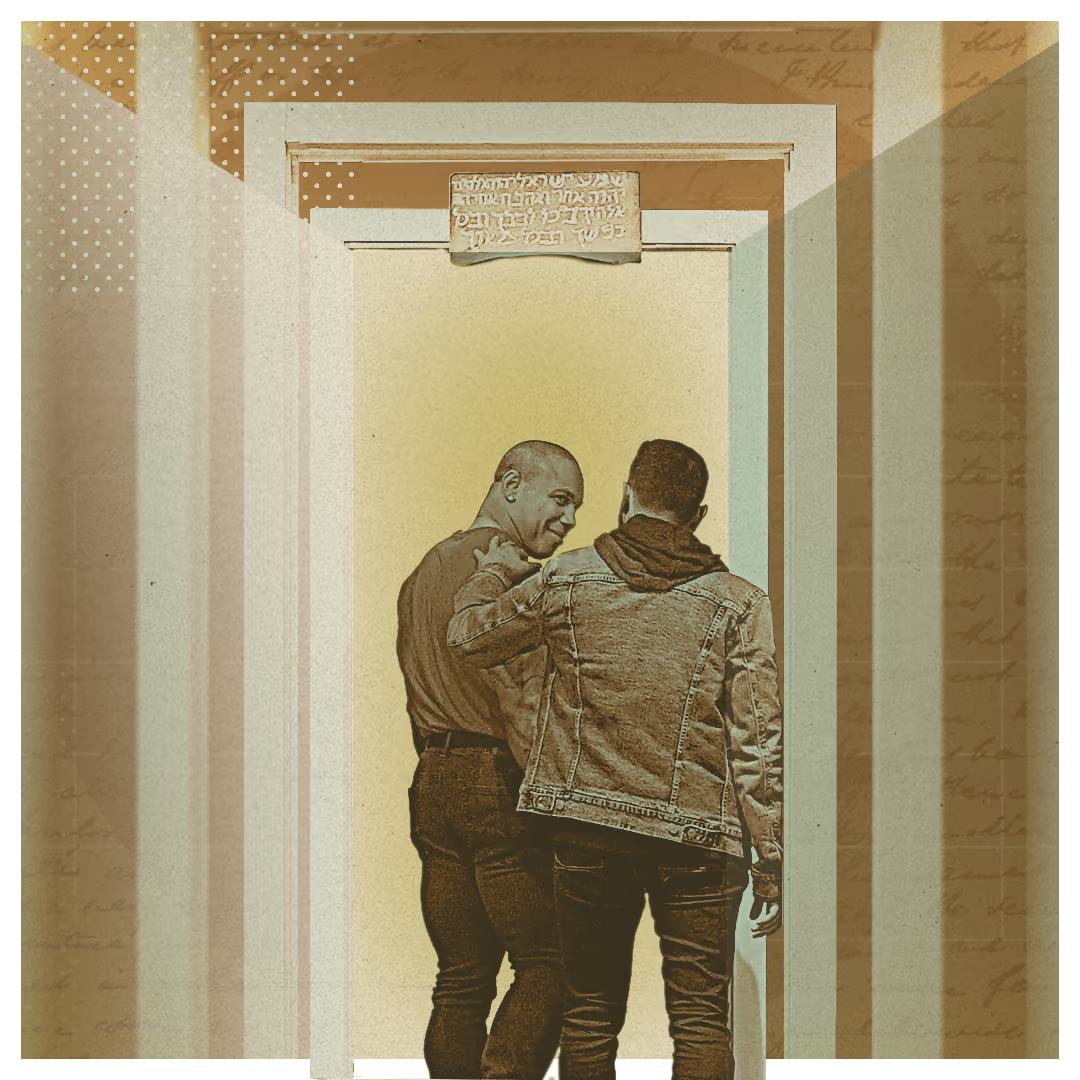
Intro: [gentle music] Welcome to the Spoken Gospel podcast. This is our attempt to speak the gospel out of every corner of scripture. We believe every part of the Bible, Old Testament and New, is about Jesus, and this podcast is our experiment to publicly test that belief. Let's jump in. [upbeat music]
David: Well, welcome everyone to the Spoken Gospel podcast. Thank you for joining us. We're really excited, uh, to talk to you today. Uh, we are in-
Seth: Deja vu
David: ... I'm in, I'm in, I'm in California, out here.
Seth: I'm in Kansas.
David: And you're in Kansas.
Seth: Cool.
David: And technology is bringing us together, which is pretty great.
Seth: It is.
David: And, uh, we're gonna be in Deuteronomy 5 and 6 today.
Seth: Which, you know-
David: Uh, and you said deja vu, didn't you?
Seth: Like, a lot like deja vu. I had a moment the other day where I was convinced, like, I have actually been here before.
David: [laughs]
Seth: No, no, no, I have dreamed this. I have ha- I had a dream of this exact scenario, but I don't think it was real. [laughs]
David: No?
Seth: No. [laughs]
David: I've had those definitely. But I, I have had deja vu, like, I get deja vu pretty often, like, where I'm like, "I've definitely lived this before, thought this before, seen this before, felt this before." And every time I do, here's my theory-
Seth: What?
David: You wanna hear my deja vu theory?
Seth: Yeah, yeah.
David: It has nothing to do with Deuteronomy. [laughs]
Seth: Here's my deja vu theory. Continue.
David: Here's my deja vu theory. It is that when we experience deja vu, we are stumbling in to, um, a glimpse of the foreknowledge of God-
Seth: [laughs]
David: ... that this, this existed in the mind of God in eternity past, and we're now walking into it. And so in a sense, in the mind of God, I have been here before. [laughs]
Seth: There, uh, uh, that could be true. [laughs]
David: It's definitely not true-
Seth: There-
David: ... but that's my theory. [laughs]
Seth: There's a, there's a scientific explanation for de- deja vu. Have you heard it before?
David: Oh, okay. I don't think so.
Seth: Where, where it's basically, like, normally you see something with your eyes, and it just, like, goes right to that center of the brain that processes that and, like, kinda interprets it. So essentially, deja vu is when there's just a interruption between what your eyes are seeing or you're hearing and the connection with that particular part of the brain. So there's just an interruption or something happens where it just disassociates, so you actually experience it twice.
David: Oh.
Seth: Once visually, and second, like, at a mental level, like, in your brain. I was like, "Man."
David: That's weird.
Seth: It's fascinating.
David: Okay, so is deja vu what's happening here?
Seth: Exactly. [laughs]
David: Is this, this, like, we've been here before, or is this different, and how?
Seth: So we're, we're going back in, and we're g- about to hear the entire Ten Commandments again spoken to this new generation of-
David: Right
Seth: ... Israel. So I was thinking about this. There's actually... I was trying to... I was hard-pressed to think of another time where so many details are the same of s- a story or an event in scripture besides this, and, like, the death, burial, and resurrection of Jesus and his life.
David: Hmm.
Seth: Like, I was, 'cause I was like, the, the, the Red Sea is told again poetically over and over again.
David: Right, yep.
Seth: But you don't have, like, 10 rules-
David: Mm-hmm
Seth: ... like, an entire sermon verbatim repeated-
David: Right
Seth: ... like this, or, or any, like, account like this repeated anywhere else, besides the gospels, right? Like-
David: Totally. Yeah. No, I, no, I think you're absolutely right. Yeah. And I think that's-
Seth: So-
David: ... actually really intentional. [laughs]
Seth: So why, so then why? Like-
David: [laughs]
Seth: ... I was trying to process through, like, why would that be, this the only other real event of scripture repeated like this?
David: Yeah. Well, I mean, 'cause what is the basis of the Ten Commandments? You know, 'cause we've talked about the Ten Commandments in a, in a past episode when we were in Exodus 20, and, um, what we looked at there is, and it, and it pops up here as well in, uh, chapter 5, Deuteronomy chapter 5, verse 6, the very first commandment, or the grounding of the Ten Commandments, there's two, two schools of thought there, it doesn't matter which one you are, the fact remains the same. This is the first part of the Ten Commandments, and it's in Exodus 20 and Deuteronomy 5, "I am the Lord your God, who brought you out of the land of Egypt, out of the house of slavery." And so therefore, [laughs] in a sense, do these 10 things. And even i- we're gonna look later, in chapter 6, is that, um, the, the, the rescue of God and the commands of God cannot be separated from one another. And so these commandments are intricately woven into the rescue of God's people from Egypt and the bringing of God's people into the promised land, and the meeting of God's people at Sinai. So all of this rescue story, the deliverance story of Israel-
Seth: Yeah
David: ... um, i- is tied up in these Ten Commandments. And so what I like, I mean, I think what, what we should call this is this is the gospel story of the Old Testament.
Seth: Right.
David: Like, the rescue of Egypt, the rescue-
Seth: Yeah
David: ... of Israel from Egypt is the gospel of the Old Testament.
Seth: Yes.
David: And so what happens in the New Testament is we get the new gospel, right, which is the full one.
Seth: Yes.
David: We're rescued not from physical, um, enslavement, but spiritual enslavement, and that is what we repeat over and over and over again now.
Seth: Yeah.
David: Yep.
Seth: And becau- and there, I think that the, there's a tighter link potentially, at least in the way the old covenant's set up, between deliverance and commands than is hap- it happens in the New Testament. Like, commands, commands, imperatives, obedience is central to the new covenant under Christ, but there's a much tighter link between God has rescued you, now do these 10 things, you know, d- these 613-
David: Hmm
Seth: ... these 613 laws, right?
David: Right.
Seth: Or am I kind of, like-
David: I mean, maybe, but I think when you read the epistles, and even when you read, you know, Jesus' own words, he seems to link, uh, his actions and our actions together. So he'll say, like-
Seth: Right, right
David: ... "I am going to go and suffer at the hands of the chief priests and the Pharisees, therefore-
Seth: Yeah
David: ... you will suffer and be persecuted." And then you look at, like-
Seth: Right
David: ... John, it's like, love because he first loved, right?
Seth: Right. I don't even agree-
David: Or like 2 Corinthians 5-
Seth: ... or into this
David: ... like, give.
Seth: Yeah, yeah.
David: You know, give because-
Seth: I don't need to-
David: ... he gave his life.
Seth: I don't need to try to make too tight a connection here. What we're seeing here is a repetition of the revelation of God- ... in the Old Testament in a recounting of his victory over the Egyptians, in the same way that the gospels are both a re- like, our victory over sin and a revelation of God. These two things are repeated because they are God's revelations that save us from evil. Like-
David: Yes
Seth: ... that's what's happening here.
David: Yes, absolutely.
Seth: That's why they're both some of the only re- stories repeated in the entire Old Testament, because we're d- looking into the gospel.
David: Yes.
Seth: Okay.
David: And I think, and I think it's something we said back in the Exodus 20 podcast, but it, it must be repeated here, is that we cannot separate the grounds of God's commandments from God's commandments themselves. In other words, we cannot separate God's rescue for us and his requirements of us. Like, we have to put those together because if we don't, we become legalists [laughs] we-
Seth: Yep
David: ... because we just end up trying to obey the commandments to get the rescue, right?
Seth: Right, yes.
David: We try to follow the requirements to get the rescue instead of being rescued, which then leads us into the requirements. [laughs]
Seth: Yes, that's a-
David: So-
Seth: ... really important-
David: Yeah
Seth: ... point to make. So here, let me ask this question.
David: Yeah.
Seth: So I have a category for the reason there are four different accounts of Jesus's life, death, burial, and resurrection, but why do I need two different accounts of this one? 'Cause it see- this one seems a little bit different. Um, why do we have two different accounts of the Ten Commandments being told to us?
David: Mm-hmm.
Seth: One to the older generation-
David: Yeah
Seth: ... one to the new generation.
David: It's a, it's a good question. Uh, and like I think, l- let's, let's read the f- the chap- verse one of, of chapter five here. So Moses says, "Hear, O Israel, the statutes and the rules that I speak in your hearing today, and you shall learn them and be careful to do them. The Lord our God made a covenant with us in Horeb. Uh, not with our fathers did the Lord make this co- covenant, but with us, who are all of us here alive today." So he's throwing us back to Exodus and Numbers, and he's, he's telling us, like, when God stood up there on the mountain and made a covenant, we're, we're learning now that this covenant was not actually made with our fathers, the ones who died throughout the book of Numbers-
Seth: Yeah
David: ... who were rebellious. This covenant was with you.
Seth: Mm-hmm.
David: But, you know, a lot of these, uh, people were tiny kids, babies, young teenagers, and so they would not have gotten to grasp the gravity of-
Seth: Got it
David: ... what happened in, at Sinai when God originally gave these Ten Commandments. And so it's being repeated to them because they are actually the intended recipients of it.
Seth: Got it. Yeah.
David: And so it's their initiation into the covenant. So that's why it's being repeated here. It's, it's a very intentional passing of the covenant to this younger generation who will enter the Promised Land in the next book.
Seth: Fascin- I was even thinking as I was reading verse nine, when it gets into the actual commandments, it says, "I, the Lord, am a jealous God, visiting the iniquities of the fathers to the children to the third and fourth generations."
David: Mm-hmm.
Seth: So right now Moses speaking to the second generation. The first generation passed, the second generation is now alive, and they're currently teaching the third generation. So if they fail to obey these commandments, the third generation, their children, will bear the, bear the consequences of it. Maybe that's too tight of a link to draw.
David: I think, I think so. I think-
Seth: 'Cause you, you mentioned multiple times there's a broader point being here, like God's-
David: Yes
Seth: ... mercy extends for thousands of generations.
David: Yes.
Seth: But I could imagine being a dad in that moment-
David: [laughs]
Seth: ... looking at my six-year-old son and say, a- and hearing-
David: Yep
Seth: ... the third and fourth generations.
David: Mm-hmm.
Seth: Like, I could imagine thinking, "Oh, my s- my son and my grandson need to remember this, and I have a responsibility to do that. I can look at them right now."
David: Definitely. Yeah.
Seth: Does that make sense? Yeah. So I was like-
David: Well, definitely, especially if you were like, "I, I got, I had to watch my parents die in the wilderness. I don't want my son to have to go through the same thing. That was horrendous and very difficult, and, you know, all the suffering that came from that. I want, I want my son to have a home. I want to be settled. I, you know, I want him to have a good life." And so I could definitely see them looking at their kids while hearing this and being like, "Hold on. I'm having deja vu now, but-
Seth: Right
David: ... from the other side." [laughs] Yeah.
Seth: Yeah, and it means, and they could even be looking at their grandkids, 'cause you could've been, as long as-
David: Mm-hmm
Seth: ... you weren't 20.
David: Yep.
Seth: So you have a 19-year-old survive-
David: Yep
Seth: ... the whole thing and-
David: Right
Seth: ... be 59.
David: Be almost, yeah, be almost 60, yep.
Seth: So you could ha- you could potentially be looking at both your grown children and their-
David: Mm-hmm
Seth: ... grandchildren-
David: Right
Seth: ... and your grandchildren and say, "Okay, like I must-
David: Third and fourth generation
Seth: ... the third and fourth generation-
David: [laughs] There they are
Seth: ... right there. Like-
David: Yep
Seth: ... I must obey. I must teach them if they are to experience the good news of the gospel, that God will rescue us and give us into this land."
David: Right.
Seth: Anyway.
David: Totally.
Seth: I was like, that put-
David: Yeah
Seth: ... put some, like, flesh on that for me.
David: Yes, absolutely. And so, um, uh, I mean, I, I don't... What do you want, how do you wanna handle the Ten Commandments this time? 'Cause we went through them-
Seth: Right
David: ... one by one in Exodus 10, or Exodus 20 in the last podcast, so I, I don't think we should do that again here.
Seth: Yeah.
David: Um-
Seth: So you guys can go back and listen-
David: Yep
Seth: ... to, um, our Exodus, uh, 20 podcast. We have two of them on all the Ten Commands. We kinda just go through them one by one and ask the question, what do they tell us about God?
David: Mm-hmm.
Seth: What do they tell us about Jesus? So I think maybe the thing we should do here is, like, okay, we've noticed that this is for a new audience, for a second-
David: Right
Seth: ... generation. Um, and really the or, the intended recipients of that first promise, like that first covenant. Like, that's what Moses-
David: Right
Seth: ... said right here.
David: Yep.
Seth: So maybe let's concentrate on what's different about the th- way these things are structured and phrased than the first, the first round.
David: Okay. Yeah, go for it.
Seth: So-
David: What's the difference?
Seth: So the first difference is actually in the fourth commandment, the observance of the Sabbath day.
David: Okay.
Seth: And it says this: "Observe the Sabbath day to keep it holy, as the Lord your God commanded you. Six days you shall labor and do all your work, but the seventh is the Sabbath day to the Lord." And essentially it's verbatim the same, talking about it's a Sabbath day for your servants and your donkeys and whatever else, but verse 15 is what's different. You, and the reason that you do this, verse 15, "You shall remember that you were a slave in the land of Egypt, and the Lord God brought you out from there with a mighty hand and an outstretched arm. Therefore the Lord your God commands you to keep the Sabbath day." So this is different from Exodus 20.
David: Mm.
Seth: Exodus 20, do you have Exodus 20 pulled up by any chance?
David: I don't, no.
Seth: Uh, I will look it up and just continue to talk like this so there's no dead air.
David: [laughs] But you're s-
Seth: Uh-
David: But you're s- but you're saying that, like, the, th- th- that this you shall remember that you were a slave in the land of Egypt isn't in the original- Or in the, in the first telling of the Ten Commandments?
Seth: It's not. It says-
David: Oh, crazy
Seth: ... in the first telling, the first telling of the Ten Commandments is this, verse 10 of Exodus 20, "But the seventh day is the Sabbath of the Lord. On it you shall not do any work because in six days the Lord made heaven and Earth and the sea-
David: Oh
Seth: ... and all that's in them, and rested on the seventh day. Therefore, the Lord blessed the Sabbath day and made it holy."
David: So he grounded it in the creation account the first time-
Seth: Yeah
David: ... and then he grounded it in their deliverance from Egypt in the second account.
Seth: Yes.
David: What... Why? [laughs]
Seth: I, I've been trying to figure that out as well because I, I mean, he- they'd been, been saved from Egypt back in Exodus 20, so it would-
David: Mm-hmm
Seth: ... have made sense to do it then. Um-
David: Totally
Seth: ... and we talked about even back then is like how like if they're headed towards the new Eden-
David: Mm-hmm
Seth: ... it makes sense that God's appealing to the old Eden. Like God made-
David: Right
Seth: ... the Earth in seven days.
David: Yeah. [laughs]
Seth: We're gonna go see that Sabbath day Edenic rest when we get there. So like that made-
David: Right
Seth: ... sense to us. But maybe all we just need to say here is like we just get two different motivations to do-
David: Totally
Seth: ... one of, one of God's commands. Like-
David: Yes
Seth: ... let's press on to hopefully one day receive the Eden that we hope for, but also-
David: Right
Seth: ... let's go and because God has saved us, because we have been rescued, let's rest.
David: We can rest in that rescue.
Seth: Right.
David: Yeah.
Seth: We u- used to be slaves. We used to never have a day off, but now we do.
David: Mm. Mm.
Seth: We are freed from slavery, so let us make sure that we rest and remember that we've been freed from slavery.
David: So good. I love that. I, I wanna just... We don't have to go in depth, but like that's just, that bears repeating more explicitly to how it ties to the gospel 'cause that's just such good news-
Seth: Yes. Do it
David: ... that, that we-
Seth: Do it
David: ... have, like all the whole world is enslaved to this idea that I will only be right with myself, my conscience, my family, um, a deity, um, a, a moral responsibility to mankind, whatever your standard is, um, my online gaming community. [laughs] I mean, it can be anything.
Seth: Yeah.
David: Uh, I will only be okay in those arenas, whatever they are for you personally, um, if I work hard enough, if I do enough, if I'm good enough, if I achieve enough, and that can look different. That can look like moral, um, fiber. It can look like, um, uh, you know, workplace aptitude.
Seth: It could-
David: It, it can look like religious observance
Seth: ... it could even look like just binging Netflix. Like-
David: Totally, yep
Seth: ... even though that doesn't sound like work, like you're trying to... There's this implicit understanding like, "Well, if I watch Netflix enough, I won't be as sad anymore." You know?
David: Yeah.
Seth: Like, like there-
David: Totally. I'll have, I'll entertain myself into joy. Yeah.
Seth: Yeah.
David: And so, and yet when the gospel comes to us and we believe that Jesus has earned for us the acceptance, the approval, the righteousness, the goodness, the fulfillment, uh, that we are constantly trying to earn in this life, and he's just earned it for us in his life, death, and resurrection, and credits it to us, we can just rest for the first time in our lives and stop running at such a frenetic pace and say, "I am approved. I am accepted. I am okay with the God of the universe."
Seth: Right.
David: And in that, you can rest.
Seth: Yeah.
David: And yet from that, from that rest, you're then sent out into the world to-
Seth: Yeah
David: ... follow the other Ten Commandments, [laughs] you know? Um-
Seth: Yeah, another way to say, another... Maybe just to borrow the ru- the words of Deuteronomy is like, uh, you should remember that you were a slave to Netflix-
David: [laughs]
Seth: ... and your pa- and your parents' expectations and your own expectations and career performance. But the Lord brought you out of those things by his mighty hand and his outstretched arms on the cross. Therefore-
David: Yeah
Seth: ... the Lord your God has commanded you to rest from your efforts.
David: Yeah.
Seth: Like, you can rest and trust him. Like, pray that God's kingdom would come. [laughs] Like, that's, that's-
David: Totally
Seth: ... the, the heart of that prayer. Yeah.
David: So beautiful. Wow. I like that too that there's w- you know, it might not be necessary to go why is this grounding of motivation different than the one in Exodus 20. It might just be enough to say like, how gracious is God to give us two motivations for one command. [laughs] Like, how cool.
Seth: That's exactly right.
David: I love that. Okay. So what are, what are some other differences that you, you were, you were talking about?
Seth: Uh, the next difference is in the next command, so honor your father and mother. And so as we said in the fir- the first, uh, time we did this, like there's a separation here. So the first four commandments are relate- related to our relationship with God.
David: Yeah.
Seth: The last six are our relationship with other people. So the first one is honor your father and mother. So Exodus 20 says this, uh, "Honor your father and mother, that your days may be long in the land that the Lord your God is giving you." End of, end of sentence.
David: Oh, that's it. Okay.
Seth: That's it. Verse six, here in Deuteronomy it says, "Honor your father and mother, as the Lord your God has commanded you," so that's, that's, uh, an addition, "that your days may be long in the land, and that it may go well with you in the land that the Lord your God is giving you."
David: Mm.
Seth: So we get a doubling down of... We actually get a reminder that the Lord has already commanded us to, to honor our father and mother-
David: Right
Seth: ... and the addition that it may go well with us in the land.
David: Yeah. So it's not only that we're-
Seth: Sorry
David: ... that we're, uh, we get to live in the land, but it's that it's gonna go well as we're living in the land. [laughs]
Seth: Yes.
David: So it's like a double-
Seth: I think-
David: ... reminder and a double promise. Yeah.
Seth: It is. And I think too, like, like the first, uh, command of Exodus 20, it's supposed to point us to Eden. Like, as we obey, as we live in ri- relationship with our parents, as we take care of them as they get older, as we actually get to experience Eden, like it will go well with us.
David: Mm.
Seth: Like, there will be goodness in the land. Like, the... It's as we go forth and multiply and have multiple children and they take care of us at the end of our life, like this is the way Eden is supposed to work.
David: Mm.
Seth: Caring for one another, honoring one another. It will go well for, for us there.
David: Right. Okay. So I think what you're saying then, if I could put this in New Testament language, it would be to say that, um, in Heaven, the new Heavens and the new Earth, uh, one of the reasons why it will go so well for us in that land is that everyone will be acting the Ten Commandments out perfectly towards one another. And there will be no pain. There will be no, like, no-
Seth: Yeah
David: ... yes, because God is superintending things and changing things in a miraculous way.
Seth: And some of the most pain- and some of the most painful relationships we have in our life are the ones with our parents. And-
David: Mm.
Seth: Right? Like-
David: Yeah, definitely
Seth: ... like, the new heavens and the new earth, honoring of the father and mother will happen perfectly.
David: Mm-hmm.
Seth: Perfect forgiveness will happen for past wrongs and past abuses. Like, perfect repentance will happen. Like, there will be peace between family members.
David: Mm-hmm.
Seth: Things will go well for us there. Yeah.
David: That's good. That's good. Are there other differences?
Seth: The only difference is in, other difference is in, um, the coveting of the, in the coveting commands.
David: Oh, yeah.
Seth: And ac- in, in Deuteronomy, all the scholars point to it and say, "That's actually two commands here, not just one." Uh, it's not meant to be read as two necessarily, but it, it's, the way that it's written is just changed.
David: Okay.
Seth: And, and besides that weird grammatical thing, really the only thing it, it does is it adds things to it. So it's not just your neighbor's house, but it's his field, and his male servant, and his female servant, and his ox, and his donkey, and anything that is your neighbor's. So in Exodus 20, uh, it's a little bit more compact. Uh, it doesn't mention some of the things it mentions there. So that's all that, that's different. So-
David: Oh, and so what are the two commands? What's the grammatical thing with the two commands? I've not heard of that.
Seth: Well, here it's-
David: Is it, uh-
Seth: ... and you shall not covet your neighbor's wife, period. And you shall not covet your neighbor's house, or his field, or his male servant. So there seems to be a separation between-
David: Oh
Seth: ... coveting the wife-
David: Uh-huh
Seth: ... and coveting his things. Uh, but really they are both subsumed. And the idea here, commentators will point out, it might just be a way to make sure that people understand that women are not property.
David: Mm.
Seth: If you read Exodus 20, it could sound like, uh-
David: Oh, yes
Seth: ... the wife is just a piece of property like a servant, or an ox, or anything else. So they say that maybe one of the reasons why it's separated out this way is to make sure that husbands know that wives are not property.
David: Mm.
Seth: Uh, but the command is the same.
David: Yeah.
Seth: You shouldn't lust after your neighbor's wife or desire any of his things. Like, don't do that. [laughs]
David: Yeah. That's, that's helpful. Um, I'll, I'll say one thing about coveting, uh, as we kind of end the Ten Commandments here, they'll look at a- as they are here in, uh, Deuteronomy 5. So, um, I think, a- and, and, and, and scholars in the Jewish tradition have talked about how coveting is at the bottom of every sin. Um, I think in, in Christian circles, I've often heard, like, pride is the root of all sin, [laughs] you know?
Seth: Right. Yeah, yeah, yeah.
David: Uh, which is, which is really, can be a subset of coveting. But, you know, in the Jewish mind, coveting was the subset of all sin, which is why it ends the Ten Commandments.
Seth: Mm-hmm.
David: So at the front of the Ten Commandments, you have that God has delivered you, and at the end of the Ten Commandments, it's, um, don't try to deliver yourself by going and, and trying to get everything for yourself, by wanting more than you have. Um, and because that was the sin of Eve in the garden-
Seth: Yeah
David: ... that God had already given her the commands that, that he wanted for her to have, and she coveted, uh, more knowledge, so she took the tree. Um, and that happens. Uh, people then use the law that way, that they, they try to-
Seth: Yeah
David: ... they covet, they covet the life that the law, um, offers them, and so they, they try to y- you know, maliciously use it. And so, um-
Seth: Well, it makes me think of Deuteronomy 6, when it talks-
David: Okay
Seth: ... it kind of says, "Here's what's gonna happen when you go into the, the land." It says, "When you go into the land, there's gonna be great cities and good city that you did not build, houses full of good things that you did not fill-
David: Mm
Seth: ... cisterns that you did not dig, vineyards and olive trees that you did not plant. And when you've eaten or full, take care not to forget the Lord." So I mean, I think what you're saying here is, part of what you're saying is like, the desire, like coveting something that you don't have, um, is really a distrust in God's ability to provide for you.
David: Yes.
Seth: And they're about to walk into a land where everything is provided for them.
David: Yes.
Seth: So don't do that. [laughs] Like, don't covet. God's gonna give you all that you need.
David: Yeah. That is 100% it. And, uh, and so for us in the gospel, like, Jesus has earned for us all of our righteousness. He has promised us an eternal reward. And so we don't have to look at our obedience to him as something that we're trying to earn, you know, more of. Um, and, and we don't have to look around us at the material goods, uh, of, of this world and say like, "Man, if I had that," or, "Oh, that-
Seth: Yeah
David: ... would really make me happy." Because we-
Seth: Or you can even be more concrete and draw even straighter line. We, we could talk about the immaterial thing, which we need to, because-
David: Mm-hmm
Seth: ... ultimately we will get all that we need by relationship with Jesus in heaven, spiritually, new heavens, new earth, physically. But what does Jesus also say? Pray and ask for your daily bread. Like-
David: Right. Yeah
Seth: ... in the gospel, we actually do have a promise from our savior that he will meet the needs that we have.
David: Mm-hmm.
Seth: And that's, I always get s- hesitant by that, by that promise, because, like, I know people that don't have everything that they, they need.
David: Totally.
Seth: Right? Like, I know a lot of people who are in poverty. I've visited villages that don't have running water. So like, what does that, what does it mean for Jesus to promise daily bread? Is it only spiritual? I actually don't think so, though. I think God really is saying, like, "Look at the, look at the sparrows. Aren't they clothed? Uh, don't they eat?"
David: Mm-hmm.
Seth: "Aren't the c- aren't the flowers of the field clothed more beautifully than the kings of Solomon?" I think in the gospel, because of Jesus, he is actually bringing physical provision for his people. In a, maybe not, not abundance, not, not like necessarily wealth, but like our daily bread, the things that we most need, he will always provide.
David: Hmm.
Seth: What do you think?
David: Yeah, it's good. No, I think, I think that's good. And I think, uh, I think it's a promise that, that we can, that we, we can lean on. And I think people like you and I tend to shy away from those kinds of promises because of the harm we've seen from maybe, like, the name it and claim it, or health and wealth thing, where it's like-
Seth: Yeah, yeah
David: ... you know, a- a- but we don't wanna then over-spiritualize everything, where God doesn't care about our physical needs. [laughs] That, you know, that would be to do damage to what God promises in his word and what Jesus said. So, uh, no, I think it's good. I think it's a good reminder. So-
Seth: Why shouldn't we covet?
David: Yeah.
Seth: Because God has promised to meet our da- give us our daily bread-
David: Yeah
Seth: ... just like he gave the Israelites in the wilderness manna to eat. Like, God will give us our daily physical bread, the things we need. And as you were saying in the beginning, because he will ultimately give us the life we need in him. And that should satisfy us on the days we're hungry as well. [gentle music]
David: Okay, so then after the Ten Commandments are repeated, then we get a narrative retelling of what happened after the Ten Commandments, um, back in Exodus.
Seth: Yep.
David: And, um, this is, this is a part I wanted to, I wanted to hone in on. So chapter five verse 24, uh, and this is Moses quoting the people of Israel's, like, forefathers that are now dead.
Seth: Okay.
David: He says, "And you said, 'Behold, the Lord our God has shown us His glory and greatness, and we have heard His voice out of the midst of the fire. This day we have seen God speak with man, and man still live.'" And, uh, this- they, they are understanding something implicitly it seems, that when God speaks to a human and a human is-
Seth: Yeah
David: ... in God's presence, he, he shouldn't be alive anymore. [laughs]
Seth: In the next verse-
David: That should-
Seth: ... if we hear the voice of the Lord our God anymore, we shall die.
David: Yeah. And then God-
Seth: For who is there of all flesh-
David: Right, and then God ends up-
Seth: ... could live?
David: ... confirming that. He ends up saying, like, "You spoke right." Like, that totally would have happened.
Seth: You know, I- it's so opposite to how I see the world or think about God's communication to me, or even, like, the whole series of books, Jesus Calling. Like, the whole-
David: Oh, yeah
Seth: ... point of the book is God's speaking all the time directly to you.
David: Hmm.
Seth: And I've never once thought, "You know what? That should, that should be a little scary." You know what I mean? Like-
David: A little scarier
Seth: ... I've never-
David: Yeah, totally
Seth: ... had a sense of, like, um, like, [laughs] this, this might actually not be what I wa- [laughs] want, you know?
David: [laughs] Yep.
Seth: So-
David: That's really funny. Yep
Seth: ... let's talk about that. Like, for a sec- like, we like, how can we then properly understand the fear that we should have at God's voice, but at the same time, hopefully expect God's voice? 'Cause I think both those things-
David: Mm-hmm
Seth: ... should be true, right? So let's-
David: Definitely
Seth: ... given, given the fear, what should we be seeing here that we're normally missing when we think about hearing God's voice?
David: Well, I mean, yeah, I think one thing that you mentioned is, uh, we need to understand the voice of God as something that is powerful, and that, that i- implicitly in God's voice comes, um, uh, comes judgment. Uh, and, like, that's not always-
Seth: Yeah
David: ... in God's, God's voice, but, um, it's a common metaphor throughout the Old Testament that the voice of the Lord comes and judges the nations. And so, um, if-
Seth: It's like, and it's, like, part of God's voice. You can't separate, like, the authoritative-
David: Yes
Seth: ... like, jud- it's kinda like whenever you're, like, just see a police officer.
David: Mm-hmm.
Seth: He just embodies a- the law.
David: Right.
Seth: And so you automatically get nervous even if you're doing nothing wrong. Like-
David: Right. [laughs]
Seth: ... whenever I see a police officer on the side of the road, I automatically slow down, even though if I know I set my, you know, cruise control below the speed limit.
David: Right.
Seth: 'Cause I'm like, he embodies the law, and it's scary to like-
David: Yeah
Seth: ... come up next to something that embodies-
David: Right
Seth: ... things that can judge me or give me a ticket for something. [laughs]
David: To- totally. And so, like, um, Isaiah 11:4 says, um, that God will strike the world with the rod of His mouth, and it's talking about this day of the Lord, that He will come-
Seth: Mm
David: ... and He will judge all nations. How? Because He will speak to them, and He will- His word will come and judge them, and they will perish. And so-
Seth: So there's this-
David: Yeah
Seth: ... kind of biblical theology, like, when something comes out of the Lord's mouth, it's like this absolute standard-
David: Mm-hmm
Seth: ... that, like, judges the, like, it, it is the embodiment or the, the verbal issuing of actual judgment.
David: That's right. Yep.
Seth: Not, like, necessarily just, like, punishment, but just, like, judging what is good and what is right. And every- when it's spoken, everybody knows whether, what side of the road they're on, whether-
David: That's right
Seth: ... they've been keeping the speed limit or not. Okay.
David: That's right. And so if you think about the Ten Commandments then coming to the people of Israel, and they're, and the spoken standard is coming-
Seth: Mm
David: ... across them, and they know they haven't lived up to it, they should have died. Like, they were speeding. [laughs]
Seth: Right.
David: They were doing far worse than that. They had just-
Seth: Right
David: ... built, they, you know, they would go on and build an idol, you know? [laughs] Like-
Seth: That's wh-
David: ... they had fallen short of the standard.
Seth: That's one thing we haven't done when we got through the Ten Commandments is just kinda sit under the weight of them for a second.
David: Totally. Yeah.
Seth: Like, okay, have I had a god before me?
David: Yes. Constantly.
Seth: You know, it's like I've never-
David: [laughs]
Seth: ... uh, I've, like, uh, I've never actually thought about, like, okay, let's not study it. Let's imagine a king with the ability to-
David: Hmm
Seth: ... to kill me, to-
David: Yep
Seth: ... for treason, start listing these laws, and I have to process, like, have I actually lived up to these things? [laughs]
David: Right. Yeah.
Seth: Like, I think I would be s- like, right now, if, like, Donald Trump read these to me, because he's currently our president, and if he read these things to me, I'd be like, "I don't know if I actually have done these things in a way that would prevent me from going to jail."
David: Right.
Seth: You know what I mean?
David: Yeah.
Seth: So I-
David: Yeah
Seth: ... I haven't thought, I haven't read them that way in a long time.
David: No, I don't think I have either. And it's, uh, yeah, it's, it, it's one of those things that's like, man, we just heard God tell us all these things to do, and we should have died. Why, why aren't we dead right now? [laughs] Like, we, like, we did not live up to this. And, and so, and so God is showing there even His grace and mercy and long-suffering to forgive the iniquities of thousands of generations, which is what he says here in this passage, and he said back in Exodus 34, um, whenever he proclaimed his name to Moses. And so, like, th- like, God is showing his grace by setting a standard and yet not judging those who fall short of that standard right then and there, that they have-
Seth: Hmm
David: ... heard the voice of God and yet did not die. But there is a time coming that the prophets predict, like from Isaiah 11:4, that God will come and judge the whole earth with the rod of His mouth. And we read then in Revelation 19:15 that this day-
Seth: The sword coming out of Jesus's mouth
David: ... the sword coming out of Jesus' mouth.
Seth: Oh.
David: This is when Jesus returns, he will judge the world. And, like, even in John, Jesus said, like, "God is not gonna judge the world. He's giving-
Seth: Do you think-
David: ... me the right to judge the world"
Seth: ... when he comes, he will just be speaking the Ten Commandments? Like-
David: Dude, I don't know. Yeah, I don't know.
Seth: 'Cause I mean, like, imagine that. We n- we ha- I have this image in my head with Jesus with the sword in his mouth, 'cause it's kind of a crazy image, and I know-
David: Yeah
Seth: ... it means judgment, but what i- like, just imagine if- Jesus came back, and all he did was speak the Ten Commandments. And then everyone who lived up to them or not would know in that moment whether they were guilty.
David: Right.
Seth: And that-
David: And everyone would be guilty.
Seth: And everyone would be guilty.
David: Yep.
Seth: Like, oh, man.
David: Yeah.
Seth: I haven't thought about, I haven't thought about that much power and consequence behind the Ten Commandments.
David: Totally.
Seth: Ex- except maybe, like, those crazy, like, evangelists that, like, go out in the streets like, "Have you lied this week?"
David: Uh-huh.
Seth: Like, did you, did-
David: Then you're going to hell, yeah.
Seth: Then you're going to hell. Like, I've heard that version-
David: Definitely
Seth: ... which has never been helpful.
David: Yeah.
Seth: But this is actually-
David: I was trained in that version. [laughs]
Seth: But this is actually helping me redeem some of those kind of things I think are kinda crazy, like, for me devotionally. Like, I should, like, consider the consequences-
David: Yes
Seth: ... of being judged by God's word.
David: Yeah, definitely. Yeah, and, and so but there's another side to this, too. So Jesus comes back. He will speak his word, m- maybe even the Ten Commandments. The whole world will know that they are under condemnation, and yet also in that moment, those who have already put their faith in Jesus, that sword will not be piercing for them. It will be vindicating for them.
Seth: Yeah.
David: It will not cut them. It will cut sin off of them. Like, it's a, it's amazing. Um, and so because God's word does not just bring judgment and death. It also brings life. So in John 6:63, Jesus says that, "It is the spirit who gives life. The flesh is no help at all. The words that I have spoken to you are spirit and life." And so God has, Jesus spent time with his disciples speaking to them, teaching them, and then in John 20:22, he breathes out of his mouth the spirit and life.
Seth: Mm-hmm, yeah.
David: And the Holy Spirit comes to them, and it gives them life. And so for those of us who have faith in Jesus, when he opens his mouth to give us his words, it's not death to us. It is life to us. And so it's, it's both things that come out of God's mouth.
Seth: Mm-hmm.
David: And, and what is, what is, what are we gonna hear in Deuteronomy later? "I have now set before you life and death, blessing and curse."
Seth: Yeah.
David: How? By speaking, by speaking commands.
Seth: Yeah.
David: And so God is coming and saying, "Here are the commands. They are-
Seth: And how-
David: "... either life or death to you."
Seth: And how in both situations, both in Mount Sinai and the New Testament, are we both get to hear the voice of God, hear the commands of God, be, uh, be spared by Moses-
David: Mm-hmm
Seth: ... the one who stands between the people of God and the top of the mountain burning in fire. And in the New Testament, it is Jesus, the truer and better Moses, who when God's decree comes even more, like, when Jesus is judged on the cross, the clouds come. Like, that is-
David: Yes
Seth: ... judgment. If God did not spare His Son from judgment-
David: Mm-hmm
Seth: ... how is he gonna spare any of us?
David: Right.
Seth: That should be fearful to us, say, we should look at that and say, "That might happen to us unless Jesus is also Moses going before, interceding before God and being our go-between."
David: Mm-hmm.
Seth: Yes.
David: Yeah. Yeah, it's beautiful. So anyway, I just love that whole voice of the Lord motif through this passage. Um, I think it's really beautiful. Um, so let's kind of, let's now, let's turn our attention to chapter six and see what's going on there. [gentle music] Okay, so in, in chapter six, we get, um, what is really one of the most famous parts of Deuteronomy, right?
Seth: Yeah, the Shema.
David: The Shema, which is the Hebrew word for hear.
Seth: Yep, hear.
David: Yep.
Seth: Hear and obey.
David: Hear.
Seth: Mm.
David: And so, "Hear, O Israel, the Lord our God, the Lord is one. You shall love the Lord your God with all your heart and with all your soul and with all your might." So you've probably heard that before.
Seth: Yep.
David: And this became a central prayer for the people of Israel. Even today, Jews all around the world still pray this prayer.
Seth: It's kinda like the, uh, Nicene or Apostles' Creed for-
David: Mm-hmm
Seth: ... Judaism, isn't it? It's like-
David: Yep, totally
Seth: ... it's the statement of Orthodox Jewish belief.
David: Yep, God is one, and we should obey Him.
Seth: Yes.
David: And so, yeah.
Seth: And love Him.
David: And love Him, yes.
Seth: Yeah. Yeah, yeah.
David: And, uh, and, and that, and, and really, that is, it does, it is the crux on which Deuteronomy, uh, kind of turns because it's, it's the, the combination of hearing, loving, and obeying. Those should all go together. You should hear from the Lord what He's done for you, what He commands of you. That should create love in your heart for Him. That should lead you to obedience. That's the-
Seth: Yeah
David: ... the, the moral, the moral theology of Deuteronomy is summed up-
Seth: So-
David: ... in the Shema
Seth: ... let's ask a question as a Christian of this text then for just a second. So this is the foundational text for, for Judaism, Judia- uh, monotheism. Like, they don't believe in a trinity or Jesus.
David: Correct.
Seth: So they would see this, this whole exercise of seeing Jesus in the Shema as, um, actually a violation of the text. The Lord is one.
David: Right. Correct.
Seth: So how have Christians understood this throughout history? Or maybe just, like, are, are we justified in seeing, are we still allowed to think about a trinity because it says this, is kind of the question.
David: [laughs]
Seth: But I think it's important.
David: I think, yeah, I think that we, uh, we actually have more reason to believe in the trinity because of this passage because if God was-
Seth: I was not expecting that. Okay. [laughs]
David: If, if God wasn't one, why would you need to point it out? You know what I mean? Like-
Seth: Yeah, 'cause I, w- why would I say, "I am Seth, and I am one" [laughs] like-
David: You're like, "Wait, hold on. I, I hadn't thought that you were more than one before."
Seth: "Was there a question of-
David: Yeah
Seth: ... about that?" [laughs] Yeah.
David: Right, but we've already, in the Torah, we've already met the word of God, the voice of God. We've met the spirit of God. We, you know, we've met the heavenly council of God, and so there's all these things happening, and we're like-
Seth: We've also heard, like, lots of different names for God, like God as-
David: Yes
Seth: ... healer or provider or-
David: Yeah, yeah, yeah. Is he, he's the I Am, but he's also, his name is Jealous, and his name is also Long Suffering, and-
Seth: Yeah
David: ... what? Who, who are you? I'm, I'm, I'm all these things, but I am one.
Seth: Yeah.
David: Yep.
Seth: And in that time period, the temptation would be just to label each one of those attributes of God as its own god, right?
David: Correct.
Seth: Is that kind of right?
David: Yes.
Seth: So like, oh, the, the fear of God is Symbolized by this figure, and the justice of God is this figure, and the-
David: Yes
Seth: ... beauty of God is this figure. Got it. Okay.
David: Yep, yep, because they were, they came from a polytheistic background in Egypt, and so this monotheistic, um-
Seth: Got it
David: ... proclamation is very important. Yep. Absolutely.
Seth: Which makes sense, 'cause the one thing I do know about this word is that word one is not so much like alone or-
David: Mm
Seth: ... one in isolation. It's actually, like, unity. Like, it's, that's the more co- the connotation behind it. So much so that whenever in Genesis 2, Adam and Eve become one flesh-
David: Oh, right
Seth: ... the same word one there is the same word one here. It's not so much that there's a, um, just a oneness or a singularity. It's actually that there's a united nature to what-
David: Mm-hmm
Seth: ... what's being talked about. All the attributes of God are in one being.
David: Right. We don't say that a husband and wife are now one person, and they, they have, you know, that they are completely-
Seth: That's right
David: ... indivisible.
Seth: Right.
David: Uh, but we also understand them as one unit.
Seth: Yeah.
David: And so yeah, totally. That's a good-
Seth: For tax purposes
David: ... that's a good picture. Yeah, for tax purposes. [laughs]
Seth: [laughs]
David: Uh, okay. So then you get these amazing commands, uh, about how are they, as, as people going into this new land, how are they going to continue to obey and remember God's commandments and, and the story of their deliverance. And the, the answer is that they should just take the commands they, they've just heard, and write them all over their house. You know, like, put them on the doorposts and scrawl them on the walls. You know, write it on your forehead if you have to.
Seth: Yeah.
David: Just make sure you encounter this word everywhere.
Seth: Which some streams in Judaism have done. They have the-
David: Mm-hmm
Seth: ... what's it ca- oh, what's the word? The-
David: Ah, dang it. I knew you were gonna ask that.
Seth: Uh, I, I, like, I looked it up too.
David: You have one. Don't you have one?
Seth: Um, no. I ha- I had a mezuzah, which is what-
David: Oh
Seth: ... they put on the doorpost of the house in, inside.
David: Yeah.
Seth: So today, if you go to a Jewish home, they'll have a mezuzah on the door, and inside should be a scroll that either has the Shema on it, or a section of the Old Test- the Torah.
David: Yeah.
Seth: Or maybe the whole Torah, depending on the size or the type.
David: Mm-hmm.
Seth: And so they are supposed to see it every time they walk in the door, and what they'll do is they'll kiss it and they'll t- kiss their hand.
David: Mm-hmm.
Seth: They'll touch the mezuzah. Uh, that's, ah, I know it's not the nephilim. I don't know why that's the word that's coming to mind.
David: [laughs]
Seth: But, but it begins with, like, a T-S. And anyway, if you go to, like, Orthodox Jewish spaces, they'll have these, like, leather straps that wrap around their arms-
David: Mm
Seth: ... and a little box on their forehead, and they-
David: Right
Seth: ... they all contain the Shema or a portion of the law.
David: That's not the phil- philecter- philectery
Seth: Philactery.
David: Philectery.
Seth: Philactery?
David: Philactery? I don't re- I don't know how to pronounce it.
Seth: Hmm.
David: But yeah, that's something like that, right?
Seth: Yeah, yeah, yeah.
David: The box. Yeah.
Seth: That's, that's exactly right. And so if you see them, that's actually what they're doing. They're trying to obey this command as-
David: Yes
Seth: ... literally as possible. They have the law of God on their hands, on their forehead, and on the doorposts-
David: Right
Seth: ... of their home.
David: And so what's amazing with the biblical story then is what God does here i, i- throughout the, the biblical narrative, and we see promises of it in Ezekiel and Jeremiah, is that he's not gonna just come and write his law on your forehead or on your house.
Seth: Mm-hmm.
David: He's actually going to inscribe it on your heart.
Seth: Yeah.
David: And that way you will actually be able to obey it. So it's, it's like-
Seth: Hmm
David: ... try, try all these external ways to obey the law, and what's gonna happen? You're still gonna fail. [laughs] You-
Seth: Well, and I'm assuming the point here is that you write them on your forehead and your doorpost and your hands, and you teach them to your children in the hopes that they-
David: They would make their way to the heart
Seth: ... they would make their way to the heart. And I mean, that's the way we teach our children, right?
David: Yes. Yep.
Seth: Like, we know that we can't... Like, by virtue of my parental fiat, my son is not gonna become a believer in Jesus.
David: Right.
Seth: But what I do is I repeat the story of the gospel. I tell him the commands of Jesus. I remind him of the Ten Commandments. When he's mean to his sister, I say, I tell him, "Love your neighbor as yourself." Like, when he's mean to his mother, "Honor your mother." Like, I-
David: Mm-hmm
Seth: ... I put that constantly before him because I know if I don't, one, he'll forget.
David: Yeah.
Seth: And two, he won't actually grow up to have them inscribed-
David: Right
Seth: ... on his heart at all.
David: Right.
Seth: So I'm assuming the heart here is that by repeating, they would get to the heart, right?
David: Yes.
Seth: That's-
David: That was absolutely the goal. Yeah, you shall love-
Seth: Right
David: ... the Lord your God with all your heart.
Seth: Yes.
David: And so the whole idea was repeat these until they, they, they work their way into the heart. I mean, it's why David probably reflecting on this passage or a similar one said, "I have hidden your words in my heart-"
Seth: Verse-
David: "... that I might not sin against you."
Seth: Even verse six right here, "And these words that I command you today shall be on your heart."
David: There it is.
Seth: The whole point of these external, uh, ways in which you remember the law is to place them on your heart.
David: Right.
Seth: What you're getting at is the fact that ultimately, later in the Book of Deuteronomy, uh, Moses will actually say, "God is not in your heart." [laughs] Yep.
David: Right. He's gonna say, he's gonna say, "You have a hard, uncircumcised heart because God has not softened it or uncir- or circumcised it yet."
Seth: So later on in the Book of Deuteronomy, we get this kind of ominous tone where it's like all this repetition will actually be for nothing.
David: Yeah.
Seth: Um, and the prophets will pick that up as well and say, like, "All of Israel has an uncircumcised heart. We need our hearts to be softened. We need new hearts if we're gonna-
David: Yeah
Seth: ... obey God's laws properly." Uh-
David: Yeah, and I think it's important to say that it's not because they tried to repeat them over and over again, and it didn't work. Like, this would have worked. [laughs]
Seth: Yes.
David: But they did not obey this command. They did not repeat the stories to their children. They did not put them on their walls and, and, and on their foreheads. They, they, they didn't-
Seth: No
David: ... it, the law did not make its way to their heart 'cause they-
Seth: Because-
David: ... immediately started breaking the law. [laughs]
Seth: Yeah, and so the, the real fear, the real boogeyman in this passage is not disobedience but forgetfulness. I mean, it is-
David: Yes
Seth: ... disobedience, but it's forgetfulness.
David: Yeah. Forgetfulness first, because he says, "You're gonna go into this land, and there's gonna be houses you did not bui- build and vineyards you did not plant. You're gonna be... It, it's just gonna be so good. You're gonna move into a suburban neighborhood."
Seth: Yeah. [laughs] You-
David: "And when you do, and you're super comfy-
Seth: Or a revitalized downtown like New York. [laughs]
David: ... or revitalized downtown, whatever. "You're, you're going to forget me because you won't... You, you'll feel like you don't need me anymore because all your needs are gonna be met." And so it's like we, w- as Westerners, we can definitely relate to that because our needs are met, you know, very easily. And, and, and it's easy to forget our need of God whenever we have our needs met by ourselves so easily for s- for so many people. Um- And, and it's, it's much different if you are in a hand-to-mouth society or nomadic society like Israel-
Seth: Yeah
David: ... was at this time. Your needs were-
Seth: Yeah, God's saying-
David: ... always very evident. [laughs]
Seth: God's gonna s- say, "Oh, you've been wandering the wilderness for 40 years, and you're about to have everything handed to you. And if you don't, in that place of wealth, remind yourself of my commandments, you'll forget them."
David: Mm-hmm. Right.
Seth: And which makes sense of why so much of Jesus' polemics, Book of James, speaks so, um, intensely about wealth. Like, the forgetfulness of the people of Israel was the idolatry of the people of Israel was precipitated by the gaining of wealth.
David: Mm-hmm.
Seth: Like, or this an abundance of things. I think even Proverbs picks up on this language, uh, when, in Proverbs 30 when it says, "Give me neither poverty nor riches, lest I forget you."
David: Right.
Seth: Uh, "Don't give me so much that I for- would forget you." Uh, so there's this danger to wealth that would bring us to, like, forget who God is.
David: Mm-hmm.
Seth: So we always need to repeat God's commands constantly, otherwise we'll forget.
David: Yep. Why-
Seth: Have you ever read The Silver Chair? Oh, anyway, what were you gonna say?
David: Oh. Well, I was gonna say one more thing about that, was-
Seth: Yeah
David: ... was it's like the, you know, I think of the rich, young ruler with Jesus too here, because-
Seth: Yeah
David: ... you know, he was, he was rich, and Jes- and he was like, "What do I need to do to it to get eternal life?" And he's like, "Obey these, these commandments we've been reading." And he's like, "Yeah, I've... Yeah, yeah, I did that." And he's like, "Okay, so do you not need anything? You feel like... Uh, it just feels like you, you, you've got it all figured out." And so Jesus gets to it, the heart of the problem, and he says, "Sell all your possessions." And he's like, "Uh, but then I would need something," you know? [laughs] And then-
Seth: Yeah, yeah, yeah
David: ... it's just, it's impossible for him. He's forgotten his dependence on God because he not only had all his moral categories checked off, he also had all his needs cared for, so he didn't need this traveling teacher.
Seth: Yeah.
David: He didn't need God. Anyway, just thought of that.
Seth: Right. No, it's, it's not-
David: So Silver Ch- do, you were talking about The Silver Chair?
Seth: Well, yeah. Well, in, uh, C.S. Lewis, he ba- uh, the opening of the book is Aslan speaks to, uh, Jill Pole and gives her-
David: And this is-
Seth: ... four signs
David: ... but for those who don't know, this is in the, the series The Chronicles of Narnia.
Seth: Right. Did I not say that?
David: Right.
Seth: Chronicles of Narnia.
David: I don't think so. Yep.
Seth: Excellent. And so this one book, she gives, he gives Jill Pole four signs she's supposed to remember, say every time she wakes up, every time she goes to bed, and repeat them as she's walking on her way. So it's like, it's a version of-
David: [laughs]
Seth: ... Deuteronomy 6. And what she ends up doing is forgetting.
David: Mm.
Seth: Uh, she forgets to, to do that practice. And so there's this moment that comes when she gets trapped by this in- this witch, um, and she, who's also a serpent, so like, all this, like, demonic imagery. And this witch con- tries to convince her that Aslan's not real, that God isn't out for... Like, that Aslan is this God figure, it's like he's-
David: Mm-hmm
Seth: ... not real. He's just something that you've made up. And it's... Oh, I, I'm gonna just read a little bit, 'cause I have it open in front of me, and it's so brilliant. He said, "The witch shook her head and said, 'I see,' she said, 'That we, that we should do no better than your...'" Oh, shoot. I shouldn't do this, because now I've, don't even know where [laughs] the book is.
David: [laughs]
Seth: Anyway, the whole point, she, like, tries to subvert all of her expectations. She said, like, "There's no such thing as a lion."
David: Uh-huh.
Seth: "You think Aslan's a lion? Oh, what you probably saw was my cat in the corner-
David: Oh, right
Seth: ... and just imagined a bigger and better cat." So I can imagine something similar happening to the people of Israel-
David: Mm-hmm
Seth: ... where they say, "Oh, you know, I probably just made up God."
David: Right.
Seth: "It was a projection of my desire for a father I didn't have."
David: Yeah.
Seth: "Or it's my idea that that's where all wealth comes from, when actually all that really is is the wealth and abundance I see around me." Which is exactly what Israel does.
David: Mm-hmm.
Seth: They worship the cre- the creation-
David: Right
Seth: ... and the creature rather than the creator who lives forever.
David: Wow. It's so good.
Seth: But anyway, C.S. Lewis is brilliant. If you wanna, if you wanna read it, you should read The Silver Chair because-
David: So good
Seth: ... so good.
David: Man, okay. Last thing that we have to talk about here is the reasons for o- obeying the law, um, because God, God gives those, and I think it's really interesting. Uh-
Seth: Yeah, yeah. Verse 23
David: Yeah.
Seth: Uh, "And he brought us out from there," Egypt, "that he might bring us in and give us the land that he swore to give our fathers. And the Lord commanded us to do all these statutes." And then here's the reasons, "To fear the Lord our God for our good always, that he might preserve us alive as we are this day. And it will be righteousness for us if we're careful to do the commands before the Lord our God."
David: Mm-hmm. So four things, right? What are they?
Seth: Or we, uh, why do we obey these commands? Because we've been rescued out of Egypt.
David: Yep.
Seth: Uh, in order to fear God properly, for our good, for our life, and for righteousness. Five reasons.
David: So five. Five reasons.
Seth: Five reasons.
David: We've been rescued so we might fear the Lord, for our good, for our righteousness. Oh, wait, I missed one.
Seth: For our good, for our life, and for our righteousness.
David: For our life and for our righteousness. Wow. So why do we obey? First and foremost, we've talked about this already, it's because we've been rescued.
Seth: Yes.
David: Uh, even before this, what led us into this is, um, he's talking about, you know, go and talk to your, your children and repeat these commands to them. And when they say, "What, what's the deal with these commandments? Why do we follow them, and why do we observe these different feasts and everything?" You're to say to them, "Because we were slaves in Egypt and God rescued us."
Seth: Yeah.
David: "And then he gave us these commands." And so it's funny that the, that we've talked about how God's rescue leads us into his requirements-
Seth: Yeah
David: ... but then it's also the other way, where his requirements should remind us of his rescue, you know?
Seth: Yeah.
David: And so it's, it's just cool. So anyway, it- it, because God saved us-
Seth: And of all the things that people will forget, what Israel forgot and what Christians forget, it's that God's rescue and love precedes his commands. Like-
David: Mm-hmm
Seth: ... God has died for us, he's rescued us out of Egypt, and because we are rescued, we now obey.
David: Right. Yes.
Seth: And we are always co- like, we think we're gonna get the other... We forget that it's the other way around constantly.
David: Yep.
Seth: So this is why we need to remind ourselves, because we are programmed, uh, to think that it's our actions, our efforts that will get God to rescue us.
David: Yes.
Seth: That's not the case.
David: Not the case. It's so good. And so that's the first reason. The second reason is God gave these commands, uh, so that we might fear him, and we've kind of talked about that, where it's like if we remember everything that God actually requires of us as humans, we will constantly go, "Oh, no, I have not lived up to that." Like- He is powerful, he is going to speak, and I will be under judgment. But then what, what gets to happen? You get to remind yourself of the rescue.
Seth: Right.
David: That Jesus has given you, um, a-
Seth: Think about-
David: ... a way out of your judgment
Seth: ... think about somebody on parole. Like-
David: Yeah
Seth: ... you've committed a crime, now you're out on a limited basis, and if you-
David: [laughs]
Seth: ... do anything wrong again, you'll be back in prison, and you have a meeting with your parole officer once a month to make sure that you haven't broken any laws. So, like, there's a, an appropriate fear of the law for somebody on p- parole.
David: Yeah.
Seth: And so there's a sense, like, when we have the law and an authority in the back of our mind saying, like, "Do not break these things, otherwise you come under punishment," like, that's the fear that's being talked about here. That's a healthy fear to follow the law, right? Like it's-
David: Yeah, I think the only, the only, the only, like, nuance I'd want to give to that is I think that living our lives in Christ like we're on parole is, is not helpful [laughs] at all-
Seth: No, but-
David: ... because we're free. We're free from condemnation
Seth: We are free.
David: There is no condemnation.
Seth: But it is good to fear God.
David: Yes.
Seth: That's what-
David: Absolutely
Seth: ... we said la- that's what we said last week, and even here.
David: Yep.
Seth: It is good to fear-
David: Mm-hmm
Seth: ... have an appropriate respect for the embodiment of God's law in his Son, Jesus.
David: Yes.
Seth: So there is a sense that we should have an abiding sense that the law will... We will be hol- held accountable to law, and we should seek to do it, because if we not, we'll be held accountable to it. Does that make sense?
David: That's right. Definitely, yep.
Seth: The, the fear of punishment, the fear of retribution or a fear of, like, discipline should motivate us towards obedience.
David: Yes. Okay, and then the-
Seth: Right
David: ... third one is it's for our good. I love this one.
Seth: So good.
David: Why, why obey the law? Why, why do the things that the Bible requires? It's not because they're oppressive. It's not because you're trying to earn something. It's because it's good for you. It's like a multivitamin.
Seth: You were designed, you were designed this way.
David: Yeah. [laughs]
Seth: God made you so that you wouldn't have to deal with the intense psychological trauma that comes from killing somebody. Like, God has-
David: Oh my gosh, yeah
Seth: ... made you in such a way that you work best when you obey his commands. You were made to be the man of one wife.
David: Mm-hmm.
Seth: So your world will look better when you live that way. [laughs] Like-
David: Yes
Seth: ... you were designed not to lie.
David: Yes.
Seth: Like, you were not designed to c- like, to deal with all the anxiety that comes from pr- uh, all that comes from, like, making sure that nobody found out the truth. Like, you weren't designed for that.
David: Totally. Yeah, and-
Seth: Whenever-
David: Yeah. It's so good
Seth: ... whenever Eric and I were in counseling after, like, we lost our son, one of the-
David: Mm, yeah
Seth: ... most helpful things that we heard was, like, "You were not designed for grief."
David: Mm.
Seth: Like, you were not designed for the brokenness that you experience.
David: Yeah.
Seth: Like, when you obey God's law, when you are inviting the new creation back in, and you experience in the life the goodness that was supposed to be ours in Eden.
David: Mm-hmm. It's for our good. The commands-
Seth: It's for our good
David: ... are for our good, and they're for our life.
Seth: Which-
David: And so, which we've, we've talked about, that, that these commands are not only for our good, they actually lead to life. They lead to eternal life. Like, for the-
Seth: They lead to the new-
David: For-
Seth: ... the new lands, yeah
David: ... the new land.
Seth: Yeah, yeah.
David: Yeah, for, for the Israelites it would be this new land in Canaan. For us, it's eternal life with God forever. And it's not a works-based righteousness where you are earning your way into that, but it, it gives life, these commands, and, and it will be our life, like we talked about. In the new heavens and new earth, we will live these commandments out. They will be life to us. They will be our very existence. Um, and then number five, they are righteousness for us. And man, I'm in Romans right now-
Seth: Okay
David: ... for Spoken Gospel stuff. I'm r- working on the introduction-
Seth: We're all about this
David: ... to Romans, and it's all about righteousness. And so-
Seth: Boy
David: ... it just feels like-
Seth: So what does it mean, then, for us to obey? So if we've already been given a good standing, G- Christ's own righteousness by our trust in him, that's already happened.
David: Yep.
Seth: We've already been rescued from sin. What does it mean after the fact to do good works for more righteousness? [laughs]
David: [laughs] So, so what happens in Romans is that, that... So there's three kinds of righteousness. One is God's righteousness, which is-
Seth: Okay
David: ... his faithfulness, that God is... He, he shows his righteousness to us by being faithful to us.
Seth: Yep.
David: That he is good even when we're not, that he's-
Seth: Yep
David: ... faithful when we're faithless. The second kind of righteousness is the righteousness Jesus earns for us on the cross, that he declares us justified, legally righteous before the Father, despite the sins that we've committed to break his, these laws here.
Seth: Okay.
David: But then there's a third kind of righteousness that you learn about more towards the end of, uh, Romans, like Romans 8 and on, and that is the kind of righteousness that is lived righteousness, that we are actually becoming-
Seth: Mm
David: ... righteous people who do the right things, who actually live, um, as if we are justified, and that we aren't-
Seth: Are
David: ... under condemnation. We live as people who are good. And so it, it moves from-
Seth: So there's a righteousness-
David: ... faith to faith. Yeah
Seth: ... there's a righteousness that comes from God. Or the, the-
David: Mm-hmm
Seth: ... there's a righteousness that God is just by virtue of being God himself.
David: Yep, he is righteousness.
Seth: There's a, the ri- there's a righteousness that Jesus gives to us.
David: Mm-hmm.
Seth: And there's also a righteousness that we continue in as we live, like, that we actually commit. We commit righteousness. We commit-
David: That's right
Seth: ... uh, anot- another word for righteousness is just justice. Like, we-
David: Yep
Seth: ... commit and do justice. Like, we-
David: That's right
Seth: ... do what is right.
David: Yep, so how can we do right in this world? How can we be good people in this world? How can we be righteous? We obey the Ten Commandments.
Seth: We obey the commandments, yeah.
David: We do these. They are righteousness for us. Uh, it doesn't mean that they earn our righteousness for us. That was earned in, in Christ, but they are our righteousness in that we live them out and act justly in this world, so-
Seth: And even here in the Old Testament-
David: You know
Seth: ... we should be aware that he's not saying if you are righteous enough, then you'll get into the Promised Land.
David: Right, yep.
Seth: The reason they were getting into the Promised Land was because God delivered them out of the land of Egypt and was gonna provide victory in battle for them once they got there.
David: Yep.
Seth: Like, all the i- initiatory entering into the Promised Land saving action was on God's end.
David: Yes.
Seth: What they're, he's talking about here really is that third category of righteousness.
David: Mm-hmm.
Seth: The good and the justice that we can do. And that should be good news to us. Like-
David: Mm-hmm
Seth: ... God's commands should be good news because it means that you and I can actually do good in the world. Like, the world can actually-
David: Yep
Seth: ... be changed-
David: Yeah
Seth: ... by our efforts. Like, that's a real piece of good news. Like-
David: Yes, it is
Seth: ... but so, like, 'cause I think I, I can be tend towards hopelessness, right?
David: Mm-hmm. Yes.
Seth: Like, what I do doesn't matter.
David: Yeah.
Seth: Like, justice won't actually reign.
David: Mm.
Seth: But if you trust in Jesus, that is false. Like-
David: Yeah
Seth: ... God's kingdom comes in part through us.
David: Yep, when we obey his commands.
Seth: That's right.
David: Yeah. I love that. That's good. It's also good news to me when I get to hear your daughter, like, cooing in the-
Seth: Cooing in the background
David: ... cooing in the background. It's so powerful.
Seth: She woke up halfway through the podcast, so I just-
David: Yeah
Seth: ... threw her on the ground right next to me.
David: Threw her on the ground. [laughs]
Seth: Well, you know, just placed her gently-
David: Laid her gently on the ground
Seth: ... laid her gently on the ground.
David: [laughs]
Seth: And she just...
David: Oh, that's awesome. Well, this has been great. Um, well, we'll, uh, we'll pick up with, um, talking about God's chosen-ness of his people next week, which will be really interesting, why God chose Israel and what that means for us. That-
Seth: Yeah
David: ... that will be very intense, so I'm excited. So anyway-
Seth: It'll be great
David: ... thank, thank you, guys, for listening. This is, this has been-
Seth: Thank you guys so much.
David: Yeah, it's been a lot of fun.
Seth: If you guys like our podcast, please make sure to rate us on iTunes. We literally read all the comments, and-
David: We do. We love them
Seth: ... th- we do. We text them back and forth to each other.
David: [laughs]
Seth: Please leave us a comment to, like, encourage us, and especially if you want more people to hear about Jesus in all scripture-
David: Mm-hmm
Seth: ... because your comments and your likes are how more people hear about Jesus.
David: Yeah, and, uh, you can get all of our free resources at spokengospel.com. Uh, we just love you guys. Thank you for listening.
Seth: Thank you.
David: And, uh, we'll see you next week. [upbeat music]
Outro: Thank you for listening to the Spoken Gospel podcast. Spoken Gospel is a non-profit dedicated to creating free gospel-centered media that speaks the gospel out of every corner of scripture. So to join us in our mission and view our resources, we invite you to visit spokengospel.com. [upbeat music]