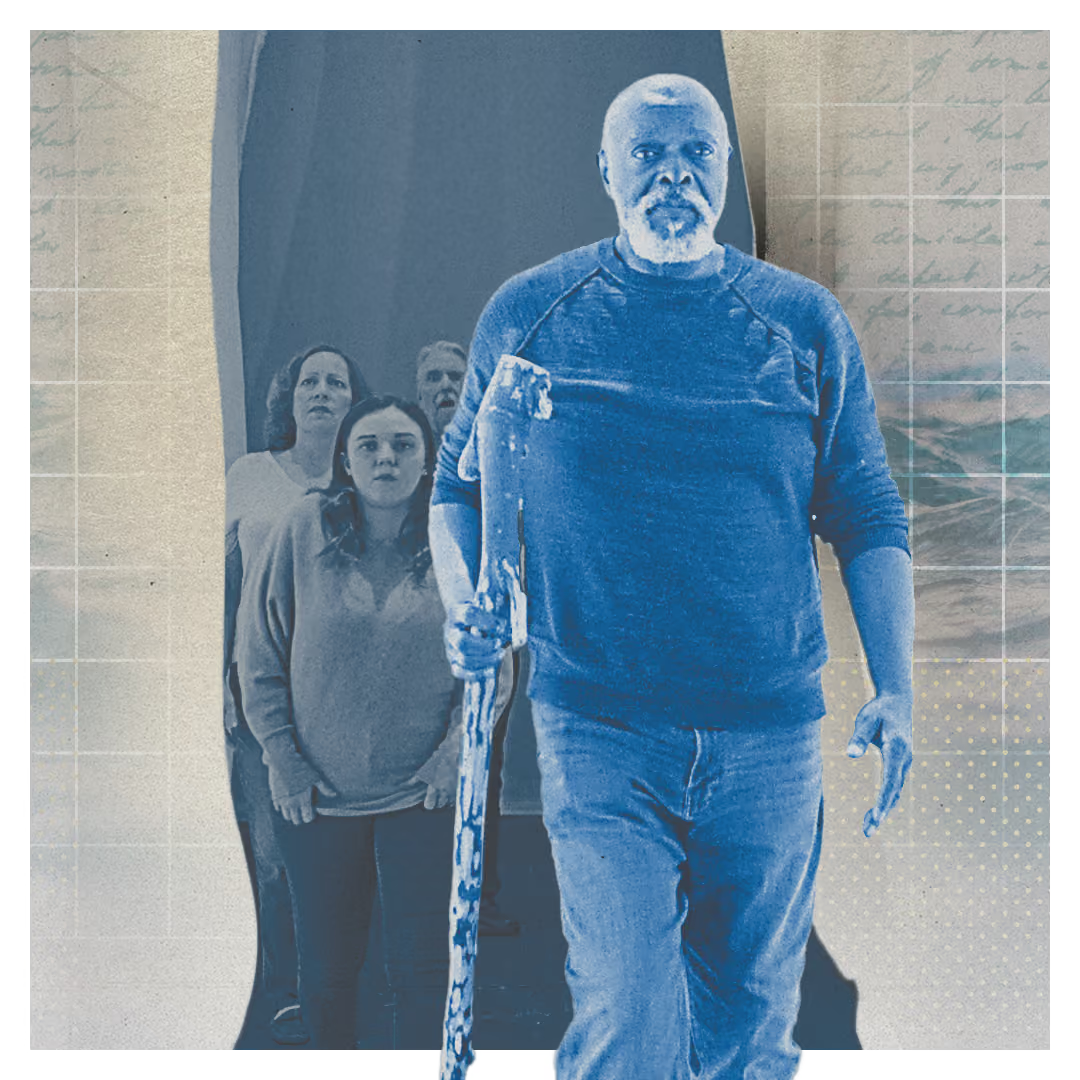
Intro: Welcome to the Spoken Gospel Podcast. This is our attempt to speak the gospel out of every corner of Scripture. We believe every part of the Bible, Old Testament and New, is about Jesus, and this podcast is our experiment to publicly test that belief. Let's jump in.
David: Well, hey everyone, welcome to the Spoken Gospel Podcast. This is our journey to speak the gospel out of every corner of Scripture. I'm David Bowden.
Seth: I'm Seth Stewart.
David: And today is our first full episode of the Spoken Gospel Podcast. How you feeling, Seth?
Seth: Tired.
David: Tired. But there's no coffee in front of you.
Seth: But there's no coffee in front of me, just water.
David: Just— and a LaCroix. Yeah. That's not going to do it.
Seth: Nope.
David: But we're going to be talking about Exodus 1 and 2 today. Because that seems to be how the text is broken up. It's this introductory material that kind of gets us up to date on what's happening after Genesis and the people's, like, travel into Egypt, and then before the call of Moses. So it seems to be this little section, right? Would you agree? 1 to 2 is a good place to start?
Seth: Yeah, it's Because it's the beginning. I feel like just God wrote it through the author to be at the beginning.
David: He really did. Authorial intent would be—
Seth: But it starts here.
David: It starts here in Exodus 1. And I was more talking about it stopping in Exodus 2.
Seth: Yeah.
David: Before the call of Moses.
Seth: Yes.
David: You're on board.
Seth: I'm on board.
David: Okay.
Seth: There's the plot revolves around the character of Moses and God's actions through Moses. And this gets us prepared to see that character do what the Lord has planned for you.
David: Yeah, that's great. Okay, so let's, uh, give an overview here of what's going on. Um, you, you basically have, um, Israel— it starts off is increasing greatly in Egypt, so they're multiplying, they're being fruitful, um, and then Pharaoh oppresses them, right? How does he, how does he go about oppressing them here?
Seth: Through, uh, genocide and infanticide, right?
David: And he does it in two different ways, right? He, he has two different like methods. The first one is the—
Seth: well, the first is just the actual slavery. So there seems to be the assumption that through slavery we will oppress the Jewish people, the Hebrew people, in such a way that they won't continue to increase and multiply. Right. But that doesn't work.
David: Right. That's the taskmasters in verse 11. Yes. Okay, I see that. Okay. And then he does the genocide thing with the midwives. That's his first strategy, is these midwives will take the male babies that come out of the womb of the Israelite women and they are supposed to just kill them, right?
Seth: Yes, by some means, right?
David: By some means.
Seth: We don't really know why or how.
David: Right, but the midwives disobey and they don't do it.
Seth: Or they obey because they feared God and not Pharaoh.
David: Yeah, they obey the right God and God blesses them for that and actually gives the midwives children. And so Pharaoh tries to oppress them, doesn't work, and even leads to more fruitfulness and multiplicity.
Seth: Yeah, they were vigorous and gave birth before the midwives. Well, that's the lie.
David: Oh yeah, that's the lie that the midwives tell is so great. It's like, well, why aren't you doing this? Oh man, these Israelite women are vigorous in childbirth and they just push them out before we even get there.
Seth: Which is kind of prophetic because in verse 20 it says, and the people multiplied and grew very strong.
David: Yeah, it's almost like that repetition of vigorous. That's interesting, I've never seen that. Um, okay, and then, um, And so then, uh, Moses is born.
Seth: Well, before that, Pharaoh has another version.
David: Okay, his second method.
Seth: His second method is to throw them into the river.
David: And who's supposed to carry that out?
Seth: Um, is it all his people?
David: Oh my gosh.
Seth: So it's not just the midwives. If you see a male Hebrew child, you as a citizen of Egypt have a responsibility to throw them in the river.
David: Gosh, that's like— how would you have to be brainwashed to carry that out, right?
Seth: That is You think about dictatorships all over the world, and this is the way they operate. The whole of society enforces the rule of the Pharaoh.
David: Ugh, that's rough. That's rough. Okay, so all the male children are born— that are born are supposed to be thrown into the Nile River and drowned. And it's in this context that we meet the main character, who is a male child being born in this situation, which you're like, well, No hope. No hope. And so Moses is born, and his mom seems to kind of obey because she does put him in the Nile River, but in a little basket.
Seth: Yeah, yeah. And so bitumen and pitch, which I think you're supposed to think of the ark, which was covered in pitch too.
David: Okay. But anyway, okay, rad. And so she does this, and then Moses is found by Pharaoh's daughter, and he grows up. Right. And yeah, yeah. And she calls him Moses because I drew him out of the water. I guess that's what Moses means.
Seth: Yeah.
David: Cool.
Seth: Yeah. So the Pharaoh, though, there's, there's like an undermining here happening, right? So Pharaoh's daughter is actually undermining the Pharaoh's commands.
David: Right, right. That's pretty awesome. Okay. And so then Moses grows up. This is in verse 11 of chapter 2. Moses grows up and he like goes out and he sees an Egyptian mistreating one of his Hebrew brothers.
Seth: Right.
David: And he ends up coming over them and basically just murders the Egyptian.
Seth: Right.
David: And then buries his body in the sand.
Seth: Yep, we're not told why or what motivation it was, you're left to assume, but he does it.
David: Yeah, and it's like, and the way that he secretly buries him kind of makes you think of those movies, those gangster movies where you secretly hide a body somewhere, there's all this going on. And then Moses comes out again a second day and there's two Hebrews arguing with each other, right? And he tries to settle the dispute, and they say, "Who made you a prince and a judge over us? Did you mean to kill me as you killed the Egyptian?" And so Moses was afraid, and he runs away to Midian, where he sees these women at a well, and they're tending their flock, and these herdsmen, are they herdsmen, or someone who, they try to come in and like take over the well so the women can't get there.
Seth: And then Moses rescues them. Yeah. Chases them away.
David: Chases them away, waters their sheep, and you have this woman, Zipporah.
Seth: Zipporah.
David: Zipporah, great name.
Seth: Great name.
David: And he marries her, 'cause that's awesome. Just, you know, chivalry, you know, it's just, if you want a wife, You just go beat up a guy at a bar.
Seth: And then it works.
David: And then it works every single— it's worked for me every time.
Seth: Every time?
David: Yeah, I've tried it zero times, so every time it works.
Seth: I think it's interesting that we should notice here, he quotes— he says of himself, "I've been a sojourner in a foreign land." Oh yeah. That's a theme that will get picked up later, but it's just important to note right here.
David: Yeah, that is. Verse 22 in chapter 2. Yep. "She gave birth to a son. Zipporah gave birth to a son, and he called his name Gershom.
Seth: Great name.
David: For he said, I have been a sojourner in a foreign land.
Seth: Yeah. And then at this point, the king of Egypt dies. The people of Israel are now groaning under the weight of oppression and slavery and genocide, and they're crying out for rescue to God. And we're told that God hears their groaning, and God remembers his covenant that he made with Abraham, Isaac, and Jacob. He sees the people of Israel, and the next thing we're introduced to in number 3 is the burning bush and the calling of Moses. God's response to their cries. And so at this point we have to start asking, okay, so what— so we're clearly clued in here to what's happened before. There's promises being made that God is now cashing in on because of the oppression of his people.
David: Oh, right, because of the word covenant. Right, right. He remembered something.
Seth: Remember something.
David: Yeah, yeah, yeah.
Seth: Mentions these 3 patriarchs.
David: Okay. Okay, well, let's, let's find out what's going on. Okay, so now that we've looked at what's happening in our text, Exodus 1 and 2, we, we need to look at what's going on in the broader context, like right before this, because we need to know what should we as a reader be looking for, right?
Seth: After you've just made basic observations about the text that you're engaging with. Okay, how does this fit into the broader narrative of scripture, right?
David: Because clearly there's lots going on already. Who are these Hebrews? Why are they in Egypt? What's this covenant? Like, yeah, totally. Uh, who's this God to whom they're crying? Like, all these questions have to be answered. Like, what— why is it so significant that he keeps saying be fruitful, multiply? So let's look at these things. So let's start there. Um, because I think really quickly what stands out to me is this thing in Genesis 12 that starts with the covenant with God in Genesis 12 that he makes with Abraham. He says that, you know, "I'll make you be fruitful and multiply and you'll bless all the nations," right?
Seth: Right, and what's even maybe not more important, but God doubles down on this promise to Abraham in Genesis 15 where Abraham makes a sacrifice He falls asleep and the Lord appears to him in this trance or this dream, and he promises him, "I will make you a great nation. I will multiply your children, but it will come through oppression and slavery." And God prophesies that they will be enslaved for 400 years.
David: Yeah, it says in Genesis 15:13, "Know for certain that your offspring will be sojourners in a land that is not theirs and will be servants there, and they will be afflicted for 400 years.
Seth: Yeah, so one, prophecy is coming true. Two, we're getting hints that Gershom's name is intentional because Moses is remembering the covenant made to his forefathers. And then another interesting thing that happens is that God repeats the same covenant promise to Joseph in Genesis 46. And a lot of interesting parallels are happening there. One, Joseph makes a sacrifice. 2, he falls asleep. 3, God comes to him in a dream and says, "Joseph, do not be afraid." And so at this point, we have no reason to think Joseph should be afraid in the story that's happening there. Joseph is going to see his son who was sold into slavery in Egypt, but actually becomes the ruler of Egypt, and he's going to be reunited. So why should he be afraid in this moment? And so I think the answer is that he knows what was promised to Abraham. He knows that when he goes to Egypt, there is coming a time of enslavement and oppression.
David: Right. There had to come this time when they would be sojourners. Okay, I'm going to a place that's not mine. Is this the time that, you know, great-grandpa said, "We're going to be enslaved for 400 years"? Yeah, that's that time.
Seth: "Do not be afraid to go down to Egypt, for there I will make you a great nation." Oh man. So he knows this is where it's going to happen, but also know it comes at a cost. It comes at the cost.
David: Yeah. And I mean, if you look at the second part of that prophecy we read in Genesis 15 that God says to Abraham, it says, "But I will bring judgment on the nation that they serve. And afterward, they shall come out with great possessions. As for you, you shall go— and he keeps going. But it's like he knows that there's a greatness that comes out of suffering. And so if God is combining, do not be afraid with I'm going to make you a great nation, I mean, he's got to be thinking, this is it.
Seth: This is it. Yeah, this is it. It's happening right now. Okay.
David: What other— what other themes do we see going for— going beforehand other than like be fruitful and multiply? And it's going to happen through— yeah, the sojourner. It's going to happen through oppression and suffering.
Seth: We also see— we already talked about growing and multiplying.
David: Well, I guess not extensively. Oh, we haven't even gone— this goes back to the beginning. But at the very beginning, yeah, that's true.
Seth: The very first covenant that God makes with humanity is that you will be fruitful and multiply and fill the earth, right? And so we see it happening here, even under oppression, right?
David: So this is Adam and Eve, right? We're in the Garden of Eden, right? And one of the first things that God commands is for Adam and Eve to be fruitful and multiply. So this is, this is like his— the purpose of the, of the world is to be fruitful and multiply. And for what purpose?
Seth: To be caretakers of the land, right? To fulfill his promises, or to expand his glory, right?
David: To like to cover the earth, because they were image bearers of God, right? They were the— they were made in God's image. And he says, I want you to be fruitful, multiply. So if they were made in God's image, and then he said, be fruitful and multiply, what he's saying is, I want you to replicate my image over the whole world. Why? Because the world is for God's glory. You know, I think of Habakkuk later where it's like, you know, the, the, the, the glory of the Lord will cover the earth as waters cover the sea. Like, that was the original purpose, right, of the garden, was for it to be tended and grown and filled with image bearers of God so that his glory would fill the earth, right?
Seth: And we see them fail. Adam and Eve fail that covenant. And then we're— so after this, like, 11 chapters in Genesis of like this broad explanation of what happens when you fail and all these terrible things happen with Cain and Abel, whatever else.
David: Tower of Babel.
Seth: Tower of Babel. You come to Abraham.
David: Yep.
Seth: And he is going to continue the same covenant God made with Adam and Eve. You're going to be fruitful, you're going to multiply, you're going to spread my fame throughout the world, uh, you will inhabit the land. Right. And so we don't see that happen though in Abraham's lifetime, right? He only owns his grave by the end of the time, right? Like, that's all he owns. And so we're still waiting for the person or the ruler who would make the covenant work, to make a people that can multiply correctly and in such a way that would actually bring God's kingdom, right?
David: And it's strange that the situation in which God is remembering his covenant and the people are being fruitful and multiplying is in slavery and under a heavy-handed dictator who's committing genocide against their children.
Seth: Yeah, and not just that, it was prophesied to be this. This is not just happenstance, it was prophesied, right, and intended.
David: Okay, so this seems to be an important theme too, right? Because you mentioned how Pharaoh's daughter is, is kind of undercutting Pharaoh's wishes. You know, it seems to be that no matter what Pharaoh tries, no matter what the rulers of the world try, God's still in control. It's like no matter how far— if you go back to the beginning of Genesis like we just did, even though we keep messing up, you know, we broke the covenant in the garden, we built the Tower of Babel, you know, we called— like, we sinned so much that God flooded the earth, all these things. It's like God still is in control. He still has this plan. And it seems to be that in Genesis— in Exodus 1 and 2, we see that all the more. It's like no matter what's going on, God is still multiplying his people. He's still working everything out, right?
Seth: We see that in like embryonic form in the story of Joseph. God— in at the very end of Genesis 50:20, it says, as for you, Joseph referring to his brothers who sold sold him into slavery. He says, as for you, you meant it for evil against me, right? But God meant it for good. So this embryonic one-person story of God making the best— not even making the best, like using the same bad actions to actually accomplish his purposes, using evil intentions to bring about his good plan. We see an embryonic single person, one family, and now we're seeing it played out nationally with a whole people. Right.
David: And that's like— and what you just said, that thing about God, what you planned for, what you thought was going to be evil, God used for good. That's how Genesis ends. Like, there's that verse and then Joseph dies and then the book's over, right? There's like, there's like 7 verses between the end of Genesis and that, that crazy truth that God's in control even in evil.
Seth: Yeah.
David: And then we have, and then the people in Exodus 1, and then the people are in Egypt and they're being oppressed, but they're multiplying. It's like if you had that echo of the end of Genesis in your head, you know what's going on as the reader. You got to get this front row seat to see, oh, what Pharaoh thinks is happening isn't really happening. God's actually doing good out of evil.
Seth: There's all this dramatic tension there.
David: Yeah.
Seth: Will God do the same thing he's always done?
David: Oh, man.
Seth: Will he always keep his promises? Will he always turn evil for good? Will he be faithful?
David: Right. And that's probably what caused the people to cry out, like, God, remember your covenant, right? Right.
Seth: That's what we would be as if we were just reading this and seeing it dramatically played out on screen. We'd be like, in this moment, we know all this history, like, Lord, save.
David: Yeah. All right, well, let's see how these two kind of go together.
Seth: Okay, so we've asked, what does this story tell us? What are we observing? What are we seeing in this particular text in these two chapters? We've asked, okay, what's gone before? What's led us to this moment? So now that we have a good understanding of the context, what themes should we be looking at to see Christ in Um, in a second, right?
David: Yeah, I think, um, well, clearly the thing we kept talking about was be fruitful and multiply. So, um, and like, but that kind of falls under a broader category of like God's covenant.
Seth: Yes, God's promises to his people, right? And somehow God's promises to his people actually almost always involving fulfillment through suffering, fulfillment through, uh, oppression, right?
David: And this isn't random oppression. This is— God knew this was going to happen. He told the patriarch Abraham that it was going to happen. And so here it is happening like, oh man, and think about this. It's like, oh, this is crazy. So it's like God, God promised that they would suffer and be enslaved in Egypt, and now they are. Promise fulfillment. Promise fulfillment.
Seth: Yeah.
David: And then he says, but I will also deliver you and you will leave that place with great possessions. Promise. And now they're going, where's the fulfillment?
Seth: There's a fulfillment. Yeah, we got the bad part.
David: We got the bad fulfillment. Can we get the good stuff be fulfilled too? And it's like, that's kind of the question that's left hanging at the end of this little pericope. Pericope. Yeah, pericope is—
Seth: and just even on a personal level, that's the question we're always asking too, right? Like, man, I know the world's gonna suck. Yeah, God's delivered on that one. But like, where's Where's his goodness?
David: Right.
Seth: Where's the things that he's done for all those other people that I've seen around?
David: I get that. I get that God works through suffering, and I see the suffering, but where's the work?
Seth: Right.
David: Yeah, totally.
Seth: Yeah.
David: So how does this— like, how does this flesh out in the text itself, these themes? Well, first we see that one observation we've already made is that no matter how much oppression Pharaoh puts on these people, they continue to grow. They continue to fulfill God's command of being fruitful and multiplying. So actually, suffering seems to be the means of fulfillment, right?
Seth: Yeah. Yeah, there's—
David: it's very unexpected, which is the same story as Joseph, remember?
Seth: Like, there's— his suffering was the means by which he was— God was going to redeem Joseph's family, right?
David: Yeah, yeah. He was, he was thrown into this pit and sold as a slave. He was in prison, and yet this was the path that he took for him to be exalted in Egypt to the right hand of Pharaoh.
Seth: Yes. Yeah. Yeah, that's exactly right.
David: So through suffering, God fulfills his promises.
Seth: Yeah.
David: Okay.
Seth: That's the theme.
David: And then what about a theme? Okay, that's a, that's a theme that God keeps his covenant through suffering. He brings it about through suffering. Another one, though, is, is actually in the, in the be fruitful, multiply thing itself, right? Like, why is that itself important? We talked about like God's glory covering the earth and everything like that. Do you see any of that in this text? Or is it hinted at?
Seth: Is it started? I don't know if I see that one as clearly. So maybe you can just speak to that a little bit more, because obviously you see it.
David: Well, I just see, "Be fruitful, multiply." They were— they continued to multiply, they continue to multiply. And if I have the echoes of Genesis in my head here, going, this was the original intent of God in the Garden of Eden, and they're fulfilling that here. What's happening. And it's like, well, then we know that Egypt becomes the stage for the glory of God to be shown, like through the plagues and through the Exodus. It's like they have this huge group of people and then they're, they're taken out. And that's when the missionary journey of Israel begins and they start to be a light to the nations as they're, as they're saved. So it's like this is the, the seed, I guess, of this blessing that it's got, like whatever God was trying to do in Eden is beginning to take shape under the thumb of Pharaoh as they're fruitful and multiplying in Egypt. Yeah, we at least should be, you know, the narrative tension, we should be expecting something, right?
Seth: Right.
David: It's like, okay, we're growing, we're growing, we're growing. When's your glory going to go out onto the, onto the world? Like we're multiplying, but we're not expanding.
Seth: So yeah, we talked about this already. So there's a sense that half the promises are being fulfilled. The suffering part of the promises are being fulfilled.
David: Right.
Seth: But not the glory and dominion and having— subduing the land or being like owners.
David: None of that's happening.
Seth: We're owned by other people. And the other part of this promise is that— and if I think what I hear what you're saying is the other part of this promise is that they actually are getting some of the good things. They are increasing and multiplying, but the context surrounding them is not what they expected.
David: It's terrible.
Seth: Right. Yeah. Their promises are being fulfilled and good promises. You are being fruitful. You're multiplying. You're seeing part of God's kingdom. But the kingdom is no further than your own people. It's not expanded beyond what you can do in your own homes. It's not impacting the world system. It's not impacting those who are oppressing you.
David: Yep. It's stuck.
Seth: It's stuck.
David: Yeah. You're not free to go out. And so I guess— and then you have this theme of calling upon the Lord here at the end, like they, they, they, they cry out because of their slavery. So again, like God's bringing something about through suffering. It says in 23, during those many days, the king of Egypt died, and the people of Israel groaned because of their slavery and cried out for help. Right? And so it's like, again, God is bringing about what he wants through suffering. Because of their enslavement, they cried out to God. And we don't— I mean, we'd have to kind of read into the text to think like without that kind of suffering they wouldn't have, but it seems to be at least a correlation. Right, right. That like through suffering, they're crying out to the God of the covenant that they remember.
Seth: And I— this may not necessarily be what this text is supposed to get us to, but groaning is a really important word in the book of Exodus more generally. Yeah, because what's the one thing the Israelites continue to do in the desert wilderness? They keep groaning and grumbling, and it turns into sin. So I, I don't know if what we're seeing here necessarily in Exodus 2, but they're There's this godly groaning for his purposes to be done. There is a sense in which not all the promises are fulfilled yet, but there's a hope that he will. But when they groan in the desert, there's a sense that the promises of God haven't been fulfilled yet, but they have no hope that those things will come. So I think what we see here is an understanding that God has purposes and plans, fulfilling promises, but they're not here yet, but they will come soon, and we can trust him to do that.
David: That's really good. That's really good. So what we need to do as we move into Exodus throughout the rest of these podcasts in Exodus is we need to remember this moment when there was godly groaning.
Seth: Yes.
David: And see how it's been corrupted. Yes. That'll be really helpful. So then finally, as we wrap up this, this segment here of what's going on thematically in Exodus 1 and 2, I think we have to address what is this thing that God— it says that God heard their groaning, God remembered his covenant, and God saw his people and knew. It's like, because I think for us it's like, wait, hold on, was there one time when God didn't hear and didn't remember and didn't see and didn't know? Uh, it's like, no, this is what's happening here. This is like a God like acting, or he's, he's awakened, or what's, what's happening here? What's this language?
Seth: I think it's to tell us that God cares, right? I mean, I think it's, it's personal language.
David: Yeah.
Seth: God isn't far removed, but he's impacted by the suffering of his people. And he is impacted in such a way that he responds.
David: Right. Yeah. These are, these are metaphors to help us know that, like, oh, I'm in God's mind and God thinks of me. God hears my cries. He sees my plight. But this isn't meant to show us like, oh, we finally woke God up, right? Because God was the one who told Abraham that this all was going to happen. And God is the one who said that after it happens for 400 years, I'm going to save you. So this isn't God like going, oh yeah, the Israelites, right?
Seth: This is an ignorance. This is a symbol of his care. It's not just a symbol. It is his actual care for his people.
David: Yes. And the— and the— and the cry of faith that was brought about by the suffering he put upon them is bringing about the purposes that he desires. Like, again, so I was just thinking that it's like, so God— God put the people in suffering, like he said it was going to happen and he has a purpose for it. And through that suffering, they cry out because of their slavery. They groaned and they called out to the Lord. And so, and now God is responding to that cry. But God is the one who brought about that cry through the suffering. And so it's like from him and through him and to him. He's, he's orchestrating all of this, right?
Seth: Back to the Genesis text. What you intended for evil, God has intended for good. There's no part of this plan that is outside of my purposes and my ability to hear and fix.
David: That's really good. All right, well, let's see how this shows us Jesus more clearly. Let's, let's take a look. Okay, so we've looked at a lot today. We've seen that there's this evil tyrant king who's oppressing the people of God, just as God said that it would happen. And through that, he's actually accomplishing the covenant that God said that the people would be fruitful and multiply, and they are, despite Pharaoh's best chances and best— best chances? Best efforts. Efforts. There we go. Evil efforts. Evil efforts. And so, and even through this punishment, through this oppression, God raises up the deliverer by Moses's mom kind of being obedient to this, this call to throw her child into the river. And, and then we see finally, we ended with the people calling out to God, and in their suffering, and God heard their groaning, and he remembered the covenant. So we see God's covenant purposes permeating through and actually being accomplished by suffering. Yeah, here we are.
Seth: And here we are. So the question we're trying to ask now is, knowing that that's what the text says, knowing that's what the history leading from Genesis into this what— how are we seeing Jesus in this text? If we believe that all Scripture points to Christ, how are we actually seeing that played out right here, specifically, faithfully, right, without making stuff up?
David: Right. Well, I think we can— I think the Gospel writers really take us by the hand here, and God really does. As the God of history, he orchestrates all events. And so the Gospel writers take us by the hand and say, here's something. They, they show us at the beginning of the Gospel narratives that Jesus too was born under a tyrannical king, King Herod, right? And this king, he called for a very similar edict, right? He said, he said, I want you to kill all male, male children under 2 years old that were born in Bethlehem, because he was trying to kill Jesus himself, right?
Seth: Yeah. And in order to escape, Mary and Joseph go to Egypt, right?
David: So we're back in Egypt.
Seth: We're back.
David: If you missed it with the whole infanticide thing, you hopefully Flute pick it up here again in Egypt. God is saying, look, I'm raising up a new deliverer who will be like Moses.
Seth: Yeah. And actually, it's in Exodus 4:20. It says, "So Moses took his wife and his sons and had them ride on a donkey and went back to the land of Egypt." This is after the suffering, right? After the infanticide happens, after the Pharaoh that hurts him, they actually go back to Egypt. In the same way, once Herod dies, with Jesus and his family, they go back to Jerusalem, right? So there's this, there's this migration-immigration story that's being paralleled in Jesus, right?
David: And so what's interesting there, I haven't thought about it like this, but what's interesting there is just as after Pharaoh died, Moses went into Egypt because that's where God's oppressed people were. After Herod dies, the people seeking his life, Jesus went back to his people in Jerusalem, right, in Nazareth, because that's where the oppressed people of God were.
Seth: Yeah.
David: Right. So there's this new Exodus.
Seth: Okay.
David: So what we have to ask is, what were the oppressive forces of the day that Jesus was coming to rescue people from? Yeah. What were they? I mean, you have Rome, right?
Seth: Yes. You have Herod himself acting as this figure, this puppet king for Rome. But you also have what the story is setting itself up for is also sin.
David: Right. It's something bigger, which we haven't gotten to yet necessarily, but The Exodus story is repeated so many times throughout the Old Testament that it prepares us for the dismantling of an oppressive power that's not necessarily physical. Because just as the Exodus story was Israel's— Israel being brought out of physical oppression, there comes a time later in the Old Testament when God says that there will be another exile. They're going to go into slavery again, into this thing called the Babylonian captivity. And they're going to go out into that, and God is going to send a new deliverer. But whenever the prophets like Ezekiel and Jeremiah talk about this new deliverance, it's not deliverance from just evil outward forces. It's from this inward evil, this hardness of heart that he calls it. And he says, I'm going to come and I'm going to build a new covenant with you that won't be like the old covenant. And this new covenant is going to change your heart, the inside.
Seth: Yeah, right. And even in Exodus, we're told that because in the first 18 chapters, it deals with freedom from this physical oppression by Pharaoh. And the next half we're saying, okay, the physical oppression is over, the land is going to be able to be conquered, we're going to be able to see God's promises fulfilled. And what do we learn? That the people of Israel are just as idolatrous as Pharaoh were.
David: They are—
Seth: something wrong in their own hearts that prevent them from being in God's presence and being in the Promised Land. The problem isn't oppression by itself, it's the sin that causes the oppression that resides in all of our hearts, which, like back in Genesis, the thoughts of our heart are only evil all the time, continually, right?
David: And so you think about, okay, Israel keeps going through to the cycle of slavery and oppression and then repentance and deliverance. And they keep going through this cycle. And the last cycle they went through was this Babylonian captivity. And then they came back into the land, right? You have like Nehemiah and Ezra there. They're trying to rebuild this promised land. You know, they're trying to rebuild the temple. And then you have basically the Old Testament ends and they're still looking forward to this full restoration of Israel. And lo and behold, Rome comes and kind of messes everything up. And so they hadn't quite gotten out of this last turn of exile that they've been in. And so they're asking this question, what kind of deliverer is going to come and save us? And Jesus comes as that deliverer. But even the people to whom he comes don't recognize him for what he is, right?
Seth: So we're asking then in the first two chapters, so we know that Moses is a proto-deliverer. He will do some of what Jesus will do. But he won't be perfect.
David: Right.
Seth: And so what we're looking at in the first two chapters is, well, what kind of deliverer will Moses be? And then what kind of deliverer must the Messiah be? Yes. So when we just— if we were just to say, okay, let's be faithful to these two chapters, let's not go all into the prophets and Babylon, right? If we were just gonna stay in these two chapters, what kind of deliverer must Jesus be in this text?
David: Oh man, that's a good question. I think he must be— I guess it seems like if he's going to be a deliverer like Moses, it seems that he would be a deliverer who rescues through suffering.
Seth: Yes.
David: Right. And through oppression. Right. And so you kind of have that. And I think the clearest parallel that I see is you have Pharaoh trying to squash— he doesn't know he's trying to squash the plans of God, but he's trying to squash the plans of God and the growth of his people by oppression. But that oppression and suffering only actually leads to the accomplishment of God's plan. And so if Jesus is the antitype to the type of Moses here—
Seth: why don't you define that for us?
David: Yeah, sure. So you have a type. So in Moses, we have this type that is a little child born in suffering who is raised up inside of that suffering to be a deliverer, right? So you have that despite— and then Jesus is the antitype. He's the fulfillment of that type. It's kind of like a foreshadowing. So it's like a shadow and substance. So Moses isn't actually the person, he's the shadow that's cast from the person.
Seth: That make— that's helpful. That's helpful.
David: Okay. And so just to— let's just go ahead and show our hands so we can have a little bit longer of a conversation about something else. Jesus suffered under Roman oppression and religious oppression, right? They tried to squash this Nazarite who was performing all these miracles and claiming that the kingdom was coming and calling all these people to himself. They tried to squash him by putting him up on a cross and killing him, taking his life. And yet we're told in Acts 2:23 that this Jesus was delivered up according to the definite plan and foreknowledge of God. You crucified him and killed him by the hands of lawless men.
Seth: It's the same thing we read in Genesis 50:20. Yeah, that what man intended for evil, God intended for good. The same thing is happening in Jesus on the cross, the same same deliverer from the land of Egypt to those who are being oppressed will conquer through suffering.
David: That's right. That's right. No matter what the world does to try to stop the plans of God, they only ever end up bringing them about, actually. Because yes, men's hearts are evil. Yes, our intentions are bent and wicked. But God is in control. And when we get to look at the world through the biblical lens, we see that God's never out of control. We actually get to see like this little behind-the-scenes picture that what actually seems like is just spinning out of control, God's actually ordaining and controlling and bringing everything about in perfect adherence to what he's planned.
Seth: And I think this helps me personally, or anybody who has ever suffered. Yeah, it says that the Lord is not willing to use a knife on you that he hasn't cut himself with. Right? Because we, we say like, how could God allow this to happen to me? He, he hasn't had to suffer like this. And the fact remains, no, he has. He's you. He's not using a different tool on you than he's used on himself. Like, he knows what it feels like and he knows how to bring purpose from pain.
David: That's right. And the reason why is because he's not just God, right? In Jesus, he's God and man, right? We don't have a God who is unable to sympathize with us, right? Hebrews says, because he became flesh. And so here's another way that, that we see Jesus in Exodus 1 and 2 is that Moses was not just an Israelite. Neither was he just an Egyptian, right? He was both. He was both. And so he could represent his people, the Israelites, in the courts of Pharaoh as an Egyptian. He had a right as an adopted heir in Egypt to go into Pharaoh's courts. We're not told in the whole narrative how he was actually granted admission. We're told like he performed some signs later to the Israelites, but it wasn't— we're not then told by these signs he was admitted into the courts of Pharaoh. It was most likely because he grew up with this dude, right? It's like this is his brother, like his adopted brother. And as an Egyptian, he gets to go in there and represent his people as an Israelite.
Seth: So that's in Exodus 5, right? So we're told here in Genesis— Exodus 1 and 2 is that he was both Hebrew an Israelite.
David: Yep.
Seth: That's kind of all we're told.
David: Or he— Israelite and Egyptian.
Seth: Israelite and Egyptian. We're told he has a double identity, double citizenship, and that's all we're left to— that's all we really know about him, right? These two things simultaneously. Yeah.
David: And it's ripping him apart. You can see that. It's like he murdered someone. He murdered an Egyptian for picking on some Israelites.
Seth: He attempts to judge the Egyptians. Yeah. He is punished for it by Pharaoh. He attempts to judge Hebrews. He's judged for it by them.
David: Oh yeah.
Seth: Who can What is his role and what is his place, right, as both of these things?
David: Yeah, it doesn't work for him, right? Yeah. But for Jesus, it worked perfectly. He was the God-man. He was fully God, fully man, able to come and judge men as God, but able to represent men to God as God. Right. He can do both because he's both God and man, just as Moses was both Egyptian and Israelite.
Seth: Because he is God, he can stand in the throne room in the courtroom of God and be a perfect judge and be a perfect judge.
David: Right.
Seth: And because he is man, he can be our perfect representative as our substitute. Moses could do neither of those things fully because he neither had the authority of Pharaoh or actually all the sympathies of the Hebrew people. The Hebrew people said, "No, you don't know. You don't know us. You don't— you can't judge over us." So Moses couldn't be fully Egyptian and fully Hebrew in the way that Jesus could be fully God and fully man.
David: That's right. That's why he's only a shadow, right? He's only part of the story. Fascinating. Yeah, that's really cool. I love that. And so let's, let's end on two quick observations. Let's, let's— because I don't want to miss these because we don't really go back to the be fruitful and multiply thing throughout Exodus too often. So it seems to be a very, very common theme here. And we see in the Great Commission the sending of Jesus's disciples after his death, burial, and resurrection. He sends out his people and tells them to go and make disciples of all nations. Right. So this all nations thing should remind us of the covenant God made with Abraham whenever he said, all nations will be blessed by you. How will they be blessed? We'll go back to Eden and we see by being fruitful and multiplying, by going out and spreading this human likeness of God that I created. But now in the new kingdom under Jesus, we don't primarily be fruitful, multiply through procreation. Procreation. That's a nice way to say sex.
Seth: Yeah, I like that.
David: Yeah. And instead of that, we, we be fruitful, multiply by sharing this good news that Jesus is Lord, that he died in our place, that God has become man, right? That, that the, the power of sin and dominion and the rulers of this world have been overthrown by a man submitting himself in suffering to oppression. Yeah, somehow this crazy story of the gospel.
Seth: And in, in that, this is a very side point, but I think it's important. It moves the locus of redemption from families to families and singles. Jesus himself was single. Paul was single. Before Jesus—
David: oh yeah—
Seth: the only way for the people of God to increase was through family, and that left out so many people in society. Only in Christ do we have a dignification of singleness as integral members of the increasing kingdom of God.
David: Right. It used to be that orphans and widows and foreigners, if they weren't allowed to marry, their hope would end. But now it doesn't have to. Yes, that's really cool. I like that. And then finally, Exodus 2 ends with this call to the Lord to be faithful to his covenant, to his promise. And God is. And in Jesus, we have the same thing. God has been faithful through Jesus. And all he asks us to do is to do what the Israelites did, to cry out in helplessness to him, and he will save you. Like, what a hard response.
Seth: So hard.
David: But it is, because it means saying that you can't do it, right? You, you, you can't stand up under the weight that is above you by your oppressors in this world, and the physical oppressors and the spiritual oppressors. You can't do it.
Seth: You need help. That's right.
David: So call out to help in Jesus, and he will save you. All right, well, that's Exodus 1 and 2. Thanks, Seth, for being here with me.
Seth: Of course, I'll be here every Every time.
David: Yeah. And so, yeah. So we hope you guys enjoyed this first episode and we'll see you next week.
Outro: Thank you for listening to the Spoken Gospel podcast. Spoken Gospel is a nonprofit organization dedicated to creating gospel-centered media that speaks the gospel out of every corner of Scripture in every corner of the world. To learn more about the ministry of Spoken Gospel and view more of our resources, visit SpokenGospel.com.